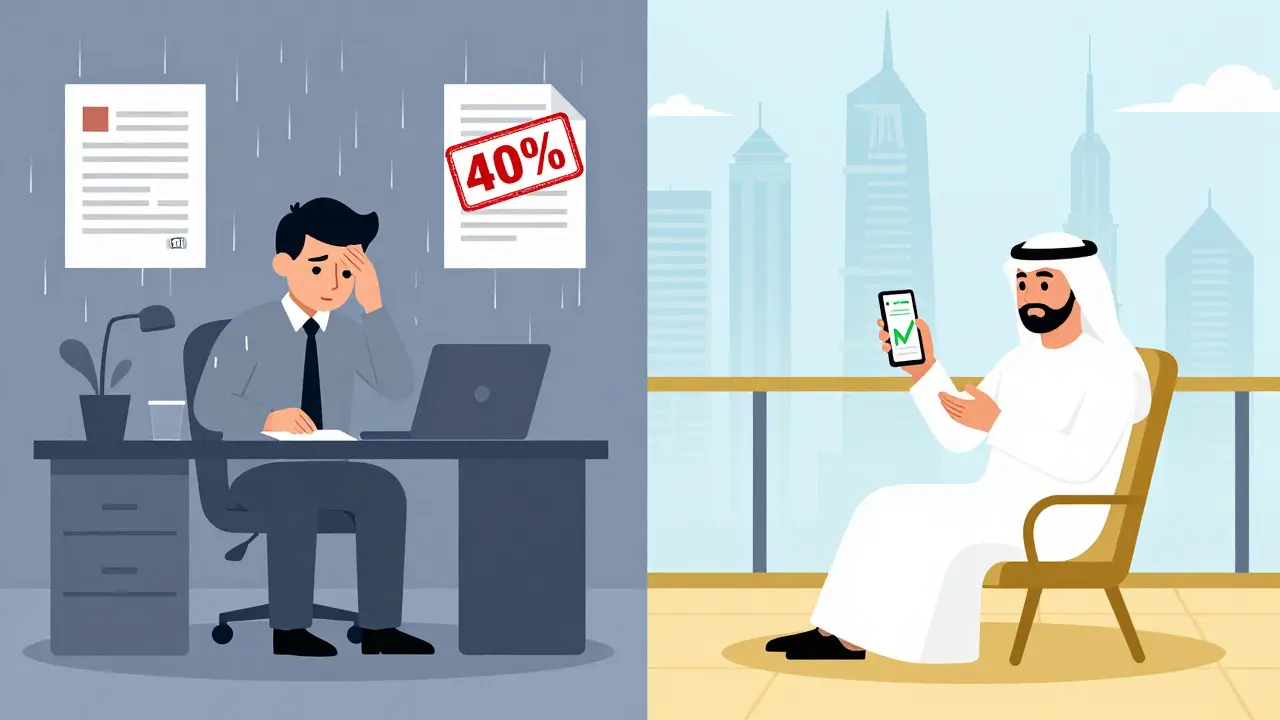
Imagine selling a Bitcoin position for $900,000 in profit and handing over exactly zero dollars to the tax man. For most investors in Western economies, this scenario belongs in fantasy novels or illegal offshore schemes. But in the United Arab Emirates, it is simply Tuesday.
The UAE has cemented its status as one of the world’s most aggressive tax havens for digital assets. As of mid-2026, individual residents enjoy a flat 0% personal income tax rate on all cryptocurrency gains. This includes trading profits, staking rewards, mining income, and even the appreciation of your wallet holdings. While countries like the US and Germany are tightening their nets with rates climbing toward 40%, the UAE is throwing the doors wide open-but only if you play by their specific residency rules.
This isn’t just about saving money; it’s about structural financial freedom. However, "tax-free" doesn’t mean "rule-free." The landscape involves strict residency requirements, evolving reporting frameworks like CARF, and distinct boundaries between personal investing and business operations. Let’s break down exactly how to legally keep your crypto gains in the UAE without triggering international compliance flags.
Who Qualifies for the 0% Rate?
The biggest misconception among new expats is that buying a property in Dubai automatically makes you tax-resident. It does not. To legally claim the 0% personal income tax on crypto gains, you must establish genuine tax residency in the UAE.
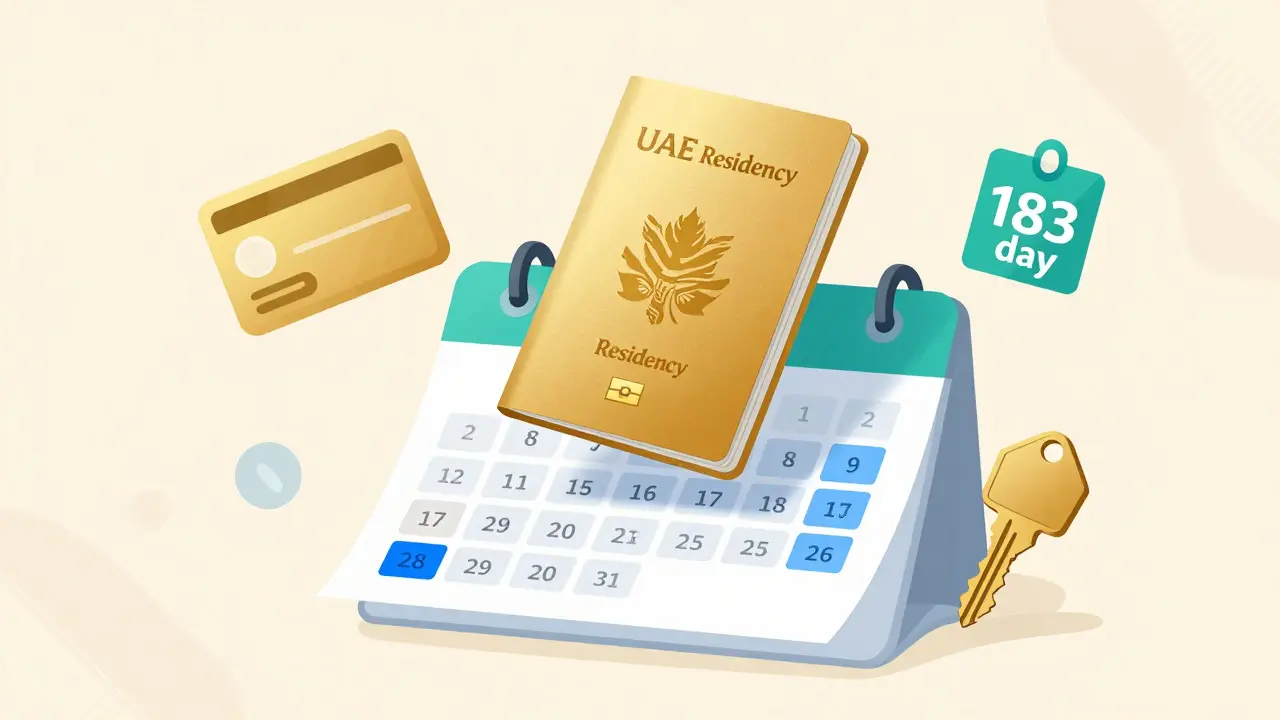
The primary rule is straightforward but physically demanding: you must spend at least 183 days per calendar year within the UAE. This is the standard threshold used by most jurisdictions to determine tax domicile. If you split your time evenly between London and Dubai, you likely remain a UK tax resident. You need to be physically present in the Emirates for the majority of the year.
To achieve this, you need a valid residency visa. Common pathways include:
- Golden Visa: A 10-year renewable residency permit available to high-net-worth individuals, including those who invest significant capital in real estate or start innovative businesses. This is the gold standard for crypto investors seeking long-term stability.
- Freelancer Visa: Ideal for independent traders or consultants. These are often issued through free zones like the Dubai Media City or Abu Dhabi Global Market (ADGM).
- Property Owner Visa: Granted to individuals who purchase real estate above a certain value threshold (typically AED 2 million), allowing for a 2-10 year residency depending on the investment amount.
Once you have the visa and the physical presence, you are considered a tax resident. At that point, your personal crypto activities-buying, holding, selling, and staking-are entirely exempt from personal income tax. There is no capital gains tax. There is no wealth tax. There is no inheritance tax. The government takes nothing from your personal portfolio growth.
Personal vs. Business: The Critical Line
Here is where many investors trip up. The 0% rate applies to personal income. If the UAE Federal Tax Authority (FTA) determines that your crypto activities constitute a "business," different rules apply.
The distinction usually comes down to frequency, volume, and intent. Are you a hobbyist trader checking charts on weekends? That’s personal. Are you running a high-frequency trading algorithm, offering custody services, or operating a mining farm with commercial scale? That looks like a business.
If your activity is classified as a business, you fall under the UAE Corporate Tax regime. Introduced in June 2023, this law imposes a 9% corporate tax rate on taxable profits exceeding AED 375,000 (approximately $102,000 USD). Profits below this threshold are taxed at 0%.
However, there is a loophole for businesses too. Companies operating in designated Free Zones can qualify as Qualifying Free Zone Persons (QFZP). If you meet strict substance requirements-maintaining adequate offices, employees, and economic activity within the free zone-you can pay 0% corporate tax on qualifying income. This requires careful structuring and professional legal advice to ensure you don't accidentally trigger the 9% rate due to "de minimis" limits on non-qualifying income.
The CARF Framework: Transparency Without Taxation
In September 2025, the UAE Ministry of Finance announced the adoption of the Crypto-Asset Reporting Framework (CARF). This caused panic in some circles, but the reality is nuanced. CARF is not a tax law; it is a reporting mechanism.
Think of CARF as the OECD’s answer to CRS (Common Reporting Standard) for traditional bank accounts. Its goal is to stop crypto from being a black box for global tax authorities. Under CARF, crypto service providers (CSPs)-including exchanges, brokers, custodians, and wallet providers-must collect detailed data on your account balances and transaction proceeds.
Here is the timeline you need to know:
- Public Consultation: Closed in November 2025.
- Final Regulations: Expected in 2026.
- Full Implementation: Begins January 1, 2027.
- First Data Exchange: Occurs in 2028.
What does this mean for you? It means your local exchange in Dubai will share your transaction history with the UAE tax authority, which will then automatically exchange that data with other signatory countries. If you are a true UAE tax resident, this data confirms you live here and owe nothing elsewhere. If you are a US citizen hiding in Dubai, this data ensures the IRS eventually finds you.
The key takeaway: CARF enforces residency compliance, not taxation. As long as you genuinely live in the UAE and report your status correctly, CARF protects your 0% tax advantage by proving your domicile.
Comparing the UAE to Other Jurisdictions
To understand the magnitude of the UAE's offer, compare it to major global economies. The difference isn't marginal; it's existential for high-volume traders.
| Country | Personal Crypto Tax Rate | Capital Gains Treatment | Reporting Complexity |
|---|---|---|---|
| United Arab Emirates | 0% | No Capital Gains Tax | Moderate (CARF compliant) |
| United States | Up to 37% + NI | Taxed as Property | High (Form 8949, Krypto tracking) |
| Germany | Up to 42% (short-term) | 0% after 1 year hold | Moderate |
| United Kingdom | Up to 28% CGT | Taxed on disposal | High (HMRC Crypto Checker) |
In the US, every single trade triggers a taxable event. In Germany, you can avoid tax by holding assets for more than a year. In the UAE, neither time nor frequency matters. Whether you day-trade Ethereum or hold Bitcoin for a decade, the personal tax rate remains zero. This simplicity allows investors to focus on strategy rather than tax-loss harvesting.
Practical Steps to Establish Residency
Moving your tax residence to the UAE is a logistical project, not just a paperwork exercise. Here is the realistic path forward for a crypto investor:
- Secure a Residency Visa: Engage a PRO (Public Relations Officer) or immigration lawyer. Depending on your profile, this could involve setting up a freelance license in a free zone or purchasing property. Budget $10,000 to $50,000 for initial setup costs, including visa fees, medical tests, and legal retainers.
- Establish Physical Presence: Rent an apartment. Get a local SIM card. Open a UAE bank account. Bank accounts can be tricky for crypto natives; some banks still view crypto income with suspicion. Be prepared to provide proof of funds and explain your source of wealth clearly. Neobanks like Wio Bank or Mashreq NeoBank are often more crypto-friendly.
- Track Your Days: Use a dedicated app or spreadsheet to log every entry and exit from the UAE. You need irrefutable proof of the 183-day rule. Keep boarding passes and hotel receipts if you travel frequently.
- Sever Ties with Previous Residence: This is crucial. Simply moving to Dubai doesn't cancel your tax obligations in your home country. You may need to formally renounce tax residency in places like the UK or Canada. Consult a cross-border tax advisor to handle this separation cleanly.
- Prepare for CARF: Ensure your crypto exchanges are CARF-compliant. Most major platforms already are. Keep detailed records of your cost basis, dates of acquisition, and wallet addresses. While you won't pay tax, you must prove your transactions are legitimate to satisfy Anti-Money Laundering (AML) checks.

Pitfalls to Avoid
Even in a tax-free paradise, mistakes happen. Here are the most common traps:
Ignoring VAT: While income tax is 0%, Value Added Tax (VAT) exists at 5%. Does it apply to crypto? Generally, no. Trading cryptocurrencies is outside the scope of VAT. However, if you sell goods or services *for* cryptocurrency, or if you run a commercial mining operation, VAT implications may arise. Always clarify with a local accountant.
Assuming Anonymity: The UAE is not a secrecy jurisdiction anymore. With CARF and FATCA (Foreign Account Tax Compliance Act) agreements in place, your financial life is transparent to partner countries. Don't use UAE residency to hide illicit funds. Use it to optimize legitimate wealth.
Neglecting Substance: If you set up a company to enjoy the 0% corporate tax, you must have real substance. A mailbox address and a virtual assistant aren't enough. The FTA looks for real office space, qualified employees, and actual economic activity within the free zone.
Future Outlook
Will the 0% rate last? All current indicators suggest yes. The UAE’s economic strategy relies heavily on attracting global talent and capital. Raising personal income taxes would undermine this core competitiveness. Instead, the government is focusing on regulatory clarity and international cooperation.
Expect stricter AML enforcement and more robust digital identity verification in the coming years. The era of wild west crypto is ending globally, but the UAE is positioning itself as the regulated, safe harbor for digital asset ownership. For investors willing to relocate and comply with residency rules, the financial upside remains unmatched.
Do I have to pay any tax on crypto gains in the UAE?
No. If you are a tax resident of the UAE (spending 183+ days annually), you pay 0% personal income tax on all cryptocurrency gains, including trading profits, staking rewards, and capital appreciation. There is no capital gains tax or wealth tax.
How do I become a tax resident in the UAE?
You must obtain a valid residency visa and physically reside in the UAE for at least 183 days in a calendar year. Common visa types include the Golden Visa, Freelancer Visa, and Property Owner Visa. You should also sever tax ties with your previous country of residence.
Does the UAE charge corporate tax on crypto businesses?
Yes. Businesses face a 9% corporate tax on profits exceeding AED 375,000 annually. However, companies in designated Free Zones can qualify for 0% corporate tax if they meet specific substance and qualifying income criteria as a Qualifying Free Zone Person (QFZP).
What is CARF and how does it affect me?
CARF (Crypto-Asset Reporting Framework) is a global reporting standard adopted by the UAE. It requires crypto exchanges to share your transaction data with tax authorities. It does not change your tax rate but ensures transparency. Full implementation begins in 2027, with data exchange starting in 2028.
Is staking income taxed in the UAE?
No. Staking rewards received by individuals are considered personal income and are subject to the 0% personal income tax rate. Only commercial-scale staking operations run as a business may incur corporate tax obligations.
Can US citizens benefit from the UAE's 0% crypto tax?
US citizens are taxed on worldwide income regardless of residency. While the UAE charges 0%, the IRS will still tax your crypto gains. However, you can use the Foreign Earned Income Exclusion and Foreign Tax Credit mechanisms to mitigate double taxation, though complete elimination is rare for US persons.
Leave a comments