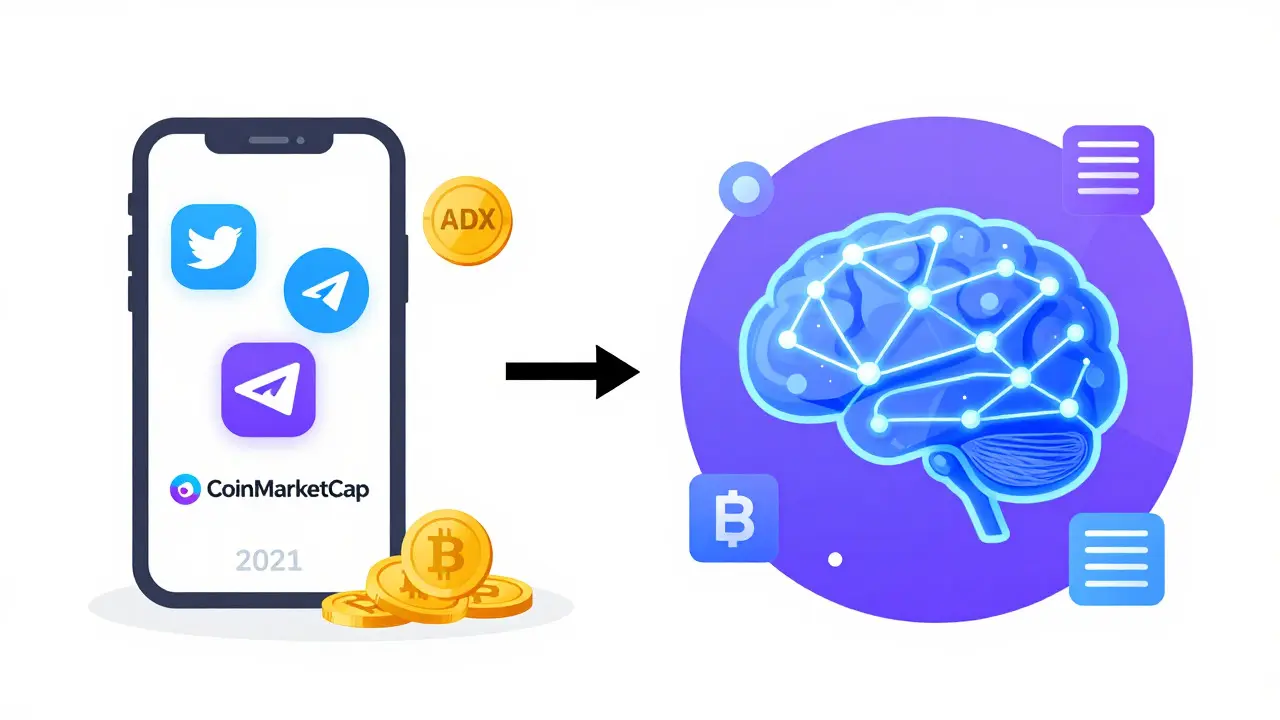
You might be searching for an AdEx Network airdrop right now. If you are expecting a massive token drop like we saw in the early days of crypto, you need to adjust your expectations. The big, simple "follow us on Twitter" airdrop that distributed thousands of tokens happened years ago. But that doesn't mean AdEx is dead or irrelevant. In fact, the project has evolved into something much more sophisticated. Today, AdEx isn't just about handing out free tokens; it’s about using artificial intelligence to help you find value in the Web3 space.
To understand where things stand today, we have to look back at how they started and then jump forward to their current AI-driven strategy. This guide breaks down the history of the ADX token distribution, explains what the network actually does, and details how their new product, AURA, changes the game for anyone interested in decentralized finance and airdrops.
The Historical Context: The 2021 CoinMarketCap Campaign
When people talk about the AdEx Network airdropa major token distribution event conducted by AdEx Network in partnership with CoinMarketCap, they are almost always referring to one specific campaign from August 2021. This was a significant moment for the community because it was one of the most documented distribution events in the network's history.
Here is exactly how that campaign worked:
- Total Tokens Distributed: 30,000 ADX tokens.
- Number of Winners: 300 participants were selected randomly.
- Reward per Winner: Each winner received up to 100 ADX tokens.
- Timeline: The campaign concluded on August 6, 2021, with winners announced shortly after. Prize distribution was completed by August 10, 2021.
Getting into this pool wasn't hard, but it required effort. You had to complete several social engagement tasks. Specifically, you needed to join the official AdEx Network Telegram chat, follow both @adex_network and @AdexWallet on Twitter, and add ADX to your watchlist on CoinMarketCap. Once you did those things, you entered a random draw. It wasn't a tiered system based on how many friends you invited; it was a flat chance for everyone who followed the rules.
If you missed this window, don't worry. That specific event is over. However, understanding it helps you see AdEx's philosophy: they prefer broad community participation over concentrating rewards among a few whales. This mindset carries over into their current operations.
What Is AdEx Network? Beyond the Hype
Before diving into the future, let's clarify what AdEx actually is. Founded in 2017, AdEx Networka blockchain-based advertisement exchange platform designed to decentralize digital advertising was built to fix the broken model of traditional online ads. In the old system, middlemen took huge cuts, data was opaque, and fraud was rampant. AdEx wanted to create a trustless environment where advertisers and publishers could deal directly.
The core technology behind this is called OUTPACE channelsoff-chain unidirectional payment channels used to manage financial transactions in advertising campaigns efficiently. These are essentially smart contracts that handle payments outside the main Ethereum blockchain to save gas fees and increase speed. When an advertiser creates a campaign, it maps to specific OUTPACE channels. Deposits are made upfront, and publishers get paid automatically based on real-time ad interactions. This ensures that money only moves when actual value is delivered.
As of February 2025, the native ADX tokenthe utility and governance token of the AdEx Network ecosystem has a total supply of 150 million units. About 144.04 million of these are already in circulation. This means the token is largely distributed, which reduces the pressure for massive future inflationary airdrops. Instead, the focus has shifted to utility and ecosystem growth.
The Pivot to DeFAI: Enter AURA
This is where things get interesting for 2026. AdEx didn't stay stuck in just advertising. They launched a product called AURAan AI agent framework by AdEx Network designed to simplify Web3 experiences through personalized market monitoring and strategy recommendations in 2025. AURA stands for Decentralized Finance + AI (DeFAI). Think of it as a personal assistant for your crypto wallet.
AURA monitors markets, analyzes your on-chain activity, and recommends tailored opportunities. It doesn't just tell you what to buy; it can potentially execute actions on your behalf based on your risk profile. For example, if you hold a lot of stablecoins, AURA might suggest a low-risk yield farming opportunity that aligns with your historical behavior.
In August 2025, AdEx released the AURA demo. Users could input their wallet addresses to receive personalized strategy recommendations. To celebrate, they minted 420 exclusive Early-Tester NFTs. These sold out in four days. Why do these NFTs matter? Because they unlock premium features, early access to new tools, and future reward opportunities within the AURA ecosystem. This is the modern equivalent of an airdrop qualification: prove your interest and engagement, and you get access to better tools and potential rewards.

How AURA Changes Airdrop Hunting
If you are here for airdrops, pay attention to this section. AURA has a specific feature designed for airdrop huntingthe practice of identifying and qualifying for upcoming cryptocurrency token distributions. Unlike the static lists you used to rely on, AURA uses AI to identify both upcoming and unclaimed airdrops.
Here is how it works:
- Data Integration: AURA integrates with the Bankless API to surface live airdrop events across multiple blockchains, including BNB Smart Chain and Mantle networks.
- Personalization: It looks at your wallet. If you use DeFi protocols often, it prioritizes airdrops from similar protocols. If you are a passive holder, it finds opportunities that require less active trading.
- Double-Dip Opportunities: This is the killer feature. AURA identifies strategies where you can earn immediate yield (like staking rewards) while simultaneously maximizing your eligibility for a future airdrop. It calculates the potential return on investment for your time and capital.
This turns airdrop hunting from a guessing game into a strategic process. You aren't just clicking buttons; you are optimizing your portfolio for maximum exposure to new projects.
Ecosystem Growth and Developer Incentives
AdEx knows that for AURA to succeed, it needs developers. In late 2025, they ran a month-long hackathon from September 22 to October 22. The prize pool was $12,000, distributed as follows:
| Place | Prize Amount | Focus Area |
|---|---|---|
| 1st Place | $5,000 | Real-world use cases for AURA framework |
| 2nd Place | $3,000 | SDK modules and integration tools |
| 3rd Place | $3,000 | Governance strategies and MCP connections |
| 4th Place | $1,000 | Innovative AI agent applications |
The goal wasn't just to give away money. It was to attract talent that would build on top of AURA. Developers created new SDK modules, governance strategies, and Model Context Protocol (MCP) connections. This expands the functionality of AURA beyond what the core team could build alone. As more developers integrate AURA into existing platforms, the network effect grows, making the tool more valuable for users like you.
Quality Control: Staking for Visibility
One problem with airdrops and recommendations is spam. How do you know if a project recommending itself via AURA is legit? AdEx solved this with a staking mechanism. Projects must stake ADX tokens to boost their visibility within AURA recommendations. But there's a catch: their offerings must align with user interests.
This acts as a security guarantee. If a malicious project tries to infiltrate the recommendation flow, they lose their staked tokens. It creates a value-based system rather than one driven purely by advertising budgets. For you, the user, this means the airdrops and opportunities surfaced by AURA are vetted to some degree. You are less likely to waste time on scams or low-quality projects.
Future Roadmap: What Comes Next?
AdEx has outlined a clear path for AURA's development:
- Version 1.0: A prototype DeFi strategy recommendation engine. This is where we are now, with basic monitoring and alerts.
- Version 2.0: Focus on real-time market insights. Faster data processing and more granular analysis of market trends.
- Version 3.0: A fully empowered personal AI agent. This version will have deeper autonomy, allowing for complex multi-step transactions executed entirely by the AI based on your predefined risk parameters.
They are also improving the backend reliability. Automated LLM testing logic and evaluation frameworks are being used to ensure the AI gives accurate advice. An admin panel is in development to track performance and refine prompts. This technical rigor suggests that AdEx is building for the long term, not just chasing short-term hype.
Summary: Is There Still Value in AdEx?
If you are looking for the easy 100 ADX token handout from 2021, it's gone. But if you are looking for a powerful tool to navigate the complex world of Web3 airdrops and DeFi, AdEx offers something unique. The combination of their established infrastructure (OUTPACE channels) and their new AI layer (AURA) positions them at the intersection of advertising, finance, and artificial intelligence.
The key takeaway is this: engagement still matters. Whether it was joining Telegram chats in 2021 or interacting with the AURA demo and holding Early-Tester NFTs in 2025, AdEx rewards active, genuine participation. By using AURA to optimize your strategy, you position yourself to capture value in future distributions, not just from AdEx, but from the broader ecosystem of projects it connects you with.
Is the AdEx Network 2021 airdrop still active?
No, the specific CoinMarketCap partnership airdrop that distributed 30,000 ADX tokens ended in August 2021. Winners were announced on August 6, 2021, and all prizes were distributed by August 10, 2021. However, AdEx continues to offer value through its AURA AI agent and ecosystem incentives.
What is AURA and how does it relate to airdrops?
AURA is an AI agent framework launched by AdEx Network in 2025. It simplifies Web3 experiences by monitoring markets and recommending opportunities. Crucially for airdrop hunters, AURA identifies upcoming and unclaimed airdrops across multiple chains (like BSC and Mantle) and helps users optimize their eligibility strategies through "double-dip" opportunities.
How can I qualify for future AdEx rewards?
While there is no single public airdrop campaign currently running, engagement with the AURA ecosystem is key. Holding Early-Tester NFTs unlocks premium features and future reward opportunities. Additionally, actively using the AURA demo and providing feedback contributes to your standing in the community, which may lead to future incentives.
What are OUTPACE channels?
OUTPACE channels are off-chain unidirectional payment channels used by AdEx Network to manage financial transactions in advertising campaigns. They allow for fast, low-cost settlements between advertisers and publishers without clogging the main Ethereum blockchain, ensuring real-time compensation based on ad interactions.
Does AdEx Network support blockchains other than Ethereum?
Yes. While originally built on Ethereum, AdEx has expanded its reach. Through the AURA product, the network now supports BNB Smart Chain (BSC) and Mantle networks. They are also researching Cosmos and Polkadot alternatives for future scalability improvements.
How does the ADX token staking mechanism work for projects?
Projects can stake ADX tokens to boost their visibility within AURA recommendations. This serves as a security guarantee; if a project is deemed low-quality or malicious, they risk losing their stake. This ensures that only high-value, relevant projects appear in user feeds, protecting the integrity of the recommendation system.
Leave a comments