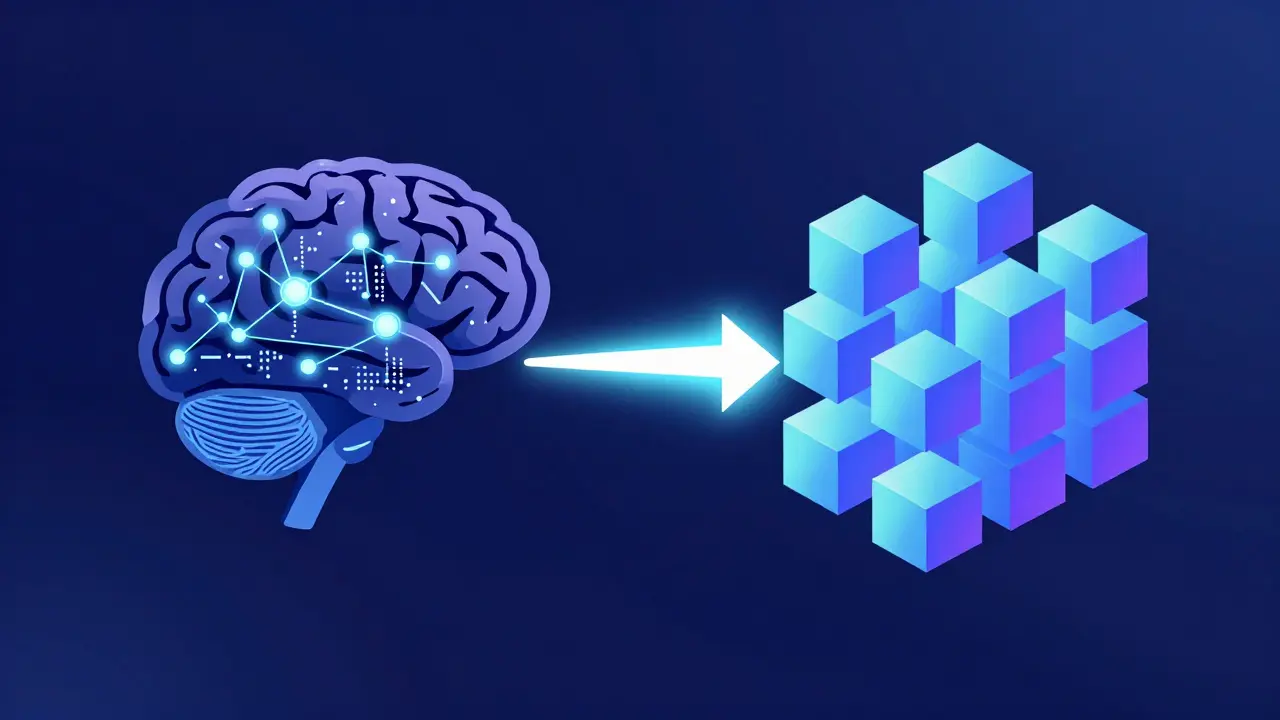
Imagine a world where a computer makes a high-stakes medical diagnosis or a financial decision, but you have no way of knowing why it made that choice. This is the "black box" problem of artificial intelligence. Now, imagine a digital ledger that is impossible to hack but is sometimes too slow or clunky to handle complex data. That is the traditional struggle of blockchain. When you put these two together, you get a system that isn't just smart, but also verifiable and transparent. AI and blockchain use cases are moving beyond theoretical whitepapers into real-world applications that are actually cutting data breaches and fraud.
The Synergy: Why Put AI and Blockchain Together?
At first glance, AI and blockchain seem like opposites. AI is all about pattern recognition and probabilistic guessing, while blockchain is about rigid, deterministic rules and absolute certainty. However, this is exactly why they work so well as a pair. Blockchain is a decentralized, immutable ledger system that records transactions across many computers. It provides the "truth"-a verifiable record of data that hasn't been tampered with.
On the other hand, Artificial Intelligence is the simulation of human intelligence processes by machines, especially computer systems. AI can analyze the massive amounts of data stored on a blockchain to find efficiencies that a human would never spot. According to data from Deep Data Insight, this partnership allows blockchain to solve AI's transparency problem, while AI fixes blockchain's operational lag. In fact, AI-optimized networks can process transactions up to 2.3x faster than standard versions by predicting traffic spikes and preventing congestion before it happens.
Real-World Use Cases Across Industries
We are seeing a massive shift in how sectors like finance and healthcare handle data. It isn't just about storing information; it's about making that information work for the business without risking a security leak.
Healthcare and Patient Diagnostics
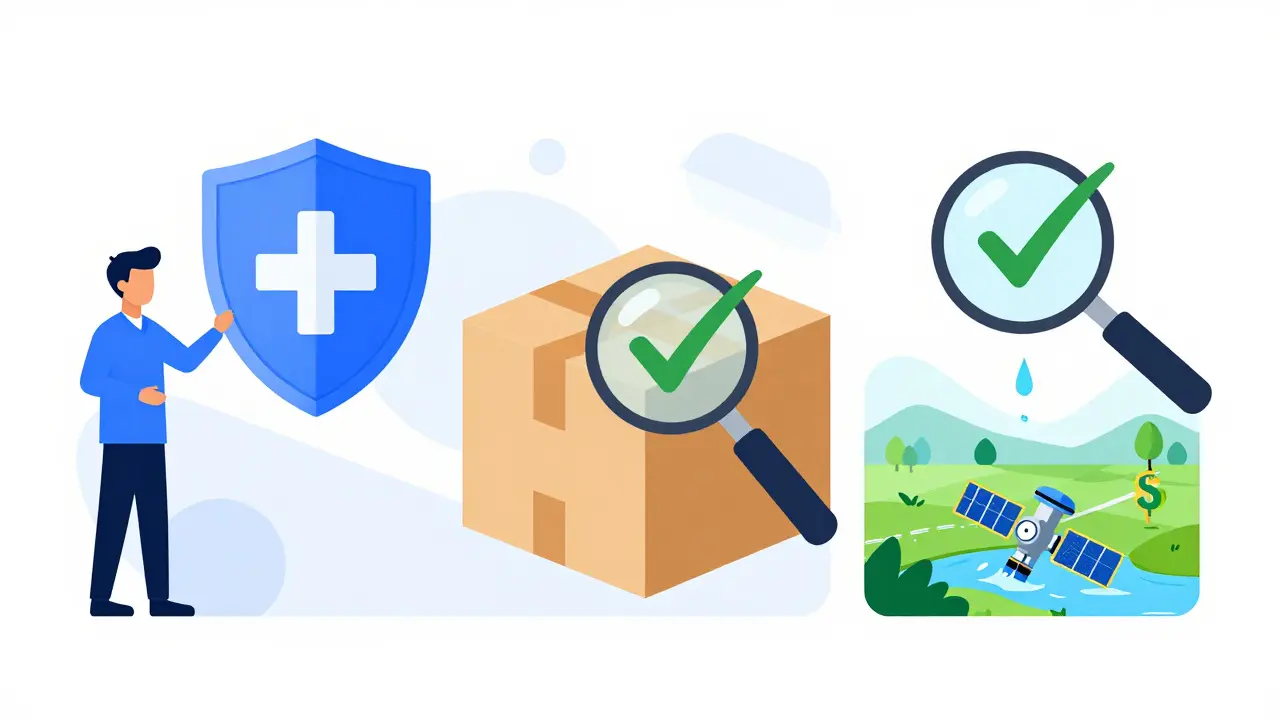
In healthcare, privacy is everything. By using a private blockchain like Hyperledger Fabric, which is a modular blockchain framework designed for enterprise use, hospitals can share patient data securely. AI then steps in to analyze this encrypted data to provide diagnostics. Because the blockchain records every time a piece of data is accessed or changed, there is a perfect audit trail, ensuring HIPAA compliance while allowing AI to save lives through faster pattern recognition in radiology or oncology.
Supply Chain Transparency and Fraud Prevention
Supply chains are notoriously messy. A shipment of organic produce might claim to be from a specific farm, but verifying that is usually a nightmare of paperwork. AI-blockchain integration changes this. AI can scan logistical data and sensor readings (like temperature and humidity) in real-time, while the blockchain ensures that these readings aren't faked. One supply chain manager reported on Reddit that they slashed fraud incidents by 52% just by implementing this kind of verification for their shipment documentation.
Financial Services and Smart Contracts
Traditional contracts are slow and rely on lawyers. Smart Contracts are self-executing contracts with the terms of the agreement directly written into code. When you add AI to these contracts, they become "intelligent." Instead of a simple "if this, then that" logic, AI-enhanced contracts can handle complex decision-making. For example, an insurance smart contract could use AI to analyze satellite imagery of a flood and automatically trigger a payout to a farmer without needing a manual claim process. On the Ethereum platform, these AI-powered optimizations have been shown to reduce transaction gas fees by up to 37%.
| Feature | Standalone AI | Standalone Blockchain | Integrated AI + Blockchain |
|---|---|---|---|
| Data Integrity | Low (vulnerable to manipulation) | High (immutable) | Very High (Verifiable & Analyzed) |
| Processing Speed | Very Fast | Slow (consensus lag) | Optimized (AI predicts traffic) |
| Transparency | Black Box (Opaque) | Transparent (Public) | Explainable AI via Audit Trails |
| Security | Moderate | High | Highest (Anomaly detection + Ledger) |
The Technical Hurdle: Implementation Challenges
It sounds like a magic bullet, but getting these two to talk to each other is incredibly difficult. You can't just plug an AI model into a blockchain and expect it to work. Most AI models require massive amounts of computational power-think NVIDIA GPUs-while blockchains are designed to distribute work across many smaller nodes. This creates a bottleneck.
To solve this, developers use hybrid architectures. They perform the "heavy lifting" of AI processing off-chain and then record the final result and the verification proof on the blockchain. This keeps the network from crashing under the weight of the AI's calculations. Even with these workarounds, the cost is high. Enterprise solutions often range from $250,000 to $500,000 just to get the initial integration running. Furthermore, the learning curve is steep; it typically takes a development team 6 to 9 months to become proficient in both Solidity (for Ethereum) and frameworks like TensorFlow or PyTorch.
The Future: zkML and Autonomous Organizations
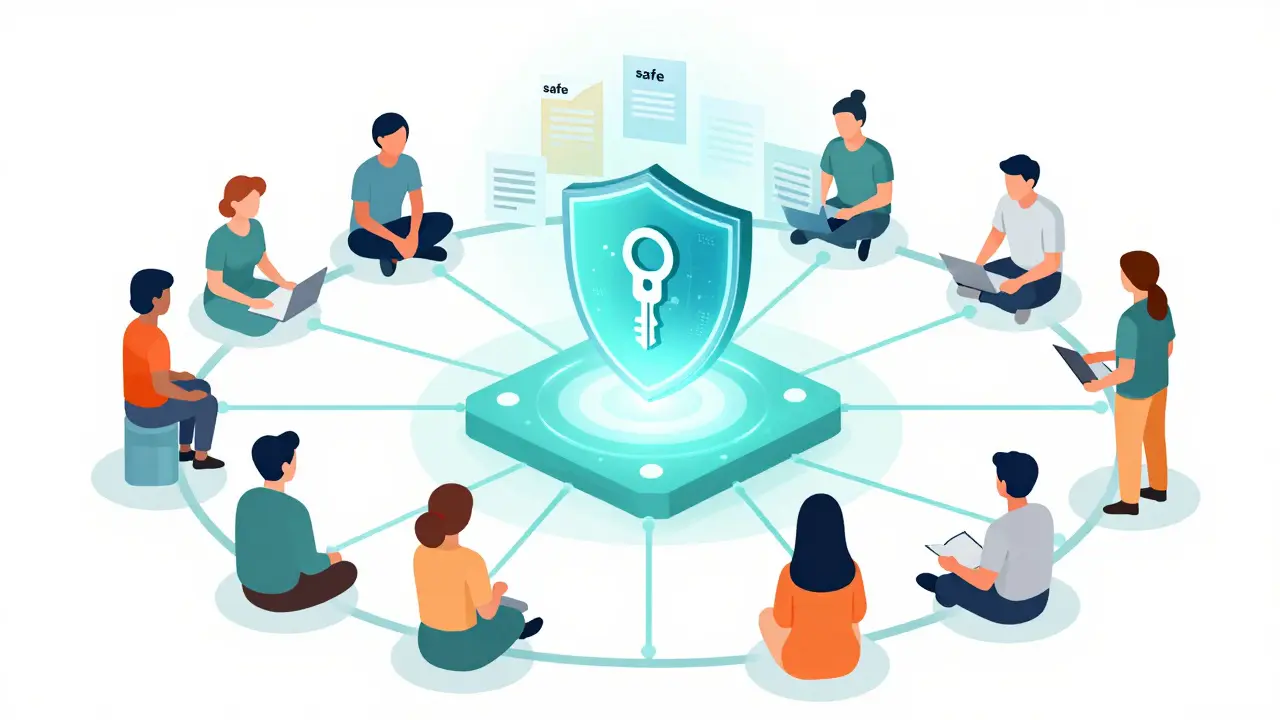
Where is this headed? The next big frontier is Zero-Knowledge Machine Learning (zkML). Essentially, this allows a system to prove that an AI model reached a specific conclusion without actually revealing the proprietary model or the sensitive data used to get there. It's the ultimate balance of privacy and proof.
We are also seeing this move into DAOs (Decentralized Autonomous Organizations). Instead of a thousand people voting on every tiny detail, AI can scan through proposals, flag potential scams, and summarize the pros and cons for the community. PwC predicts that by 2030, the total economic value unlocked by this integration could hit $15.7 trillion. It's a massive number, but it depends on whether we can solve the energy consumption issues associated with blockchain and the high cost of entry for smaller startups.
Does AI make blockchain faster?
Yes, in specific ways. While blockchain's inherent consensus mechanism can be slow, AI can be used to predict network traffic and optimize how transactions are routed. This reduces congestion and, in some enterprise implementations, has increased transaction speeds by 2.3x.
Which is better for AI integration: Ethereum or Hyperledger?
It depends on your goal. Ethereum is the leader for public-facing decentralized apps (dApps) because of its massive ecosystem and flexibility. Hyperledger Fabric is better for private enterprise use, such as healthcare or banking, where strict privacy and compliance are more important than public transparency.
How does blockchain solve the AI "black box" problem?
The "black box" problem refers to the inability to see how an AI reached a decision. By recording the data inputs, the model version, and the decision process on an immutable blockchain, we create a permanent audit trail. This makes AI decisions transparent and verifiable for regulators and users.
Is it expensive to implement AI and blockchain together?
Yes, it can be. Enterprise-level integrations typically cost between $250,000 and $500,000. This is due to the need for specialized talent proficient in both blockchain development and machine learning, as well as the high cost of the computational hardware required to run AI models.
What is zkML and why does it matter?
Zero-Knowledge Machine Learning (zkML) allows a party to prove that an AI computation was performed correctly without revealing the underlying data or the model's weights. This is crucial for protecting intellectual property while still providing proof of a correct AI output.
Next Steps for Implementation
If you are looking to move from theory to practice, the path depends on your role:
- For Business Leaders: Start with a narrow use case. Don't try to "blockchain everything." Focus on a specific pain point, like supply chain fraud or audit compliance, and determine if you need a public (Ethereum) or private (Hyperledger) network.
- For Developers: Focus on hybrid architectures. Learn how to move heavy AI computations off-chain and use the blockchain only for state updates and verification. Mastering both Solidity and a ML framework like PyTorch will put you in a very small, high-demand talent pool.
- For Security Officers: Be wary of new attack vectors. Integrating two complex systems creates new gaps. Focus on implementing specialized security protocols that monitor the bridge between the AI model and the blockchain ledger.
Kathleen Bergin
22 04 26 / 14:00 PMEveryone knows blockchain is basically just a fancy database. Adding AI to it is just a way to make it sound cooler for investors.
Miranda Jamieson
23 04 26 / 11:44 AMThis is a joke. Imagine thinking a 'hybrid architecture' is some revolutionary fix when the energy cost alone is a moral failure. You're all just chasing buzzwords while the planet burns. Utterly delusional.
Greg Reynolds
25 04 26 / 11:11 AMActually, the claim that AI fixes blockchain's operational lag is fundamentally flawed. AI doesn't magically speed up the consensus mechanism; it optimizes routing. There's a huge difference between throughput and latency, and this post completely ignores that distinction.
Alex Wan
25 04 26 / 21:33 PMI must say, the prospect of zkML is truly breathtaking! Imagine a world where privasy and proof coexist in perfect harmony! It is a monumental leap for humanity's digitial infrastructure, though the implementashun will surely be a herculean task for the devs involved!!
Larry Yang
26 04 26 / 05:43 AMTypical mid-tier analysis. It's all very surface-level. The cost of entry is obviously high because the talent pool is shallow, not because the tech is magically 'difficult.' Also, calling it a 'magic bullet' is just lazy writing.
Paige Raulerson
26 04 26 / 12:50 PMI've seen better explanations of this in a whitepaper from 2017. The phrasing here is so pedestrian. It's almost offensive that we're still explaining what a smart contract is in the year of our lord 2024. Please, let's move past the basics.
Guy Bianco
27 04 26 / 13:25 PMI believe we should all be supportive of the developers trying to bridge these two complex worlds. It is a challenging journey, but the potential for healthcare improvement is significant. 🌟 Keep learning, everyone! 📚
praveen subbiah
27 04 26 / 15:23 PMINDIA IS LEADING THE CHARGE IN TECH AND WE WILL DOMINATE THIS AI-BLOCKCHAIN REVOLUTION! 🇮🇳 THE TALENT IN BENGALURU IS UNMATCHED AND WE WILL SHOW THE WORLD HOW IT IS REALLY DONE! ABSOLUTELY MAGNIFICENT!
Benjamin Forg
27 04 26 / 19:06 PMwho really thinks these ledgers are secure
its just a way for the elites to track every single move we make under the guise of efficiency
they want the ai to predict our behavior before we even think it
wake up people
Robert Mosolygo
29 04 26 / 02:39 AMThe mention of PwC's 15.7 trillion dollar prediction is a classic example of corporate fabrication. They use these astronomical numbers to distract from the fact that most DAOs are just glorified group chats with a treasury that gets drained by a single exploit. The 'black box' isn't the AI, it's the venture capital firms pumping these dead-end projects.
Sarah Fisher
29 04 26 / 04:17 AMIt's interesting to think about the ethical shift here. We're moving from trusting humans to trusting a verifiable mathematical proof. There's a certain poetic justice in using a rigid system like blockchain to constrain the unpredictability of AI. It feels like we're building a digital skeleton for a ghost.
Sara Ellis
30 04 26 / 15:43 PMso basically its just robots and codes talking to each other lol
sounds like a sci fi movie but i guess it works
jill huyo-a
1 05 26 / 02:29 AMI love how the supply chain example shows a real reduction in fraud. It's so helpful to see actual numbers like 52% instead of just vague promises. I think we could all learn a lot from focusing on those specific pain points first.
Findlay Duncan Lyon
2 05 26 / 12:19 PMQuite a comprehensive overview. Very useful for the uninitiated. Cheers!