
Remember when getting free money meant just signing up for a newsletter? In the world of Airdrop Farming, it’s more like doing your homework, attending class, and participating in group projects before you get paid. It is not passive income; it is active labor with a high potential payoff. If you are sitting on the sidelines wondering how some people managed to score thousands of dollars from protocols like Arbitrum or Uniswap without investing their life savings, this guide breaks down exactly how they did it-and what has changed by late 2026.
The core idea is simple: new blockchain projects need users. To attract them, they distribute free tokens, known as airdrops, to early adopters who interact with their networks. But here is the catch-projects have gotten smarter. They no longer reward everyone who clicks a button. They reward genuine usage. Your job as a farmer is to prove you are a real human using the network, not a bot trying to game the system. This article covers the practical steps, the risks of multi-wallet strategies, and how to stay safe while hunting for those elusive tokens.
What Exactly Is Airdrop Farming?
Airdrop Farming is the strategic practice of interacting with decentralized applications (dApps) and blockchain networks to qualify for future token distributions. Unlike traditional investing, where you buy an asset hoping its price goes up, here you earn assets by providing value to the protocol through activity. Think of it like credit card points. You don’t pay extra for the points; you earn them by spending money you were going to spend anyway. In crypto, you "spend" gas fees and time to earn tokens.
The appeal lies in the low barrier to entry. You do not need $10,000 to start. Often, you only need enough ETH or SOL to cover transaction fees. However, the definition of "activity" has evolved. Early farming was easy: bridge funds, swap once, done. Today, projects use sophisticated data analysis to filter out Sybil attackers-users creating multiple fake wallets to claim rewards multiple times. Successful farming now requires consistent, organic-looking behavior over weeks or months.
The Two Main Strategies: Quality vs. Quantity
When you start farming, you face a critical decision: do you focus on one wallet with deep engagement, or spread yourself thin across many wallets? Each approach has distinct pros and cons.
| Feature | Single-Wallet Strategy | Multi-Wallet Strategy |
|---|---|---|
| Complexity | Low. Easy to track and manage. | High. Requires careful bookkeeping. |
| Sybil Risk | Very Low. Looks like a natural user. | High. Prone to detection if patterns match. |
| Potential Reward | Moderate. One allocation per project. | High. Multiple allocations possible. |
| Gas Cost | Lower. Fewer transactions overall. | Higher. Fees multiply by wallet count. |
| Time Commitment | Consistent daily/weekly actions. | Intensive setup and maintenance. |
For most beginners in 2026, the single-wallet strategy is safer. Projects are increasingly using AI-driven tools to detect clusters of wallets that perform identical actions at similar times. If you send 0.1 ETH from Wallet A to Wallet B, then swap it on Uniswap, and do the exact same thing with Wallets C through Z within five minutes, algorithms flag you. The single-wallet approach forces you to engage deeply with a few protocols, which often results in higher-tier rewards because you look like a loyal community member rather than a mercenary.
Essential On-Chain Actions That Qualify
Not all interactions are created equal. To maximize your chances, you need to understand which activities projects value most. Here are the key behaviors that typically trigger eligibility:
- Bridging Assets: Moving funds from Ethereum Mainnet to Layer-2 networks like Arbitrum, Optimism, or Base is a primary qualifier. It proves you are using the specific ecosystem the project lives on.
- Swapping Tokens: Use decentralized exchanges (DEXs) like Uniswap, Jupiter, or Raydium. Don’t just swap once; vary the pairs and amounts. Small, irregular swaps look more organic than large, round numbers.
- Providing Liquidity: Locking your tokens in a liquidity pool earns you fees and often boosts your airdrop score. Even small amounts ($50-$100) can count significantly if held for a period.
- Staking: Many protocols require you to stake their native token or a related asset. This locks up capital but signals long-term commitment.
- Testnet Participation: Before a mainnet launch, projects invite users to test their software. These tasks are usually free (using testnet tokens) but highly valued because they help developers find bugs.
Notice the pattern? Consistency beats intensity. Doing one swap every week for three months looks better than doing ten swaps in one day. Projects want users who stick around after the hype dies down.
Navigating the Anti-Sybil Landscape
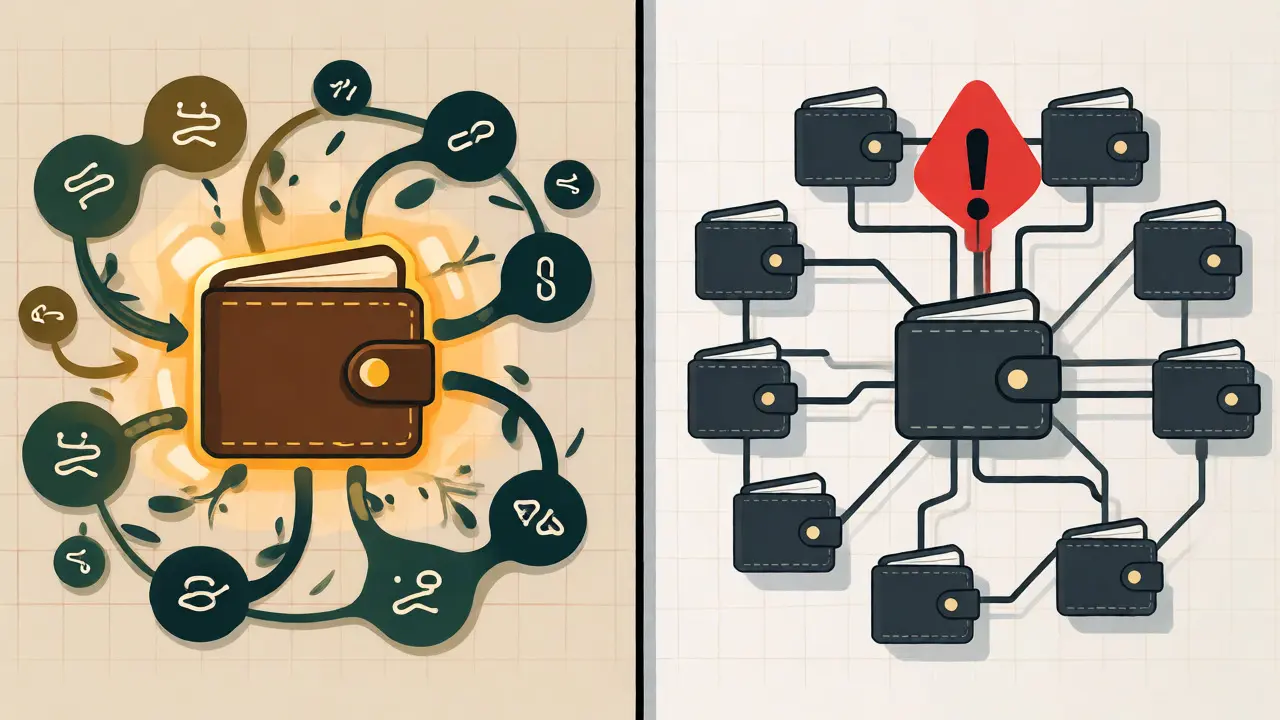
In 2024 and 2025, we saw major controversies where projects retroactively disqualified thousands of wallets. Why? Because they looked too perfect. To avoid being labeled a Sybil attacker, you need to introduce randomness into your behavior.
First, diversify your funding sources. Do not fund all your wallets from a single exchange account. Use different deposit addresses or even different exchanges if possible. Second, vary your timing. If you check your wallets every morning at 9 AM, change it up. Third, interact with different dApps. If you only use one DEX, try another. Explore NFT marketplaces, lending platforms, and gaming apps within the same ecosystem.
Some projects now use proof-of-humanity checks. They might ask you to connect a social media account or complete a captcha challenge that requires cognitive effort. Keep your digital footprint clean. If you are farming seriously, consider separating your personal wallet from your farming wallet. This protects your main holdings from smart contract risks associated with newer, untested protocols.
Security Risks and Scams
The biggest danger in airdrop farming isn’t missing out-it’s losing everything. Scammers know that farmers are eager for free tokens. They create fake websites that look exactly like official project dashboards. When you connect your wallet to sign a message to "claim" your airdrop, you might accidentally approve a malicious contract that drains your funds.
Always verify URLs. Bookmark the official site of the project. Never click links sent via direct messages on Telegram or Discord unless you initiated the conversation. And never, ever share your seed phrase. Legitimate airdrops never ask for your private keys. If a site asks you to enter your seed phrase to receive tokens, close the tab immediately.
Another subtle risk is tax implications. In New Zealand, and many other jurisdictions, receiving airdropped tokens may be considered taxable income at the fair market value when received. Later, when you sell them, you might owe tax on any gain above that initial value. Keep detailed records of dates and values. Using portfolio tracking tools can save you headaches during tax season.
Tools and Resources for Farmers
You cannot farm effectively without good information. The space moves fast, and opportunities disappear in days. Here is how to stay ahead:
- Airdrop Aggregators: Websites like Airdrop.io and CoinMarketCap’s airdrop section list upcoming and ongoing campaigns. Use these as a starting point, but always cross-reference with official channels.
- Twitter (X) Lists: Create a private list of trusted analysts and founders. Avoid following influencers who shill every new coin. Look for accounts that provide data-driven insights.
- Telegram and Discord: Join the communities of protocols you are using. Developers often announce snapshots or special tasks in these chats first. Be careful of spam bots; mute channels until you need them.
- Wallet Trackers: Tools like DeBank or Zapper help you monitor your total net worth and activity history across chains. They also highlight which protocols you haven’t touched yet.
Don’t rely solely on aggregators. Sometimes, the best airdrops come from obscure projects that haven’t been listed yet. Read documentation. If a project has a clear roadmap and active development, it’s worth investigating even if it’s not trending on Twitter.
The Future of Airdrops: What to Expect in Late 2026
The era of "free money for clicking buttons" is over. We are entering a phase where airdrops are tied to reputation and loyalty scores. Protocols are launching their own points systems, similar to airline miles. You earn points for volume, consistency, and unique contributions. These points convert to tokens at launch.
This shift favors quality over quantity. Instead of farming 50 protocols superficially, you might focus on 3-5 ecosystems where you become a power user. For example, if you are heavily involved in the Solana ecosystem, you might qualify for multiple airdrops from new Solana-based L2s or DeFi apps without needing to bridge back to Ethereum.
Regulatory clarity is also improving. As governments finalize rules on digital assets, the uncertainty around taxation will decrease, making farming more predictable. However, compliance requirements may increase. You might need to undergo KYC (Know Your Customer) verification for larger airdrops, which adds friction but reduces fraud.
Ultimately, airdrop farming remains one of the best ways to bootstrap a crypto portfolio. It requires patience, discipline, and a willingness to learn. Treat it like a part-time job. Set aside time each week to review your activities, check for new opportunities, and execute necessary transactions. The returns won’t come overnight, but when they do, they can be substantial.
How much money do I need to start airdrop farming?
You can start with as little as $50-$100 to cover gas fees on Layer-2 networks. The amount depends on which chains you target. Ethereum mainnet is expensive, so most farmers prefer L2s like Arbitrum, Optimism, or Base, where fees are cents instead of dollars. Having a small buffer is wise to handle unexpected spikes in network congestion.
Are airdrops guaranteed income?
No. Airdrops are speculative. Many projects never launch a token, and others distribute tokens that lose value quickly. There is no guarantee of payment. You are investing time and gas fees in hopes of a reward. Diversifying across multiple projects helps mitigate the risk of betting on a single failing protocol.
Can I use multiple wallets for one airdrop?
Yes, but it is risky. Modern anti-Sybil algorithms detect linked wallets based on funding sources, transaction timing, and behavioral patterns. If you use multiple wallets, ensure they have distinct histories and funding paths. Otherwise, you might get disqualified entirely, losing the reward for all wallets.
Do I need to pay taxes on airdropped tokens?
In most countries, including New Zealand and the US, yes. Receiving airdropped tokens is often treated as ordinary income at their market value upon receipt. Selling them later triggers capital gains tax. Consult a local tax professional, as rules vary by jurisdiction and change frequently.
What is a Sybil attack in crypto?
A Sybil attack occurs when one person creates multiple fake identities (wallets) to manipulate a system. In airdrops, farmers use Sybil attacks to claim multiple rewards. Projects fight this by analyzing on-chain data to identify coordinated behavior among seemingly separate wallets.
Muyiwa Osibolu
5 10 26 / 05:11 AMOne must exercise extreme caution when engaging with these so-called "decentralized" networks. The data analysis mentioned in the article is not merely for filtering bots; it is a surveillance mechanism designed by Western entities to track African economic activity and suppress our sovereignty. If you do not protect your digital identity with rigorous paranoia, you will find that your assets are frozen without recourse. We cannot allow foreign protocols to dictate the terms of our financial freedom.
Daniel Tremblay
5 10 26 / 18:53 PMthis is honestly such a scam 🤡
people act like they deserve free money just for clicking buttons but they forget about the gas fees and the time wasted
it's morally bankrupt to farm airdrops while others can't afford basic necessities 😤📉
Ayodele Emmanuel
7 10 26 / 03:04 AMLET'S GOOOO! 🔥 This is exactly what we need right now! Stop waiting for handouts and start building those wallets! You gotta be consistent, you gotta be loud, and you gotta believe in the process! Every swap is a step toward financial independence! Don't let anyone tell you it's too late because the train is still leaving the station! Get up and grind! 💪🚀💰
Michael DeGroat
8 10 26 / 22:32 PMhonestly this whole thing is overrated
i tried farming last year and spent more on eth gas than i made back lol
americans always think they can outsmart the system but its rigged anyway
just buy btc and go to sleep like normal people
Ashley Cooke
10 10 26 / 06:28 AMThis is a solid overview for beginners. I would add that tracking your cost basis from day one is crucial for tax reporting later. Many new farmers neglect this until they have thousands of transactions to sort through. Also, consider using separate browser profiles for different wallets to keep your session data clean and reduce accidental cross-contamination of IP addresses.
sai charan
11 10 26 / 22:03 PMThe author clearly hasn't analyzed the on-chain data properly.
Single wallet strategies yield diminishing returns compared to sophisticated multi-wallet clusters if executed correctly with distinct funding sources.
The claim that AI detection is perfect is false; many sybil farms still extract significant value.
It's lazy journalism to suggest quality beats quantity without providing empirical evidence from recent L2 launches.
Gary Bryant
12 10 26 / 21:05 PMhey can u share ur exact bridge routes??
i mean i know u said vary them but like which specific routers are u using for arbitrum vs optimism?
also how much sol are u keeping in reserve for jupiter swaps??
im trying to optimize my liquidity provision scores rn and need specifics
Riya Adhikari
12 10 26 / 22:20 PMWait, did you actually check if these projects require KYC? Because half of them suddenly ask for ID verification at the end and ruin everything for us non-US citizens. It’s so annoying when you do all the work and then get blocked because of your passport. Have you guys had issues with Indian passports specifically?
Rohit Singh
14 10 26 / 02:45 AMoh absolutely... nothing says "free money" like spending hours reading docs and paying fees just to maybe get $50 worth of tokens that dump 90% in an hour... truly inspiring stuff here... really motivates me to quit my job and become a full-time clicker... 🙄
Sandy Garg
14 10 26 / 08:42 AMI have been observing the shift towards reputation-based systems with great interest. It raises philosophical questions about what constitutes value in a digital society. Are we merely training algorithms to recognize human behavior, or are we genuinely contributing to network security? The distinction between active labor and passive observation seems increasingly blurred in these ecosystems. It is a fascinating, albeit exhausting, evolution of economic participation.
Nicoletta Milanesio
15 10 26 / 18:13 PMLove the focus on organic behavior! 🌱 It feels way less stressful than trying to game the system. I’ve found that just using the apps I actually enjoy naturally leads to better rewards anyway. Plus, no risk of getting flagged! ✨😌
Angel Bee
15 10 26 / 21:43 PMGreat tips!! I started last month and already feel like im learning so much even if i havent cashed out yet 😅 Keep going everyone!! Its totally worth the effort in the long run i promise!! 🙌💸