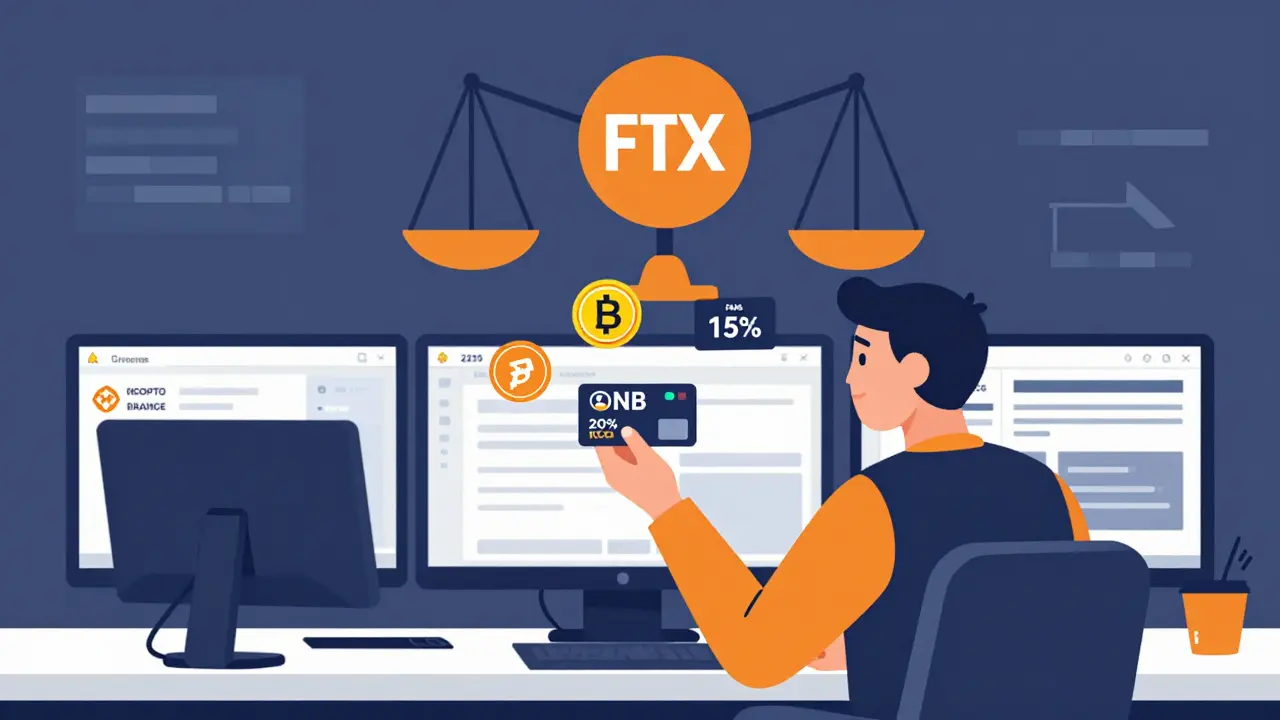
Exchange tokens like Binance’s BNB, OKX’s OKB, and KuCoin’s KCS have become a major part of the crypto landscape. But are they actually good investments? Or are they just flashy perks for traders who already use these platforms? The answer isn’t simple. It depends on how you trade, what you believe about the exchange’s future, and how much risk you’re willing to carry.
What Makes an Exchange Token Worth Anything?
At its core, an exchange token isn’t just another cryptocurrency. It’s a tool built into a specific platform - one that gives you real benefits if you use that exchange regularly. The biggest perk? Trading fee discounts. On Binance, holding BNB can cut your trading fees by up to 25%. On KuCoin, KCS holders get 10% off. That adds up fast if you’re trading daily. For someone who pays $500 in fees a month, that’s $125 saved. That’s not a bonus - that’s a direct return on your token holdings.
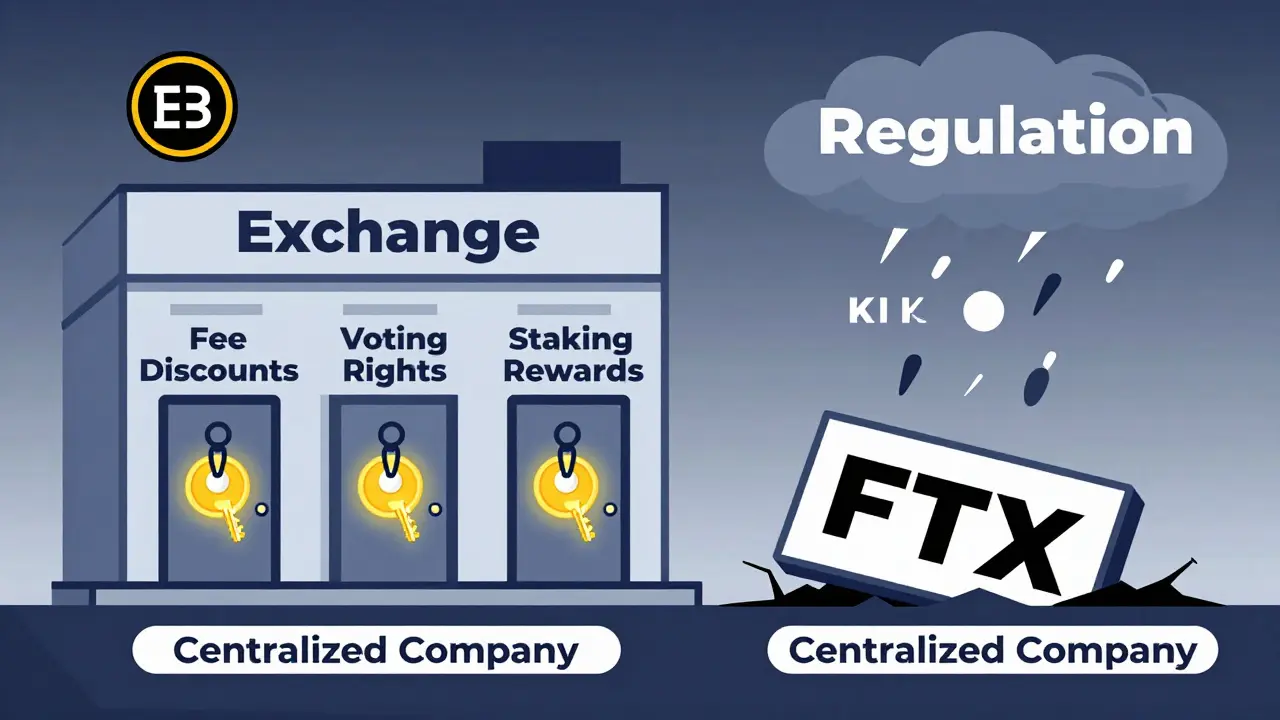
But it’s not just about fees. Many exchange tokens give you voting rights. Want to know if the exchange will launch a new futures market? Or change how staking rewards are distributed? If you hold enough of the token, you get to vote. It’s not democracy - it’s weighted by how much you own. The more tokens you hold, the more say you have. This isn’t just symbolic. In 2023, Uniswap’s UNI holders voted to change how fee revenue flows back to liquidity providers - a move that shifted millions in earnings.
Then there’s staking. Exchanges like OKX and Crypto.com let you lock up your tokens to earn more tokens. OKB stakers might earn 5-10% APY. That’s not guaranteed - rates change - but it’s real income. And some exchanges burn tokens. Binance burns BNB quarterly, destroying a portion of supply based on trading volume. Since 2019, over 20% of the total BNB supply has been burned. Less supply + steady demand = upward pressure on price. That’s not magic. It’s math.
The Dark Side: Why These Tokens Can Crash
Here’s the catch: every benefit depends on the exchange staying alive and thriving. If the exchange gets hacked, banned, or loses users, the token loses its value. Remember FTX? Its token, FTT, dropped from $20 to near zero in days. Not because of market conditions - because the company collapsed. That’s not volatility. That’s total destruction.
Regulation is another ticking clock. In 2025, the EU’s MiCA rules forced several exchanges to halt token sales or restructure their models. Binance, under pressure from the U.S. SEC, pulled BNB from its U.S. platform. That didn’t kill BNB - but it showed how fragile the link is between a token and its parent company’s legal standing. If regulators decide exchange tokens are securities, exchanges might have to stop offering benefits. No more discounts. No more voting. No more staking rewards. Just a coin with no use.
And then there’s competition. There are over 20 major exchanges with their own tokens. If Coinbase or Kraken - two giants that don’t have tokens - start offering lower fees or better features, what happens to BNB or OKB? They’re not essential. They’re optional. And in crypto, optional means replaceable.
Decentralized vs. Centralized: Big Difference
Not all exchange tokens are the same. BNB and OKB come from centralized companies - private firms with CEOs, balance sheets, and legal teams. Their value depends on how well those companies run. Uniswap’s UNI is different. It’s governed by smart contracts. No CEO. No headquarters. No corporate structure. The protocol runs on code. That makes UNI more resistant to shutdowns - but also harder to predict. If a new DEX with better tech pops up, UNI could get left behind. There’s no marketing team, no salesforce, no customer service. Just code. And code can be outperformed.
That’s why DEX tokens like UNI or PancakeSwap’s CAKE have wilder price swings. Their value isn’t tied to a business - it’s tied to adoption. If more people use Uniswap, UNI gains. If traders switch to a rival, UNI falls. No middleman. No safety net.
Who Should Own Exchange Tokens?
If you’re an active trader on one exchange - say, you do 10 trades a week on Binance - then holding BNB makes sense. The fee savings alone can cover the cost of buying the token. It’s like having a loyalty card that also increases in value.
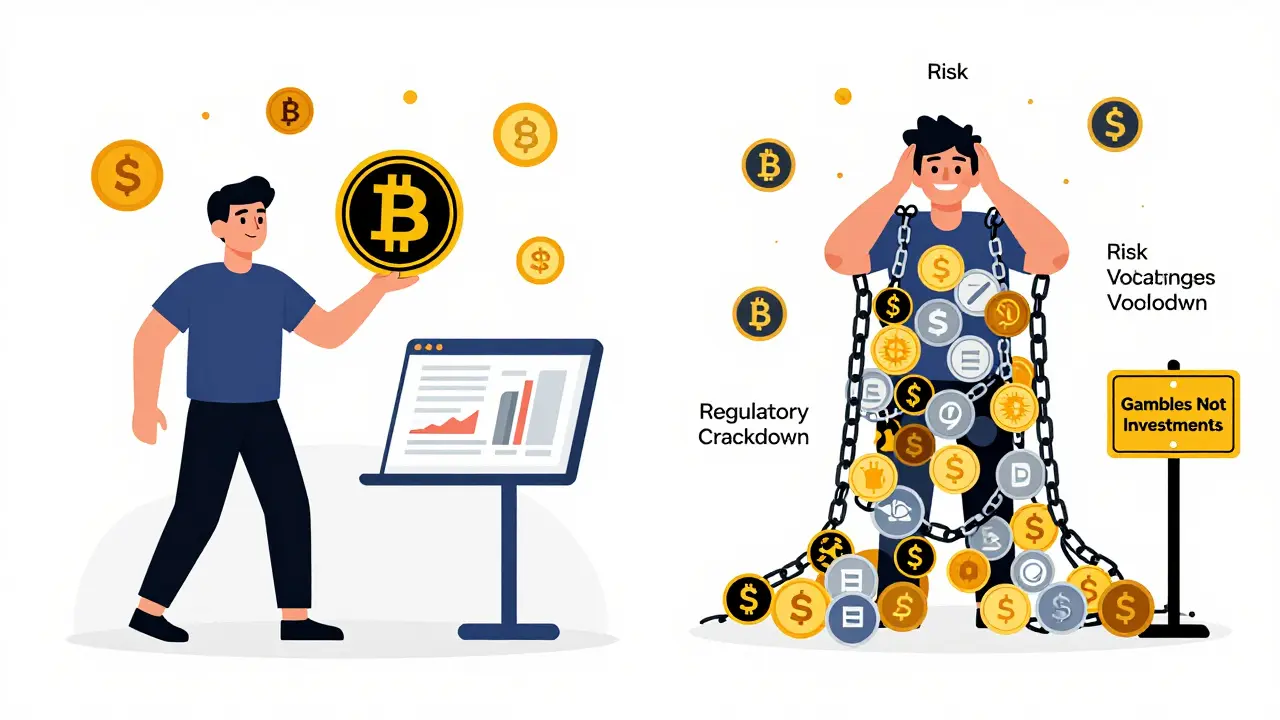
If you’re a long-term investor looking for stable growth? Skip it. Exchange tokens are too tied to unpredictable business outcomes. You’re not buying a stock. You’re buying a bet on a company’s survival. And crypto companies have a 70% failure rate within five years, according to CoinGecko’s 2024 report.
And if you’re chasing hype? Don’t. Tokens like BitMEX’s BMEX or Huobi’s HT have seen 90%+ drops after their exchanges faced legal trouble. These aren’t investments. They’re gambles.
What to Look For Before Buying
Not all exchange tokens are created equal. Here’s what actually matters:
- Fee discount rate - Is it 5% or 25%? Bigger discounts mean more value.
- Token burn frequency - Does the exchange burn tokens quarterly? Monthly? Irregular burns mean less predictability.
- Staking APY - Is it sustainable? If it’s 30% APY, it’s probably a trap.
- Regulatory status - Is the exchange licensed in the U.S., EU, or Singapore? Avoid ones under investigation.
- Trading volume - If the exchange’s daily volume is falling, the token’s value likely will too.
- Token supply - Is the max supply capped? Or can more be minted anytime? Unlimited supply = no scarcity.
BNB checks most of these boxes. OKB does too. HT? Not anymore. KCS? Still decent. CRO? Volatile, but has real utility. UNI? Different beast - no company backing, pure protocol reliance.
Bottom Line: Not an Investment - a Tool
Exchange tokens aren’t stocks. They’re not bonds. They’re not even like Bitcoin. They’re utility tools with speculative side effects. The best use for them is if you’re already using the exchange. Buy the token to save on fees, earn staking rewards, and maybe get early access to new listings. Don’t buy it because you think it’ll go up 10x.
If the exchange dies, the token dies. That’s the risk. And it’s real.
For most people, the smart move isn’t to chase exchange tokens as investments. It’s to hold them only if you’re actively using the platform - and even then, keep your position small. Treat it like a discount card, not a retirement fund.
Are exchange tokens safer than other cryptocurrencies?
No. Exchange tokens are often riskier than Bitcoin or Ethereum because they’re tied to a single company’s survival. If Binance gets shut down, BNB loses its utility and value. Bitcoin has no single point of failure. Exchange tokens are like betting on a single casino - if the casino goes bankrupt, your chips are worthless.
Can I lose my money just by holding an exchange token?
Yes. If the exchange faces regulatory action, a hack, or a sudden drop in trading volume, the token’s price can crash overnight. In 2022, HT (Huobi Token) dropped 80% in two weeks after the exchange was fined by regulators. Holding doesn’t protect you - it just delays the loss.
Do all major exchanges have their own tokens?
No. Coinbase and Kraken are two of the largest exchanges in the world - and neither has a native token. That’s significant. It means token issuance isn’t necessary for success. If you’re looking for a safe, regulated exchange, you don’t need a token at all.
Is staking exchange tokens a good way to earn passive income?
It can be - but only if you trust the exchange. Staking OKB or BNB can give you 5-8% APY, which is decent. But if the exchange shuts down, you lose both your staked tokens and the rewards. Compare that to staking Ethereum or Cardano, where the protocol is decentralized and less vulnerable to corporate failure.
Should I buy exchange tokens if I trade on multiple platforms?
Probably not. If you use 3-4 exchanges, buying tokens for each one spreads your capital thin and increases your risk. You’ll pay for fees on each platform anyway. It’s smarter to stick with the one you use most and hold only that token - if at all.
If you’re trading regularly on one platform, an exchange token can save you money. But if you’re holding it for growth? You’re not investing - you’re gambling on a company that could vanish tomorrow. The market doesn’t care about your hopes. It cares about volume, regulation, and survival. And those are unpredictable.
Leave a comments