You probably saw a notification about a "BABY" token airdrop and felt that familiar mix of excitement and confusion. Is it from BabySwap? Is it related to the MVBIII event on Binance Smart Chain (BSC)? Or is this something else entirely? If you are holding assets in your wallet and wondering if you missed out on free money, you are not alone. The crypto space loves reusing names, and right now, two distinct projects-BabySwap and Babylon-are causing a massive mix-up because they both use the ticker symbol BABY.
Here is the short answer: BabySwap did not run a dedicated token airdrop for its MVBIII win. The hype you are seeing likely stems from Babylon’s separate, large-scale BABY token launch. These are two different entities with different goals, different tech stacks, and different reward mechanisms. Let’s break down exactly what happened, who gets what, and why you need to be careful before connecting your wallet to any "claim" site.
The Core Misunderstanding: Two Projects, One Ticker
The root of the confusion is simple but dangerous. Both projects operate within or adjacent to the BNB Chain ecosystem, and both have used the name or ticker associated with "Baby." However, their functions are worlds apart. BabySwap is a decentralized exchange (DEX) and NFT platform built specifically for emerging projects on BSC. It focuses on automated market making (AMM) and has a strong community around its Non-Fungible Baby (NFB) NFTs.
Babylon, on the other hand, is a Bitcoin-secured network infrastructure project. It isn't just another DEX; it aims to bring Bitcoin's security to other blockchains. Babylon recently launched its own native token, also called BABY, which triggered a massive airdrop campaign involving millions of tokens and hundreds of thousands of participants.
When users see "BABY airdrop," they often assume it relates to the platform they already know-BabySwap. But the MVBIII award BabySwap won was about performance recognition, not a direct token distribution to users. Meanwhile, Babylon’s airdrop was a structured, multi-phase distribution tied to specific staking and participation metrics.
BabySwap and the MVBIII Award: What Did You Actually Get?
BabySwap participated in BNB Chain’s Most Valuable Builders III (MVBIII) program. This is a prestigious initiative where BNB Chain allocates $100 million in ecosystem funds to support top-performing developers and applications. In August 2023, BabySwap won the "Monthly Stars" award. This was a huge deal-it meant the team was recognized for having high daily active users (DAU) and significant trading volume, ranking 5th among all BSC applications at the time.
But here is the critical detail many miss: winning an MVBIII award does not automatically mean every user got free tokens. The award primarily benefits the development team through ecosystem support, visibility, and potential future incentives. While BabySwap has its own native BABY token used for governance and fee discounts, there wasn’t a sudden, one-time "MVBIII Airdrop" sent to every wallet that interacted with the platform during that period.
| Feature | BabySwap | Babylon |
|---|---|---|
| Primary Function | DeFi DEX & NFT Platform | Bitcoin-Secured Network Infrastructure |
| Native Token | BABY (Used for fees/governance) | BABY (Native asset of Babylon chain) |
| MVBIII Relevance | Won Monthly Stars Award (Aug 2023) | Not a participant in MVBIII |
| Airdrop Status | No dedicated MVBIII user airdrop | Major Genesis Airdrop (Feb-Apr 2025) |
| Key Metric | $60M Avg Daily Trading Volume | 250k+ Estimated Eligible Participants |
Babylon’s BABY Airdrop: The Real Event
If you were expecting tokens, you were likely looking at Babylon’s timeline. Babylon Foundation launched a major airdrop campaign that generated significant buzz in early 2025. Unlike BabySwap’s organic growth, Babylon’s rollout was highly structured. Registration opened in late February 2025 and closed in March, with the token listing scheduled for April 10, 2025, on major exchanges like Binance and Bitget.
The scale was impressive. The genesis supply was set at 10 billion BABY tokens, with at least 600 million (6%) allocated directly to the core airdrop. When including bonus staking rewards, this number expanded to roughly 900 million tokens. This wasn't just a small thank-you gift; it was a strategic move to bootstrap a new blockchain network.
Eligibility was strict. To claim these tokens, you generally needed to fit into one of five categories:
- BTC Stakers: Users who staked Bitcoin during Phase-1 up to block height 875,087.
- Pioneer Pass Holders: Owners of specific NFTs designated as early access passes.
- Finality Providers: Developers who registered on GitHub and delegated stake during Phase 1.
- Open Source Contributors: Those who contributed code to Babylon’s public repositories.
- Social Contributors: Active community members engaged before February 18, 2025.
This complexity explains why so many people checked their wallets. If you had been active in the Bitcoin staking scene or held specific NFTs, you might have been eligible for Babylon, even if you never touched BabySwap.
Why the Confusion Persists: Technical and Market Overlap
You might wonder, "If they are so different, why do I keep hearing them together?" Part of it is the BNB Chain connection. BabySwap is a native BSC app. Babylon, while focused on Bitcoin, has strong ties to the broader crypto ecosystem where BSC plays a huge role. Additionally, both projects target similar demographics: retail investors looking for yield, early access, and community-driven value.
Market data shows BabySwap holding about 1.8% of the BSC DEX volume share, ranking behind giants like PancakeSwap. Its strength lies in supporting smaller, emerging projects that can't compete on major exchanges yet. Babylon, meanwhile, is carving out a niche in the "Bitcoin Layer 2" or "Bitcoin Security" sector, competing with projects like Stacks and Rootstock.
Experts note that while BabySwap faces challenges in retaining users after initial hype cycles (with reports suggesting a decline in engagement post-MVBIII), Babylon faces a different hurdle: inflation. With an 8% annual inflation rate in its first year, analysts warn that downward price pressure could offset the gains from the airdrop. So, even if you claimed BABY from Babylon, holding it long-term requires a different strategy than simply farming yields on BabySwap.
How to Verify Your Claims Safely
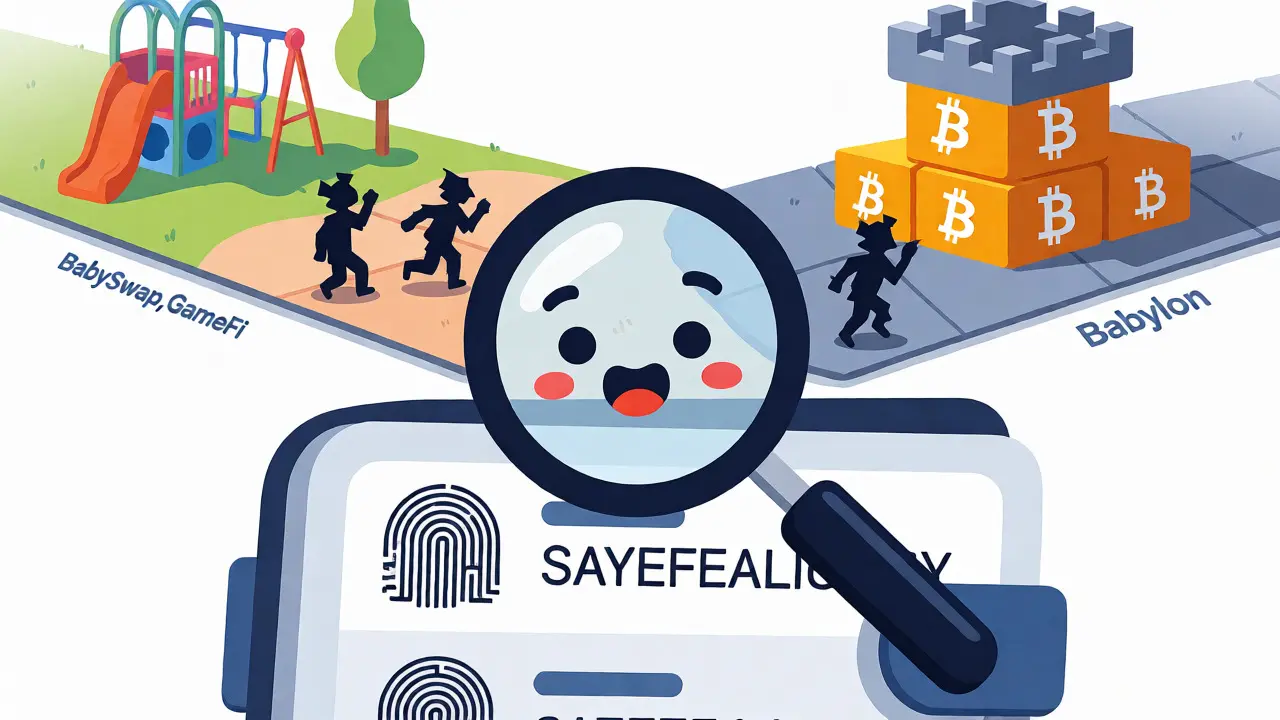
Scammers love confusion. Because people are unsure whether they should be claiming from BabySwap or Babylon, phishing sites pop up quickly. Here is how to stay safe:
- Check the Contract Address: Never trust a link in social media DMs. Go to CoinGecko or CoinMarketCap and search for "Babylon" or "BabySwap." Copy the official contract address and paste it into your wallet when adding the token.
- Visit Official Portals Only: For Babylon, use the official Babylon Foundation portal. For BabySwap, use their official dApp interface. Do not connect your main wallet to random "airdrop checker" tools unless you are sure they are verified by the team.
- Understand the Mechanism: Remember, BabySwap rewards usually come from staking pools or liquidity provision over time, not a one-off drop. Babylon rewards were a snapshot-based distribution based on past actions (like BTC staking).
If you are a BabySwap user, check your dashboard for any ongoing farm rewards or NFB staking APRs. That is where your actual earnings live. If you are a Babylon participant, ensure you completed the registration process before the deadline. Missing the window means missing the tokens, regardless of how much you traded on BSC.
Future Outlook: Where Do They Go From Here?
Both projects are at interesting crossroads. BabySwap is trying to pivot toward GameFi and avatar profiles to differentiate itself from generic DEXs. Their vision of "DeFi for everyone" relies on lowering barriers to entry, which is a tough sell when established players dominate liquidity.
Babylon is betting big on Bitcoin’s resurgence. If they can successfully integrate more Bitcoin capital into their secured network, the demand for BABY tokens could grow. However, the immediate post-airdrop period is always volatile. Many recipients sell immediately to lock in profits, creating selling pressure.
For you, the investor, the lesson is clear: Don't let ticker symbols fool you. Always dig into the underlying technology and the specific eligibility criteria of an airdrop. Was it for being a builder? A staker? An early adopter? Knowing the "why" behind the token helps you decide whether to hold, sell, or ignore it.
Did BabySwap give an airdrop for winning MVBIII?
No, BabySwap did not distribute a dedicated user airdrop specifically for winning the MVBIII Monthly Stars award. The award recognized the platform's performance and provided ecosystem support to the team. User rewards typically come from standard staking and liquidity mining programs on the platform.
Is the BABY token from BabySwap the same as Babylon?
No, they are different tokens despite sharing the same ticker symbol. BabySwap’s BABY is a utility token for its DEX on BNB Chain. Babylon’s BABY is the native asset of the Babylon Bitcoin-secured network. They have different smart contracts, supply caps, and use cases.
Who was eligible for the Babylon BABY airdrop?
Eligibility included BTC stakers from Phase-1, Pioneer Pass NFT holders, Finality providers, open-source contributors, and active social media participants who engaged before February 18, 2025. Each category had specific verification requirements.
What is the current status of BabySwap’s community?
As of early 2025, BabySwap maintains an active community with approximately 15,000 members on Telegram. Engagement has stabilized after peaking during the MVBIII program in late 2022, with users focusing on NFB staking and new GameFi features.
Should I worry about inflation with Babylon’s BABY token?
Yes, analysts have noted concerns about Babylon’s 8% annual inflation rate in the first year. This can create downward price pressure, meaning the real value of your airdrop may fluctuate significantly depending on adoption rates and market conditions.
Leave a comments