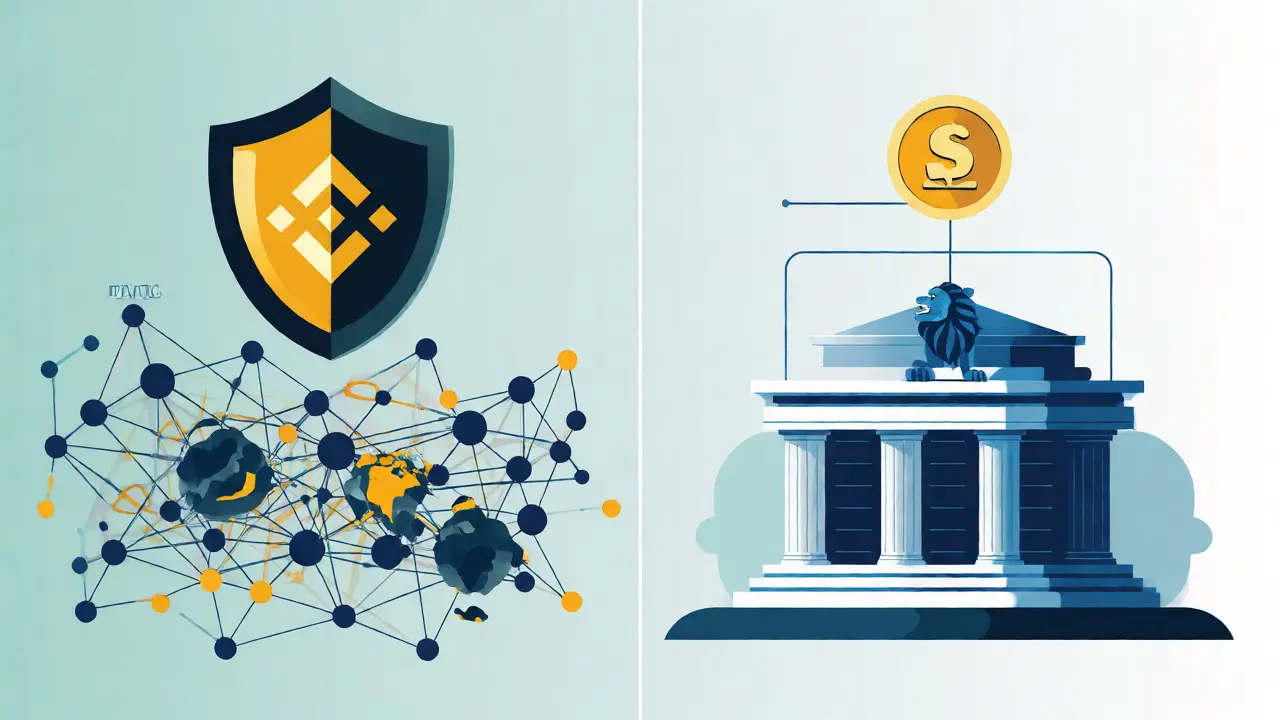
So, you're looking to trade crypto in Singapore. You've probably heard the name Binance is the world's largest cryptocurrency exchange by trading volume, serving over 255 million users globally as of 2025. It’s everywhere. But here’s the catch: just because it’s huge doesn’t mean it’s automatically the best fit for your local needs, especially when the Monetary Authority of Singapore (MAS) has strict rules about who can offer digital payment token services.
If you’re a Singaporean trader, you’re likely torn between Binance’s massive selection and lower fees versus the regulatory comfort of locally licensed platforms like Gemini or Coinhako. This review cuts through the noise. We’ll look at whether Binance actually works well for SGD transactions, if it’s safe under Singapore law, and how it stacks up against competitors that have specifically tailored their services for our little red dot.
The Regulatory Elephant in the Room
Let’s address the biggest concern first: licensing. In Singapore, the MAS requires exchanges to hold a Digital Payment Token (DPT) service provider license. This isn’t just paperwork; it’s about consumer protection, anti-money laundering checks, and ensuring funds are segregated properly.
Binance operates globally through various entities. While it has offices in places like Malta and the Cayman Islands, its status in Singapore is nuanced. Unlike Gemini, which explicitly supports SGD trading pairs and maintains clear MAS compliance credentials, Binance often functions through its global entity rather than a dedicated, fully licensed Singapore subsidiary for all features. This creates a gray area. For most retail traders, this hasn’t stopped access, but it means you aren’t getting the same level of direct regulatory recourse as you would with a platform like Coinhako, which is built from the ground up for Singaporean regulations.
Does this matter? If you’re holding small amounts for casual investing, probably not much. But if you’re moving large sums or using complex derivatives, understanding that you might be trading on an offshore platform-even if it feels local-is crucial.
Fees and Trading Costs: Where Binance Wins
Here is where Binance shines. The fee structure is significantly more attractive for active traders compared to many local competitors.
| Feature | Binance | Gemini | Coinhako |
|---|---|---|---|
| Spot Trading Fee | 0.1% (can drop to 0.075% with BNB) | ~1.49% for fiat deposits | Variable, often higher for small trades |
| Crypto Selection | 500+ coins, 1,300+ pairs | ~70-80 major coins | ~100 curated coins |
| SGD Support | Via P2P or third-party ramps | Direct SGD bank transfers | Direct SGD integration |
| Leverage | Up to 150x (global limits apply) | No leverage for retail | No leverage |
| MAS Licensing Status | Global entity, regulatory ambiguity | Licensed DPT Provider | Licensed DPT Provider |
As you can see, if you care about cost, Binance is hard to beat. The base spot trading fee starts at 0.1%, and if you hold some Binance Coin (BNB), you can knock another 25% off that. Compare this to Gemini’s ~1.49% fee for fiat-funded transactions, and the difference adds up fast. If you trade $10,000 a month, you’re saving nearly $150 just on fees alone.
However, there’s a hidden cost: getting money in and out. Since Binance doesn’t always support direct SGD bank transfers via PayNow or FAST in the same seamless way local apps do, you might end up using Binance P2P, a peer-to-peer marketplace where you buy crypto directly from other users using SGD. This is secure and widely used, but it introduces slight price spreads and requires you to manage bank transfers manually.

Asset Variety and Advanced Tools
If you want to trade obscure altcoins, Binance is your playground. With over 500 cryptocurrencies listed, you’ll find tokens months before they appear on regulated local exchanges like Luno or Coinbase. This early access can be profitable, but it also comes with risk-many of these smaller caps are volatile and less scrutinized.
For the tech-savvy, Binance offers a suite of tools that local exchanges simply don’t match:
- Binance Earn: Flexible savings products that let you earn yield on idle crypto. Rates fluctuate, but they’re generally competitive.
- Launchpool & Launchpad: Access to new token sales. This is a major draw for investors looking to get in on the ground floor of new projects.
- NFT Marketplace: Integrated buying and selling of non-fungible tokens without leaving the app.
- Derivatives: Futures trading with high leverage options. Note that MAS has tightened rules on retail leverage, so check current local restrictions before going all-in on 100x bets.
The interface, however, is a double-edged sword. It’s powerful but cluttered. If you’re a beginner in Singapore trying to buy Bitcoin for the first time, the sheer number of buttons, charts, and order types can be overwhelming. Local apps like Coinhako prioritize simplicity; Binance prioritizes depth.
Security and User Experience
Is Binance safe? Globally, yes. They maintain a substantial insurance fund (SAFU) to cover losses in case of extreme breaches. Two-factor authentication (2FA) is mandatory, and biometric login options work smoothly on mobile.
But user experience in Singapore has mixed reviews. Customer support delays are a common complaint globally, and during market volatility, tickets can pile up. Since Binance doesn’t have a dedicated Singaporean support team in every instance, resolving specific local banking issues (like a delayed SGD transfer confirmation) can take longer than with a local competitor that has phone support right here.
Also, keep in mind the KYC (Know Your Customer) process. You’ll need to upload your NRIC and proof of address. It’s standard, but if you’ve recently moved or changed addresses, verification can sometimes lag, temporarily restricting withdrawals.
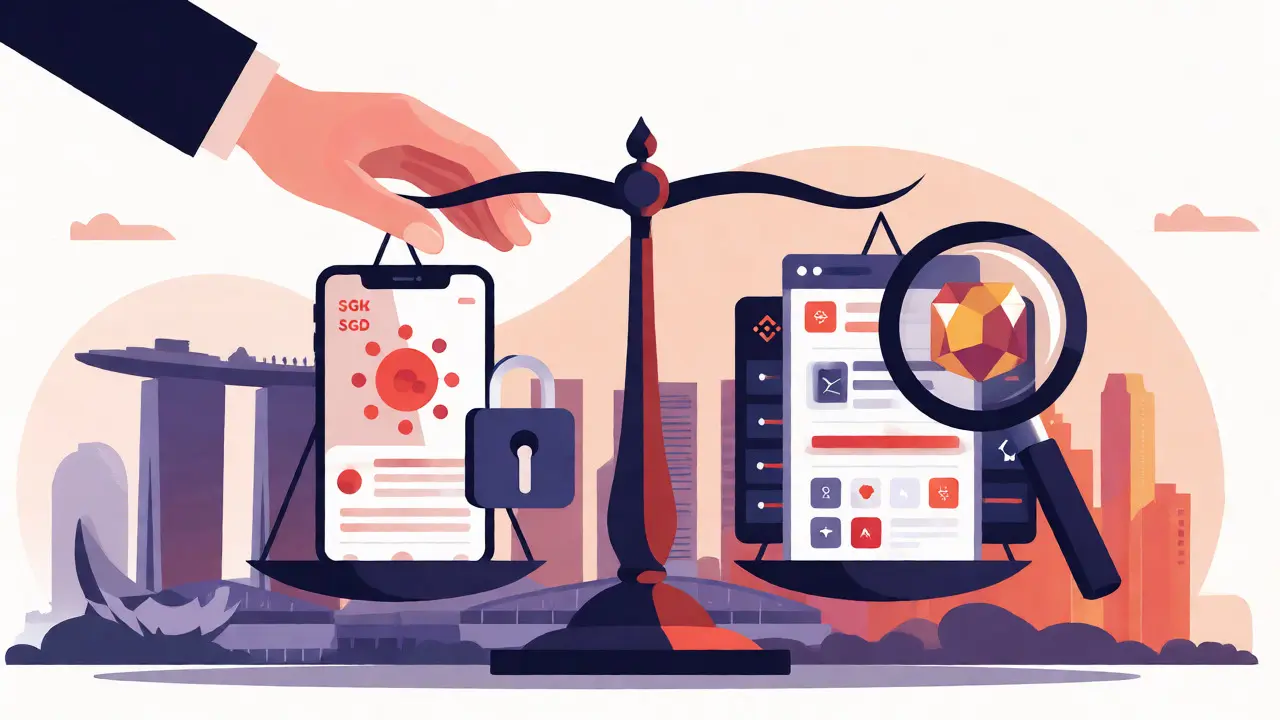
Who Should Use Binance in Singapore?
Let’s break it down by persona:
The Active Trader: If you trade daily, use limit orders, and want low fees, Binance is the obvious choice. The liquidity is deep, meaning you won’t suffer from slippage on large orders. The variety of trading pairs allows for sophisticated strategies that aren’t possible on simpler platforms.
The Long-Term HODLer: If you just want to buy BTC or ETH and hold for years, Binance is fine, but you might prefer the peace of mind of a MAS-licensed platform. The hassle of P2P transfers might outweigh the fee savings if you only trade once a quarter.
The Beginner: Start with a local app like Coinhako or Luno. Once you understand the basics of wallets and market orders, move to Binance if you feel limited by their coin selection or fees. Don’t start your crypto journey on Binance unless you enjoy learning complex interfaces.
Final Verdict
Binance remains a powerhouse in Singapore, not because it’s the most compliant, but because it’s the most capable. It offers unmatched asset diversity and industry-leading fees. However, the regulatory ambiguity and steeper learning curve mean it’s not a one-size-fits-all solution.
My advice? Keep a hybrid approach. Use a locally licensed exchange like Gemini or Coinhako for your core holdings and easy SGD entry/exit. Use Binance for altcoin hunting, earning yield, or executing complex trades. This way, you balance safety and convenience with opportunity and cost-efficiency.
Is Binance legally allowed in Singapore?
Yes, Singaporeans can use Binance. However, it operates largely through its global entity rather than a dedicated MAS-licensed subsidiary for all services. While not illegal for users to trade, it lacks the full regulatory clarity of locally licensed providers like Gemini or Coinhako. Always check the latest MAS guidelines regarding offshore exchanges.
Can I deposit SGD directly into Binance?
Direct SGD bank transfers are not always available or consistent. Most Singapore users rely on Binance P2P to buy USDT or other stablecoins using SGD via PayNow or bank transfer. Alternatively, you can use credit/debit cards, though fees are higher. Some third-party services also facilitate SGD deposits.
What are the main disadvantages of Binance for Singapore users?
The primary downsides are the lack of direct SGD banking integration (requiring P2P or card purchases), a complex user interface that can overwhelm beginners, and potential customer support delays due to its global nature. Additionally, regulatory ambiguity compared to MAS-licensed competitors can be a concern for conservative investors.
How does Binance compare to Gemini for Singapore residents?
Gemini is fully MAS-licensed and supports direct SGD trading, making it safer and easier for beginners. However, Gemini has fewer coins (around 70-80) and higher fees (~1.49%). Binance offers 500+ coins and 0.1% fees but requires navigating P2P markets and managing offshore regulatory risks. Choose Gemini for simplicity and safety; choose Binance for variety and low costs.
Is my money safe on Binance?
Binance uses cold storage for most assets and has a Secure Asset Fund for Users (SAFU) to reimburse users in case of hacks. While no exchange is immune to risk, Binance’s security track record is strong. However, unlike MAS-licensed exchanges, your funds may not be held in segregated trust accounts under Singapore law, so consider withdrawing long-term holdings to a personal hardware wallet.
Leave a comments