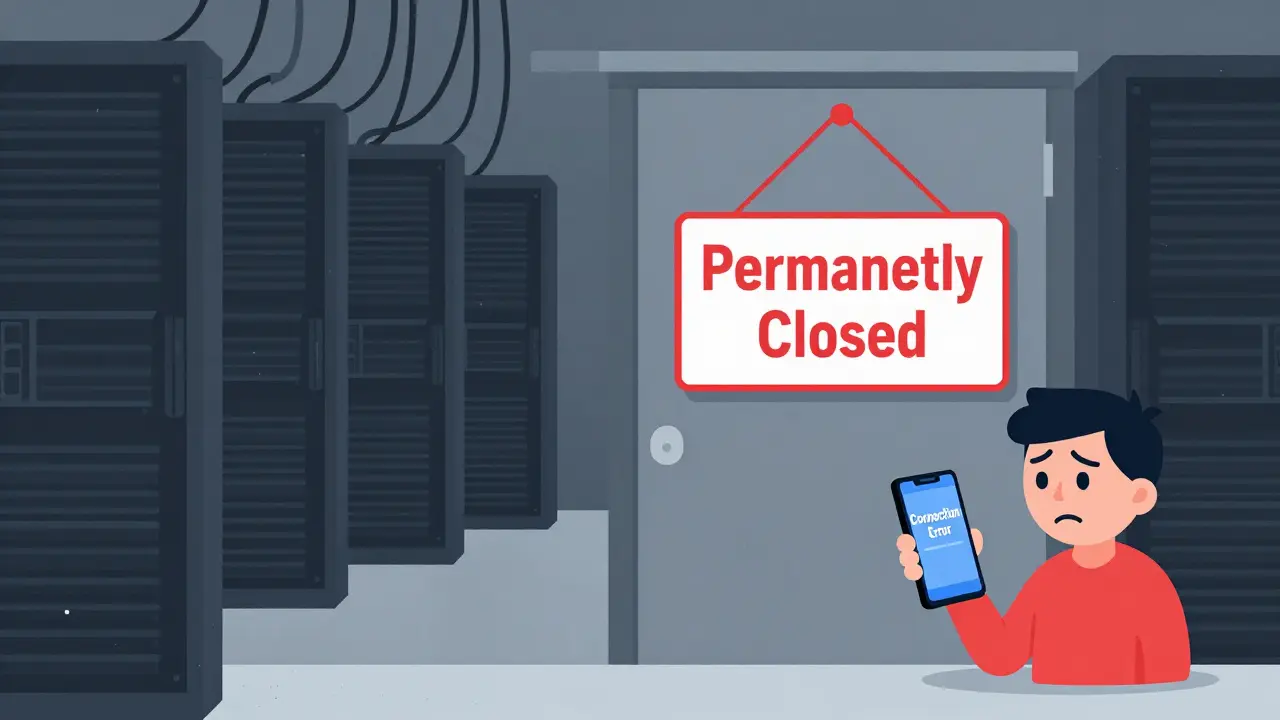
Have you heard about Bitsdaq and wondered if it is a safe place to park your crypto? Maybe you found an old forum post praising its low fees or saw a lingering price prediction for the BQQQ token. Before you try to log in or deposit funds, there is one critical fact you need to know right now. Bitsdaq is no longer operating.
If you are looking for an active trading platform, this guide will save you from wasting time on a dead link. However, if you are curious about what happened to this once-promising Asian-focused exchange, or if you hold leftover tokens and want to understand the history, we have broken down exactly how Bitsdaq worked, why it failed, and what lessons it leaves for traders today.
The Current Status of Bitsdaq: Permanently Closed
Let’s get straight to the point. As of mid-2025, Bitsdaq has permanently ceased operations. Major industry trackers like Cryptowisser have moved the platform to their "Exchange Graveyard," marking it as definitively dead. The website is non-functional, and there is no evidence of any ongoing support or liquidity.
This closure is significant because Bitsdaq launched with high ambitions. It aimed to be a pan-Asian digital asset hub with over 300 trading pairs. For years, it operated quietly, but smaller exchanges often struggle against the massive liquidity and regulatory pressure faced by giants like Binance or Coinbase. If you see current "price predictions" for BQQQ online, ignore them. They reflect negligible trading volume on obscure secondary markets, not genuine market activity. There is no functional order book left to trade against.
How Bitsdaq Worked During Its Active Years
To understand why people were interested in Bitsdaq before it closed, we need to look at its unique selling points. Unlike many modern exchanges that push aggressive marketing, Bitsdaq focused on technical architecture and specific fee structures.
Bitsdaq was a cryptocurrency exchange designed primarily for Asian markets, featuring a flat fee structure and deep integration with partner platforms. Here is what made it stand out when it was live:
- Flat Fee Structure: Most exchanges use a maker-taker model where fees change based on whether you add liquidity (maker) or remove it (taker). Bitsdaq charged a flat 0.10% on all trades. This was significantly lower than the industry average of 0.25% at the time, making it attractive for high-frequency traders.
- Crypto-Only Deposits: You could not deposit fiat currency (like USD or NZD) directly. You had to buy crypto elsewhere and transfer it to Bitsdaq. This created a barrier for beginners but simplified compliance for the exchange.
- The Bittrex Partnership: This was the crown jewel of their tech stack. Bitsdaq partnered with Bittrex, a well-known US-based exchange. They shared an order book system. This meant that when you traded on Bitsdaq, you were tapping into the liquidity pool of Bittrex. In theory, this solved the biggest problem small exchanges face: thin liquidity and wide spreads.
Security Measures and Tokenomics
Security was a major talking point for Bitsdaq. In an era where hacks are common, they promoted a robust infrastructure. They used wallet key fragmentation, splitting private keys across multiple encrypted locations with three layers of encryption. They also employed CloudFlare for DDoS protection and strong defenses against XSS and CSRF attacks.
The exchange ran on its native utility token, BQQQ (also referred to as BQ). Let’s break down the tokenomics that drove the platform’s economy:
| Metric | Value | Context |
|---|---|---|
| Total Market Cap | $55 Million USD | Established via IEO |
| IEO Size | $6.5 Million USD | 11.8% of total supply sold |
| Token Utility | Fee Discounts & Services | Used for internal platform services |
| Private Investor Allocation | >95% of Sold Tokens | Raised concerns about centralization |
CryptoPotato, a review site, gave the whitepaper an 8.3/10 score, noting it was financially clear but technically shallow. However, they scored the Token Sale Terms lower (7.8/10) because private investors got nearly 50% discounts and controlled the vast majority of sold tokens. This concentration of power is a red flag for long-term decentralization.
Why Bitsdaq Failed: A Post-Mortem Analysis
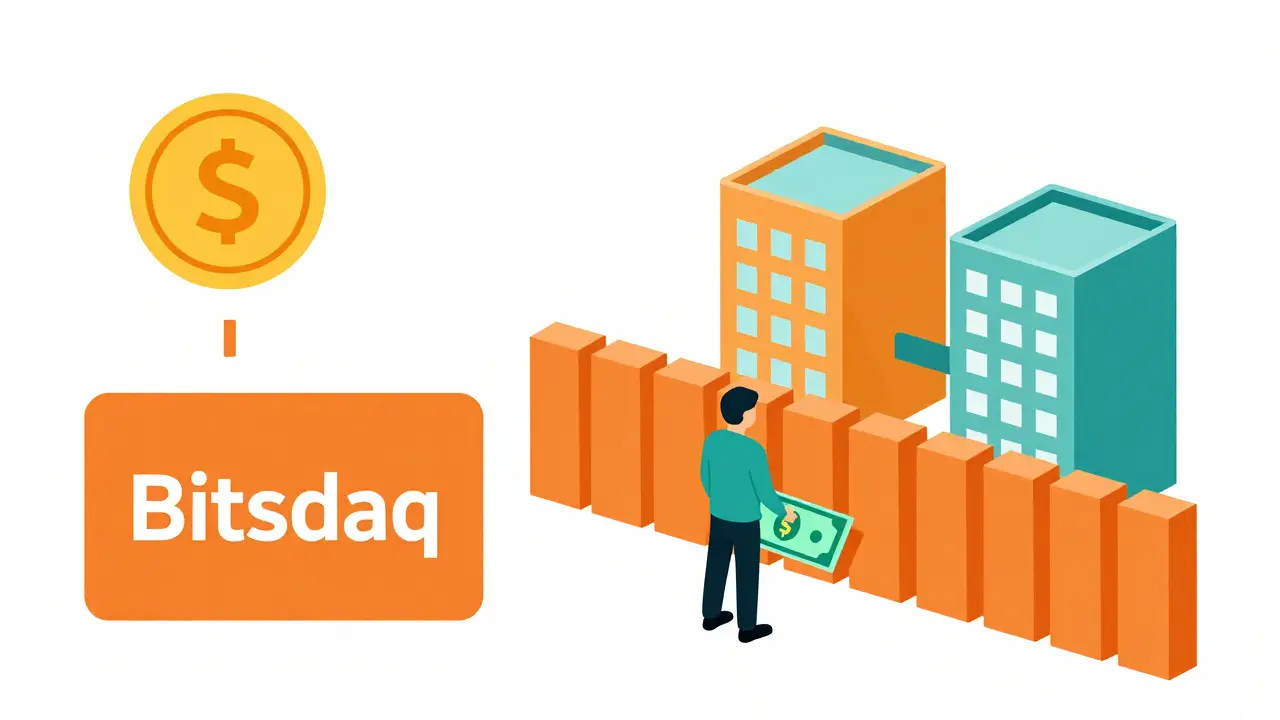
So, why did an exchange with low fees, good security, and a partnership with Bittrex shut down? Several factors likely contributed to its demise, which serve as cautionary tales for anyone entering the crypto space.
1. The Fiat Barrier By refusing fiat deposits, Bitsdaq forced users to jump through hoops. New investors wanted to buy Bitcoin with their credit cards. Bitsdaq required them to go to Coinbase or Binance first, then withdraw to Bitsdaq. This friction killed user acquisition compared to competitors who offered seamless fiat on-ramps.
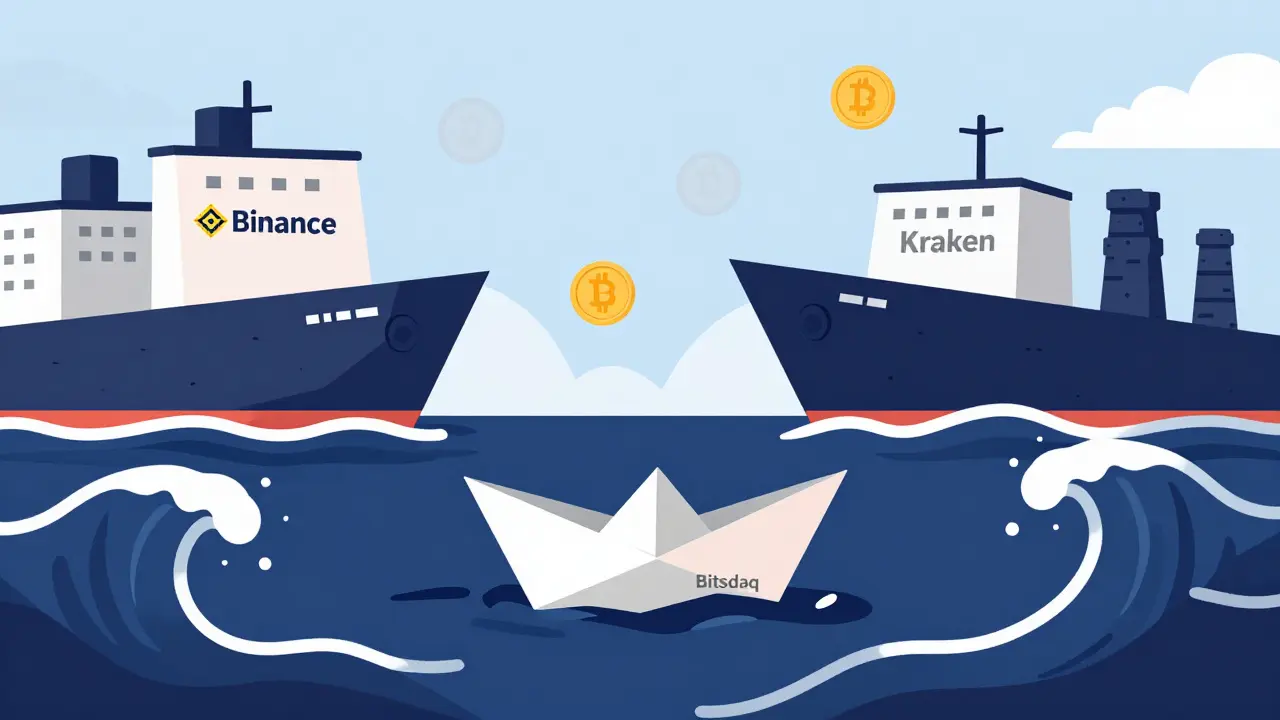
2. Competition from Giants When Bitsdaq launched, Binance Coin (BNB) had a market cap of $4.5 billion, while Huobi Token (HT) sat at $160 million. Bitsdaq’s $55 million valuation was modest. Big exchanges benefit from network effects; more users mean more liquidity, which attracts more users. Bitsdaq struggled to gain enough traction to survive the intense competition.
3. Regulatory Pressure in Asia The exchange targeted Asian markets, but regulatory environments in countries like China, Japan, and South Korea shifted dramatically between 2018 and 2025. Compliant operations became expensive, and many smaller exchanges couldn’t afford the legal overhead.
Bitsdaq vs. Modern Alternatives
If you were looking at Bitsdaq for its low fees or Asian focus, here is how it compares to active alternatives in 2026. Note that Bitsdaq is included only for historical comparison.
| Feature | Bitsdaq | Binance | Kraken |
|---|---|---|---|
| Status | Dead/Closed | Active | Active |
| Trading Fees | 0.10% Flat | 0.10% (Maker/Taker) | 0.16% - 0.26% |
| Fiat Deposits | No | Yes (Many currencies) | Yes (USD, EUR, GBP) |
| Liquidity Source | Shared with Bittrex | Internal Deep Pools | Internal Deep Pools |
| Security Record | No Major Hacks | Mixed History | Clean Record |
Today, if you want low fees, Binance still offers competitive rates. If you prioritize security and fiat access, Kraken remains a solid choice. Neither requires you to navigate the complexities of a defunct platform’s legacy tokens.
What Happens to Your BQQQ Tokens?
If you held BQQQ tokens during Bitsdaq’s operation, you are likely facing a difficult situation. With the exchange closed and the website down, there is no official mechanism to redeem or trade these tokens on the primary platform.
Some holders may find tiny amounts of BQQQ listed on obscure decentralized exchanges or peer-to-peer forums, but liquidity is effectively zero. The "price" you might see on tracking sites is often manipulated by minimal volume and does not represent real value. Experts advise treating these tokens as lost assets unless a formal recovery plan emerges, which is highly unlikely given the platform's permanent shutdown classification.
Lessons for Traders in 2026
The rise and fall of Bitsdaq teaches us important lessons about choosing crypto exchanges:
- Check the Date: Always verify if an exchange is currently operational. Old reviews can be misleading.
- Fiat On-Ramps Matter: Convenience drives adoption. Exchanges that make it hard to deposit money often struggle to retain users.
- Liquidity is King: Even with partnerships, small exchanges risk being squeezed out by larger players with deeper pockets.
- Diversify Holdings: Holding large amounts of an exchange’s native token (like BQQQ) ties your wealth to the platform’s survival. If the exchange dies, the token often becomes worthless.
In the end, Bitsdaq was an interesting experiment in cross-exchange liquidity sharing. But in the brutal world of cryptocurrency, innovation alone isn't enough. You need scale, accessibility, and resilience. Today, Bitsdaq belongs in the history books, not your portfolio.
Is Bitsdaq still working in 2026?
No, Bitsdaq is permanently closed. It was marked as 'dead' by industry trackers in 2025, and its website is no longer functional. Do not attempt to deposit funds.
Can I recover my BQQQ tokens?
Recovery is highly unlikely. With the exchange shut down, there is no official support or trading pair. Any remaining tokens have negligible liquidity and value.
Why did Bitsdaq close?
Bitsdaq likely closed due to intense competition from larger exchanges, the inability to offer fiat deposits (which limited user growth), and increasing regulatory pressures in Asian markets.
Was Bitsdaq secure?
During its operation, Bitsdaq had a strong security record with no major hacks reported. It used advanced encryption and partnered with Bittrex for liquidity, but security does not guarantee business viability.
What are good alternatives to Bitsdaq?
For low fees and high liquidity, consider Binance or Kraken. Both offer fiat deposits and have established reputations, unlike the defunct Bitsdaq.
Leave a comments