
Most traders hate two things about decentralized exchanges (DEXs): waiting forever for a trade to settle and worrying if the smart contract holding their money has a hidden bug. Bluefin is a decentralized perpetual trading platform and order book exchange powered by the Sui blockchain. It promises to fix these headaches by offering sub-second trade execution and institutional-grade security, all while letting you trade without managing complex wallets.
If you're looking for a Bluefin crypto exchange review that cuts through the marketing fluff, you've come to the right place. We’re going to look at whether this Sui-based platform actually delivers on its promise of bridging the gap between Web2 ease and Web3 security. With backing from heavy hitters like Polychain and Susquehanna International Group, Bluefin isn't just another hobby project. But does it have what it takes to compete with centralized giants? Let’s break down the speed, the safety, and the user experience.
What Exactly Is Bluefin?
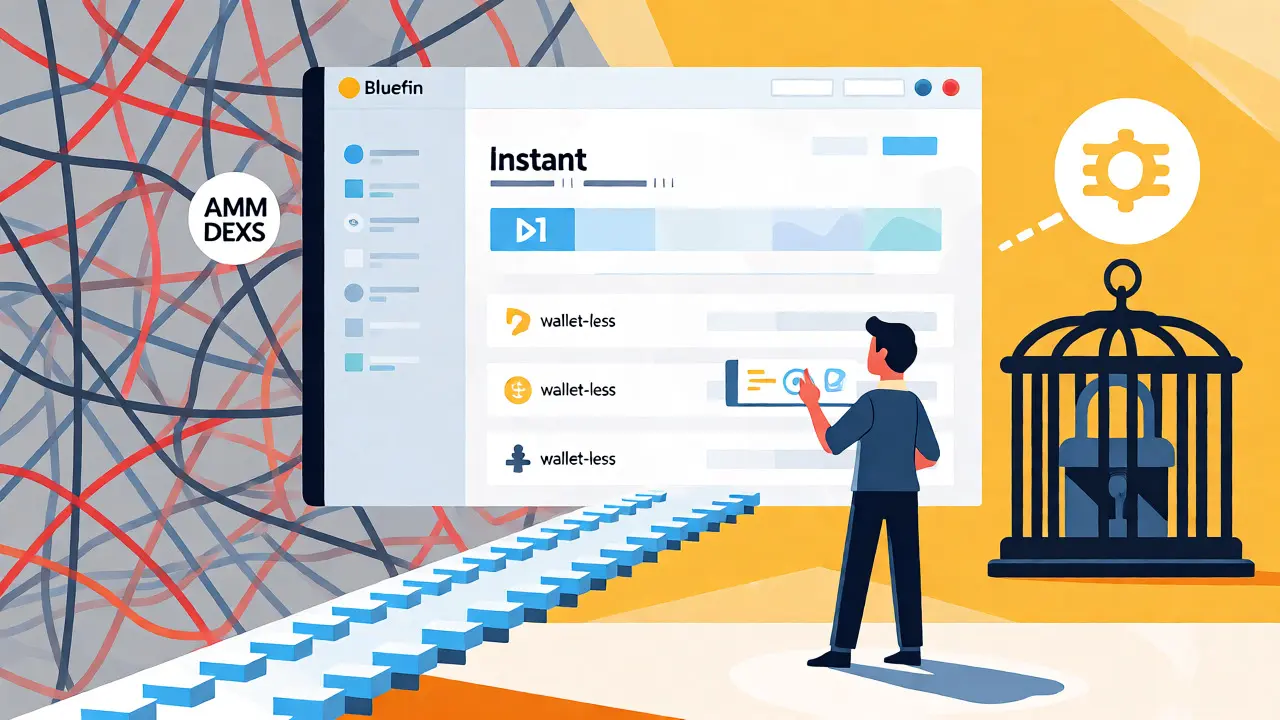
At its core, Bluefin is a hybrid beast. It operates as both a spot trading exchange and a platform for perpetual contracts. Unlike many other DEXs that rely on Automated Market Makers (AMMs) which can suffer from high slippage, Bluefin uses an on-chain order book model. This means your buy orders match directly with sell orders, giving you more control over your entry and exit prices.
The magic sauce here is the Sui blockchain. By leveraging Sui’s parallel transaction processing, Bluefin achieves completion times measured in milliseconds rather than minutes. This speed allows the interface to reflect trades instantly, mimicking the snappy feel of centralized exchanges like Binance or Coinbase. For first-time users, this is crucial because it removes the jarring lag that often makes new traders panic.
Furthermore, Bluefin integrates a wallet-less trading experience. You don’t need to set up a MetaMask extension and pray you remember your seed phrase before making your first trade. The platform handles custody and signing in a way that feels familiar to anyone who has used a traditional banking app, yet the assets remain under your control via advanced cryptographic keys.
Security Architecture: The Real Differentiator
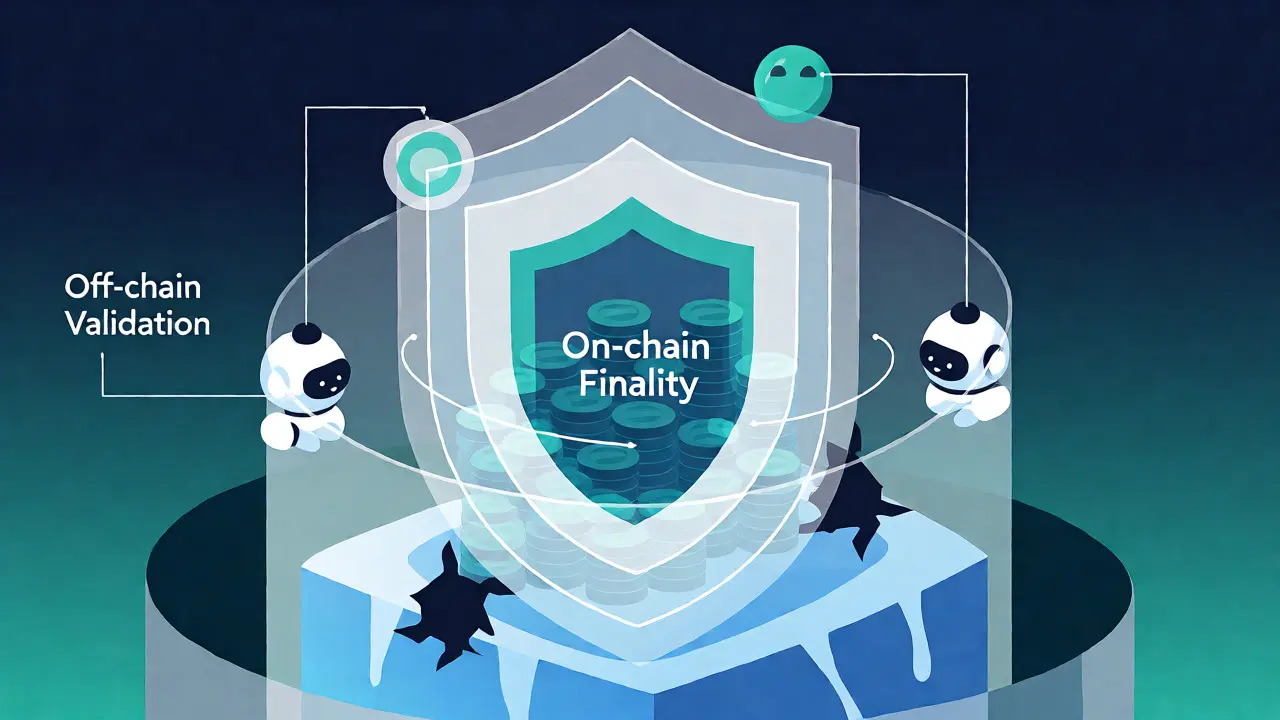
In the crypto world, "not your keys, not your coins" is the mantra, but DEXs often fail at the implementation level. Bluefin tackles this with a multi-layered security approach. They use multi-signature wallets and dual transaction signatures. Every single trade on the perpetuals platform requires signatures from both the taker and the maker. These signatures undergo rigorous validation twice-once off-chain for speed and once on-chain for finality.
The platform adopts an "assumed compromise" philosophy. This means they design their systems assuming that some parts might fail or be hacked. If their monitoring systems detect abnormal activity, such as unusual withdrawal patterns or oracle manipulation attempts, "Guardian methods" automatically activate. This pauses trading operations from the Margin Bank to prevent further losses. Most funds stay in cold storage, not sitting idle in hot wallets where hackers love to lurk.
| Feature | Standard DEX | Bluefin |
|---|---|---|
| Fund Storage | Primarily Hot Wallets/Smart Contracts | Majority in Cold Storage |
| Transaction Validation | Single On-Chain Check | Dual Signature + Off/On-Chain Validation |
| Threat Monitoring | Manual or Basic Alerts | AI-Driven Threat Modeling (Guardrail) |
| Audit Frequency | One-time or Infrequent | Continuous Bug Bounty & Audits |
Transparency is also key. In February 2024, Bluefin ran a comprehensive security audit contest on Hackenproof. Firms like MoveBit identified several vulnerabilities, including high-risk issues. While finding bugs sounds bad, it’s actually a sign of maturity. It shows they are actively hunting for weaknesses before attackers do. Since then, their partnership with Guardrail has helped maintain a record of zero major breaches despite handling billions in volume.
Trading Experience and Performance
Let’s talk numbers. Bluefin has processed over $65 billion in trading volume. That’s not small change. The Total Value Locked (TVL) sits around $200 million, indicating healthy liquidity. High liquidity matters because it means tighter spreads. When you buy Bitcoin or Ethereum on Bluefin, you aren’t paying extra just because there aren’t enough sellers.
The user interface is designed to reduce friction. You get instant feedback on your screen. No spinning wheels of death. For professional traders, this speed is non-negotiable. For beginners, it builds trust. If you click "Buy," you see it happen immediately. This psychological reassurance is often overlooked in technical reviews, but it drives adoption.
Support is another area where Bluefin tries to bridge the Web2/Web3 gap. They offer live chat and email support. Try getting a human response from a pure DeFi protocol sometimes-it’s like shouting into a void. Bluefin understands that when your money is on the line, you want answers fast.
Pros and Cons: The Honest Breakdown
No platform is perfect. Here is what stands out after digging deep into the ecosystem.
- Speed: Sub-second execution on Sui is genuinely impressive. It rivals centralized exchanges.
- Security: The dual-signature mechanism and cold storage strategy provide peace of mind.
- Backing: Investment from Polychain, SIG, and Brevan Howard adds credibility.
- Usability: The wallet-less option lowers the barrier to entry significantly.
However, there are drawbacks. Because it relies on the Sui blockchain, you need to understand how Sui works if you want to move assets in and out efficiently. It’s not as universally supported as Ethereum or Solana yet. Also, while the audits found and fixed bugs, the presence of past high-risk vulnerabilities reminds us that code is never truly "finished." You must stay updated on their security announcements.
How Bluefin Compares to Competitors
How does it stack up against other big names? Let’s look at three common scenarios.
- vs. Uniswap: Uniswap is great for swapping tokens, but its AMM model suffers from slippage during volatile markets. Bluefin’s order book model offers better price precision for large trades.
- vs. dYdX: dYdX is a leader in perpetuals, but its transition to a sovereign chain has created complexity. Bluefin stays integrated with Sui’s broader ecosystem, potentially offering easier cross-chain liquidity access.
- vs. Binance: Binance is faster and has more pairs, but you don’t hold the keys. Bluefin gives you custody without sacrificing too much speed. It’s a trade-off between convenience and sovereignty.
For traders who prioritize self-custody but hate the sluggishness of older DEXs, Bluefin hits a sweet spot. It’s not trying to be everything to everyone; it’s focusing on being the fastest, safest order-book DEX on Sui.
Final Verdict: Should You Trade on Bluefin?
If you are already in the Sui ecosystem, Bluefin is almost a no-brainer. It offers the most robust trading infrastructure currently available on that chain. The combination of institutional backing and aggressive security measures makes it one of the safer bets in the decentralized space.
For newcomers, the wallet-less feature is a gentle on-ramp. You can test the waters without diving headfirst into gas fees and nonce management. Just keep in mind that decentralized finance always carries inherent risks. Smart contracts can fail, and blockchains can congest. But compared to many alternatives, Bluefin has done the heavy lifting to minimize those risks.
Start with a small amount. Test the withdrawal process. See how the interface handles volatility. If you value transparency and speed, Bluefin deserves a serious look in 2026.
Is Bluefin safe to use?
Yes, Bluefin employs multiple layers of security, including multi-signature wallets, cold storage for most funds, and regular third-party audits. Their "assumed compromise" model includes automatic safeguards that pause trading if suspicious activity is detected. However, as with any DeFi platform, users should still exercise caution and only invest what they can afford to lose.
Do I need a specific wallet to use Bluefin?
No, you do not necessarily need a separate external wallet to start. Bluefin offers an integrated wallet service that simplifies the process. However, for full self-custody and maximum security, connecting a standard Sui-compatible wallet is recommended for long-term holdings.
What assets can I trade on Bluefin?
Bluefin primarily supports assets native to the Sui blockchain, including SUI itself, as well as wrapped versions of major cryptocurrencies like BTC and ETH. The asset list is expanding as the Sui ecosystem grows, so check the current listing page for the most up-to-date options.
Are there fees associated with trading on Bluefin?
Yes, Bluefin charges trading fees similar to other exchanges. These fees contribute to the protocol's revenue and reward providers. Additionally, since transactions occur on the Sui blockchain, you will pay minor network gas fees, though these are typically very low compared to Ethereum.
Who backs Bluefin?
Bluefin has received funding and support from prominent investment firms including Polychain Capital, Susquehanna International Group (SIG), and Brevan Howard. This institutional backing helps fund development, security audits, and market-making activities.
Leave a comments