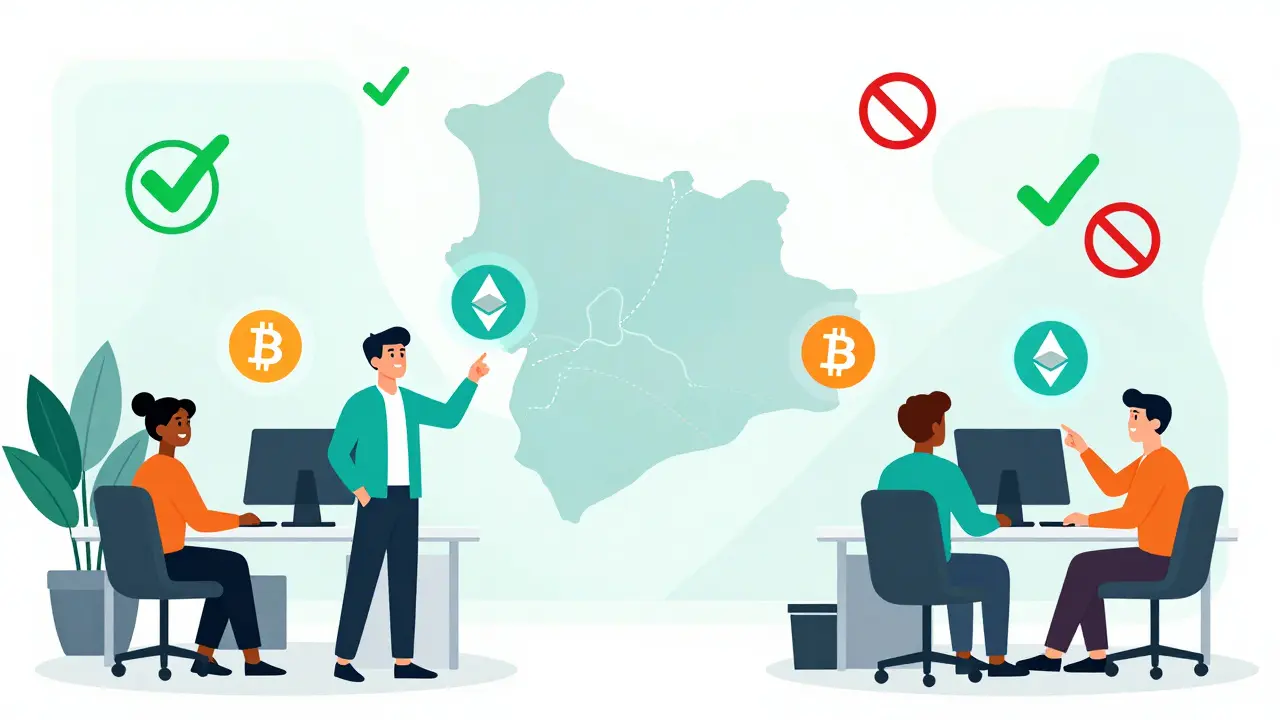
The Myth of the Ban: What Actually Happened in Bolivia?
For a long time, the story was simple: Bolivia banned crypto. Period. If you tried to buy Bitcoin or Ethereum on a major exchange like Binance or Coinbase while living in La Paz or Santa Cruz, your account got flagged, and your funds were frozen. It felt like an impossible wall. But here is the truth that many guides still miss: Bolivia lifted its cryptocurrency ban on June 26, 2024.
You don't need to use shady workarounds anymore. You don't need to pretend you live in Argentina or Chile. The government didn't just ignore crypto; they actively decided to embrace it. Resolution No. 82/2024 changed everything overnight. This wasn't a subtle policy shift-it was a complete reversal driven by economic necessity. With the local currency struggling and dollar reserves tight, the government saw digital assets not as a threat, but as a lifeline for financial growth.
If you are reading old articles telling you to use peer-to-peer (P2P) markets exclusively because banks block transactions, stop. That advice is outdated. While some legacy banking habits linger, the legal framework now supports direct access to crypto exchanges. Let's look at how this actually works today in 2026.
Why the Sudden Change? Economics Over Ideology
To understand how to access exchanges, you first need to understand why the door opened. Bolivia’s previous stance, established in 2014 by the Central Bank of Bolivia (BCB) under Resolution N° 144/2020, was strictly protective. They wanted to shield the economy from volatility. But protection turned into isolation.
By 2024, the dollar crisis hit hard. Remittances from Bolivians abroad became harder to process through traditional channels due to strict capital controls. At the same time, countries like El Salvador were showing that Bitcoin could be used for remittances with lower fees. The Bolivian government realized that banning crypto was costing them more than regulating it would.
So, they flipped the script. The new strategy isn't about stopping crypto flow; it's about capturing value from it. By allowing licensed exchanges to operate, the state can monitor flows, tax transactions, and even use stablecoins for its own cross-border payments. This pragmatic approach means that for you, the user, accessing these platforms is no longer a crime-it's a regulated activity.
The Legal Framework: From Ban to Regulation
Accessing exchanges legally requires understanding the rules set in place during 2025. It wasn't just a "ban lift"; it was a full regulatory build-out. Here is what matters for your wallet:
- Resolution No. 019/2025 (April 2025): This resolution officially recognized Virtual Asset Service Providers (VASPs). Before this, exchanges operated in a gray area. Now, they have a legal status. This means if an exchange is registered as a VASP, you can trust it has met basic compliance standards.
- Supreme Decree No. 5384 (May 2025): This decree established the licensing obligations for market participants. It created a clear path for exchanges to get a license. If an exchange holds this license, it can process Bolivian bank transfers directly.
- Stablecoin Adoption: In March 2025, the BCB itself started using USD-pegged stablecoins for cross-border payments. This signals that holding USDT or USDC is not only legal but practically encouraged for preserving value against the volatile Bolivian Boliviano.
This framework means that when you sign up for an exchange, you are entering a system that the Central Bank is actively monitoring and cooperating with. It’s safer than the wild west era of 2019-2023.
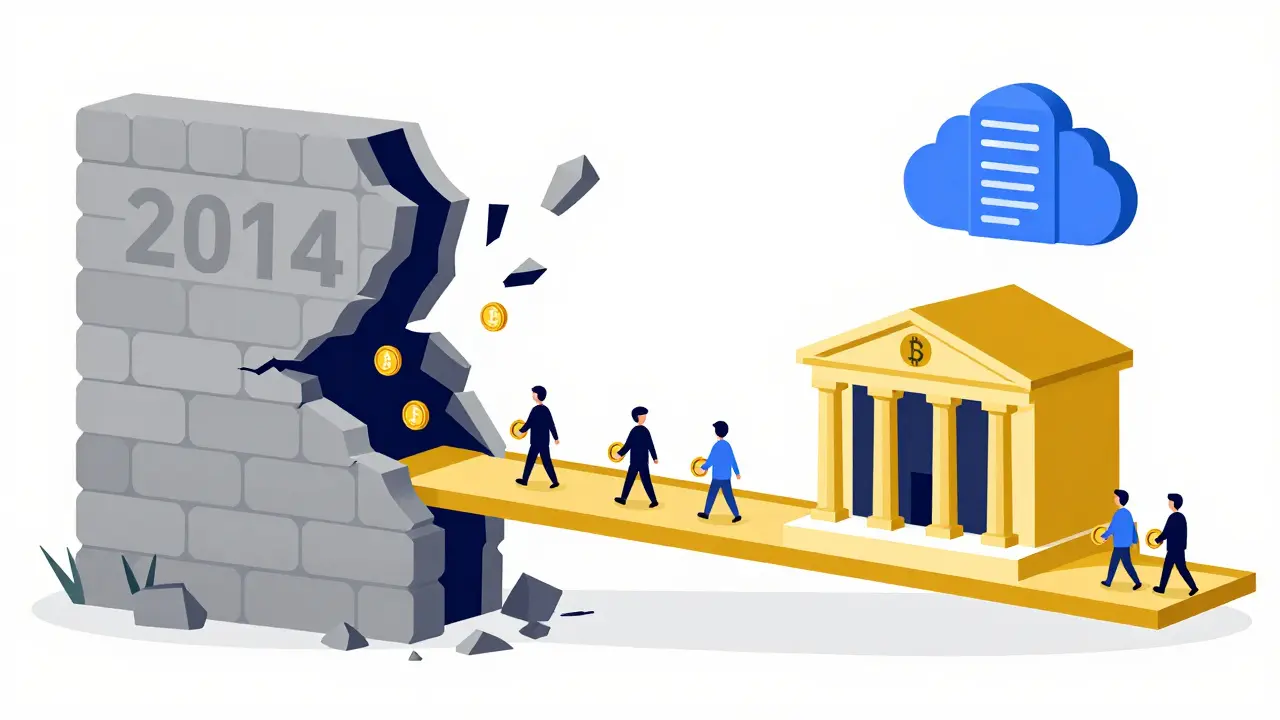
How to Access Crypto Exchanges Today
Now that the legal walls are down, how do you actually buy crypto? The process is much smoother than before, but there are specific steps to ensure you stay compliant and avoid unnecessary friction.
- Choose a Licensed or Compliant Exchange: Not all global exchanges have fully adapted to Bolivia’s new laws yet. Look for platforms that explicitly state they support users from Bolivia. Major international exchanges like Binance and Kraken have begun updating their terms of service to include Bolivia following the 2024 resolution. Local fintech startups are also emerging as VASPs.
- Complete KYC Verification: Know Your Customer (KYC) checks are stricter now. You will need to upload your Bolivian ID (Cédula de Identidad) and possibly proof of address. This is mandatory under Supreme Decree No. 5384. Don’t skip this-unverified accounts may face withdrawal limits.
- Use Local Payment Methods: Previously, you had to rely on third-party payment processors or cash deposits. Now, some licensed VASPs allow direct bank transfers via the national payment system. However, availability depends on your bank’s willingness to integrate with crypto-friendly partners. Banks like Banco Unión and Banco Mercantil are gradually adapting, but smaller banks may still hesitate.
- Consider P2P for Speed: While direct fiat ramps are growing, Peer-to-Peer (P2P) trading remains popular for speed and flexibility. Platforms like Binance P2P allow you to trade directly with other Bolivians using local bank transfers or mobile wallets. This is still legal, provided both parties follow anti-money laundering guidelines.
A pro tip: Start small. Test the deposit and withdrawal process with a modest amount to ensure your bank doesn’t flag the transaction. Some older banking systems still auto-block keywords like "crypto" or "Bitcoin." If this happens, contact your bank’s customer service and cite Resolution No. 82/2024 to request unblocking.
Risks and Pitfalls to Avoid
Just because it’s legal doesn’t mean it’s risk-free. The regulatory framework is new, and mistakes happen. Here’s what to watch out for:
| Risk Type | Description | Mitigation Strategy |
|---|---|---|
| Bank Account Freezes | Some banks still manually review transactions involving crypto exchanges, fearing money laundering. | Keep records of all trades. Use licensed VASPs. Communicate clearly with your bank. |
| Unlicensed Platforms | Scam sites may claim to be compliant but lack official VASP registration. | Check the list of registered VASPs published by the BCB or relevant financial authority. |
| Tax Uncertainty | Tax laws for crypto gains are still being clarified by the Tax Administration Service (SAT). | Consult a local accountant. Keep detailed logs of all purchases and sales for potential tax reporting. |
| Currency Volatility | The Boliviano fluctuates, affecting the real value of your crypto holdings. | Use USD-pegged stablecoins (USDT/USDC) for storage if you want to preserve value. |
One specific incident to note: In May 2025, YPFB (Bolivia’s state oil company) attempted to use crypto for fuel imports, which was initially blocked by the government. This shows that while general retail use is legal, large-scale institutional adoption still faces bureaucratic hurdles. As a regular user, you’re mostly safe, but keep an eye on news regarding large corporate transactions.
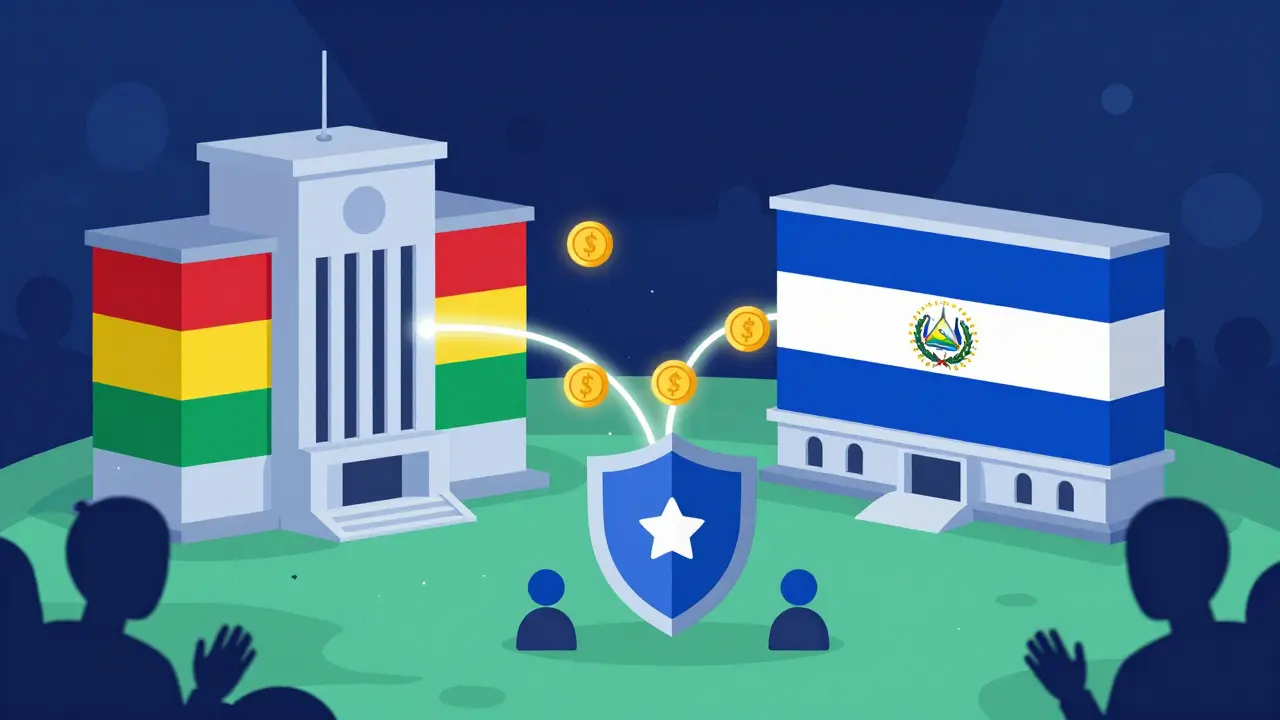
International Cooperation: The El Salvador Connection
Bolivia isn’t doing this alone. The Central Bank signed a Memorandum of Understanding (MoU) with El Salvador’s National Commission for Digital Assets (CNAD). This partnership is crucial for your security.
What does this mean for you? It means Bolivia is sharing technical expertise and blockchain intelligence tools with El Salvador. They are working together on risk analysis and market oversight. If you encounter a scam or a fraudulent exchange operating in Bolivia, the authorities have better tools to track it thanks to this collaboration. It also means that regulatory standards are aligning with regional best practices, making the ecosystem more robust.
Future Outlook: What’s Next for Bolivian Crypto?
The growth has been explosive. Since the ban was lifted, crypto usage in Bolivia skyrocketed by over 500% within one year. Trading activity picked up significantly in late 2025, with many citizens adopting crypto for daily savings rather than just speculation.
Looking ahead, expect more local exchanges to launch. Currently, most users rely on international giants. But as the VASP licensing process matures, homegrown platforms will emerge, offering better integration with local banking systems and customer support in Spanish. Additionally, the BCB’s public awareness campaigns are helping educate citizens about risks, reducing the prevalence of scams.
If you are planning to invest or simply store value in crypto, now is the time to act within the legal framework. The window of opportunity for early adoption in a newly regulated market is open, but it won’t stay wide forever. Regulations will tighten as the industry matures, so getting set up correctly now gives you a significant advantage.
Is it legal to buy Bitcoin in Bolivia in 2026?
Yes, it is completely legal. The ban was lifted on June 26, 2024, via Resolution No. 82/2024. Subsequent regulations in 2025 established a legal framework for buying, selling, and holding cryptocurrencies.
Can I use my Bolivian bank card to buy crypto?
It depends on your bank and the exchange. While legally permitted, some banks may still block direct card transactions due to internal policies. Using bank transfers through licensed VASPs or P2P platforms is often more reliable.
Do I need to pay taxes on crypto profits?
Tax regulations are evolving. The Tax Administration Service (SAT) has not issued comprehensive crypto-specific tax laws yet, but general income tax rules may apply. It is advisable to consult a local accountant to ensure compliance.
Which exchanges are available to Bolivians?
Major international exchanges like Binance and Kraken accept users from Bolivia. Additionally, local fintech companies are obtaining VASP licenses to offer domestic services. Always verify if an exchange is registered as a VASP under Bolivian law.
Is it safe to hold stablecoins in Bolivia?
Yes, owning and trading stablecoins is legal. The Central Bank of Bolivia even uses USD-pegged stablecoins for its own cross-border payments, signaling strong institutional acceptance.
Larry Port
15 05 26 / 05:14 AMIt is fascinating to see how economic necessity forces governments to abandon ideological purity. The shift from Resolution 144/2020 to the current framework shows that pragmatism always wins in the end when reserves are tight.
Michael Berggren
16 05 26 / 03:55 AMThis is such a positive step for financial inclusion! 🌟 It reminds me that progress often comes from unexpected places. I hope this opens doors for many more people who were previously excluded from the global economy. The optimism surrounding this change is well-deserved because it represents real freedom for citizens. 😊
Kiran CS
16 05 26 / 10:45 AMOne must appreciate the sheer audacity of a nation pretending to ban digital assets while simultaneously needing them for survival. It is rather quaint, isn't it? The so-called 'ban' was merely a performative gesture by bureaucrats who clearly misunderstood the nature of decentralized finance. Now they have to eat their words and embrace the very thing they feared most. How utterly predictable.
Bijan Das
17 05 26 / 21:19 PMSo they just gave up? Typical. I bet the banks still block everything anyway. Just another headache for us normal people who actually try to follow rules. Why make it complicated?
Ashley Rodriguez
19 05 26 / 17:14 PMi think this is really good news for everyone involved because it means less stress about losing money or getting accounts frozen all the time which has been such a huge problem for years now and i really hope that the new regulations will help clear up all the confusion that people have had since the beginning of this whole crypto craze in bolivia and maybe we can finally start seeing some real stability in the market instead of just wild guesses and rumors flying around everywhere
Bridget Coogle
19 05 26 / 18:02 PMGreat update. It feels safer knowing there is a legal path now. We should support these changes as they promote transparency and trust in the system.
Zara Zaman
20 05 26 / 17:03 PMBolivia does what Bolivia wants. Foreigners shouldn't interfere with our internal economic decisions. We lifted the ban because it benefited us, not because you asked nicely. Stay out of our business.
Jocelyn Garcia
22 05 26 / 16:40 PMThe VASP licensing under Supreme Decree No. 5384 is a critical development for institutional compliance. Most retail users overlook the significance of this regulatory layer, but it fundamentally alters the risk profile for cross-border transactions. The integration of stablecoins by the BCB suggests a deeper structural shift toward hybrid monetary systems.
Amit Varpe
23 05 26 / 05:59 AMFinally some sense in the region! 🇮🇳 India should take notes on this kind of pragmatic approach. Too much bureaucracy kills innovation. Let the people trade freely. 👍
Bronwen Butler
25 05 26 / 00:18 AMeveryone says its safe but its never truly safe in crypto. the government monitoring flows means they can seize assets if they want. dont trust the state with your private keys ever
Pauline Larocco71
26 05 26 / 14:14 PMim so glad to hear this! my cousin lives in la paz and she was so stressed about her savings being frozen. this gives me peace of mind knowing she can access her funds legally now. hopefully the tax situation gets clearer soon too cause thats scary stuff
beti macedo
27 05 26 / 15:13 PMIt is indeed a remarkable turn of events for the Bolivian economy. One hopes that the implementation of these new protocols will be seamless and beneficial for all stakeholders involved in the digital asset ecosystem.
Michelle Bonahoom
29 05 26 / 00:57 AMnah its probably gonna get worse. they always say one thing and do another. just keep your money in cash under the mattress like grandpa said. crypto is a scam anyway
Albert Lee
29 05 26 / 08:08 AMI am absolutely thrilled to see this level of clarity! It is a massive win for the community. Let's keep pushing forward and educating others about the benefits of this new regulatory environment. Your journey into crypto just got a lot smoother! 🚀
Ankush Pokarana
29 05 26 / 22:17 PMthe philosophical implication here is profound when we consider that money is essentially a shared belief system and by lifting the ban bolivia is acknowledging that this belief can exist outside traditional banking structures which challenges the very foundation of state-controlled currency and forces us to rethink what value actually means in a digital age where borders are becoming increasingly irrelevant
Bianca Vilas Boas Lourenço
31 05 26 / 03:42 AMOh great, another country jumping on the bandwagon. 🙄 I bet half the exchanges are still scams waiting to happen. Don't come crying to me when you lose your life savings to some unlicensed VASP. It's always the same story. 💔
Yash Lodha
31 05 26 / 19:22 PMDo not be fooled by this superficial liberation. The Central Bank’s adoption of stablecoins is merely a Trojan horse for total surveillance. They are mapping every transaction through the El Salvador partnership. Your data is no longer yours; it is theirs. The ban was lifted only to tighten the leash with digital precision. Beware the illusion of freedom.
Jesse Alston
1 06 26 / 02:44 AMHere is a helpful tip for anyone navigating this: always double-check the VASP registration list published by the BCB before depositing funds. I've seen too many people use platforms that claim compliance but lack the official stamp. Also, keep detailed records of your trades for tax purposes, even if the laws are unclear right now. Better safe than sorry! 📝✅