
It used to be a wild west out there. Now, if you are trading digital assets in Brazil, the Central Bank of Brazil is watching every move you make. The days of anonymous crypto transactions and easy money transfers across borders are officially over. Since June 2023, when Federal Law No. 14.478/2022 kicked in, the rules have tightened significantly. By 2025, those rules hardened into concrete barriers that change how exchanges operate and how users trade.
If you clicked this looking for loopholes, you won't find them. The Brazilian government has decided that cryptocurrency is not just a hobby; it is part of the formal financial system. That means taxes, strict identity checks, and heavy caps on moving money abroad. This article breaks down exactly what these restrictions mean for you, whether you are a casual trader or running an exchange platform.
The End of Anonymity: Mandatory VASP Registration
First things first: no more operating in the shadows. Under the current framework, any entity providing services related to virtual assets must register as a Virtual Asset Service Provider (VASP). The Central Bank of Brazil (BCB) took over this responsibility through Decree No. 11,563/2023. This isn't a suggestion box; it is a legal requirement.
To get registered, platforms need to prove they have robust Anti-Money Laundering (AML) systems and Know Your Customer (KYC) protocols in place. Think about what this means for your data. Every time you sign up for a local exchange like Mercado Bitcoin or NovaDax, they are required to verify your identity with the same rigor a traditional bank would use. They collect your ID, proof of address, and often perform background checks against international sanctions lists.
Why did they do this? Money laundering. Brazil has historically struggled with illicit financial flows. By forcing crypto platforms to register, the BCB ensures that every satoshi has a paper trail. If you try to use an unregistered offshore platform, you risk having your funds frozen or your accounts flagged by the Financial Activities Control Council (COAF), which acts as the country's financial intelligence unit.
The $10,000 Cap: A Major Blow to Cross-Border Trading
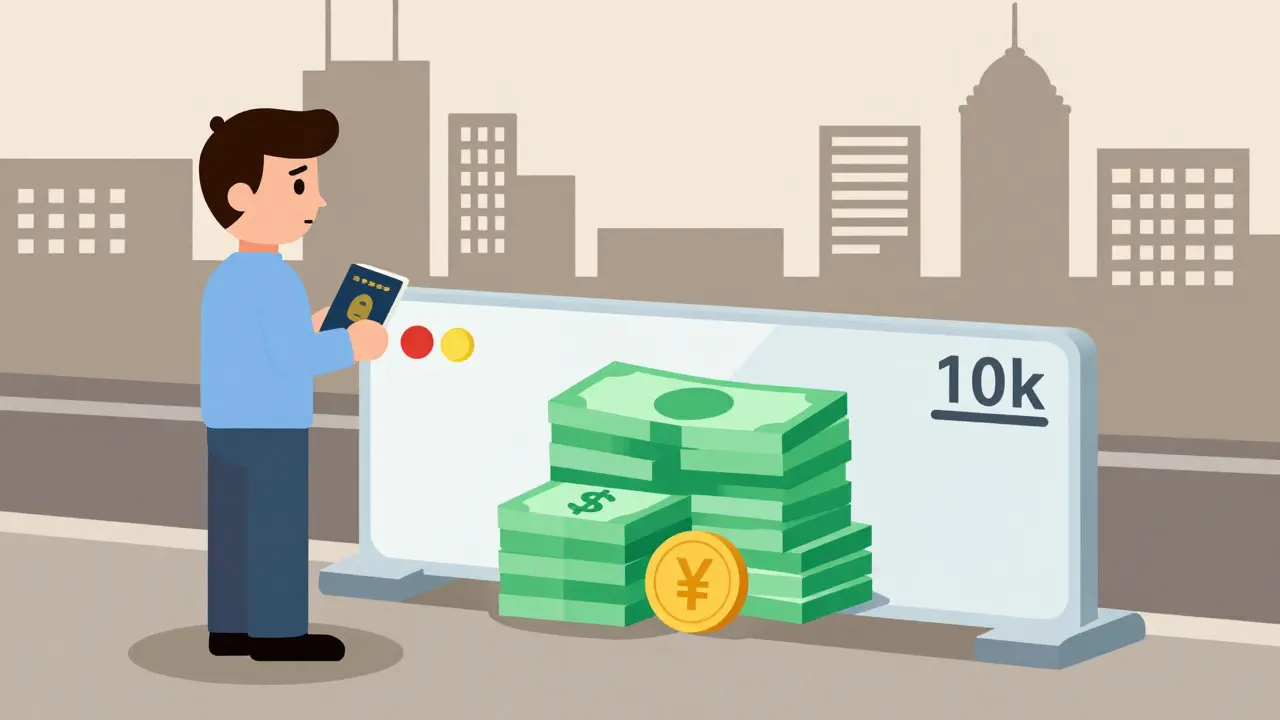
Here is where it gets tricky for many traders. In 2025, the BCB introduced strict foreign exchange regulations that directly impact crypto operations. There is now a hard cap of $10,000 on international transfers without additional scrutiny and licensing. For most retail investors, this feels like a handcuff.
Previously, you could buy Bitcoin in Brazil, send it to an international wallet, and sell it for dollars in another jurisdiction relatively easily. Now, moving value out of the country triggers complex compliance hurdles. Exchanges are forced to invest heavily in real-time transaction monitoring systems to catch anything suspicious before it leaves the border.
This restriction forces a strategic shift. Many Brazilian exchanges are pivoting toward domestic-focused services. They prioritize transactions in Brazilian Reais (BRL) and reduce reliance on foreign fiat conversions. If you are trying to move large sums abroad using crypto as a bridge, expect delays, extra documentation requests, and potentially blocked transactions if the source of funds isn't crystal clear.
| Regulation | What It Is | Direct Impact on You |
|---|---|---|
| VASP Registration | Mandatory licensing for crypto service providers | Stricter KYC/ID verification; fewer anonymous options |
| $10k Forex Cap | Limit on international transfers | Harder to move large amounts of crypto abroad; increased fees |
| DeCripto Reporting | Detailed transaction declaration mandate | Exchanges report all trades to authorities; total transparency |
| Stablecoin Limits | Restrictions on non-pegged or foreign stablecoins | Reduced ability to park funds in USDT/USDC for yield |
DeCripto: Total Transparency for Every Trade
In March 2025, the BCB rolled out the Declaration of Crypto Assets, known locally as DeCripto. This is not just a tax form; it is a comprehensive reporting mandate. All cryptocurrency activities must be declared in detail. Exchanges are required to integrate specialized compliance modules into their platforms to automate this process.
What does DeCripto actually track? It monitors buying, selling, swapping, and even holding certain types of tokens. The goal is to give the Brazilian Revenue Service (RFB) a complete picture of your crypto wealth. When you file your annual income tax return, you can no longer hide crypto gains under the rug. The RFB enforces capital gains taxation on these profits, and the data matches because the exchange already reported your activity to the government.
This creates a double-edged sword. On one hand, it legitimizes the industry. Institutional investors feel safer knowing the market isn't filled with criminals. On the other hand, the privacy erosion is significant. If you believe in the libertarian ethos of early Bitcoin-censorship-resistant and private-the current Brazilian policy is a direct contradiction of those ideals.
Stablecoins Under Siege
You might think stablecoins like Tether (USDT) or USD Coin (USDC) are safe havens. Think again. Stablecoins account for roughly 90% of Brazil's crypto transaction volume, making them a prime target for regulation. The BCB has implemented specific restrictions on stablecoin operations, particularly those not backed by domestic reserves or approved mechanisms.
Why the crackdown? The central bank wants to protect the monetary sovereignty of the Real. If everyone holds USDT instead of BRL, the central bank loses some control over inflation and interest rates. Consequently, platforms face pressure to limit the issuance and circulation of foreign-backed stablecoins. Users may find it harder to swap large amounts of Bitcoin directly into USDT without triggering enhanced due diligence checks. Some exchanges are starting to promote local stablecoin alternatives, though adoption remains slow compared to global giants.
DREX: Not a CBDC, But Close Enough
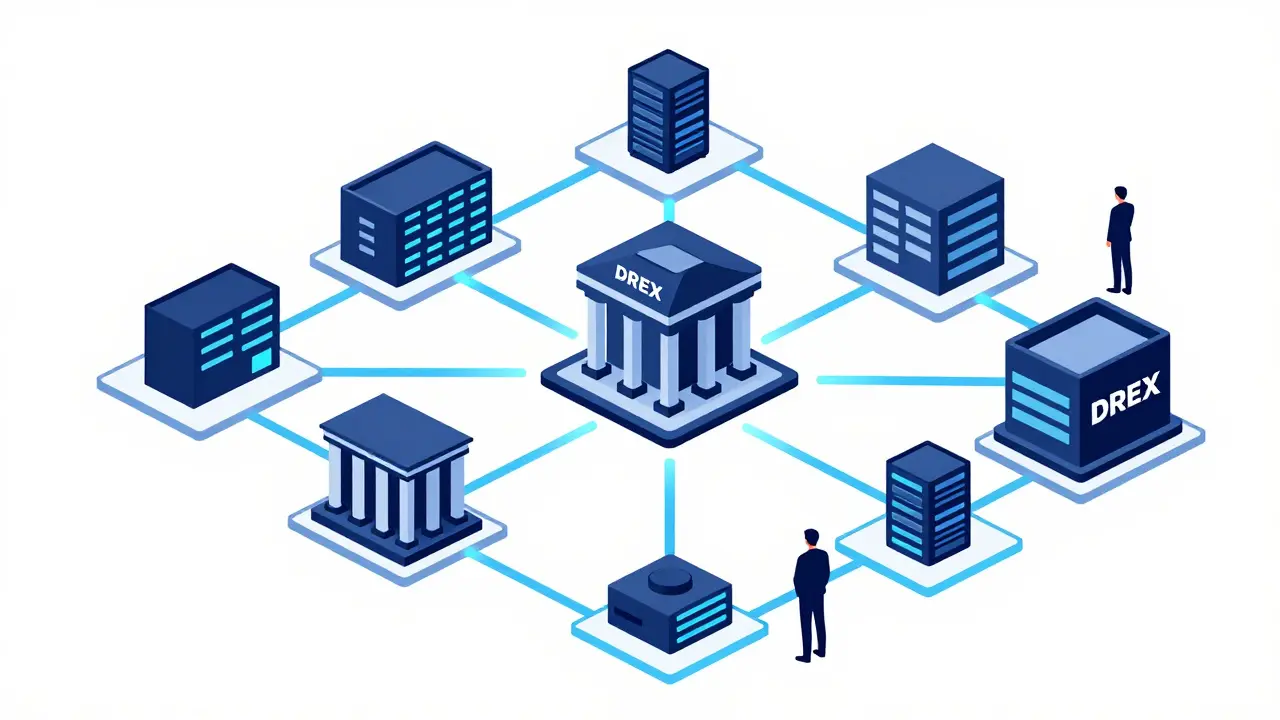
While restricting private crypto, the BCB is building its own infrastructure. Enter DREX. It is crucial to understand that DREX is not a Central Bank Digital Currency (CBDC) in the classic sense, like a digital dollar handed out to citizens. Instead, it is a distributed-ledger-based infrastructure designed for tokenized bank deposits, loans, and government securities.
Currently, DREX is limited to domestic scope. Pilots involve major financial institutions testing how to settle transactions instantly using blockchain technology. For the average user, DREX doesn't change much right now. However, it signals the future direction. The BCB prefers regulated, institutional-grade blockchain solutions over decentralized public networks. As DREX matures, we might see it become the backbone for high-value transfers between banks, further marginalizing peer-to-peer crypto usage for everyday payments.
Navigating the Compliance Maze
So, how do you survive in this new landscape? If you are a regular user, keep your records impeccable. Download your transaction history from exchanges regularly. Ensure your tax declarations align with the data sent via DeCripto. Ignorance is not a defense against the RFB.
If you run a business or exchange, the learning curve is steep. Full compliance typically takes 6 to 12 months for established firms. You need to hire regulatory experts, upgrade your tech stack to handle real-time AML monitoring, and prepare for constant audits. The cost of entry has skyrocketed, which is why smaller, independent startups are struggling to compete with larger, well-funded players who can absorb these overheads.
The International Bar Association notes that Brazil’s approach is a "gradual implementation of comprehensive regulation." It contrasts with countries that ban crypto entirely or those that ignore it completely. Brazil chose the middle path: embrace the technology but chain it tightly to existing financial laws. It provides legal certainty, yes, but at the cost of flexibility and privacy.
Future Outlook: What Comes Next?
The regulatory agenda for 2025-2026 lists cryptoassets as a strategic priority. Expect more detailed guidelines on asset tokenization later this year. The Securities and Exchange Commission of Brazil (CVM) is preparing to launch consultations on how to treat security tokens. If you hold tokens that represent equity in a company, watch this space closely. The CVM will likely impose stricter disclosure requirements similar to traditional stock markets.
For now, the message from Brasília is clear. Crypto is here to stay, but it must play by the bank's rules. The era of unrestricted, borderless, anonymous crypto trading in Brazil has ended. Adapt or exit.
Do I need to pay taxes on crypto in Brazil?
Yes. The Brazilian Revenue Service (RFB) enforces capital gains taxation on cryptocurrency profits. With the introduction of DeCripto reporting, all transactions are monitored, and you must declare these gains in your annual income tax return. Failure to do so can result in fines and penalties.
Can I still use anonymous crypto wallets in Brazil?
Technically, you can download a self-custody wallet app, but using it for significant transactions is risky. Exchanges are required to implement strict KYC/AML protocols. If you try to cash out large amounts from an anonymous wallet to a bank account, the transaction will likely be flagged by COAF for suspicious activity. The ecosystem is pushing towards full identification.
What happens if I exceed the $10,000 international transfer limit?
Exceeding the cap triggers enhanced compliance measures. You will likely need to provide extensive documentation proving the source of funds and the purpose of the transfer. Without proper licensing or approval, the exchange may block the transaction entirely. It is designed to prevent capital flight and money laundering.
Is DREX available for regular people to use?
Not currently. DREX is a pilot infrastructure for financial institutions to tokenize bank deposits and securities. It is limited to domestic scope and involves major banks. Regular consumers cannot yet open DREX wallets or trade on this network directly.
Are stablecoins like USDT banned in Brazil?
They are not explicitly banned, but they face strict restrictions. The Central Bank limits their operation to protect the Brazilian Real. Exchanges may impose higher fees, lower withdrawal limits, or require additional verification for stablecoin transactions. Non-domestic backed stablecoins are under particular scrutiny.
Leave a comments