For years, Russia was the wild west of cryptocurrency mining. Cheap electricity, lax enforcement, and a massive industrial power grid made it the go-to destination for ASIC miners worldwide. But if you are looking to plug in rigs in Moscow or Siberia today, the landscape has shifted dramatically. The days of unregulated, shadow-economy mining are over.
As of early 2025, the Russian government has implemented one of the most detailed regulatory frameworks for cryptocurrency mining is the process of using computational power to validate transactions on blockchain networks and earn digital assets as rewards in the world. This isn't just about taxes; it's about energy security, state control, and strict geographic bans. If you operate without knowing these rules, you risk heavy fines, equipment confiscation, and remote shutdowns by the state.
The New Legal Framework: From Prohibition to Controlled Legalization
In August and October 2024, President Vladimir Putin signed comprehensive legislation that fundamentally changed how mining operates in Russia. The goal? To bring the industry out of the shadows and into the tax net while protecting the national power grid from collapse. Starting January 1, 2025, mining is no longer a gray area-it is either legal and registered, or it is illegal.
The core of this new system relies on three pillars:
- State Registry Requirement: All mining businesses must register their equipment with the federal registry. This includes labeling and certification for all imported hardware.
- Taxation: A flat 15% tax on Bitcoin mining profits was introduced in November 2024.
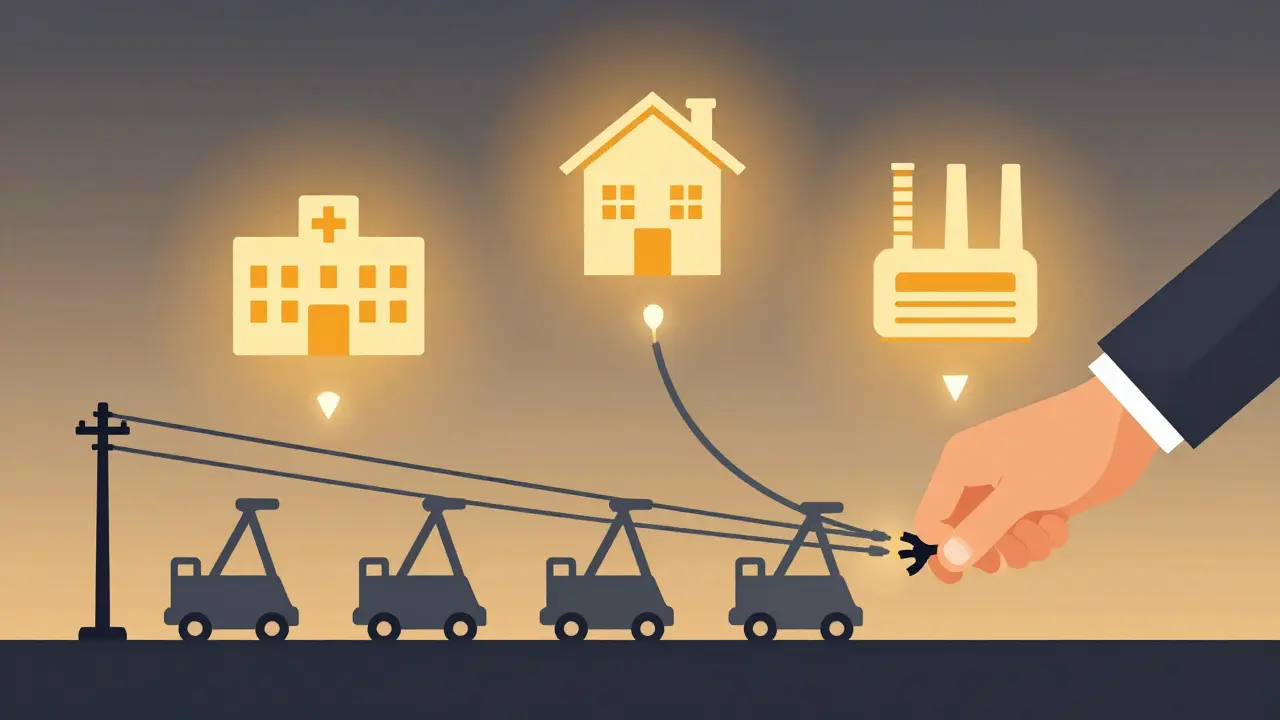
- Energy Priority Classification: Miners are now classified as "fourth category" consumers, meaning they have the lowest priority for electricity usage.
This shift acknowledges the economic potential of mining-demand for industrial equipment tripled in Q4 2024 alone-but it comes with strings attached. The state wants its cut, but it refuses to let miners drain the grid during winter peaks.
Geographic Bans: Where You Cannot Mine
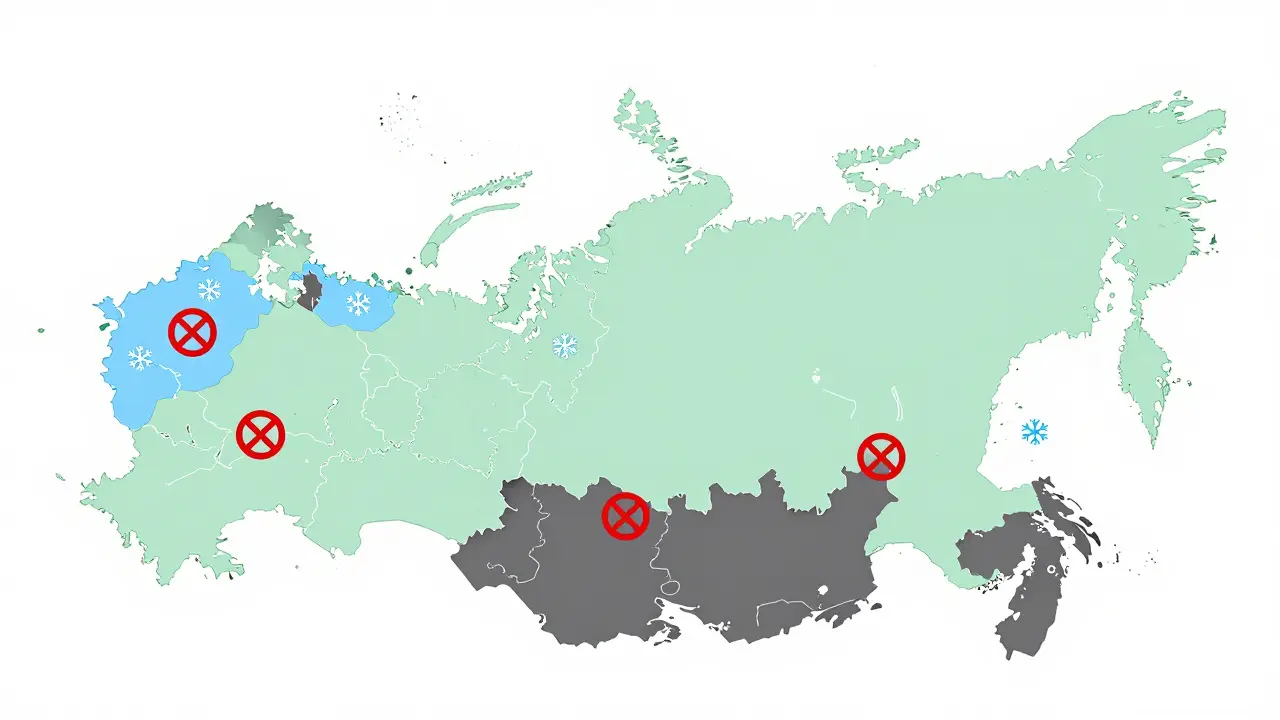
You cannot simply set up shop anywhere in Russia. The government has implemented a two-tiered restriction system based on regional energy deficits. As of January 1, 2025, there are blanket bans in 10 regions. These bans are not temporary fixes; they are scheduled to last until March 15, 2031.
| Region/Territory | Ban Duration | Reason |
|---|---|---|
| Dagestan | Jan 1, 2025 - Mar 15, 2031 | Critical Energy Deficit |
| Ingushetia | Jan 1, 2025 - Mar 15, 2031 | Critical Energy Deficit |
| Kabardino-Balkaria | Jan 1, 2025 - Mar 15, 2031 | Critical Energy Deficit |
| Karachay-Cherkessia | Jan 1, 2025 - Mar 15, 2031 | Critical Energy Deficit |
| North Ossetia | Jan 1, 2025 - Mar 15, 2031 | Critical Energy Deficit |
| Chechnya | Jan 1, 2025 - Mar 15, 2031 | Critical Energy Deficit |
| Donetsk People's Republic | Jan 1, 2025 - Mar 15, 2031 | Infrastructure Strain |
| Lugansk People's Republic | Jan 1, 2025 - Mar 15, 2031 | Infrastructure Strain |
| Zaporizhzhia Region | Jan 1, 2025 - Mar 15, 2031 | Infrastructure Strain |
| Kherson Region | Jan 1, 2025 - Mar 15, 2031 | Infrastructure Strain |
If you operate in any of these areas, your equipment will be seized, and you will face significant legal penalties. There is no loophole here.
Seasonal Restrictions in Siberia
Siberia has historically been the heart of Russian mining due to its hydroelectric power plants. However, the government has recognized that winter energy demand spikes threaten residential heating and essential services. Consequently, three key Siberian regions face seasonal bans:
- Irkutsk Oblast
- Buryatia
- Zabaikalsky Krai
In 2025, mining is banned in these regions from January 1 to March 15. In subsequent years, this window expands to November 15 through March 15. This means you can only mine legally in these high-power areas during the spring and summer months when energy supply exceeds local consumption.
Registration Rules and Tax Obligations
To operate legally, you must register with the national miners' registry. However, there is an exemption for small-scale hobbyists. Individual miners who consume less than 6,000 kWh of electricity per month are exempt from registration requirements. This threshold allows casual miners to operate without bureaucratic overhead, provided they stay under this power limit.
For commercial operations, the rules are stricter. You must:
- Register your business entity with the Federal Tax Service.
- Label and certify all imported mining hardware.
- Pay the 15% tax on mining profits.
- Report transactions exceeding 600,000 rubles to tax authorities.
Compliance remains a challenge. As of mid-2025, Deputy Minister of Finance Ivan Chebeskov noted that only 30% of miners were properly registered. The government is actively working to "clean up" the remaining 70%, signaling that enforcement will intensify throughout 2025 and 2026.
Penalties for Illegal Mining
The consequences of operating outside the law are severe. The Russian Digital Development Ministry has proposed increasing fines for illegal mining from 200,000 rubles to up to 2 million rubles (approximately $25,500). Additionally, unregistered equipment can be confiscated and destroyed.
But the financial penalty is only part of the risk. Because miners are classified as "fourth category" consumers, authorities have the legal right to remotely disconnect your equipment during periods of high electrical demand. This prioritizes homes, hospitals, and critical industries over your hash rate. Imagine running a farm in Irkutsk in February, only to have the state cut your power feed because a hospital needs extra capacity. That is the reality of regulated mining in Russia.
Broader Crypto Regulations in Russia
It is important to understand that mining regulations exist within a broader crypto legal context. While owning and trading digital assets is permitted, using cryptocurrencies to pay for goods and services remains illegal. The ruble is the sole legal tender. This means you cannot use your mined Bitcoin to buy groceries or pay rent in Russia without violating anti-money laundering laws.
All individuals and organizations must report cryptocurrency transactions exceeding 600,000 rubles to tax authorities. Failure to do so results in additional penalties designed to enforce monetary policy and prevent capital flight.
Future Outlook: Controlled Growth
Russia’s approach represents a model of controlled legalization. By setting clear geographic boundaries, seasonal limits, and tax obligations, the state aims to harness the economic benefits of mining without compromising energy security. The six-year timeline for regional bans provides long-term regulatory certainty, allowing investors to plan around known constraints.
However, the tension between decentralization and state control remains. With only 30% compliance rates, the government faces a difficult task in bringing the entire industry into line. Expect increased surveillance, stricter import controls on ASICs, and potentially higher fines in the coming years.
For those willing to navigate the bureaucracy, mining in Russia can still be profitable, especially in non-banned regions with stable power grids. But the era of easy, unregulated gains is definitively over. Success now requires legal registration, tax compliance, and careful location planning.
Is crypto mining legal in Russia?
Yes, crypto mining is legal in Russia if you comply with specific regulations. You must register your equipment with the state registry, pay a 15% tax on profits, and operate outside of banned regions. Unregistered mining is illegal and subject to heavy fines and equipment confiscation.
Which regions ban crypto mining in Russia?
Ten regions have complete bans until March 2031, including Dagestan, Ingushetia, Chechnya, North Ossetia, Kabardino-Balkaria, Karachay-Cherkessia, Donetsk, Lugansk, Zaporizhzhia, and Kherson. Three Siberian regions (Irkutsk, Buryatia, Zabaikalsky) have seasonal bans during winter peak energy demand.
What is the tax rate for crypto mining in Russia?
The tax rate for Bitcoin mining profits is 15%. This applies to registered mining businesses. Individuals consuming less than 6,000 kWh per month are exempt from registration but must still report large transactions.
Can the government shut down my mining operation?
Yes. Miners are classified as "fourth category" electricity consumers, meaning they have the lowest priority. Authorities can remotely disconnect mining equipment during periods of high electrical demand to prioritize essential services like hospitals and residential heating.
What are the penalties for illegal mining in Russia?
Penalties for illegal mining include fines ranging from 200,000 to 2 million rubles ($25,500), confiscation of equipment, and potential criminal charges. The government is actively increasing enforcement to bring unregistered miners into compliance.
Do I need to register if I am a small-scale miner?
Individual miners who consume less than 6,000 kWh of electricity per month are exempt from registration requirements. However, you must still comply with general crypto transaction reporting rules if your activities exceed certain thresholds.
When do seasonal bans start in Siberia?
In 2025, seasonal bans in Irkutsk, Buryatia, and Zabaikalsky run from January 1 to March 15. In subsequent years, the ban period extends to November 15 through March 15, covering the coldest and highest-demand months.
Leave a comments