
For years, Nigerian crypto traders operated in a gray zone. You could buy Bitcoin, but banks might freeze your account if you tried to cash out. That ambiguity ended on January 1, 2026. The Nigeria Tax Act 2025 is now fully active, and it changes everything for anyone holding digital assets in the country. If you thought you could ignore the taxman because crypto wasn't "real money," think again. The law explicitly classifies profits from virtual assets as taxable income.
This isn't just about paying more; it's about staying legal. With the Securities and Exchange Commission (SEC) and the Central Bank of Nigeria (CBN) tightening their grip, the days of anonymous offshore trading are numbered. Whether you're a casual investor or running a fintech startup, understanding these new rules is critical to avoiding penalties. Let's break down exactly what has changed, who needs to pay, and how to keep your records straight.
The New Legal Framework: From Ban to Regulation
To understand the taxes, you first need to understand the law that enables them. For a long time, the relationship between Nigerian regulators and crypto was hostile. The CBN prohibited banks from serving crypto exchanges, effectively cutting off fiat on-ramps. But hostility doesn't stop trade; people just moved to peer-to-peer networks. The game changed when the government realized they were missing out on significant revenue.
The turning point came with the Investments and Securities Act 2025. This act officially reclassified cryptocurrencies not as currency, but as securities. This is a massive shift. It puts digital assets under the direct supervision of the SEC. By defining crypto as a security, the SEC gained the authority to regulate exchanges, mandate licensing, and enforce reporting standards.
Simultaneously, the Nigeria Tax Act 2025 (NTA 2025), signed by President Bola Ahmed Tinubu in June 2025, closed the loopholes. It didn't create a new "crypto tax" per se; instead, it clarified that existing tax laws apply to digital assets. Profits from selling crypto are subject to Capital Gains Tax (CGT). Income earned from staking, mining, or receiving payments in crypto is treated as ordinary income. There is no exemption simply because the asset is digital.
Who Needs to Pay? Individuals vs. Businesses
The burden of compliance falls differently depending on whether you are an individual trader or a business entity. For individuals, the rule is straightforward: if you make a profit from disposing of a digital asset, you owe tax. This includes selling Bitcoin for Naira, swapping Ethereum for USDT, or even using crypto to buy goods if the value has appreciated since you acquired it.
However, the definition of "disposal" can be tricky. Does swapping one token for another count as a taxable event? Under the new framework, yes. Each swap is viewed as selling the first asset and buying the second. If your BTC went up in value against the Naira before you swapped it, you have realized a gain. Many traders miss this because no fiat currency touches their bank account, but the tax liability remains.
For businesses, the stakes are higher. Any company accepting crypto payments must register as a Virtual Asset Service Provider (VASP) if they facilitate transactions for others. Even if you don't hold customer funds, accepting crypto as payment requires accurate accounting. You must record the fair market value of the crypto at the exact moment of receipt. This value becomes your cost basis for future sales and determines your immediate income tax liability.
Banking and the Role of Licensed Exchanges
You might remember when opening a bank account felt like walking on eggshells. In December 2023, the CBN reversed its ban, allowing banks to service licensed crypto businesses. This move was strategic. By bringing crypto firms into the banking fold, the government created a paper trail. Now, if you use a local, SEC-licensed exchange, your transactions are visible to tax authorities through standard banking channels.
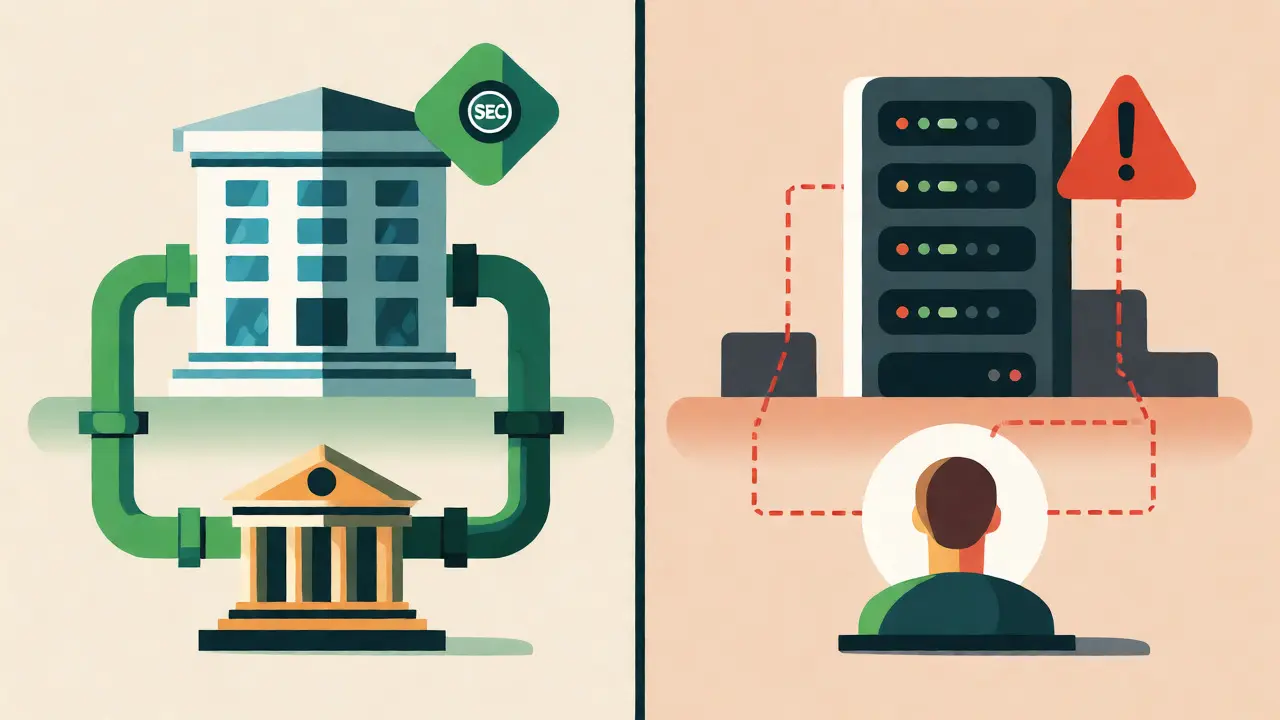
This transparency is a double-edged sword. On one hand, it legitimizes the industry. Banks are no longer afraid to process transfers from entities like Busha or other approved platforms. On the other hand, it means you can't hide offshore trades easily. The government has taken enforcement actions against unlicensed offshore giants like Binance and KuCoin, restricting their ability to serve Nigerian users directly without local compliance structures.
| Feature | Licensed Local VASP | Unlicensed Offshore Exchange |
|---|---|---|
| Bank Integration | Full access to Naira deposits/withdrawals | Limited; often relies on P2P or cards |
| Tax Reporting | Automated reports available for FIRS | User responsible for manual tracking |
| Regulatory Protection | Covered by SEC investor protection rules | No local recourse for disputes |
| Compliance Risk | Low; compliant with NTA 2025 | High; potential for account freezes |
Taxable Events: What Actually Triggers a Bill?
It’s easy to get confused about what counts as a taxable event. Let’s simplify it. If you buy Bitcoin and hold it, you don’t pay tax yet. Tax hits when you realize the gain. Here are the specific scenarios that trigger a tax obligation under the NTA 2025:
- Selling for Fiat: You sell 1 ETH for Naira. If the price rose since you bought it, the difference is a capital gain.
- Trading Tokens: You swap SOL for ADA. You sold SOL (taxable event) and bought ADA (new cost basis).
- Spending Crypto: You buy a laptop worth ₦500,000 using Bitcoin. You must calculate the gain based on the Bitcoin's value when you acquired it versus its value when you spent it.
- Staking Rewards: Income earned from staking is generally treated as ordinary income, taxed at your marginal income tax rate, not capital gains rates.
- Mining Income: If you mine crypto, the fair market value of the coins at the time of receipt is your income. Future sales of those mined coins are then subject to capital gains tax based on that initial value.
One common pitfall is ignoring transaction fees. When calculating your cost basis, you can usually deduct legitimate transaction fees paid to exchanges. However, you need receipts. Without proof of these costs, the Federal Inland Revenue Service (FIRS) may disallow deductions, increasing your taxable base.
Compliance Checklist for Nigerian Crypto Users
So, what do you actually need to do to stay safe? The era of informal record-keeping is over. The FIRS has enhanced its digital filing systems, making it easier to cross-reference bank statements with crypto activity. Here is your action plan:
- Register Properly: Ensure your exchange is SEC-licensed. Check the SEC’s official list of approved VASPs. Avoid sending large sums to unknown offshore wallets.
- Maintain Detailed Logs: Use software to track every transaction. Note the date, time, amount, currency pair, exchange fee, and the Naira equivalent at the time of the trade. Screenshots are good, but CSV exports from exchanges are better.
- Separate Personal and Business Wallets: If you run a business, never mix personal crypto holdings with operational funds. Commingling makes audits a nightmare.
- Update Accounting Software: Standard accounting tools may not handle crypto volatility well. Ensure your system can record the daily fair market value adjustments required by Nigerian tax law.
- Consult a Specialist: Don’t rely on a general accountant. Find a tax advisor familiar with digital assets. The nuances of DeFi and NFTs require specialized knowledge to avoid misclassification.

Penalties and Enforcement Risks
What happens if you ignore the rules? The NTA 2025 strengthens enforcement mechanisms. Failure to file returns can result in significant fines. More importantly, the FIRS can impose interest on unpaid taxes, which compounds quickly. For businesses, operating without a VASP license while facilitating crypto transactions can lead to heavy regulatory sanctions, including suspension of operations.
There is also the risk of asset freezing. Since banks are now integrated with the crypto sector, they are required to report suspicious transactions. If your bank sees rapid, high-volume transfers to known crypto addresses without corresponding declared income, they may flag your account for review. This isn't just about back-taxes; it's about liquidity. Having your primary bank account frozen during a market dip can force you to sell assets at a loss.
The Bigger Picture: Why Nigeria Changed Its Stance
Why did Nigeria pivot so hard? It comes down to economics and international pressure. Nigeria has one of the highest crypto adoption rates in the world, driven by inflation and a young, tech-savvy population. The government recognized that banning crypto drove activity underground, losing tax revenue. By regulating it, they capture that value.
Furthermore, global tax standards are shifting. Multinational corporations can no longer easily shift profits to low-tax jurisdictions. Nigeria’s alignment with international norms ensures that global crypto firms operating here contribute fairly. This positions Nigeria as a progressive jurisdiction in Africa, potentially attracting more institutional investment compared to neighbors with stricter bans or looser regulations.
If you are looking ahead, expect further integration. We will likely see more direct API connections between exchanges and the FIRS, automating tax calculations. The goal is frictionless compliance. The sooner you adapt your habits to this transparent environment, the less stress you’ll face during tax season.
Is cryptocurrency considered legal tender in Nigeria?
No, cryptocurrency is not legal tender in Nigeria. The Central Bank of Nigeria does not recognize it as official currency for settling debts. However, it is legally recognized as a tradable asset and is classified as a security under the Investments and Securities Act 2025, meaning it can be bought, sold, and held legitimately.
Do I pay tax if I just hold my Bitcoin without selling?
No, you do not pay tax on unrealized gains. Tax liability arises only when you dispose of the asset-meaning you sell it, swap it for another crypto, or spend it. As long as you hold the asset, any increase in value is not yet taxable.
How are staking rewards taxed in Nigeria?
Staking rewards are generally treated as ordinary income. The fair market value of the tokens at the time you receive them is added to your total income for the year and taxed according to your personal income tax bracket. When you later sell those tokens, you pay capital gains tax on any profit made above that initial received value.
Can I use offshore exchanges like Binance for tax-free trading?
No. While you can technically use offshore exchanges, the tax obligation remains regardless of where the platform is located. Additionally, the Nigerian government restricts banking services for unlicensed offshore entities, making it harder to deposit and withdraw Naira. Using licensed local VASPs is recommended for easier compliance and banking access.
What happens if I fail to declare my crypto income?
Failure to declare crypto income can result in penalties, interest charges on unpaid taxes, and potential audits by the Federal Inland Revenue Service (FIRS). For businesses, non-compliance with VASP licensing requirements can lead to operational suspensions and fines.
Leave a comments