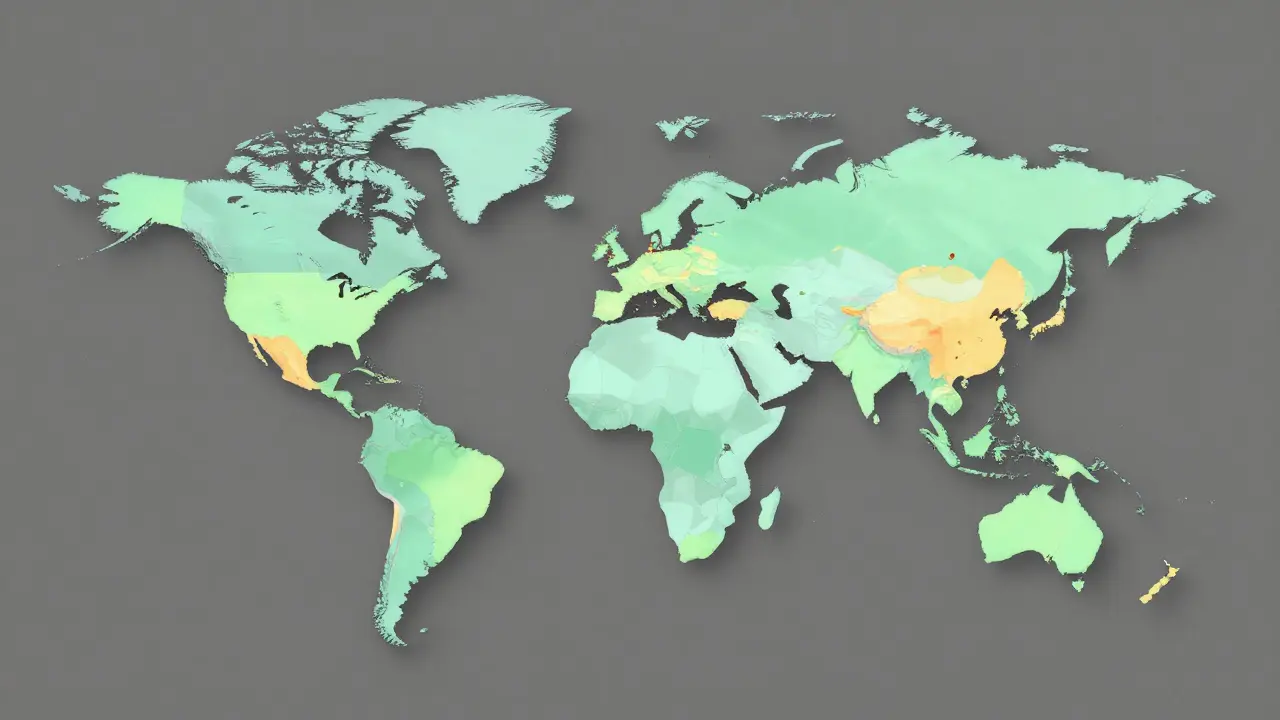
If you run a digital asset business or manage a crypto portfolio across borders, you know the regulatory landscape moves fast. The most critical shift recently involves how global authorities track and restrict financial flows. For many, the name 'FATF' sounds bureaucratic, but for anyone dealing with virtual assets, its lists dictate whether your transactions get processed or blocked. The difference between being listed on the 'grey' list versus the 'black' list can mean the difference between a compliant business operation and total capital flight.
The Financial Action Task Forceis an inter-governmental body that sets global standards for combating money laundering and terrorist financing. Established in 1989, it acts as the watchdog for international financial systems. While originally focused on traditional banking, its influence now extends deeply into the decentralized world of cryptocurrencies. Recent updates in mid-2025 tightened these controls, adding new jurisdictions to watch lists while removing others that met compliance targets. As we move through 2026, understanding these statuses is vital for anyone navigating the intersection of crypto and sovereign law.
Decoding the Blacklist and Greylist
To understand the impact on crypto operations, you first need to distinguish between the two main warning signals the organization uses. These aren't random suggestions; they are binding mandates for banks and regulated entities worldwide. A blacklist, officially termed the 'High-Risk Jurisdictions Requiring Immediate Action,' represents the most severe threat level. When a country lands here, it means their strategic deficiencies in addressing illicit finance are acute.
Currently, three specific nations sit on this blacklist. The North Koreais identified as having severe strategic deficiencies in addressing money laundering, terrorist financing, and proliferation financing. It is notorious for using sophisticated cyber operations to steal digital currency. Next is Iranremains under close monitoring due to continued funding of organizations considered terrorist by much of the international community. Finally, Myanmarmaintains significant strategic deficiencies in its mechanisms for combating money laundering. If your compliance software flags these names, the standard procedure is enhanced due diligence or immediate transaction blocking.
The greylist is different but still demanding. Officially called 'Jurisdictions Under Increased Monitoring,' it signals a country is making progress but hasn't fixed everything yet. As of the major review in June 2025, the list included 24 to 25 countries. New entries like Bolivia and the UK's Virgin Islands joined the ranks during this cycle. On the flip side, Croatia, Mali, and Tanzania successfully climbed off the list after completing their action plans. Being on the greylist doesn't ban you from trading, but it forces every bank processing your transaction to look closer at your source of funds. It creates friction-delays, extra paperwork, and potential rejection of transfers.
| Jurisdiction | Status | Risk Level |
|---|---|---|
| North Korea | Blacklist | Critical (Immediate Action) |
| Iran | Blacklist | Critical (Immediate Action) |
| Myanmar | Blacklist | Critical (Immediate Action) |
| Bolivia | Greylist | Increased Monitoring |
| South Africa | Greylist | Increased Monitoring |
| Virgin Islands (UK) | Greylist | Increased Monitoring |
The Direct Impact on Virtual Assets
You might ask why this matters if crypto is decentralized. The link exists because of the entry and exit points of digital value. To use Bitcoin or Ethereum, you usually interact with a fiat on-ramp or off-ramp-a centralized exchange or bank account. Virtual Asset Service Providersare businesses providing services for the transfer, custody, or management of virtual assets. Banks cut ties with companies that serve high-risk jurisdictions. If your crypto exchange accepts customers from greylisted regions without rigorous checks, your bank account could be frozen overnight. This makes the restriction effectively global.
In practice, this translates to stricter Know Your Customer (KYC) protocols. When a user in a greylisted country tries to withdraw cash, the system demands proof of identity and source of wealth far beyond a passport scan. For blacklisted entities, the protocol is often binary: reject the connection. There are documented cases where Pakistani citizens lost access to foreign exchange tools after their nation's past greylisting caused correspondent banks to tighten credit lines. Estimates suggest Pakistan lost around $38 billion over a decade due to such capital flight. For emerging economies, these financial sanctions can stall broader economic development programs because compliance costs drain state resources.
The correlation with corruption is also stark. Research indicates that countries with higher public servant corruption rates are five times more likely to appear on the Grey List. Corrupt officials often fail to prosecute financial crime because bribery undermines the judiciary. This creates systemic gaps where illicit funds flow through unmonitored channels. In 2024, South Africafollowed increased corruption concerns under previous leadership before entering the list. The listing persists until internal governance improves. For crypto investors, this serves as a red flag. If the underlying legal system is weak, the local crypto market becomes a playground for money launderers rather than legitimate traders.
Operational Challenges for Businesses
Running a fintech startup or managing a crypto hedge fund requires constant updates to your subscription agreements. You cannot rely on old databases. When the FATF updates its lists, your internal screening tools must sync immediately. The addition of the Virgin Islands and Bolivia in June 2025 required service providers to update geofencing parameters overnight. Failure to do so exposes the company to fines or license revocation. Compliance teams utilize advanced transaction monitoring systems to flag dealings with listed countries, requiring manual review and reporting to authorities.
The challenge intensifies with Decentralized Finance (DeFi). Traditional banks check IP addresses and ID documents. But peer-to-peer swaps on a blockchain don't always require identity verification. Regulatory arbitrage emerges as platforms relocate to avoid these costs. However, major exchanges typically implement global standards exceeding minimum requirements to keep their banking relationships intact. The reputational risk of serving restricted markets often outweighs the revenue generated there.
Consider the "Travel Rule." This regulation requires sharing sender and receiver information for transfers above a certain threshold. Originally for wire transfers, it now applies to VASPs. The goal is to track the movement of funds across borders similarly to traditional banking. For users in greylisted nations, this means sending a large crypto payment triggers an automated request for personal details. If the destination jurisdiction lacks the infrastructure to share this data, the transaction fails. It creates a bottleneck where the technology is ready, but the legal framework halts the flow.

Economic Consequences and Delisting Struggles
Once listed, getting off the list is incredibly difficult. It requires more than just writing laws on paper; governments must enforce them. Geopolitics often plays a role. Syriaand Yemen have remained grey-listed since February 2020. By mid-2024, they had technically addressed their action plans. However, ongoing security situations prevented FATF from conducting necessary on-site visits to verify enforcement. Without that physical confirmation, the status remains unchanged indefinitely.
This delay has real-world costs. Governments may abandon beneficial policy programs because they conflict with FATF principles. Albania, for example, rejected a Voluntary Tax Compliance program specifically because it didn't comply with anti-laundering transparency rules. It shows how compliance dictates domestic policy. Investors looking at these markets see volatility. A sudden removal of financial access can destabilize a national economy overnight.
Crypto adoption trends show a paradoxical rise in these restricted areas. Despite sanctions, North Korea continues sophisticated crypto heists to bypass financial blocks. Iran has explored developing state-backed digital currencies to normalize transactions. Myanmar saw increased usage following political instability, as citizens sought alternatives to hyper-inflated local currency. Instead of eliminating crypto use, strict international restrictions sometimes drive the activity underground into darker corners of the web, making it harder to monitor rather than stopping it entirely.
Navigating Compliance in 2026
Looking ahead into late 2026, the focus will shift toward integrating Central Bank Digital Currencies (CBDCs). These government-backed tokens may change how FATF assesses digital compliance. Authorities are planning expanded guidance specifically addressing DeFi protocols. We expect updates to the Travel Rule requiring even more granular information sharing between crypto service providers. The days of fully anonymous wallet interactions are shrinking rapidly.
For individuals in affected regions, the strategy is clear. Maintain pristine records of your asset origin. If you are a VASP operator, audit your third-party vendors regularly. Do not assume a generic geoblock covers you. You need dynamic screening that checks the FATF status in real-time. The cost of non-compliance is no longer just fines; it's loss of operational capability. Understanding the map of these listings is as important as understanding the charts of price movements.
Which countries are currently on the FATF blacklist?
As of the latest comprehensive review in June 2025, the blacklist includes North Korea, Iran, and Myanmar. These three jurisdictions face the strictest Enhanced Due Diligence measures and often result in total transaction blocking for international financial services.
What does it mean if my country is on the FATF greylist?
A greylist placement means your country is under increased monitoring. You likely won't be blocked from trading, but financial institutions will apply stricter checks on transactions. This includes deeper background checks, source of funds documentation, and potentially delayed transfer processing times.
How does FATF status affect cryptocurrency wallets?
If a crypto service provider serves you, they must screen your location. If your address or IP links to a blacklisted region, accounts may be suspended. For greylisted regions, withdrawals and deposits often require additional verification steps to satisfy Anti-Money Laundering (AML) laws.
Can a country leave the greylist?
Yes, countries like Croatia, Mali, and Tanzania were removed from the list after completing their action plans and fixing strategic deficiencies in their anti-corruption and financial laws. It requires both legislative changes and physical site inspections by FATF representatives.
Why is South Africa on the greylist?
South Africa was added in 2024 largely due to concerns over corruption levels impacting its financial integrity systems. Data suggested high public perception of corruption, creating risks for money laundering. It remains there until enforcement actions demonstrate resolved issues.
Wade Berlin
30 03 26 / 10:56 AMIt is funny how compliance teams suddenly appear out of nowhere whenever regulations shift. Everyone acts like they anticipated this change six months ago. We all pretend the blacklists are purely for security purposes. Reality checks show they often follow political agendas. Banks freeze accounts faster than they approve transfers. The definition of risk gets bigger every year. Crypto enthusiasts loved the idea of anonymity originally. Now we fill forms like regular taxpayers. It is efficient if you love paperwork. Otherwise it feels like surrender.
Colin Finch
31 03 26 / 00:54 AMThe digital landscape transforms rapidly with these updates. Financial authorities weave complex webs around asset flows. Blacklisted nations face severe restrictions on transactions. North Korea sits firmly at the top of the danger zone. Iran continues to challenge international banking norms. Myanmar remains a significant concern for regulators. Greylisted jurisdictions experience increased monitoring scrutiny. Bolivia joined the ranks recently alongside South Africa. Banks implement enhanced checks on every transfer. Users must provide detailed proof of funds. Transactions face delays while audits occur. Delisting requires genuine legal reforms within nations. Governments work hard to regain full status. Some economies suffer from capital flight costs. Investors watch the maps closely for changes. This evolution shapes our future financial freedom.
Alex Kuzmenko
1 04 26 / 19:39 PMits importent to note the geofencing paramters change often. my company had issues with the virgin islands last month. the system blocked everything suddenley without warning. we had to update the whote database manualy. its frustrating dealing with govment lists like this. people forget how much data is reqired now. compliance cost go up every quarter. we need bettor tools to screen addresses. hope the next review clears some regions soon. thanks for sharing this breakdown everyone.
Alex Lo
2 04 26 / 01:43 AMso basically when you look at the big picture of fatf rules its actually quite complicated for small businesess to manage because you have to worry about teh travel rule and making sure your vendor does kyc correctly or you get in trouble and i mean real trouble with license revocation which is scary because losing your license means losing your entire revenue stream overnight and nobody wants that happening to them but thats the reality we live in now with centralized exchanges controlling access points for blockchain activity. also consider how defi protocols try to bypass these controls but eventually they still need to interface with fiat rails which are the weak link in the system and everyone knows that banks will pull the plug if they see any red flags from graylist regions so operators just cut ties to stay safe rather than fight the regulators. it makes the ecosystem smaller but safer for institutional investors who are watching closely to see how this plays out over the next five years or so until we get full clarity on cbdc integration plans.
Cara Boyer
3 04 26 / 09:06 AMThese directives signal a coordinated reduction in monetary sovereignty 🚩. Western institutions consolidate power through surveillance mechanisms. National economic policies bend to external demands. We observe this pattern repeating globally 🛑. Freedom of movement for capital vanishes under guise of security. Citizens become subjects of algorithmic oversight. Trust in local governance erodes quickly. This centralization serves specific interests only 🧐. Vigilance remains necessary for all parties involved. Protect your assets accordingly.
Raymond K
4 04 26 / 10:45 AMthis is really helpful info to understand the situation better. i was confuesd about what the graylist meant before reading this. knowing the difference helps avoid trouble later. we should all support each other during these changes. staying informed keeps us safe from risks. lets hope regulations stay fair for everyone. i am glad you shared this knowledge with us. its important for community education. keep sharing updates if you find more details. we can figure this out together friends.
Chris R
4 04 26 / 16:53 PMCompliance protocols require immediate adjustment for all businesses.
Leah Lara
5 04 26 / 23:06 PMseems like another regulatory hurdle nobody enjoys facing. the process is slow and painful for everyone involved. hopefully it gets easier later.
Justin Smith
6 04 26 / 09:58 AMThe data presented reflects the June 2025 snapshot accurately. Current listings differ slightly by early 2026 standards. Readers must verify real-time statuses via official channels. Static tables expire rapidly in this sector. Accuracy is paramount for legal adherence.
Disha Patil
6 04 26 / 23:11 PMYou seem very upset about the government rules today. I do not see why you are so scared of them. Just follow the steps they tell you to do. Everything will be fine if you obey. Stop worrying so much about control. We just need to move forward with life. Do not let fear take over your thoughts. Focus on keeping your wallet safe. That is the main priority for us now. Relax and trust the system works for now.
Elizabeth Akers
7 04 26 / 10:58 AMgood summary of the situation really. seems like things are changing fast. i agree we need to adapt soon.