
Running a cryptocurrency exchange in the United States isn't just about building a slick trading interface or securing your servers. It’s about navigating one of the most complex regulatory mazes in finance. If you are operating a centralized platform that lets users trade Bitcoin, Ether, or stablecoins, you are likely already under the watchful eye of FinCEN, which is the Financial Crimes Enforcement Network, a bureau of the U.S. Department of the Treasury responsible for safeguarding the financial system from illicit activity. As of July 2026, ignoring these rules isn't an option-it’s a fast track to severe penalties, frozen assets, and criminal charges.
You might think you’re just facilitating peer-to-peer trades, but if you accept virtual currency to send, receive, or store it for others, you are legally defined as a Money Services Business (MSB). This designation triggers a cascade of federal obligations under the Bank Secrecy Act (BSA). This guide breaks down exactly what FinCEN requires, how it intersects with state-level licenses, and what new reporting rules are reshaping the industry right now.
Who Needs to Register with FinCEN?
The first question every founder asks is whether their specific business model falls under FinCEN’s jurisdiction. The short answer is yes, if you are a centralized entity handling user funds. FinCEN does not issue traditional "licenses" like a driver’s permit; instead, it requires registration as a Money Services Business (MSB). This registration signals to the government that you are aware of your obligations to prevent money laundering and terrorist financing.
You must register if your platform engages in any of the following activities involving convertible virtual currency (CVC):
- Money Transmission: Accepting value from one person and transmitting it to another. This includes crypto-to-fiat swaps (buying BTC with USD) and crypto-to-crypto swaps (swapping ETH for USDC).
- Custody Services: Holding private keys on behalf of customers. If users log into your platform to see their balance, you are likely a custodian.
- Payment Processing: Enabling merchants or users to pay for goods and services using cryptocurrency.
- Exchange Operations: Operating an order book or automated market maker (AMM) where you facilitate trades between users.
Decentralized protocols present a gray area. If your platform is truly non-custodial and has no central administrator controlling transactions, you may argue you are not an MSB. However, FinCEN has increasingly targeted entities that provide "mixing" or "tumbling" services, classifying them as unlicensed MSBs regardless of decentralization claims. In 2023, FinCEN explicitly warned against mixing services, signaling that anonymity-enhancing technologies are under intense scrutiny.
The Dual Burden: Federal Registration vs. State Licenses
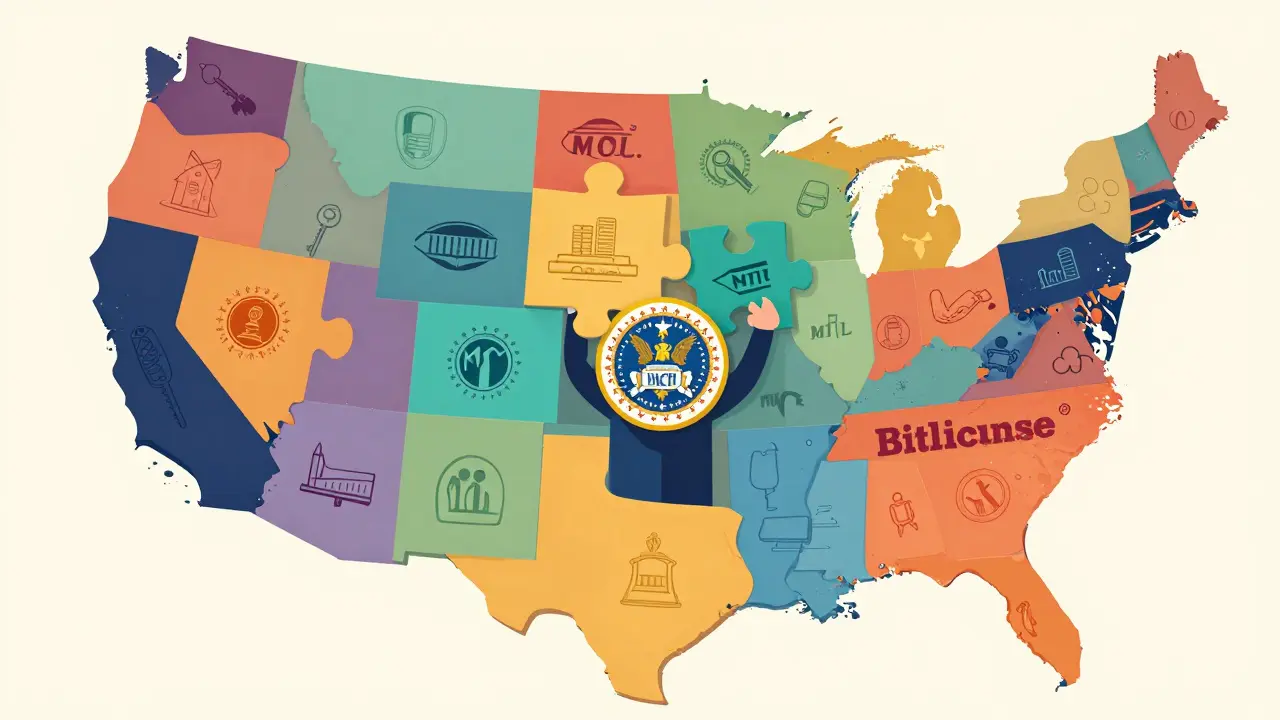
Registering with FinCEN is only half the battle. The United States operates on a dual regulatory framework. While FinCEN handles federal Anti-Money Laundering (AML) and Countering the Financing of Terrorism (CFT) compliance, individual states control who can actually operate within their borders. This creates a fragmented landscape that many startups underestimate.
| Regulatory Layer | Authority | Primary Requirement | Scope |
|---|---|---|---|
| Federal | FinCEN / Treasury | MSB Registration & AML Program | Nationwide oversight of illicit finance risks |
| State | Department of Financial Institutions (varies by state) | Money Transmitter License (MTL) | Operational permission to conduct business in that state |
| Special Case | New York DFS | BitLicense | Strict operational and capital requirements for NY operations |
To operate nationwide, you generally need to obtain a Money Transmitter License (MTL) in all 50 states. Each state has its own application process, fees, bonding requirements, and examination schedules. New York stands out with its BitLicense, which is widely considered one of the most rigorous and expensive licenses to obtain. Many smaller exchanges choose to partner with licensed payment processors or bank networks to avoid the multi-year, million-dollar cost of obtaining MTLs in every jurisdiction. However, this partnership strategy requires careful legal structuring to ensure you aren't acting as an unlicensed transmitter yourself.
Core Compliance Obligations Under the BSA
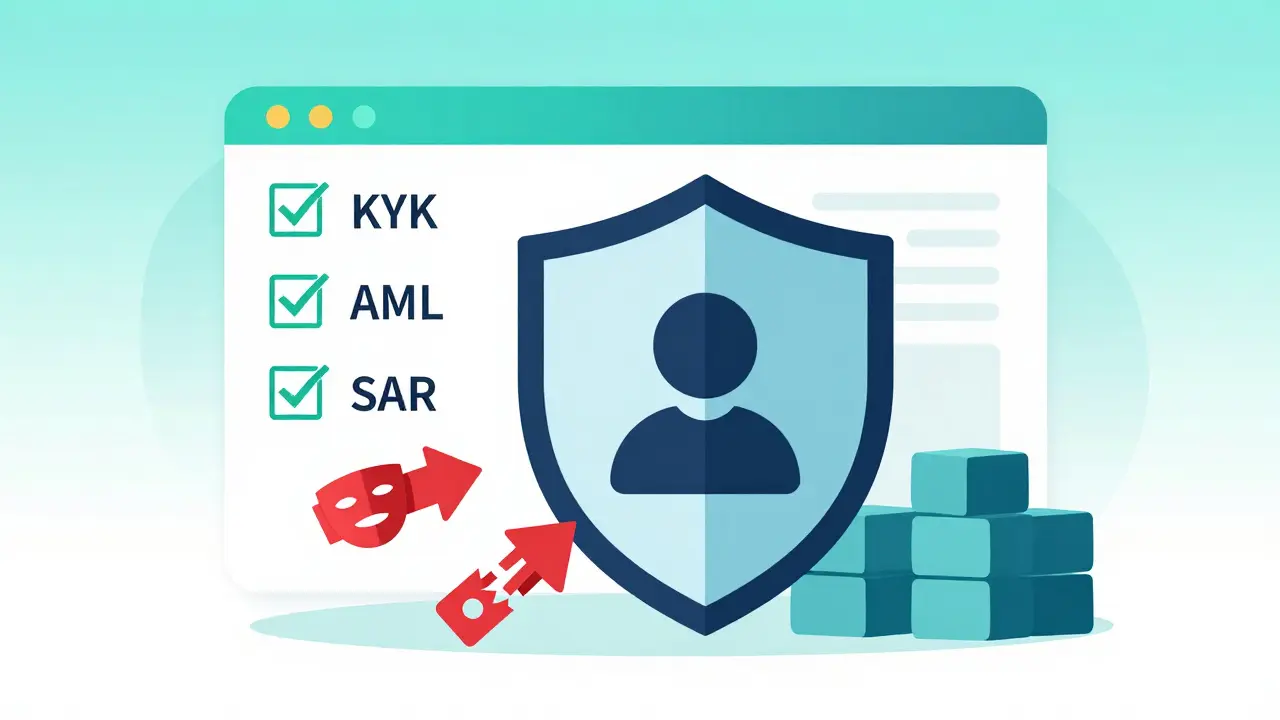
Once registered, the real work begins. FinCEN expects you to have a robust AML/CFT program tailored to your specific risk profile. This isn't a checkbox exercise; it's an ongoing operational requirement. Your program must include five core components:
- Independent Testing: Regular audits by independent third parties to evaluate the effectiveness of your AML controls.
- Designated Compliance Officer: A specific employee responsible for day-to-day monitoring and reporting. This person must have sufficient authority and resources.
- Ongoing Employee Training: Staff must be trained on red flags related to cryptocurrency, such as structuring, layering, and integration techniques used by launderers.
- Customer Identification Program (CIP): You must verify the identity of every customer before opening an account. This means collecting full name, date of birth, address, and identification number (like a Social Security Number or passport number).
- Risk-Based Policies: Documented procedures for assessing and mitigating risks associated with different customer types, geographies, and transaction patterns.
Record-keeping is equally critical. You must maintain records of all transactions involving convertible virtual currency for at least five years. This includes details of the sender, receiver, amount, and timestamp. For large transactions, you may also need to file Currency Transaction Reports (CTRs) if they exceed $10,000, although FinCEN has specific guidance on how CTRs apply to digital assets.
Suspicious Activity Reporting (SARs) in Crypto
The most sensitive part of your compliance job is filing Suspicious Activity Reports (SARs). If you detect a transaction that lacks economic sense, involves known illicit addresses, or shows signs of money laundering, you must file a SAR with FinCEN within 30 days of detection. Failure to file can result in significant fines.
In the crypto world, red flags often look different than in traditional banking. Watch out for:
- Peeling Chains: Small amounts being moved across multiple wallets to obscure the origin.
- Mixer Interaction: Users sending funds to or receiving funds from known mixing services or tumblers.
- Rapid Turnover: Accounts that deposit and withdraw large sums immediately without holding balances.
- Sanctioned Jurisdictions: Transactions linked to countries or entities under OFAC sanctions.
Automated blockchain analytics tools are essential here. Most compliant exchanges integrate platforms like Chainalysis, Elliptic, or TRM Labs to screen addresses in real-time. These tools help you identify high-risk interactions before they become regulatory liabilities.
New Rules for Unhosted Wallets and Digital Assets
The regulatory landscape shifted significantly in late 2024 and early 2025 with proposed and finalized rules targeting "unhosted wallets." An unhosted wallet is one where the user holds their own private keys, rather than relying on an exchange or custodian. FinCEN has moved to classify convertible virtual currencies and certain digital assets as "monetary instruments" under the BSA.
This change imposes stricter requirements on banks and MSBs interacting with unhosted wallets. If your exchange allows deposits or withdrawals to/from unhosted wallets, you may face enhanced due diligence requirements. Specifically, you might need to:
- Verify the identity of the beneficial owner of the unhosted wallet.
- Maintain detailed records of transactions involving these wallets.
- Report transactions above certain thresholds that involve jurisdictions identified as high-risk by FinCEN.
This rule aims to close the loophole where illicit actors use self-custody wallets to bypass KYC checks. For exchanges, this means tightening withdrawal policies and potentially restricting transfers to certain types of external wallets unless proper verification is obtained.
Costs and Operational Impact
Let’s talk numbers. While the initial FinCEN MSB registration fee is relatively modest (often under $1,000), the total cost of compliance is substantial. Between state MTL applications, bonding requirements, legal counsel, compliance software subscriptions, and staff salaries, launching a fully compliant exchange can cost hundreds of thousands to millions of dollars.
Technology infrastructure is a major expense. You need secure key management systems, transaction monitoring software, and KYC verification providers. Legal costs add up quickly as you navigate overlapping jurisdictions from FinCEN, the Securities and Exchange Commission (SEC), and the Commodity Futures Trading Commission (CFTC). The SEC may claim certain tokens are securities, requiring additional disclosures, while the CFTC oversees derivatives and commodities aspects.
Despite the costs, compliance is becoming a competitive advantage. Institutional investors and retail users alike are increasingly wary of platforms that lack transparent regulatory standing. With 28% of American adults owning some form of cryptocurrency as of 2024, trust is a scarce commodity. Demonstrating rigorous adherence to FinCEN guidelines signals stability and legitimacy, helping you attract serious capital and long-term users.
Looking Ahead: Consolidation or Complexity?
As we move through 2026, there are whispers of potential federal consolidation. Concepts like a federal "BitLicense" have been discussed in legislative circles, aiming to replace the patchwork of state MTLs with a single national standard. However, until such legislation passes, the current multi-jurisdictional reality remains.
For now, the trend is toward tighter enforcement. FinCEN is actively pursuing non-compliant entities, particularly those involved in mixing services or facilitating sanctions evasion. The agency’s focus on emerging technologies ensures that compliance is not a static goal but a continuous adaptation. Businesses entering the space must build flexible compliance frameworks that can evolve alongside regulatory guidance.
How long does FinCEN MSB registration take?
The actual online registration process is quick, often taking less than an hour to complete. However, FinCEN reviews applications manually, and approval can take several weeks to months depending on their backlog and the complexity of your business model. You should not begin accepting funds until you have received confirmation of your registration status.
Do I need a FinCEN license if I only operate outside the US?
If you have no nexus with the United States-meaning no US-based employees, servers, marketing, or customers-you generally do not need to register with FinCEN. However, if you serve US persons or process transactions involving US dollars or US-based counterparties, you likely fall under FinCEN’s jurisdiction. Always consult with specialized legal counsel to determine your specific exposure.
What happens if I fail to register as an MSB?
Operating as an unregistered MSB is a serious violation of the Bank Secrecy Act. Penalties can include massive civil fines, seizure of assets, and criminal prosecution for both the company and its executives. FinCEN has publicly enforced actions against several crypto firms for failing to register, resulting in settlements worth tens of millions of dollars.
Is FinCEN registration enough to operate legally?
No. FinCEN registration satisfies federal AML/CFT reporting requirements, but it does not grant you the right to operate as a money transmitter in any specific state. You must still obtain Money Transmitter Licenses (MTLs) from each state where you have customers or physical presence, unless you qualify for a specific exemption.
How do recent rules affect DeFi protocols?
While pure decentralized protocols without central administrators may argue they are not MSBs, FinCEN has shown willingness to target interfaces, front-ends, or entities that provide liquidity or governance over these protocols. If your DeFi project has a foundation, development team, or token holders that exert control, you may be deemed a regulated entity. The line is blurry, and caution is advised.
Ruth Williams
2 07 26 / 12:36 PMIt is truly disheartening to witness the sheer incompetence of those who believe they can bypass federal oversight with naive notions of 'decentralization.' The regulatory framework exists for a reason, and your failure to comprehend the gravity of FinCEN's jurisdiction suggests a profound lack of intellectual rigor. One does not simply opt out of the Bank Secrecy Act because one prefers the aesthetic of code over the substance of law.
The distinction between a legitimate custodial service and an illicit mixing operation is not merely semantic; it is legal bedrock. To suggest otherwise is to display a willful ignorance that borders on negligence. You are either a Money Services Business or you are not. There is no gray area for those who possess the capacity to read and understand statutory definitions. Your continued engagement in this discourse without acknowledging these fundamental truths is both tedious and indicative of a broader societal decline in financial literacy.
Kat Barr
3 07 26 / 20:03 PMomg this is so scary!! 😱 i mean like seriously?? 💸 do we really have to fill out all that paperwork just to trade some bitcoin?? 🤔 its kinda overwhelming tbh but also makes sense i guess?? 🙄 like if its safe then ok i suppose?? 👌 but why is it always so complicated?? 😫
John Harman
5 07 26 / 18:41 PMYou're missing the point entirely. It's not about 'paperwork' for the sake of bureaucracy, it's about preventing your platform from becoming a laundromat for cartel money. If you think compliance is optional, you're already dead. The guys running Tornado Cash didn't get rich; they got indicted. Learn the difference between privacy and anonymity, because the government doesn't care about your philosophical stance on data rights when they're freezing your assets.
Also, stop acting like KYC is some dystopian nightmare. You show ID to buy a plane ticket. Why is showing ID to move millions in crypto suddenly a violation of human rights? Grow up.
Logan Edmison
7 07 26 / 13:30 PMi think the real issue is that the system is broken and trying to fix it with more rules is just putting bandaids on a bullet hole. the whole concept of centralized exchanges is flawed from the start. why should we trust them at all if they are just playing by the govts rules? its all a big scam anyway and the regulations are just ways for the elite to keep control over the little guy. wake up sheeple.
Michelle Walker
9 07 26 / 11:07 AMYour conspiracy theories are irrelevant. The market demands compliance. Institutional capital will not touch unregulated platforms. If you want to play in the big leagues, you follow the rules. Simple as that. Stop whining about 'control' and start understanding economics.
The cost of non-compliance is extinction. Look at the settlements. Millions of dollars. Criminal charges. It’s not a game. It’s business. Adapt or die.
Sophie Nakasako
10 07 26 / 05:58 AMI find it fascinating how the regulatory landscape forces us to reconsider what 'trust' means in a digital ecosystem. While Ruth points out the legal necessities, I wonder if there's a middle ground where technology can facilitate compliance without stripping away user agency. Perhaps the solution isn't just stricter laws, but better tools that make compliance seamless for everyone involved. What do you all think about the role of automated blockchain analytics in bridging this gap? It seems like a promising avenue for maintaining both security and privacy.
Antony Lopez
10 07 26 / 18:01 PMAmerican companies need to follow American laws. Period. We don't need foreign entities or decentralized protocols hiding behind code to evade our tax obligations and anti-money laundering statutes. This is about national security and protecting our financial infrastructure. If you can't operate within the US legal framework, you shouldn't be operating here. It's that simple. We built this country on rule of law, not on libertarian fantasies about escaping regulation. Get licensed or get out.
Shay Thomson
11 07 26 / 06:05 AMOh my goodness, can we please just breathe for a second? The tension in this thread is absolutely palpable! It feels like we're all standing on a precipice, looking down into the abyss of bureaucratic red tape, screaming at each other while the world burns around us! But maybe... just maybe... there's a light at the end of the tunnel? A way to harmonize our desires for freedom with the need for order? Let's not lose hope! The future is still unwritten!
DJ Maleko
11 07 26 / 11:06 AMLook, I don't care about your feelings or your philosophy. I care about the bottom line. If you're running an exchange, you're making money. Pay the price of admission. The BitLicense is expensive? Good. That keeps the amateurs out. I've seen too many startups fail because they thought they could hack their way through compliance. You can't hack the Treasury Department.
And to the person asking about DeFi - stop pretending it's magic. Someone wrote the code. Someone deployed the contract. Someone holds the governance tokens. Find them. Regulate them. Or don't, and watch the DOJ sweep in later. It's always easier to comply now than to defend yourself in court later. 📉💸
Erika Pozzetto
13 07 26 / 03:18 AMIt is imperative to consider the long-term implications of these regulatory shifts on the global financial architecture, particularly as we observe the increasing convergence of traditional finance and digital asset ecosystems, which necessitates a comprehensive understanding of the interplay between federal mandates such as those issued by FinCEN and the varying state-level requirements that create a complex patchwork of compliance obligations for operators seeking to establish a presence across multiple jurisdictions within the United States, thereby highlighting the critical importance of robust legal counsel and strategic planning in navigating this evolving landscape.