
You’ve heard the name Forteswap, maybe in an ad or a forum post promising easy trading. But when you look closer, something feels off. There’s barely any information about it online. No detailed reviews. No clear team members. No proof of where your money sits. In the world of cryptocurrency, silence is often louder than noise.
This review cuts through the confusion. We’ll examine what Forteswap actually is, why it lacks transparency, and how it compares to trusted platforms like Coinbase, Kraken, and Bybit. If you’re thinking of depositing funds here, read this first. Your capital deserves better than guesswork.
What Is Forteswap? The Mystery Behind the Name
Forteswap is a cryptocurrency exchange platform with limited public documentation and minimal industry presence as of mid-2026. Unlike major exchanges that publish quarterly reports, security audits, and team bios, Forteswap operates in the shadows. A quick search reveals almost nothing beyond a single mention on FxVerify-a site that lists reviews but rarely provides deep analysis for obscure platforms.
Here’s the red flag: legitimate exchanges don’t hide. They compete on trust. Binance publishes Proof of Reserve data monthly. Kraken shares its cold storage protocols openly. Coinbase files regulatory updates publicly. Forteswap does none of these things. That absence isn’t just inconvenient-it’s dangerous.
Many users confuse Forteswap with Forta (FORT), which is a blockchain security protocol token listed on several decentralized exchanges. Forta has real utility: it powers network monitoring tools used by developers to detect anomalies. Its price fluctuates based on market demand, not exchange performance. Mixing up Forta with Forteswap leads to costly mistakes. Always verify the exact URL and legal entity before connecting your wallet.
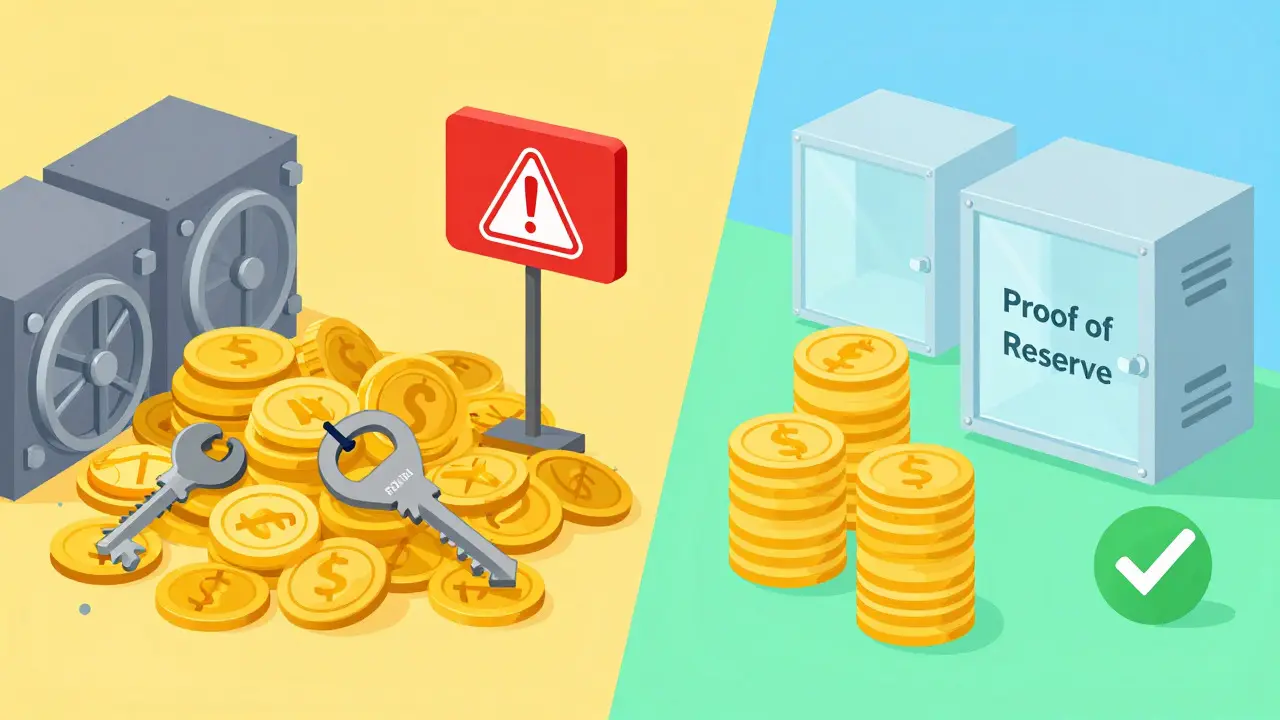
Security Gaps: What Happens When You Can’t See the Vault?
In crypto, security isn’t optional. It’s survival. Major exchanges use multi-layered defenses: hardware wallets, multi-signature approvals, AI-driven fraud detection, and regular third-party audits. These aren’t marketing buzzwords-they’re requirements after high-profile hacks like Phemex’s $70 million loss in January 2025.
So what do we know about Forteswap’s security? Almost nothing. There’s no mention of two-factor authentication (2FA) enforcement. No details on cold storage percentages. No record of past breaches-or lack thereof. Without transparent security practices, you’re gambling with every deposit.
- No published Proof of Reserve audits
- Unknown insurance coverage for user assets
- Lack of visible compliance with KYC/AML standards
- No history of independent security assessments
Compare that to Kraken, which uses Merkle tree verification so users can independently confirm their funds exist. Or Bybit, which maintains segregated accounts and daily withdrawal reviews. Transparency builds trust. Opacity breeds risk.
Fees and Trading Pairs: Hidden Costs Await
Even if Forteswap were secure, would it be worth using? Let’s talk fees. Established exchanges charge between 0% and 3.99%, depending on volume and order type. Maker fees are lower because they add liquidity; taker fees are higher because they remove it. Some even offer fee discounts via native tokens or VIP tiers.
Forteswap? Silent again. No fee schedule. No explanation of spread costs. No clarity on withdrawal charges. This isn’t oversight-it’s evasion. Traders need predictable pricing to manage risk. Guessing fees means eating unexpected losses.
Trading pairs matter too. Top platforms support hundreds of cryptocurrencies plus fiat options like USD, EUR, GBP, AUD, and CAD. You can buy Bitcoin with a credit card, PayPal, or bank transfer. Forteswap offers no such flexibility. Unsupported currencies mean extra steps, higher conversion costs, and delayed access to your money.
| Feature | Forteswap | Coinbase | Kraken | Bybit |
|---|---|---|---|---|
| Proof of Reserve | Unknown | Yes (Monthly) | Yes (Merkle Tree) | Yes (Regular Audits) |
| Fee Range | Not Disclosed | 0% - 3.99% | 0% - 0.4% | 0.1% - 0.6% |
| Fiat Support | Limited/None | USD, EUR, GBP, etc. | USD, EUR, GBP, AUD, etc. | EUR, USD, MXN, CRC, PEN, GBP |
| Security Incidents | Unreported | None Major Since 2020 | None Major Since 2018 | $70M Hack (Jan 2025) |
| User Base Size | Estimated <10K | >110 Million | >13 Million | >40 Million |
Why Does Information Matter So Much?
You might think, “If it works, who cares?” Wrong. Crypto isn’t banking. Once your coins leave your wallet, recovery depends entirely on the exchange’s honesty and infrastructure. Remember FTX? Users lost billions because there was no audit trail. No reserves. Just promises.
Forteswap doesn’t promise much-but it also proves little. That gap is where scams thrive. Fraudulent platforms often mimic legitimate ones, copy interfaces, and disappear once deposits roll in. The Crypto Legal database tracks thousands of such cases globally. While Forteswap isn’t currently listed there, absence from a blacklist doesn’t equal safety. Many new scams haven’t been caught yet.
Ask yourself: Who runs Forteswap? Where are they registered? Do they respond to customer complaints? Have they ever faced regulatory scrutiny? If you can’t answer those questions confidently, walk away.
Better Alternatives Exist-Use Them
Don’t settle for uncertainty. Choose platforms built on accountability. Here’s what each top contender brings:
- Coinbase: Best for beginners. Simple interface, strong U.S. compliance, instant buys via debit card or PayPal.
- Kraken: Ideal for advanced traders. Low fees, deep liquidity, excellent desktop app, and robust API access.
- Bybit: Strong for derivatives and leveraged trading. Supports multiple fiat gateways including SEPA and Apple Pay.
- Binance: Largest selection of altcoins. High-volume discounts, staking rewards, and global reach.
All four have survived market crashes, regulatory pressures, and cyberattacks. Their track records speak volumes. Forteswap has none.
How to Verify Any Exchange Before Depositing
Before trusting any platform-even one with a fancy website-run this checklist:
- Check if the company is registered with financial authorities (e.g., FinCEN, FCA, ASIC).
- Look for recent Proof of Reserve statements or audit reports.
- Search Reddit, Trustpilot, and Twitter for user experiences-not just ads.
- Test customer support with a simple question. Response time matters during emergencies.
- Start small. Deposit $10, withdraw it, then scale up only after confirming smooth operations.
These steps take five minutes. Skipping them could cost you everything.
Is Forteswap a scam?
While not officially labeled a scam yet, Forteswap exhibits classic warning signs: zero transparency, no security disclosures, and minimal online presence. Until proven otherwise, treat it as high-risk.
What’s the difference between Forteswap and Forta?
Forta (FORT) is a blockchain security token traded on DEXs. Forteswap claims to be a centralized exchange. They share similar names but serve completely different purposes. Confusing them may lead to investing in the wrong asset.
Can I trust exchanges without Proof of Reserve?
Only temporarily. Without PoR, you have no way to verify your funds actually exist. After FTX collapsed, regulators mandated greater reserve transparency. Avoid platforms ignoring this standard.
Which exchange should I choose instead?
For simplicity, pick Coinbase. For low fees and advanced tools, go with Kraken. For futures and leverage, try Bybit. All three are regulated, audited, and widely trusted.
How do I check if an exchange is legit?
Search for registration numbers, read independent reviews, test withdrawals, and join community forums. Legitimate exchanges welcome scrutiny. Suspicious ones deflect it.
Leave a comments