
Imagine you have a massive amount of capital to move. You don't want to crash the price when you buy or sell. You want a tool that handles your trade slowly and steadily over time, minimizing slippage. That is exactly what Fraxswap promises with its unique Time-Weighted Average Market Maker (TWAMM) technology. But does this promise hold up on the Fantom blockchain? Or is it just another abandoned experiment in the crowded world of decentralized finance?
If you are looking for a high-speed trading platform with deep liquidity for quick swaps, Fraxswap on Fantom might not be the answer. However, if you are a DAO treasury manager or an institutional trader interested in algorithmic execution strategies, this protocol offers something no other exchange provides. Let's break down what Fraxswap actually is, how its tech works, and whether it’s worth your attention in 2026.
What Is Fraxswap on Fantom?
Fraxswap is a decentralized automated market maker (AMM) built by Frax Finance. It operates similarly to Uniswap but adds a layer of sophistication through its integration with the broader Frax ecosystem. The version deployed on the Fantom Opera network allows users to swap tokens like WFTM, FRAX, and FXS without needing a central intermediary.
Unlike traditional exchanges where orders are matched in an order book, AMMs use liquidity pools. When you trade on Fraxswap, you are swapping directly against a pool of funds provided by other users. The price is determined by a mathematical formula, typically the constant product formula ($x \times y = k$). This ensures that trades can happen 24/7 as long as there is liquidity in the pool.
The key differentiator here isn't just the basic swapping mechanism-it's the proprietary features borrowed from the main Ethereum deployment of Fraxswap. Specifically, the ability to create custom pools and, more importantly, the TWAMM functionality. This makes Fraxswap distinct from generic clones found on many blockchains.
The Game Changer: TWAMM Explained
This is the part that matters most for serious traders. Most AMMs execute trades instantly. If you try to sell $1 million worth of a token in one click, you will likely suffer huge slippage because you are draining the available liquidity at once. The price moves against you before the trade even finishes.
TWAMM stands for Time-Weighted Average Market Maker. Instead of executing a large order all at once, TWAMM spreads the trade out over a set period-say, 24 hours or several days. It sells small amounts continuously, averaging out the price over time.
- For Institutions: It prevents market impact. You can offload large positions without signaling distress to the market.
- For DAOs: Treasuries can rebalance assets smoothly without causing volatility in their own governance tokens.
- For Retail: While less critical for small trades, it protects against sudden wicks during volatile periods.
On the Fantom network, this feature is technically viable due to the chain's speed and low costs. However, the utility depends entirely on whether there is enough liquidity to support these timed executions effectively.
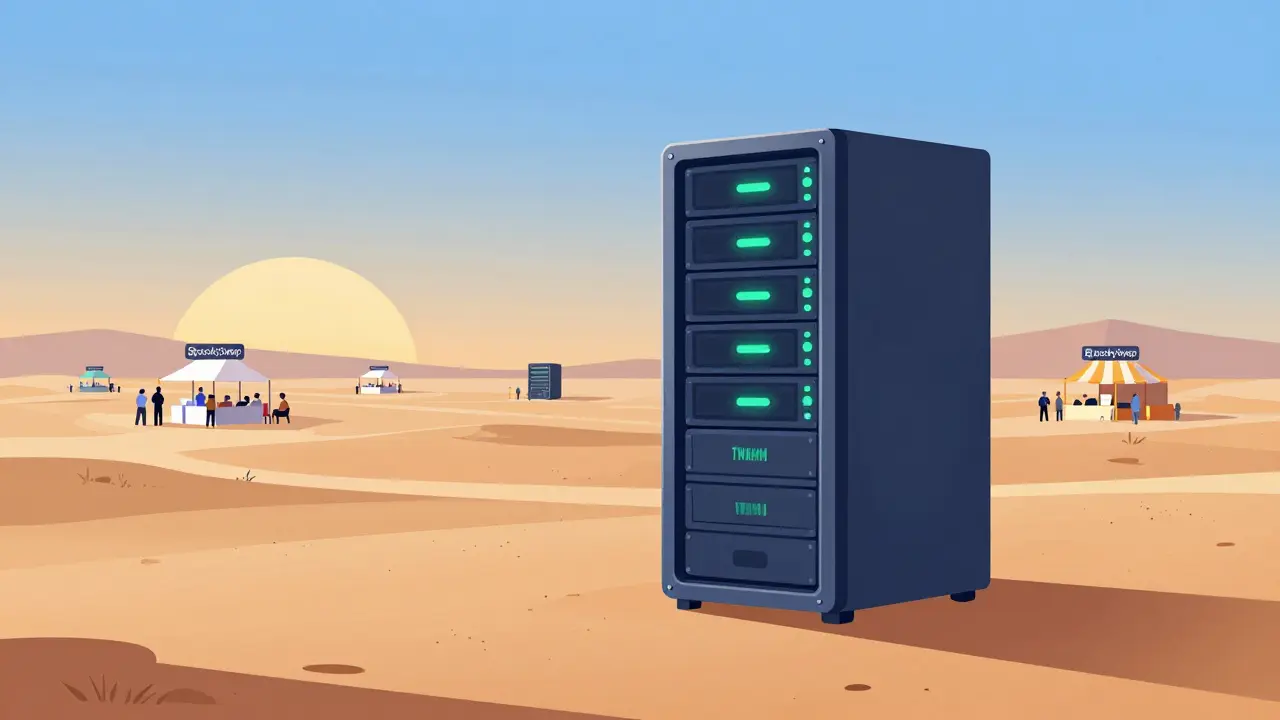
Liquidity Reality Check: The Numbers Don't Lie
Here is where we need to get real. Technology is impressive, but a DEX is only as good as its liquidity. Without depth, even the best algorithms fail.
Data from mid-2025 and early 2026 paints a concerning picture for Fraxswap on Fantom. Major tracking platforms like CoinMarketCap classify the Fantom-specific volume as "Untracked" or negligible. Reports indicate daily trading volumes hovering around fractions of a dollar for specific pairs like WFTM/FRAX. Compare this to competitors like SpookySwap or SpiritSwap, which process millions in daily volume.
| Platform | Estimated Daily Volume | Key Feature | Best For |
|---|---|---|---|
| Fraxswap (Fantom) | < $1 (Untracked) | TWAMM, Custom Pools | Institutional/Treasury Management |
| SpookySwap | $1M - $10M+ | High Liquidity, Staking | Retail Swaps, Yield Farming |
| SpiritSwap | $500K - $5M+ | User-Friendly UI | New Users, Quick Trades |
| Beethoven X | $200K - $2M+ | Concentrated Liquidity (Balancer V2) | Advanced Traders, Efficiency |
Why is the volume so low? Several factors contribute. First, the Frax ecosystem's primary focus has been on Ethereum and Arbitrum. Second, Fantom's own DeFi summer boom cooled significantly after regulatory pressures and team controversies in 2023-2024. Many users migrated away, taking their liquidity with them. As a result, Fraxswap on Fantom suffers from a chicken-and-egg problem: traders won't come because there's no liquidity, and providers won't add liquidity because there are no traders.
User Experience and Technical Setup
If you decide to test Fraxswap despite the low volume, the experience is straightforward. You need a Web3 wallet compatible with Fantom, such as MetaMask or Trust Wallet. Ensure your network settings include the Fantom Opera RPC details.
- Connect Wallet: Visit the Fraxswap interface and connect your wallet. You will see your FTM balance.
- Select Pair: Choose the token pair you wish to trade. Currently, WFTM/FRAX and FXS/FRAX are the most relevant, though liquidity is thin.
- Approve Tokens: If you haven't traded these tokens on Fraxswap before, you must approve the smart contract to spend your assets. This costs a tiny fee in FTM gas.
- Execute Swap: Enter the amount and confirm. Note that due to low liquidity, the price impact warning may be high unless you use TWAMM.
The interface is clean and mirrors the standard AMM layout. However, documentation specific to the Fantom deployment is sparse. Most guides refer to the global Fraxswap protocol. Smart contracts are open-source, which is a plus for security-conscious users, but independent audit reports specifically for the Fantom instance are not prominently displayed in public docs.
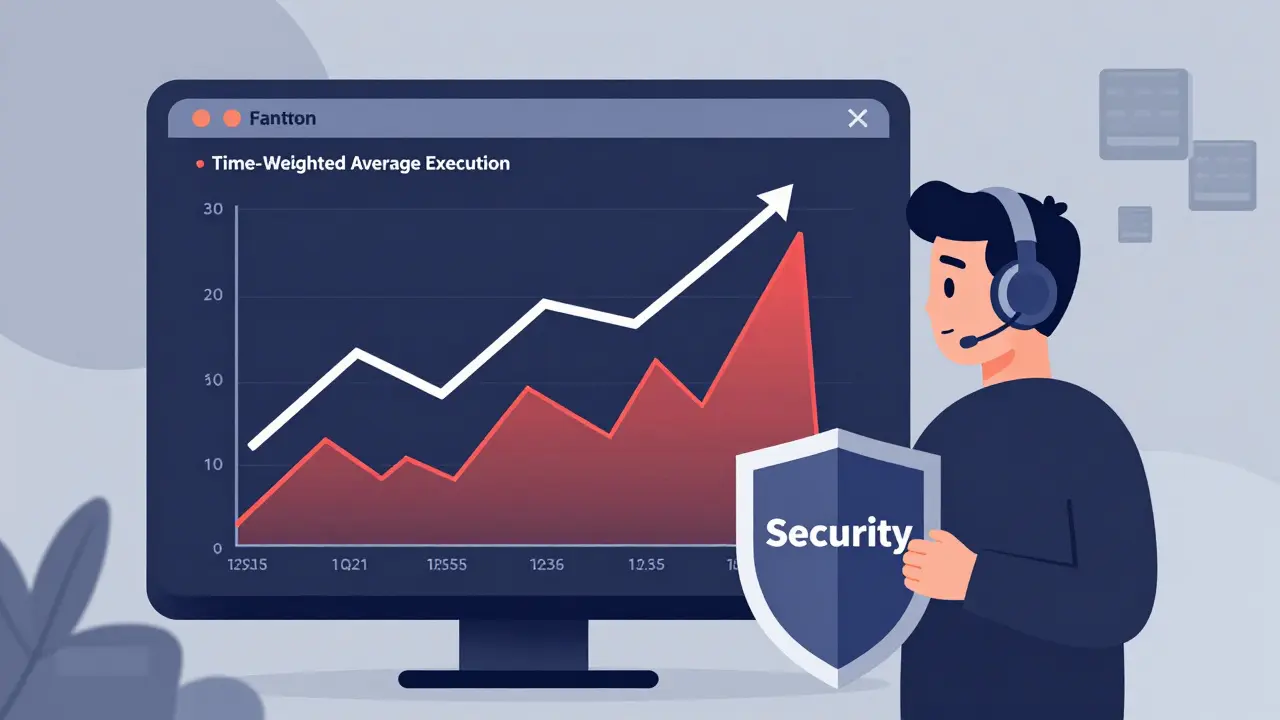
Security and Risks
Security in DeFi is never guaranteed. Fraxswap benefits from being part of the larger Frax Finance ecosystem, which has undergone multiple audits. The core codebase is shared across chains, meaning vulnerabilities found on Ethereum are often patched globally.
However, risks remain:
- Smart Contract Risk: Any bug in the code could lead to loss of funds. Always verify contract addresses yourself.
- Liquidity Risk: With such low volume, impermanent loss for liquidity providers can be severe if prices diverge sharply.
- Network Risk: While Fantom is fast, any network-level issues could affect transaction finality.
Never invest more than you can afford to lose. Given the experimental nature of the Fantom deployment, treat it as a high-risk environment.
Is Fraxswap Worth Using in 2026?
For the average retail trader wanting to swap FTM for USDC quickly, Fraxswap is likely not the best choice. The slippage will eat into your profits, and the lack of liquidity means you might not get the price you expect. Stick to SpookySwap or SpiritSwap for everyday transactions.
However, if you manage a treasury or hold significant amounts of FXS or FRAX and want to execute large moves without moving the market, Fraxswap's TWAMM is a powerful tool. Even with lower overall volume, the algorithmic approach can provide better execution prices for large blocks compared to instant swaps on deeper but simpler pools.
The future of Fraxswap on Fantom depends on two things: renewed interest in the Fantom network and strategic incentives from Frax Finance to boost liquidity. Until then, it remains a niche tool rather than a mainstream exchange.
What is TWAMM on Fraxswap?
TWAMM stands for Time-Weighted Average Market Maker. It allows large trades to be executed gradually over a specified time period, reducing slippage and market impact. This is ideal for institutional investors and DAO treasuries managing large asset allocations.
Is Fraxswap safe to use on Fantom?
Fraxswap uses audited smart contracts shared with the broader Frax ecosystem. However, like all DeFi platforms, it carries inherent risks including smart contract bugs and liquidity issues. Always do your own research and start with small amounts.
Why is the trading volume on Fraxswap Fantom so low?
The low volume is due to limited user adoption on the Fantom network since 2024, competition from established DEXs like SpookySwap, and a lack of specific marketing incentives for the Fantom deployment. Most Frax activity occurs on Ethereum and Arbitrum.
Can I provide liquidity on Fraxswap Fantom?
Yes, you can provide liquidity to earn swap fees. However, due to low trading volume, the returns may be minimal compared to the risk of impermanent loss. It is generally recommended for those who already hold the underlying tokens and want to support the ecosystem.
How does Fraxswap compare to Uniswap?
While both are AMMs, Fraxswap distinguishes itself with TWAMM for timed executions and tight integration with the Frax stablecoin ecosystem. Uniswap is more focused on general-purpose trading and has significantly higher liquidity across most networks.
nancy jarecki
27 06 26 / 12:44 PMthe entire premise of this protocol is fundamentally flawed because liquidity providers are essentially donating capital to a black hole. the impermanent loss on these thin pairs is astronomical and the twamm feature is just a fancy way to say your money is stuck in smart contracts for days with zero yield. it is pathetic that people still think fantom has any relevance in 2026.
Daniel J. Cox
29 06 26 / 09:10 AMi actually tried using the twamm feature last week for a small rebalance and it was surprisingly smooth. sure the volume is low but if you are moving more than fifty k you really don't want to slip through spooky swap pools. it feels like a niche tool waiting for the right moment. :)
Emma Rémond
1 07 26 / 07:05 AMsmooth? please. the execution risk is non-negotiable when the pool depth is measured in dollars. relying on a fragmented ecosystem like frax on a dead chain like fantom is financial suicide. the market impact might be lower but the opportunity cost of locked capital is immense. you are not trading you are parking assets in a digital mausoleum.
Routh Middaugh
2 07 26 / 03:23 AMi think we need to look at the bigger picture here, really! the technology is sound, absolutely. but adoption is key, obviously. without users, even the best code is useless, unfortunately. i hope they find a way to incentivize liquidity, hopefully soon!
Carl Belgrave
3 07 26 / 06:58 AMstop coddling these weak protocols. if it cant handle real volume it deserves to die. american traders deserve robust platforms not experimental toys from failed ecosystems. burn it down and let the strong survive.
Nicole Woessner
4 07 26 / 03:38 AMits kinda sad how aggressive everyone gets about crypto. its just code. i mean sure the liquidity is bad but maybe thats okay for now. lets see what happens next year before we call it dead
Abby Martin
5 07 26 / 02:13 AMyou guys are missing the point entirely. this is exactly why i stick to ethereum mainnet or arbitrum. trying to use fraxswap on fantom is like bringing a knife to a nuclear war. the slippage will eat you alive unless you are literally a whale with infinite patience. do better.
Robert Hundley
5 07 26 / 12:17 PMhey hey! dont be so harsh! there is always room for innovation! i love the idea of timed swaps even if it is slow. lets keep supporting new tech! :D
ross harris
6 07 26 / 09:40 AMthe whole concept of twamm is a beautiful dance between time and price, a waltz in the void. most traders are too impatient for this symphony. they want instant gratification like junkies chasing a hit. but the true artist understands the value of the slow drip. it is poetic really how the market bends under the weight of gradual execution. a masterpiece of inefficiency perhaps but art nonetheless.
Carl Hanzel
6 07 26 / 19:31 PMeveryone says it is niche but niche means nobody cares. it is not a strategy it is a delusion. you are not preserving value you are losing it to gas fees and stagnation. wake up.
Jon Milton
8 07 26 / 13:27 PMwe must consider the cultural shift towards decentralized treasury management. this tool serves a specific demographic that values precision over speed. it is not for the masses but for the stewards of digital wealth. understanding this distinction is crucial for peaceful coexistence in the defi space. let us respect the utility even if we do not use it ourselves.
Ryan Peters
9 07 26 / 07:04 AMstewards of digital wealth? give me a break. it is just another bloated smart contract eating gas. the jargon is thick enough to cut with a knife. typical elitist nonsense from people who have never lost money on a rug pull.
Maurice Flynn
10 07 26 / 22:41 PMi see the potential here. it reminds me of early uniswap days. slow growth but steady progress. maybe we should focus on the positives rather than tearing it down. energy matters in this space.
Rob Morton
11 07 26 / 19:25 PMwhat interests me is the technical implementation of the constant product formula combined with time weighting. does anyone know if the oracle data used for pricing is resistant to manipulation during these long execution windows? i would like to understand the security model better.
John Curry
13 07 26 / 06:48 AMthe tragedy of fantom is palpable. once a beacon of hope now a ghost town. seeing fraxswap struggle here is like watching a great library burn down slowly. the architecture remains standing but the books are gone. it is a melancholic sight indeed.
Fiona Ellis
14 07 26 / 07:36 AMoh darling 🙄 you really think this matters? the ui is clunky and the docs are nonexistent. who has time to read open source code just to trade some tokens? just use an app that works properly 😒
Carol @minaszilda
15 07 26 / 21:37 PMlet us be kind to each other. every project starts small. support is important.