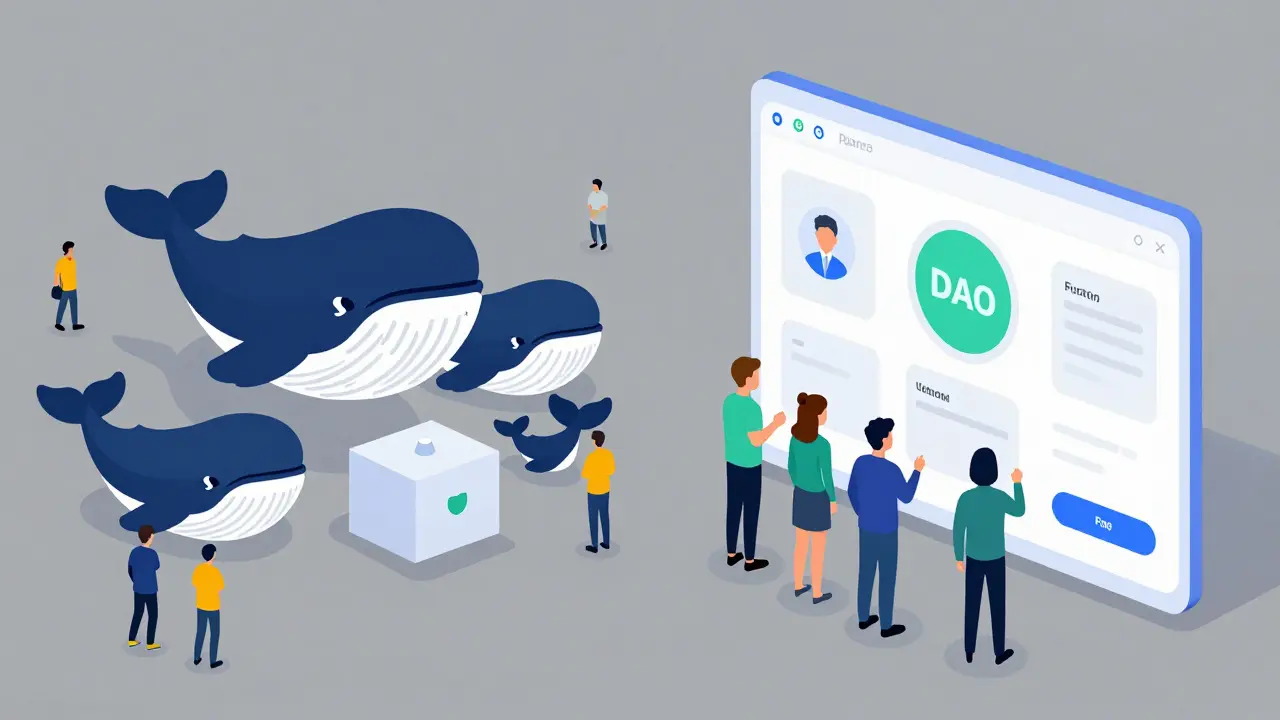
Remember when joining a community meant signing up for an email list and hoping someone replied? Now, imagine owning a piece of that community, having your vote count directly on the ledger, and watching treasury funds move automatically based on collective decisions. That is the promise of Decentralized Autonomous Organizations (DAOs), which are organizations governed by smart contracts and token-based voting mechanisms rather than traditional hierarchical structures. But let’s be honest: early DAOs were messy. Voter turnout was abysmal, big holders called all the shots, and legal gray areas kept investors nervous. Fast forward to 2026, and the landscape has shifted dramatically. We are no longer just experimenting with basic token votes; we are building sophisticated systems powered by artificial intelligence, cross-chain interoperability, and nuanced voting mechanics designed to actually work for humans.
The Death of Simple Token Voting
For years, the default setting for most DAOs was simple: one token equals one vote. It sounded democratic until you realized it was plutocratic. If you held 30% of the tokens, you controlled 30% of the decisions. According to research from ECGI Global, this "whale" dominance influenced 73% of contentious votes in 2024. Small holders felt ignored, leading to mass disengagement. The average voter participation rate across all DAOs hovered around a dismal 17%. That means for every person showing up to vote, five others checked out entirely.
This failure of pure token-weighted voting forced a pivot. The industry realized that ownership shouldn’t always equal influence, especially when expertise matters more than capital. This realization birthed new models that prioritize intent and contribution over raw balance sheets. The shift wasn't just theoretical; it became necessary for survival as DAO treasuries grew to manage over $22.3 billion in assets by Q1 2025. You can’t run a multi-billion dollar entity with a broken voting system.
Rising Stars: Quadratic and Liquid Democracy
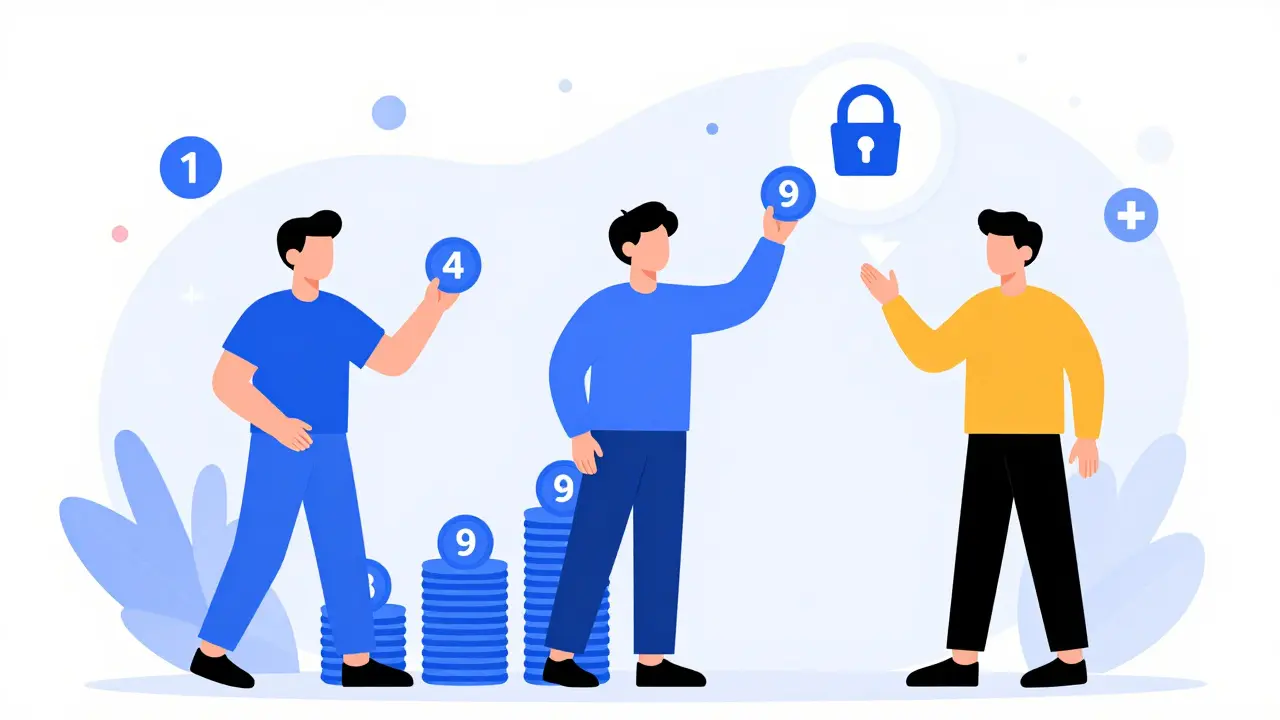
If you want to fix whale dominance, you need math that punishes concentration. Enter Quadratic Voting, a voting mechanism where the cost of additional votes increases quadratically, allowing users to express preference intensity while limiting large stakeholders' disproportionate influence. Here is how it works: if one vote costs one token, two votes cost four tokens, and three votes cost nine. This structure makes it prohibitively expensive for whales to buy up every issue, while allowing small holders to signal strong preferences cheaply. Adoption of quadratic voting jumped 30% between 2024 and 2025. In practice, participants in Gitcoin DAO reported feeling their contributions actually mattered because the system valued their specific interests rather than just their wallet size.
Another powerful alternative is Liquid Democracy, a hybrid governance model that allows members to vote directly on issues or delegate their voting power to trusted experts for specific topics. Think of it as a dynamic representative system. You might trust Alice’s judgment on security proposals but prefer to vote yourself on marketing budgets. With liquid democracy, you can delegate your vote to Alice only for security-related topics. Karma, a prominent platform using this model, saw 42% of voters delegate at least some of their power in 2024. This solves the "expertise gap" without removing agency from the community. It balances inclusivity with competence, ensuring that complex technical decisions aren’t made by people who don’t understand the code.
AI Agents and the New Governance Layer
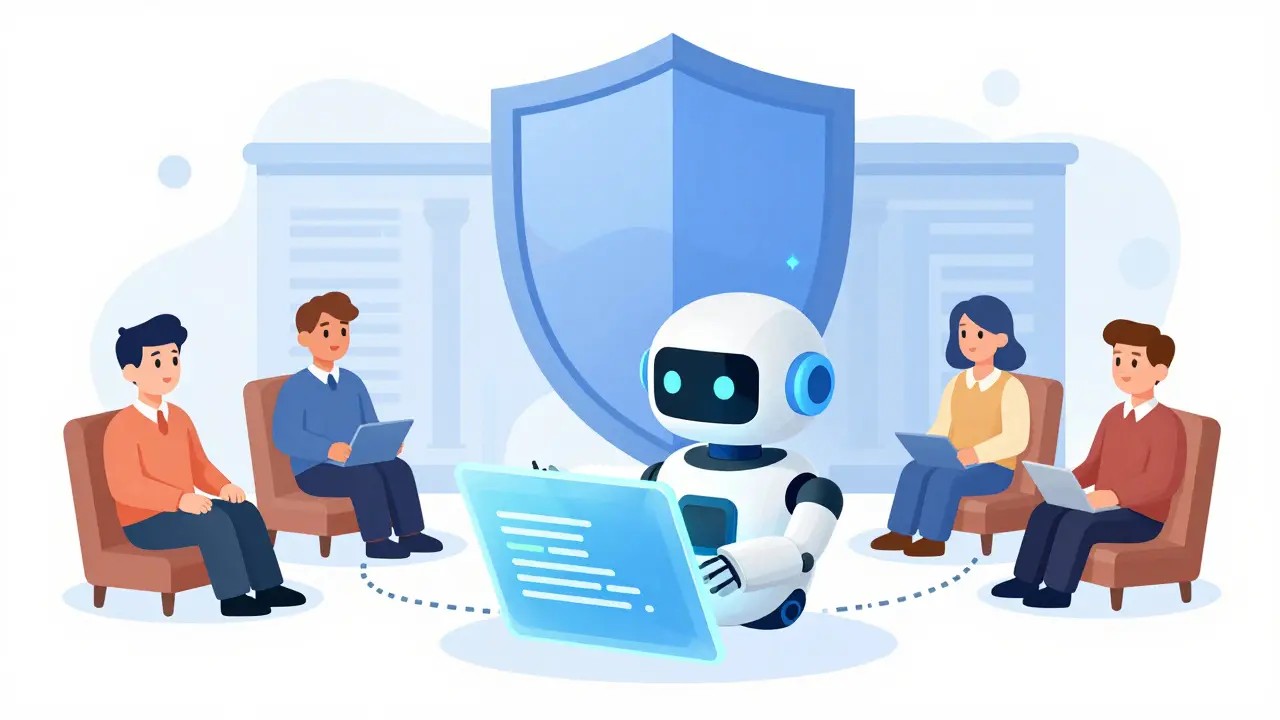
You cannot talk about the future of DAOs without addressing artificial intelligence. By 2026, AI is no longer a buzzword in this space; it is infrastructure. Approximately 43% of DAOs now use AI tools for proposal analysis, treasury management, and member engagement scoring. Why? Because human beings suffer from decision fatigue. MakerDAO members, for instance, faced an average of 17 governance proposals per week. Who has time to read every whitepaper and financial report?
AI agents now handle roughly 35% of routine treasury decisions, such as stablecoin rebalancing or paying recurring invoices. This frees up human governors to focus on high-level strategy. However, there is a catch: trust. How do you ensure the AI isn’t making bad calls? The solution is "circuit breakers." These are predefined limits set by the community that automatically pause AI operations if certain triggers are met, like a sudden drop in asset value. As of 2025, 28% of DAOs using AI have implemented these safety nets. It’s a symbiotic relationship: AI provides efficiency, humans provide oversight and ethical boundaries.
Cross-Chain Complexity and Reputation Systems
Blockchains used to be silos. Today, they are interconnected highways. In Q1 2025, 68% of DAOs operated across at least two blockchain networks, leveraging Polkadot, Cosmos, and zero-knowledge bridges. This cross-chain capability introduces new governance challenges. How do you coordinate a vote when your members are spread across Ethereum, Solana, and Base? The answer lies in improved tooling. Platforms like Snapshot processed over 12 million votes in 2024 alone, handling the complexity behind the scenes so users don’t have to worry about gas fees or network congestion. Layer-2 solutions like Arbitrum and Optimism reduced transaction costs by up to 90%, making micro-voting economically viable for everyone.
Alongside technical upgrades, reputation systems are gaining ground. Used by 29% of DAOs, these models reward contributors based on activity metrics rather than just token holdings. Colony, for example, tracks 27 different contribution types-from writing documentation to auditing code-to determine voting weight. In task-based DAOs, reputation scores account for 65% of voting power. This ensures that the people doing the actual work have a say in the direction of the project, aligning incentives much better than passive investment does.
| Model Type | Key Mechanism | Best For | Main Weakness |
|---|---|---|---|
| Token-Weighted | 1 Token = 1 Vote | Simplicity, Early Stage | Whale Dominance |
| Quadratic Voting | Cost Increases Quadratically | Fairness, Public Goods | Complex Math, Sybil Attacks |
| Liquid Democracy | Delegable Votes | Expertise-Based Decisions | Delegate Concentration Risk |
| Reputation-Based | Activity Metrics | Active Contributors | Gaming the System |
The Legal Reality Check
All the tech in the world won’t help if your DAO gets shut down by regulators. Legal recognition remains the single biggest barrier to mainstream adoption. As of early 2026, only seven jurisdictions have established clear DAO legal frameworks. Wyoming, Tennessee, and the Marshall Islands lead the way, offering LLC-like structures that protect members from personal liability. Meanwhile, the EU’s Digital Governance Act created a provisional framework adopted by 17 European DAOs. However, uncertainty persists elsewhere. The SEC’s enforcement actions against unregistered security offerings through governance tokens created anxiety for 62% of US-based DAOs. Navigating this requires careful structuring, often involving hybrid entities that combine on-chain voting with off-chain legal wrappers.
Building for Longevity: Practical Steps
So, how do you build a DAO that lasts? First, start with modular governance. Don’t try to invent everything from scratch. Use tools like Aragon or Snapshot to mix and match components. Second, prioritize user experience. Onboarding time dropped from 45 minutes in 2022 to just 8 minutes in 2025 thanks to interfaces like Tally’s one-click voting. If it’s hard to join, people won’t. Third, implement rage-quit mechanisms. Pioneered by MolochDAO, this feature allows dissenting members to exit with their fair share of funds, reducing internal conflict. It’s now standard in 61% of DAOs. Finally, document everything. Clear constitutions and decision-making processes prevent the chaos that led to the dissolution of projects like ConstitutionDAO.
The future of DAO governance isn’t about replacing humans with machines. It’s about creating systems where technology amplifies human judgment, reduces friction, and ensures that voices are heard regardless of wealth. As we move deeper into 2026, the most successful DAOs will be those that embrace hybrid models-combining algorithmic efficiency with genuine community engagement.
What is the main problem with traditional token-based DAO voting?
The primary issue is whale dominance, where large token holders control decisions, leading to low participation rates among smaller stakeholders. Research shows that 73% of contentious votes are influenced by holders controlling over 30% of tokens.
How does quadratic voting prevent whale manipulation?
Quadratic voting increases the cost of additional votes exponentially. While the first vote is cheap, subsequent votes become significantly more expensive, making it costly for whales to exert disproportionate influence while allowing small holders to express strong preferences affordably.
Is AI replacing human decision-makers in DAOs?
No, AI is augmenting human decision-making. Currently, AI handles about 35% of routine tasks like treasury management, freeing humans to focus on strategic choices. Safety mechanisms like circuit breakers ensure human oversight remains central.
Which countries have clear legal frameworks for DAOs?
As of 2026, Wyoming, Tennessee, and the Marshall Islands have established clear DAO legal frameworks. The EU also introduced the Digital Governance Act, providing a provisional structure for European DAOs.
What is liquid democracy in the context of DAOs?
Liquid democracy allows members to vote directly on issues or delegate their voting power to trusted experts for specific topics. This combines direct democracy with representative elements, ensuring expertise guides complex decisions.
Ryan Peters
3 07 26 / 03:07 AMLook, I’m tired of this globalist tech-bro fantasy where we pretend code is law. It’s not. The SEC isn’t going to blink because you wrapped your token in a Wyoming LLC. This whole "decentralized" narrative is just a way for offshore entities to dodge accountability while US taxpayers foot the bill for the infrastructure they rely on. We need sovereignty, not some algorithmic committee run by anonymous devs who think they’re smarter than Congress.
Jay Sharma
4 07 26 / 18:59 PMYou guys are missing the point entirely. The AI agents aren't just tools; they're the first step toward a surveillance state that operates without human oversight. Who controls the training data? Who sets the circuit breakers? It's always the same elite cabal. They want you to trust the black box because it makes you compliant. Wake up.
Rebecca Shoniker
5 07 26 / 00:16 AMThe statistical significance of these "success stories" is negligible at best. You cite Gitcoin and Karma as if they represent the broader ecosystem, which is statistically absurd. Furthermore, the implementation of quadratic voting introduces Sybil attack vectors that are mathematically trivial to exploit with current identity verification protocols. It is not a solution; it is a patch on a sinking ship. The legal frameworks mentioned are provisional, meaning they offer zero actual protection against enforcement actions. Stop selling vaporware as innovation.
Abby Martin
6 07 26 / 07:23 AMI mean, honestly, it’s kind of hilarious how everyone acts like DAOs are this revolutionary new thing when they’re just corporate boards with extra steps and worse UX. But sure, let’s pretend that giving a vote to someone who holds 0.0001% of the tokens somehow makes them more "ethical" or "fair." It doesn’t. It just slows down decision-making until the treasury drains from inefficiency. Most of these projects fail because the community can’t agree on anything, not because of "whale dominance." People just suck at self-governance.
nancy jarecki
8 07 26 / 01:09 AMThe author clearly hasn’t spent enough time auditing smart contracts to understand the sheer fragility of these systems. Relying on AI for treasury management is not "efficiency"; it’s negligence. When the model hallucinates a rebalancing strategy, there is no recourse. And don’t get me started on reputation systems-they are easily gamed by bots. It’s all very amateur hour.
Scott Miller
9 07 26 / 12:43 PMCome on, guys! Let’s look at the bright side! The fact that we even have this conversation means progress is happening. Yes, early DAOs were messy, but look at how far we’ve come with cross-chain interoperability! Imagine the potential if we all worked together instead of tearing each other down. The future is collaborative, and these tools are just the beginning of a beautiful new era of decentralized cooperation. Keep pushing forward!
Mélanie Boulay
11 07 26 / 07:35 AMWhile I appreciate the enthusiasm surrounding these technological advancements, it is imperative that we consider the long-term implications of delegating significant financial authority to algorithms that lack ethical reasoning capabilities. The integration of AI into governance structures must be approached with extreme caution, ensuring that robust safeguards are in place to prevent unintended consequences, such as the erosion of individual agency or the concentration of power in opaque systems that are difficult to audit or challenge effectively.
Maurice Flynn
11 07 26 / 19:08 PMI just sit here and watch the cycle repeat. First it was NFTs, then DeFi, now DAOs. People throw money at buzzwords hoping for salvation. But deep down, I wonder if we’re really building something new or just repackaging old hierarchies in shiny digital boxes. The philosophy behind decentralization is sound, but human nature rarely changes.
Melissa L
12 07 26 / 22:18 PMi dont get why its so hard to just vote. why do i need to learn about quadratic math just to say yes or no?
Sajjad Ghorbani Moghaddam
14 07 26 / 10:31 AMHey Melissa, it’s actually pretty simple once you get the hang of it. Think of it like this: if you really care about an issue, you spend more votes to show that. If you don’t care much, you spend less. It helps make sure big holders don’t just steamroll everything. Give it a shot on a testnet, you’ll see it’s not too bad.
Robert Hundley
15 07 26 / 08:44 AMThis is awesome stuff! 🚀 Love seeing how tech is evolving to give people more voice. The liquid democracy part is my favorite-being able to delegate to experts on topics I don’t know much about sounds super practical. Who else is trying out Snapshot lately? The UI has gotten so much better! Let’s keep building! 💪
Rob Morton
15 07 26 / 21:58 PMIt’s interesting to consider how these models might evolve as regulatory clarity improves. If the EU framework becomes a standard, we might see a hybrid approach where legal entities handle liability while on-chain mechanisms handle day-to-day operations. Do you think this will lead to more institutional adoption, or will it stifle the grassroots nature of DAOs?
Jon Milton
16 07 26 / 05:54 AMWe must remember that technology is merely a tool, and its value depends entirely on the wisdom of those who wield it. The shift towards quadratic voting and AI-assisted governance reflects a deeper societal desire for fairness and efficiency. However, we must remain vigilant against the temptation to automate ethics. True democracy requires empathy, dialogue, and a willingness to listen to diverse perspectives, none of which can be fully encoded into a smart contract. Let us strive for harmony between innovation and humanity.