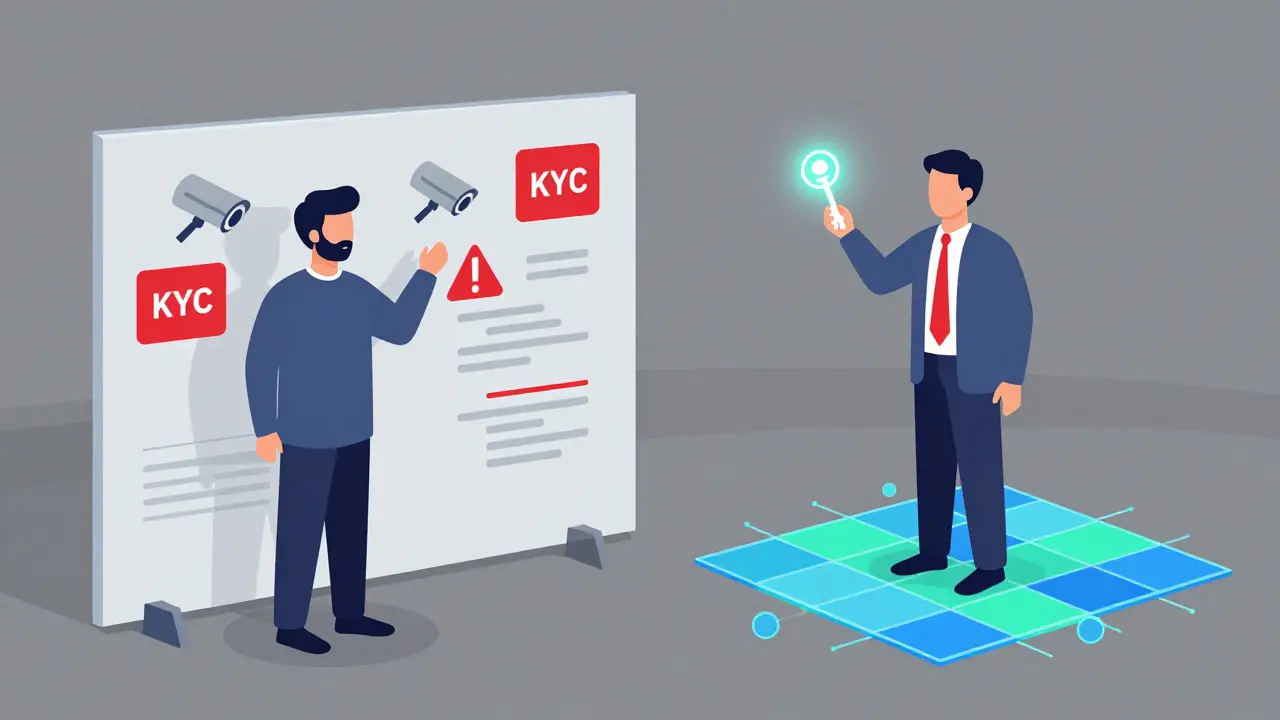
Living under heavy financial sanctions and strict domestic regulations creates a unique puzzle for Iranian citizens who want to trade cryptocurrency. For years, the path was simple: use local centralized exchanges like Nobitex. But that safety net has frayed. With massive hacks, government surveillance mandates, and international freezes on stablecoins, relying solely on centralized platforms is no longer viable. The question now isn't just about trading; it's about survival and sovereignty over your assets. This guide breaks down how you can navigate the complex landscape of decentralized exchange options available to Iranian users in 2026.
The Shift from Centralized to Decentralized
In early 2025, the rules changed drastically. President Masoud Pezeshkian placed all cryptocurrency regulation under the sole authority of the Central Bank of Iran (CBI). This move meant that every participant, including individual traders, had to obtain licenses and grant the CBI unrestricted access to their transaction data. For many, this level of surveillance was a dealbreaker. The desire for privacy pushed users away from compliant local exchanges toward protocols that don't ask for IDs or bank details.
The catalyst for this mass migration wasn't just policy-it was enforcement. In July 2025, Tether froze funds linked to dozens of Iranian addresses, many connected to Nobitex. This event shook confidence in centralized custody. Users realized that even if an exchange claimed to be local, its connections to global stablecoin issuers made it vulnerable to external pressure. The result? A rapid pivot toward decentralized finance (DeFi) where no single entity holds the keys.
| Feature | Centralized Exchange (e.g., Nobitex) | Decentralized Exchange (DEX) |
|---|---|---|
| KYC Requirement | Mandatory (National ID, Phone) | None (Wallet Address Only) |
| Custody | Exchange Holds Funds | User Holds Private Keys |
| Sanctions Risk | High (Freezes/Hacks Possible) | Low (Code-Based Execution) |
| Rial On-Ramp | Easy (Bank Transfer) | Difficult (Requires P2P or OTC) |
| Government Oversight | Direct Data Sharing with CBI | No Direct Reporting Mechanism |
Why Polygon and DAI Became the Standard
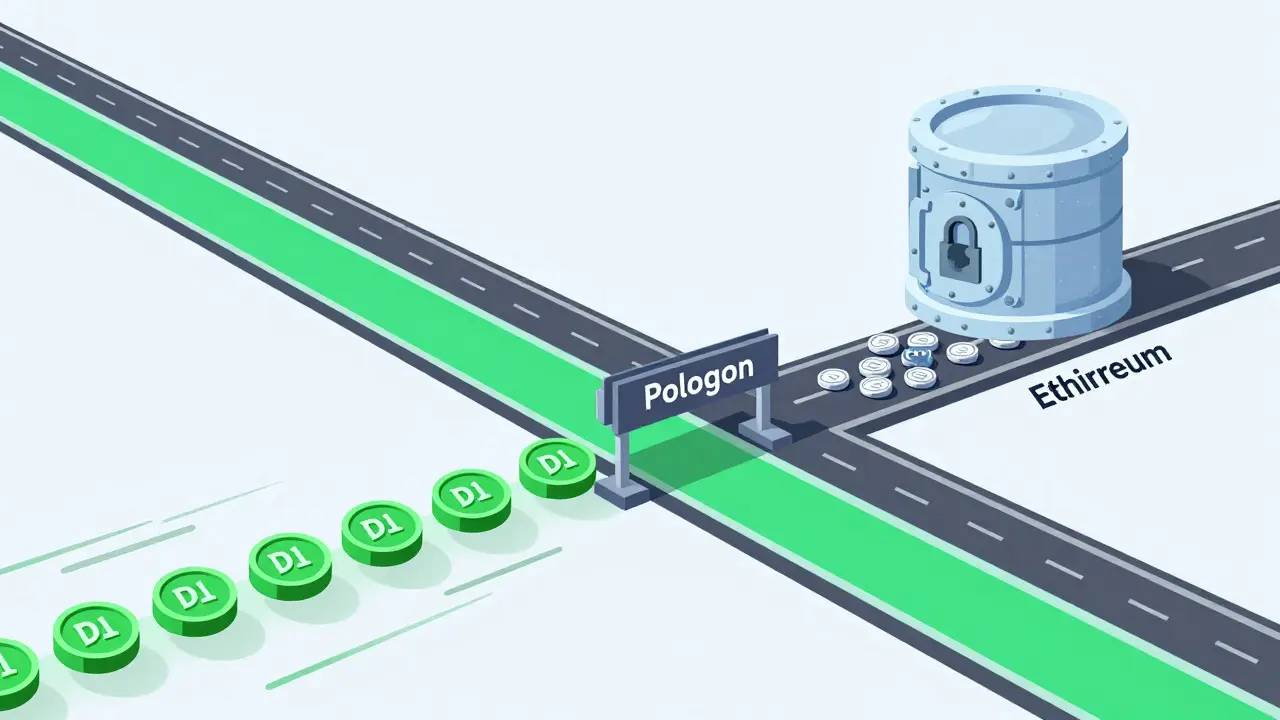
If you look at on-chain data from mid-2025 onward, one pattern stands out: Iranian users aren't just moving to any chain; they are moving to Polygon. Why? Speed and cost. Ethereum mainnet gas fees are prohibitive for small trades, and Bitcoin doesn't support smart contracts needed for automated swaps. Polygon offers low fees and fast finality, making it ideal for high-frequency trading or moving smaller amounts without eating into profits.
Equally important is the asset choice. After Tether's aggressive freezing actions, trust in USDT waned among risk-aware traders. The community shifted toward DAI, a decentralized stablecoin governed by MakerDAO. Unlike USDT, DAI cannot be frozen by a corporate entity. It is backed by collateral on-chain and managed through code. For an Iranian user, holding DAI means holding a dollar-pegged asset that no CEO can arbitrarily lock. This shift wasn't just theoretical; influencers and local crypto communities actively promoted swapping USDT for DAI via Polygon bridges immediately after the July 2025 freezes.
Step-by-Step: How to Access DEXs Safely
Accessing a decentralized exchange requires more than just downloading an app. You need a strategy that protects your identity and ensures liquidity. Here is the practical workflow used by experienced traders in Iran:
- Secure Your Internet Connection: While DEXs are globally accessible, some nodes may be slow or blocked. Use a reliable VPN to ensure consistent connectivity to RPC endpoints. Avoid free public proxies as they often log traffic.
- Set Up a Non-Custodial Wallet: Download a wallet like MetaMask or Trust Wallet. Write down your seed phrase on paper and store it offline. Never share this phrase. This is your bank account; losing it means losing everything.
- Add the Polygon Network: In your wallet settings, add the Polygon Mainnet. You will need the network URL, Chain ID (137), and Symbol (MATIC). Most wallets have this pre-configured.
- Acquire Initial Liquidity: This is the hardest step. Since you cannot deposit Rials directly to a DEX, you must buy crypto via Peer-to-Peer (P2P) markets or trusted local OTC desks. Look for sellers who offer direct transfers to your wallet address rather than requiring you to deposit into an exchange first.
- Bridge or Swap: If you bought ETH or MATIC, use a bridge to move assets to Polygon if not already there. Then, connect your wallet to a DEX like Uniswap or SushiSwap.
- Execute the Trade: Swap your base currency for DAI or other desired tokens. Always check the slippage tolerance and price impact before confirming.
Top Decentralized Exchanges for Iranian Users
Not all DEXs are created equal. Some have better liquidity, others have better interfaces. Here are the most relevant options for 2026:
- Uniswap: The largest DEX by volume. It supports Ethereum, Polygon, Arbitrum, and Optimism. Its vast liquidity pools mean you can trade almost any token pair with minimal slippage. It is the go-to for converting between major assets.
- SushiSwap: A strong alternative with a presence on multiple chains including Polygon and BNB Chain. It often offers competitive rates and additional yield farming opportunities if you want to earn interest on your holdings.
- 1inch: An aggregator that scans multiple DEXs to find you the best price. This is crucial for maximizing value when swapping large amounts. It splits orders across different pools to minimize market impact.
- PancakeSwap: Primarily on BNB Chain, but also available on Polygon. It is user-friendly and has deep liquidity for meme coins and newer tokens, though security audits vary by project.
Navigating the Regulatory Minefield
You cannot ignore the legal context. In August 2025, Iran enacted the Law on Taxation of Speculation and Profiteering. This law treats cryptocurrency trading similarly to gold or forex, imposing capital gains taxes. While the CBI has limited ability to monitor decentralized transactions directly, they do monitor fiat inflows and outflows. If you withdraw crypto to a bank account via a licensed exchange, that transaction is visible.
To mitigate risk, many users keep their activities entirely within the crypto ecosystem-using DEXs to trade and only converting to fiat when absolutely necessary, using informal networks or unlicensed P2P channels. However, this carries its own risks, including fraud and lack of legal recourse. The key is to understand that while DEXs provide technical anonymity, they do not provide legal immunity. Always stay informed about updates from the CBI and OFAC sanctions lists.
Security Best Practices for High-Risk Environments
When operating in a sanctioned environment, security is not optional; it is existential. Here are non-negotiable practices:
- Use Hardware Wallets: For significant holdings, never keep funds on a hot wallet connected to the internet. Use a device like Ledger or Trezor. Sign transactions offline.
- Avoid Phishing Links: Scammers target users searching for "free crypto" or "airdrops." Always verify URLs. Bookmark official DEX sites and never click links from social media DMs.
- Revoke Permissions: After interacting with new dApps, use tools like Revoke.cash to remove unnecessary spending allowances from your wallet. Malicious contracts can drain funds if given broad permissions.
- Diversify Chains: Don't put all eggs in one basket. Keep assets on Ethereum, Polygon, and perhaps Solana to reduce exposure to a single chain's potential failure or censorship.
The Future of Crypto Access in Iran
The landscape is dynamic. As the government tightens controls, users become more sophisticated. We are seeing a rise in local developer communities building privacy-focused tools and localized liquidity solutions. The tension between state control and technological freedom will likely drive further innovation in decentralized protocols. For now, mastering DEX usage is not just a financial skill; it is a form of digital resilience.
Can I use Binance or Coinbase as an Iranian citizen?
No. Major centralized exchanges like Binance and Coinbase strictly prohibit users from Iran due to U.S. sanctions. Attempting to bypass these restrictions using false information will result in immediate account suspension and loss of funds. Stick to decentralized exchanges or local peer-to-peer networks.
Is it safe to swap USDT for DAI on Polygon?
Yes, it is generally safer than holding USDT if you are concerned about corporate freezes. DAI is decentralized and cannot be blacklisted by Tether. However, always ensure you are using reputable bridges and DEXs to avoid smart contract exploits. Check current audit statuses of the protocols you use.
Do I need a VPN to use DEXs in Iran?
While DEX websites are often accessible, using a VPN is recommended for two reasons: first, to ensure stable connection to global RPC nodes for faster transaction confirmation; second, to protect your IP address from being logged by malicious actors or potentially monitored entities. Choose a no-log VPN provider.
What happens if the Central Bank of Iran bans DEX usage?
Technically, banning code is difficult. The CBI can block access to specific websites or IP ranges, but DEXs operate on blockchain networks that are global and permissionless. Users can still interact with them via mobile apps or alternative browsers. However, the legal risk remains, so always assess personal risk tolerance.
How do I convert Rials to Crypto without KYC?
This is the most challenging part. You typically need to use Peer-to-Peer (P2P) platforms that allow escrow services without strict KYC, or rely on trusted local contacts. Be extremely cautious of scams. Start with small amounts to test the reliability of any counterparty before moving larger sums.
Hadleigh Edwards
26 05 26 / 17:47 PMIt is truly fascinating to observe how the intersection of geopolitical pressure and technological innovation forces communities to adapt in such remarkable ways, creating a sort of digital underground that operates outside traditional banking systems while still maintaining a level of economic functionality that many in the West take for granted every single day without ever thinking about the fragility of their own financial infrastructure. The shift from centralized exchanges like Nobitex to decentralized protocols on Polygon is not merely a technical migration but a profound statement on sovereignty and privacy, especially when you consider that the Central Bank of Iran now demands unrestricted access to transaction data which effectively turns every trader into a potential target for surveillance or asset seizure if they step out of line with government mandates. I have been following the developments since the Tether freezes in July 2025 and it really highlights the inherent risks of relying on entities that are subject to international sanctions and corporate whims rather than code-based execution which cannot be arbitrarily paused or reversed by a CEO sitting in an office somewhere else in the world. The adoption of DAI as a preferred stablecoin makes perfect sense because it removes the counterparty risk associated with USDT and ensures that your assets are backed by transparent collateral mechanisms that can be verified on-chain rather than trusting promises made by a centralized issuer who might decide to comply with external pressures at any moment. It is also worth noting that the use of hardware wallets and offline seed phrase storage becomes absolutely critical in this environment because there is no customer support hotline to call if you lose access to your funds or if a malicious actor manages to phish your credentials through a fake website or social engineering attack. The community seems to be developing its own best practices and security protocols organically which is a testament to human resilience and the desire for financial freedom even in the most restrictive environments imaginable. We should probably start paying more attention to these decentralized models not just as survival mechanisms for sanctioned populations but as potential blueprints for more resilient and private financial systems globally where users retain true ownership of their assets without needing permission from intermediaries.
Crystal Davis
27 05 26 / 21:57 PMThis guide is dangerously naive and ignores the fundamental reality that blockchain transactions are pseudonymous not anonymous and anyone with basic forensic skills can trace polygon addresses back to real-world identities especially when those addresses interact with fiat on-ramps or p2p markets that require some form of identification or reputation building over time. You cannot simply assume that swapping usdt for dai magically erases your transaction history or protects you from sophisticated chain analysis firms that sell data to governments and law enforcement agencies all the time. The idea that iranians can safely operate entirely within the crypto ecosystem without legal repercussions is a fantasy because the central bank monitors fiat inflows and outflows with extreme precision and any attempt to convert crypto back to rials will immediately flag your account for investigation under the new taxation laws enacted in august 2025. Furthermore suggesting that users rely on unlicensed p2p channels exposes them to massive fraud risks and scams which are rampant in high-pressure environments where desperation leads people to ignore red flags and trust strangers based on minimal verification. This article reads like propaganda designed to encourage illegal activity rather than providing practical advice for navigating complex regulatory landscapes responsibly.
Barclay Chantel
29 05 26 / 07:04 AMOne must appreciate the sheer audacity of this so-called guide which essentially instructs citizens on how to evade state authority and undermine the very fabric of national economic policy through the use of illicit decentralized technologies that serve no legitimate purpose other than facilitating capital flight and black market activities. It is quite amusing to see western commentators romanticizing this struggle for 'digital resilience' when in reality it is nothing more than organized resistance against lawful governance structures that exist to maintain order and prevent financial instability within the country. The reliance on foreign-owned blockchains and tokens like dai which are governed by entities headquartered in jurisdictions hostile to iranian interests demonstrates a complete lack of understanding regarding national security implications and the importance of supporting domestic financial institutions that adhere to international standards and regulations. These individuals would do well to realize that their actions contribute to broader geopolitical tensions and sanction regimes that ultimately harm ordinary citizens more than any benevolent government could ever intend.
Diana Morris
30 05 26 / 10:39 AMstop worrying about the politics and just get your keys secured because if you dont you will lose everything to a scammer or a hack and then you will be crying on reddit asking for help which nobody will give you so listen up and write down your seed phrase on paper and hide it somewhere safe because digital copies are vulnerable to malware and cloud backups can be accessed by hackers or even government agents if they subpoena the service provider so keep it physical and offline always
saradee dee
31 05 26 / 18:19 PMOh my goodness this is such a dramatic situation and I feel so much empathy for everyone involved in this struggle because it must be terrifying to wake up every day not knowing if your savings will be frozen or confiscated by authorities who seem determined to strip away any semblance of personal freedom and choice from their citizens. The way people are adapting by using polygon and dai instead of ethereum mainnet and usdt is brilliant honestly because it shows incredible ingenuity and resourcefulness in the face of overwhelming odds and restrictions that would break most other societies completely. I hope that one day these brave individuals can live without fear of surveillance or punishment for simply wanting to manage their own money and trade freely without interference from powerful institutions that prioritize control over compassion and justice.
Dana Rapoport
31 05 26 / 22:23 PMThe philosophical implications of decentralization extend far beyond mere financial utility as they challenge our fundamental assumptions about trust authority and individual autonomy in modern society. By removing intermediaries and placing control directly in the hands of users we create a system that reflects democratic ideals more closely than traditional hierarchical structures ever could allowing for greater participation and equality among participants regardless of their background or status. However we must also acknowledge the dual-use nature of these technologies which can empower both liberation movements and criminal enterprises depending on how they are utilized and regulated by various stakeholders around the globe. Therefore it is crucial that we engage in thoughtful dialogue about the ethical responsibilities associated with adopting decentralized solutions and ensure that they promote positive outcomes for humanity as a whole rather than exacerbating existing inequalities or enabling harmful behaviors.
mark valmart
1 06 26 / 22:44 PMman i totally get why people are switching to dexes after seeing what happened with tether freezing those accounts it feels like holding your breath waiting for the other shoe to drop every time you check your balance on a centralized exchange so yeah keeping your keys and controlling your own destiny sounds way better than begging a corporation to please unfreeze your money when they decide you violated some obscure term of service agreement nobody actually read before signing up
Joshua Alcover
3 06 26 / 13:03 PMIt is imperative that we recognize the strategic necessity of implementing robust oversight mechanisms to mitigate the proliferation of unauthorized financial instruments that circumvent established regulatory frameworks designed to protect national security interests and maintain macroeconomic stability within sovereign jurisdictions. The utilization of decentralized autonomous organizations and smart contract-based exchanges represents a significant threat to conventional monetary policy tools and undermines the ability of central banks to effectively manage inflationary pressures and currency valuation dynamics in response to exogenous shocks and internal fiscal imbalances. Consequently policymakers must adopt a proactive stance towards regulating emerging fintech innovations ensuring compliance with anti-money laundering directives and know-your-customer protocols while fostering an environment conducive to sustainable economic growth and inclusive development objectives aligned with international best practices.
Dianne Wright
5 06 26 / 07:16 AMi cant believe how clueless some of you are thinking that just moving to polygon solves all your problems when really you are just moving the goalposts slightly further away from immediate detection but eventually the pattern emerges clearly enough for anyone with decent analytics software to piece together your entire network of transactions and identify you as part of a sanctioned entity cluster so good luck hiding forever from the algorithmic dragnets being deployed by global intelligence agencies right now
Christina Pearce
6 06 26 / 13:41 PMI appreciate the diverse perspectives shared here although I think it is important to maintain respectful boundaries when discussing sensitive topics related to national sovereignty and individual rights because emotions tend to run high in these conversations and misunderstandings can easily escalate into unnecessary conflict between parties who fundamentally agree on the importance of privacy and security despite differing opinions on implementation strategies. Perhaps we could focus more on constructive solutions that address common concerns about usability accessibility and education without resorting to polarizing rhetoric that alienates potential allies and hinders collaborative progress toward achieving shared goals in the decentralized finance community.