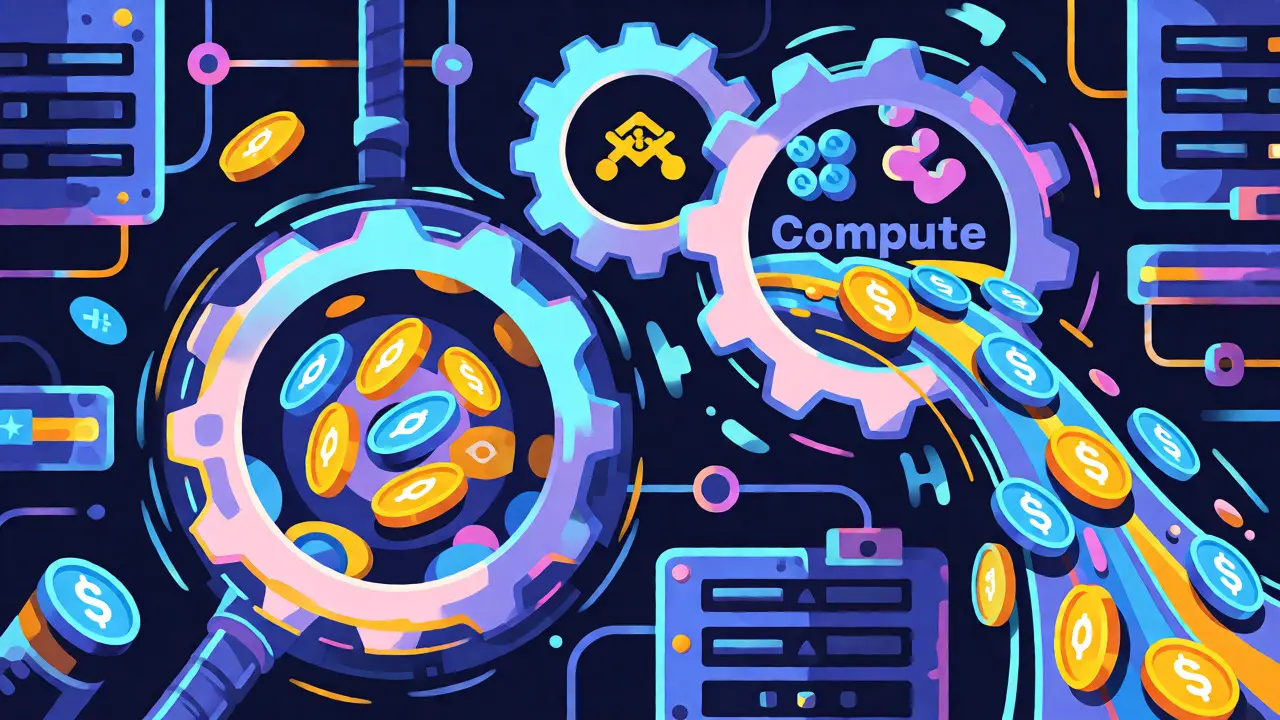
You cannot run a decentralized application without paying the piper. That piper is the platform cryptocurrency, the native token of a blockchain network like Ethereum or Solana. While users often focus on the flashy interfaces of Decentralized Finance (DeFi) protocols or Non-Fungible Token (NFT) marketplaces, the underlying engine that makes these apps possible relies entirely on the economic incentives provided by the platform's coin. Without this digital asset, there is no security, no transaction processing, and no incentive for validators to keep the network running.
This article breaks down exactly how tokens like ETH, SOL, and BNB transform raw code into functional, secure applications. We will look at the technical mechanics of "gas," the role of staking in securing data, and why choosing the right platform matters more than just picking a popular app.
The Engine Room: Gas Fees and Computational Resources
Think of a blockchain as a global computer shared by thousands of strangers. When you want to use part of that computer-say, to swap one token for another-you must pay for the electricity and hardware time used to process your request. This payment is called a gas fee, and it is always paid in the platform's native cryptocurrency.
On Ethereum, every operation has a cost measured in units of gas. The price per unit fluctuates based on network demand. During quiet periods, swapping tokens might cost you $0.50 in ETH. During a hype cycle, like an NFT drop, that same swap could jump to $18. This volatility isn't a bug; it's a feature designed to prevent spam. If transactions were free, bots would flood the network with millions of useless requests, clogging the system for everyone else.
Other platforms handle this differently. Solana uses a different architecture that allows for near-zero costs, averaging around $0.00025 per transaction. This low barrier to entry enables high-frequency trading dApps and gaming applications that would be impossible on Ethereum. However, the trade-off is complexity. Solana’s speed comes from its unique Proof-of-History mechanism, which requires robust hardware from validators. If you are building a dApp, you aren't just writing code; you are budgeting for the computational resources of the entire network.
Security Through Staking: Validators Have Skin in the Game
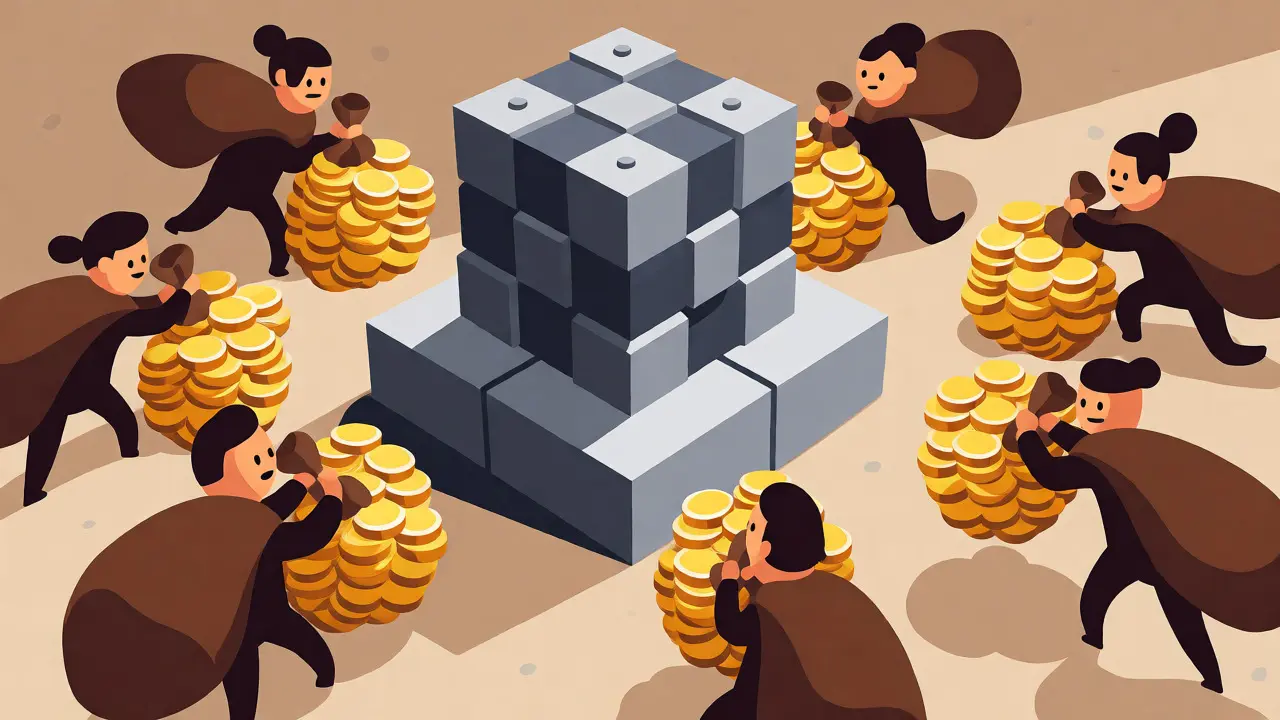
Why should you trust a network with no central authority? Because the people maintaining it have put their own money on the line. This concept is known as Proof-of-Stake. To become a validator-a node that verifies transactions and adds them to the blockchain-you must lock up a significant amount of the platform cryptocurrency.
On Ethereum, after the Merge in September 2022, validators must stake 32 ETH. At current prices, that represents tens of thousands of dollars in capital. If a validator tries to cheat the system by confirming false transactions, they lose a portion of their stake. This economic penalty ensures honesty. The platform cryptocurrency here acts as collateral. It aligns the interests of the validators with the health of the network. If the network fails, the value of the token drops, and the validators lose money. Therefore, they are financially motivated to keep the dApps running smoothly.
Binance Smart Chain (BSC) takes a slightly different approach with Proof-of-Staked-Authority. It requires fewer validators (around 41 active ones compared to Ethereum's 800,000+), making it faster but less decentralized. Users accept this trade-off for lower fees, but it means the security model relies more on reputation and less on massive, distributed financial penalties. For a dApp developer, understanding this difference is crucial. A DeFi protocol holding billions in Total Value Locked (TVL) might prefer Ethereum’s heavy security guarantees over Solana’s speed, simply because the risk of a hack outweighs the benefit of cheap transactions.
Token Standards and Interoperability
A platform cryptocurrency does more than just pay for gas; it defines the rules for creating other assets. The most famous example is the ERC-20 standard on Ethereum. This set of rules allows developers to create their own fungible tokens that can interact seamlessly with existing dApps.
Imagine you build a new lending protocol. If you launch your token on Ethereum using the ERC-20 standard, it instantly works with Uniswap, Aave, and Compound. You don't need to rebuild the plumbing for every integration. The platform provides the common language. Other networks have their equivalents: SPL tokens on Solana and BEP-20 on Binance Smart Chain. These standards ensure that when a user sends a token from Wallet A to Wallet B, the receiving wallet knows exactly what it is and how much it is worth.
| Platform | Native Token | Avg Transaction Cost | Consensus Mechanism | Primary Use Case |
|---|---|---|---|---|
| Ethereum | ETH | $1.00 - $15.00+ | Proof-of-Stake | Complex DeFi, High-Security Apps |
| Solana | SOL | <$0.01 | PoS + Proof-of-History | Gaming, High-Frequency Trading |
| Binance Smart Chain | BNB | ~$0.15 | Proof-of-Staked-Authority | Retail Swaps, Yield Farming |
| Polygon | MATIC | ~$0.01 | PoS Sidechain | Scaling Ethereum, Gaming |
Incentivizing Developers and Users
Platform cryptocurrencies also serve as rewards. Validators earn newly minted tokens and transaction fees for their work. But dApps themselves often issue their own tokens to attract users. These are typically built on top of the platform's infrastructure. For instance, Uniswap launched UNI, a governance token, to encourage users to participate in voting on protocol changes. The value of UNI is tied to the success of the Uniswap dApp, which runs on Ethereum.
This creates a flywheel effect. More users join the dApp → more transaction fees are generated → more ETH is burned (on Ethereum via EIP-1559) or earned by validators → the platform becomes more secure and valuable → more developers build on it. The platform cryptocurrency is the fuel for this loop. Without it, there is no way to distribute value back to the community fairly and transparently.
Consider the Cardano ecosystem. Its ADA token funds a treasury system where a portion of transaction fees goes toward community-voted projects. This direct link between usage and funding helps sustain long-term development, even if adoption has been slower than competitors due to its rigorous academic approach to smart contract implementation.

Challenges: Volatility and Centralization Risks
It’s not all smooth sailing. The reliance on a single volatile asset for operational costs introduces risk. If the price of ETH spikes by 50% in a week, the cost to deploy a new dApp or interact with an existing one skyrockets. This unpredictability can deter mainstream users who expect stable pricing for services. Some platforms try to mitigate this by allowing payments in stablecoins, but the underlying settlement still happens in the native token.
There is also the centralization concern. Networks like BSC and Solana offer better performance but rely on fewer validators. If a large percentage of the stake is held by a few entities, they could theoretically coordinate to halt the network or censor transactions. Remember the Solana outages in 2022 and 2023? While rare, they highlighted that high-performance chains can suffer from congestion issues that simpler, slower chains avoid. For dApp creators, this means having fallback plans or choosing platforms based on risk tolerance rather than just speed.
Practical Steps for Building on a Platform
If you are looking to launch a dApp, here is what you actually need to do:
- Choose Your Platform: Match your app's needs to the chain's strengths. Need maximum security for holding billions? Go Ethereum. Need speed for a game? Look at Solana or Polygon.
- Acquire Native Tokens: You will need the platform currency to deploy your smart contracts. Budget for deployment costs, which can range from $50 on Solana to $500+ on Ethereum during peak times.
- Implement Gas Optimization: Write efficient code. Poorly optimized smart contracts waste user funds. Tools like Hardhat and Truffle help test and optimize before going live.
- Integrate Wallets: Ensure your dApp supports major wallets like MetaMask (for EVM chains) or Phantom (for Solana). User experience depends heavily on seamless connection.
- Monitor Network Health: Keep an eye on gas prices and network status. If fees spike, consider pausing certain features or guiding users to Layer 2 solutions.
Remember, the platform cryptocurrency is not just a speculative asset. It is the lifeblood of the decentralized web. Every click, every swap, and every vote is powered by it. Understanding this relationship helps you see beyond the hype and grasp the real utility of blockchain technology.
Why do I have to pay gas fees in the platform's native token?
Gas fees compensate the validators who maintain the network's security and process transactions. Since the network is decentralized, there is no company billing you monthly. Instead, you pay directly in the native asset (like ETH or SOL) which serves as both the reward for validators and the mechanism to prevent network spam.
Can I use a stablecoin to pay for gas fees?
Generally, no. Most blockchains require gas fees to be paid in their native cryptocurrency. However, some advanced wallets and Layer 2 solutions allow you to deposit stablecoins, which the wallet then automatically swaps to the native token to cover the gas cost, simplifying the user experience.
What happens if the platform cryptocurrency loses value?
If the token value drops significantly, the absolute cost of transactions decreases, potentially attracting more users. However, it may reduce the incentive for validators to secure the network if their rewards become too low, potentially impacting decentralization. Conversely, a rising token price increases security budgets but raises barriers to entry for users.
Is Ethereum the only platform for dApps?
No. While Ethereum hosts the largest ecosystem, many other platforms support dApps, including Solana, Binance Smart Chain, Cardano, Avalanche, and Polkadot. Each offers different trade-offs regarding speed, cost, security, and developer tooling.
How do smart contracts relate to platform cryptocurrencies?
Smart contracts are the self-executing code that powers dApps. They reside on the blockchain and require the platform cryptocurrency to execute. Every function call within a smart contract consumes gas, meaning the platform token is the fuel required to trigger any logic or state change within the dApp.
Leave a comments