
Most people treat market cycles as a mystical force that only Wall Street wizards can tame. But here is the truth: if you are holding Bitcoin or altcoins, you are already deep inside one. The difference between a panicked seller and a smart accumulator often comes down to recognizing where we are in the cycle. It isn't about predicting the exact bottom or top-that game is mostly luck. It is about adjusting your strategy when the wind changes direction.
Think of the market like a four-season year. You wouldn't wear a heavy coat in July, right? Yet many investors stick with the same aggressive positions during a brutal bear market or get too cautious when the bull run is just heating up. By understanding the distinct phases of economic and crypto-specific cycles, you can protect your capital when things get rough and maximize gains when momentum builds. This guide breaks down how to shift your gears without constantly guessing the future.
Why Cycle Awareness Matters More Than Timing
Trying to time the market perfectly is a fool's errand. Even professional hedge fund managers miss the exact turning points. The goal isn't perfection; it is probability. Historical data shows that assets behave differently depending on the macroeconomic environment. For instance, during periods of rising interest rates and high inflation, risky assets like small-cap stocks and speculative cryptocurrencies tend to struggle. Conversely, when central banks cut rates and liquidity floods the system, those same assets often surge.
In the traditional finance world, frameworks like the Business Cycle divide the economy into expansion, peak, contraction, and trough. Crypto markets often mirror these broader trends but with higher volatility and faster speed. A study by Vanguard noted that strategic asset allocation based on economic cycles explained 82% of portfolio performance variance over ten-year periods. In crypto, this correlation might be even tighter because digital assets are highly sensitive to global liquidity conditions.
You don't need a PhD in economics to spot these shifts. You just need to watch a few key indicators. Are interest rates rising? Is unemployment dropping? Is the Federal Reserve printing money or tightening its belt? These factors drive investor sentiment, which drives price action. If you ignore them, you are flying blind.
The Four Phases of the Market Cycle
Let's break down the cycle into manageable chunks. While every cycle is unique, patterns repeat. Here is what typically happens in each phase and how you should react.
| Phase | Economic Characteristics | Crypto Behavior | Strategy Focus |
|---|---|---|---|
| Early Cycle (Recovery) | Interest rates low, GDP stabilizing, unemployment peaking then falling. | High-risk assets rebound first. Bitcoin leads recovery. Sentiment shifts from fear to hope. | Aggressive accumulation. Buy undervalued assets. Increase exposure to growth sectors. |
| Mid-Cycle (Expansion) | GDP growing steadily, corporate earnings up, consumer confidence high. | Broad rally. Altcoins gain traction. Liquidity flows into mid-caps and DeFi protocols. | Momentum trading. Hold winners. Rebalance occasionally. Look for strong fundamentals. |
| Late Cycle (Peak) | Inflation rises, interest rates hike, valuations stretch, yield curve inverts. | Volatility spikes. Speculative froth increases. Retail FOMO peaks. Smart money starts selling. | Take profits. Shift to stablecoins or cash. Reduce leverage. Watch for negative divergences. |
| Contraction (Recession/Trough) | GDP declines, unemployment rises, credit tightens, fear dominates headlines. | Deep drawdowns. Weak projects fail. Bitcoin holds relative strength compared to alts. | Dollar-cost averaging. Buy quality at discounts. Preserve capital. Wait for stabilization signals. |
Navigating the Early Cycle: The Accumulation Zone
This is where fortunes are made. The early cycle begins after a crash, when everyone else has given up. Prices are depressed, and news coverage is overwhelmingly negative. However, the worst of the economic pain is usually behind us. Central banks may have stopped hiking rates, and some signs of stabilization appear in employment data or manufacturing indices.
In crypto, this phase often sees Bitcoin recovering first. Why? Because institutional investors and large holders view BTC as a safer bet than smaller altcoins during uncertain times. As confidence returns, they start buying again. Your job here is to resist the urge to wait for "perfect" confirmation. You will never buy at the absolute bottom. Instead, use dollar-cost averaging (DCA) to build positions gradually. If you have spare cash, deploy it slowly. Don't go all-in on day one. Keep some dry powder ready in case the market tests lows again.
Look for projects with strong development activity. GitHub commits, active communities, and real-world usage often continue even when prices fall. These fundamentals signal long-term viability. Avoid meme coins with no utility during this phase unless you are treating them as lottery tickets with tiny amounts.

Mid-Cycle Momentum: Riding the Wave
Once the recovery takes hold, the mid-cycle kicks in. This is the sweet spot for most portfolios. Economic growth is solid, inflation is manageable, and corporate earnings are climbing. In crypto terms, this is when altseason often begins. Liquidity spreads beyond Bitcoin into Ethereum, Layer-1 competitors, and decentralized finance (DeFi) protocols.
Your strategy should shift from pure accumulation to holding and selective adding. Let your winners run. Many investors make the mistake of selling too early because they are scared of losing gains. But in a mid-cycle expansion, trends tend to persist. Monitor technical indicators like moving averages. If an asset stays above its 50-day or 200-day moving average, the trend is likely intact.
This is also the time to rebalance. If one coin has grown to represent 50% of your portfolio, consider trimming some profits to diversify into other promising areas. Don't let greed override discipline. Also, keep an eye on regulatory news. Mid-cycle optimism sometimes ignores potential headwinds until they hit hard.
Late Cycle Warning Signs: When Greed Takes Over
The late cycle is tricky. Everything feels great. Your portfolio is up, friends are talking about crypto, and taxi drivers give you investment tips. That euphoria is often a warning sign. Economically, this phase is marked by rising inflation, central banks raising interest rates to cool the economy, and stretched valuations. The yield curve often inverts-a reliable predictor of recessions.
In crypto, look for extreme greed. Check the Fear & Greed Index. If it stays in "Extreme Greed" territory for weeks, caution is warranted. New retail investors flood in, driving up prices of low-quality assets. Volume spikes but price momentum slows down. This is called distribution, where smart money sells to new entrants.
What should you do? Start taking profits. Move some holdings into stablecoins like USDC or USDT. Consider shifting into less volatile assets or traditional safe havens like gold or short-term treasuries. Reduce leverage significantly. Margin trading becomes dangerous when volatility spikes unexpectedly. Remember, the goal is not to sell everything at the top. It is to reduce risk so you sleep well at night.
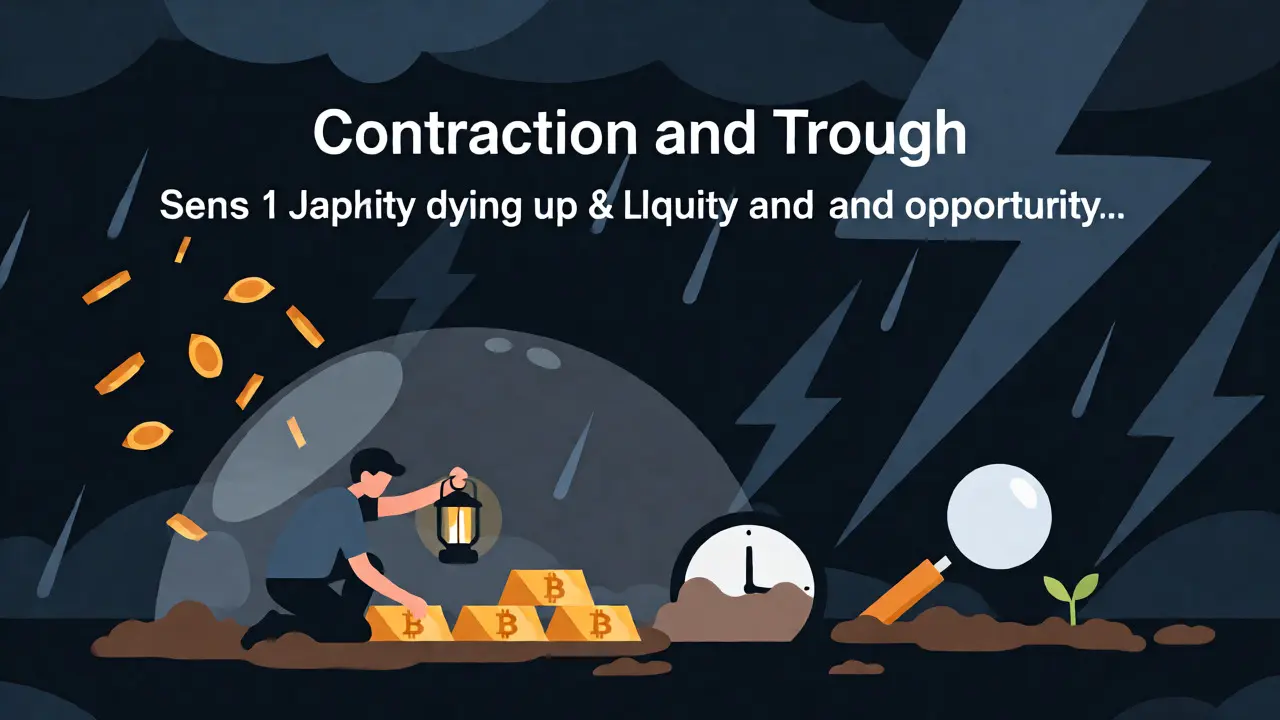
Contraction and Trough: Survival and Opportunity
When the bubble bursts, panic sets in. Prices drop fast. News outlets declare crypto dead. Unemployment rises, and consumers pull back spending. In this contraction phase, defensive assets shine. In traditional markets, utilities and healthcare outperform. In crypto, Bitcoin tends to hold value better than altcoins. Smaller projects with weak tokenomics often lose 90% or more of their value and may never recover.
Your main job is survival. Protect your capital. Do not try to catch falling knives. Wait for stabilization. Look for volume drying up and price basing out. This is the best time to research new opportunities. Many excellent projects launch or mature during bear markets because developers focus on building rather than marketing.
If you have cash reserves, this is your chance to buy quality assets at steep discounts. Warren Buffett famously said, "Be fearful when others are greedy, and greedy when others are fearful." Apply that logic here. But be patient. The bottom is rarely a single point. It is often a period of sideways movement. Dollar-cost averaging remains your best friend. Avoid using borrowed money. You want to avoid being forced to sell during a dip due to margin calls.
Tools and Indicators for Cycle Detection
You cannot rely on gut feeling alone. Use objective data to guide your decisions. Here are some practical tools:
- Yield Curve: An inverted yield curve (where short-term bonds yield more than long-term ones) historically precedes recessions. Watch the 2-year vs. 10-year Treasury spread.
- ISM Manufacturing Index: A reading below 50 indicates contraction in the manufacturing sector, which often correlates with broader economic slowdowns.
- Fear & Greed Index: Specific to crypto, this measures market sentiment. Extreme readings often mark local tops or bottoms.
- On-Chain Metrics: Tools like Glassnode track metrics such as MVRV (Market Value to Realized Value). High MVRV suggests assets are overvalued; low MVRV suggests undervaluation.
- Liquidity Conditions: Track global M2 money supply. Expanding liquidity fuels asset prices; contracting liquidity pressures them.
No single indicator works in isolation. Combine them. If the yield curve is inverted, sentiment is greedy, and on-chain metrics show overvaluation, the risk of a downturn is high. Conversely, if sentiment is fearful, liquidity is expanding, and valuations are low, you might be near a bottom.
Common Pitfalls to Avoid
Even with a good strategy, behavioral biases can derail you. Here are the biggest mistakes investors make across cycles:
- Recency Bias: Assuming current trends will last forever. Bull markets don't last forever, and neither do bear markets.
- Over-Leveraging: Using borrowed funds amplifies both gains and losses. In volatile crypto markets, leverage can wipe you out before the recovery starts.
- Ignoring Macro Trends: Crypto does not exist in a vacuum. Global interest rates and currency strength affect digital assets heavily.
- Panic Selling: Selling during a sharp drop locks in losses. Often, the drop is temporary noise within a longer uptrend.
- FOMO Buying: Jumping in after a massive rally means you bought high. Wait for pullbacks instead.
Another trap is trying to trade every wiggle. Frequent trading incurs fees and taxes, eroding returns. Stick to your plan. Review your portfolio quarterly, not daily. Constant checking leads to emotional decision-making.
Adapting Strategies for Long-Term Success
The ultimate goal is consistent growth over years, not months. A cycle-aware approach helps you manage risk-adjusted returns. During expansions, you capture upside. During contractions, you preserve capital and accumulate cheaply. This compounding effect beats passive holding through extreme volatility.
Consider a barbell strategy. Keep a core holding of Bitcoin and Ethereum for stability. Allocate a smaller portion to high-growth altcoins during favorable cycles. Keep a cash reserve for opportunistic buys. Adjust these percentages based on cycle phase. For example, increase cash reserves to 30-40% during late-cycle peaks. Reduce them to 10-15% during early-cycle recoveries.
Remember, flexibility is key. Rigid strategies fail when market conditions change. Stay informed, stay disciplined, and keep emotions in check. The market rewards patience and preparation.
How do I know which market cycle we are currently in?
Identifying the current cycle requires monitoring multiple indicators simultaneously. Key metrics include the shape of the yield curve, inflation rates, unemployment data, and central bank policy actions. In crypto specifically, look at on-chain data like network activity, holder behavior, and sentiment indices. No single metric is definitive, so look for confluence among several signals. Consulting reports from firms like Goldman Sachs or J.P. Morgan can provide institutional perspectives on cycle positioning.
Should I sell all my crypto during a recession?
Not necessarily. Selling everything locks in losses and misses potential rebounds. Instead, rebalance your portfolio. Reduce exposure to high-risk altcoins and increase holdings in stablecoins or Bitcoin. Keep enough liquid assets to cover living expenses and take advantage of lower prices later. Historically, quality assets recover strongly after recessions, so maintaining some position allows you to benefit from the next upcycle.
Does dollar-cost averaging work in all market cycles?
Yes, dollar-cost averaging (DCA) is effective across all cycles, though its benefits vary. In volatile or declining markets, DCA lowers your average entry price automatically. In steady uptrends, it prevents you from missing out entirely while avoiding the risk of investing a lump sum at a peak. It removes emotional timing decisions and ensures consistent participation in the market regardless of short-term fluctuations.
How does inflation affect cryptocurrency investments?
Inflation impacts crypto indirectly through monetary policy. High inflation often leads central banks to raise interest rates, which strengthens the dollar and reduces liquidity. Since crypto thrives on excess liquidity, rising rates can pressure prices. However, some investors view Bitcoin as an inflation hedge similar to gold. The relationship is complex and depends on whether the market views crypto as a risk-on asset or a store of value. Monitor real yields and fiat currency weakness for clues.
Is it possible to predict the exact top of a bull market?
Predicting the exact top is nearly impossible, even for experts. Markets can remain irrational longer than you can remain solvent. Instead of trying to nail the peak, aim to sell portions of your holdings as targets are met. Use trailing stop-losses or predefined profit-taking levels. Accept that you might leave some money on the table, but prioritize preserving gains over chasing the final percentage point of upside.
Sue Howard
7 11 26 / 12:03 PMGreat read but honestly half of this is just common sense wrapped in fancy words.