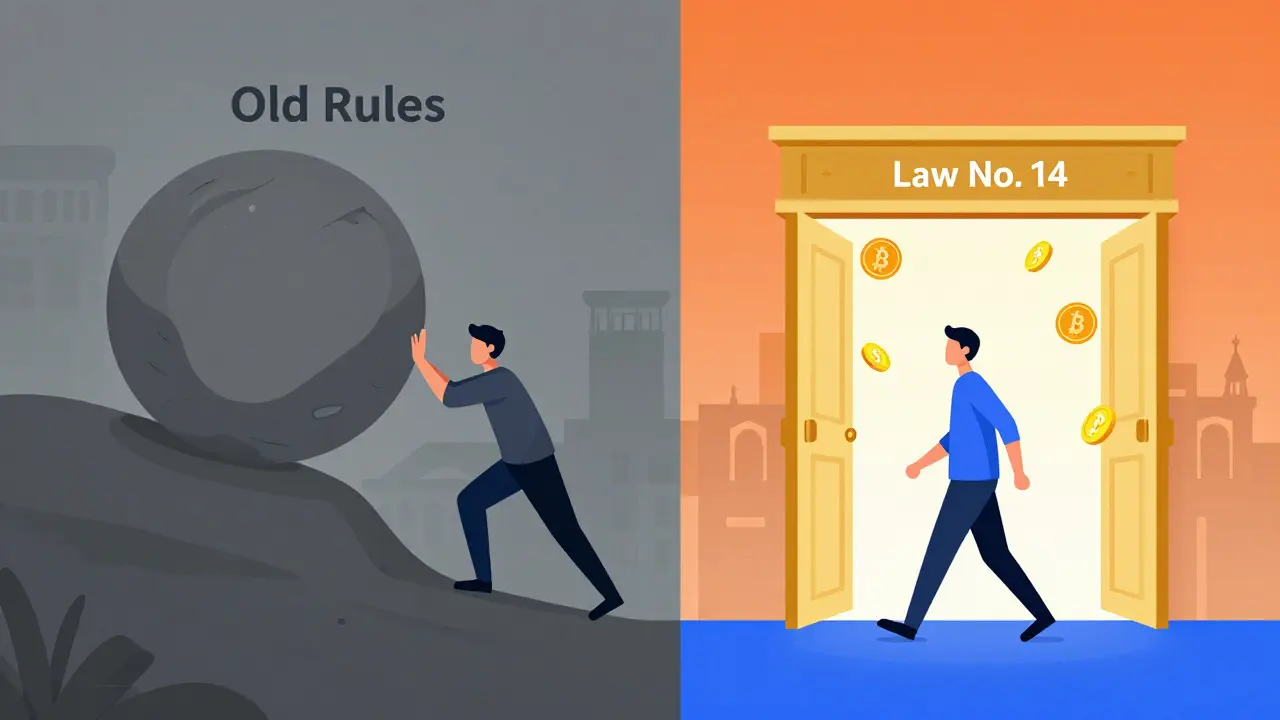
For over a decade, trying to buy Bitcoin with a Jordanian bank card was like trying to push a boulder uphill. The banks would simply decline the transaction, often citing vague 'security' reasons or flat-out bans. If you were a trader in Amman, you likely relied on peer-to-peer deals, cash handoffs, or sketchy online marketplaces because the formal financial system had its doors firmly shut.
That era ended abruptly in September 2025. With the enactment of Law No. 14 of 2025, officially known as the Virtual Assets Transactions Regulation Law, Jordan flipped the script. The Central Bank of Jordan (CBJ), once the strict gatekeeper banning digital assets, is now actively building the rails for them. But here is the catch: it is not a free-for-all. The new rules are tight, specific, and come with heavy penalties for those who miss the mark.
The Shift from Prohibition to Regulation
To understand where we stand today, you have to look at where we started. Since 2014, the CBJ issued repeated warnings that cryptocurrencies were not legal tender and effectively banned banks from dealing with them. The fear? Volatility, fraud, and money laundering. For years, this created a gray market. People still traded crypto, but they did it under the radar, disconnected from the banking infrastructure.
The turning point wasn't just about technology; it was about global compliance. In October 2023, Jordan was removed from the Financial Action Task Force (FATF) grey list. This was huge. It meant Jordan’s anti-money laundering (AML) frameworks were finally deemed robust enough by international standards. To keep that clean bill of health, the country needed to bring the shadowy world of crypto into the light. You can’t regulate what you don’t see, so the government decided to open the door, but only if you walked through it properly.
The Central Bank of Jordan transitioned from issuing prohibition notices to collaborating on regulatory frameworks, signaling a high-level commitment to balancing innovation with financial stability.
What Banks Can Actually Do Now
If you think this means your local bank will suddenly start offering Bitcoin savings accounts, slow down. The new law is precise. Under Article 11, licensed banks are permitted to engage in virtual asset activities, but only after getting prior approval from the CBJ.
Here is the breakdown of what is allowed:
- Custodial Services: Banks can hold digital assets for clients, acting as secure vaults.
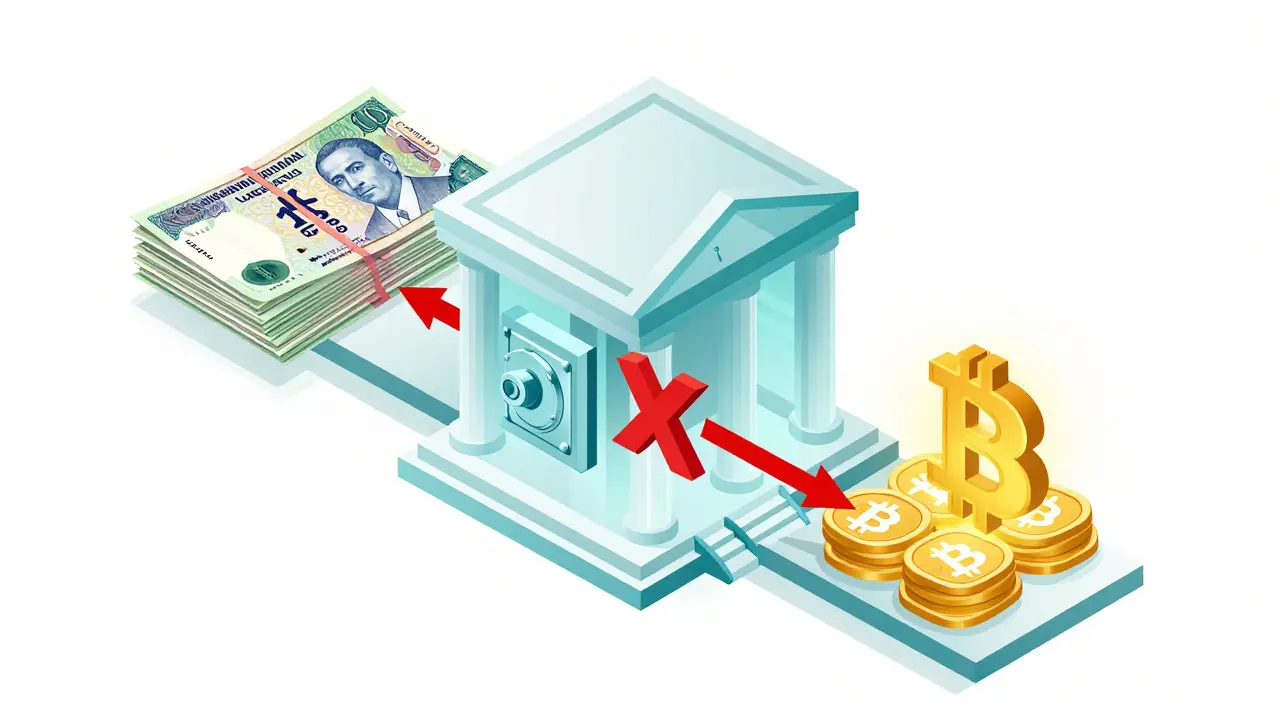
- Exchange Services: Banks can swap virtual assets for fiat currency (like the Jordanian Dinar) and vice versa.
- The Big Restriction: Banks are not authorized to provide transfer services for virtual assets. They cannot move crypto from one wallet to another directly.
Why the restriction on transfers? It’s a monetary policy safeguard. The government wants to ensure that capital flows remain visible and linked to the existing banking infrastructure. They want to prevent a 'crypto-only' economy that bypasses the central bank’s control over money supply. Essentially, the bank is the bridge between the real world and the crypto world, not the highway itself.
Who Watches the Watchers? The Regulatory Web
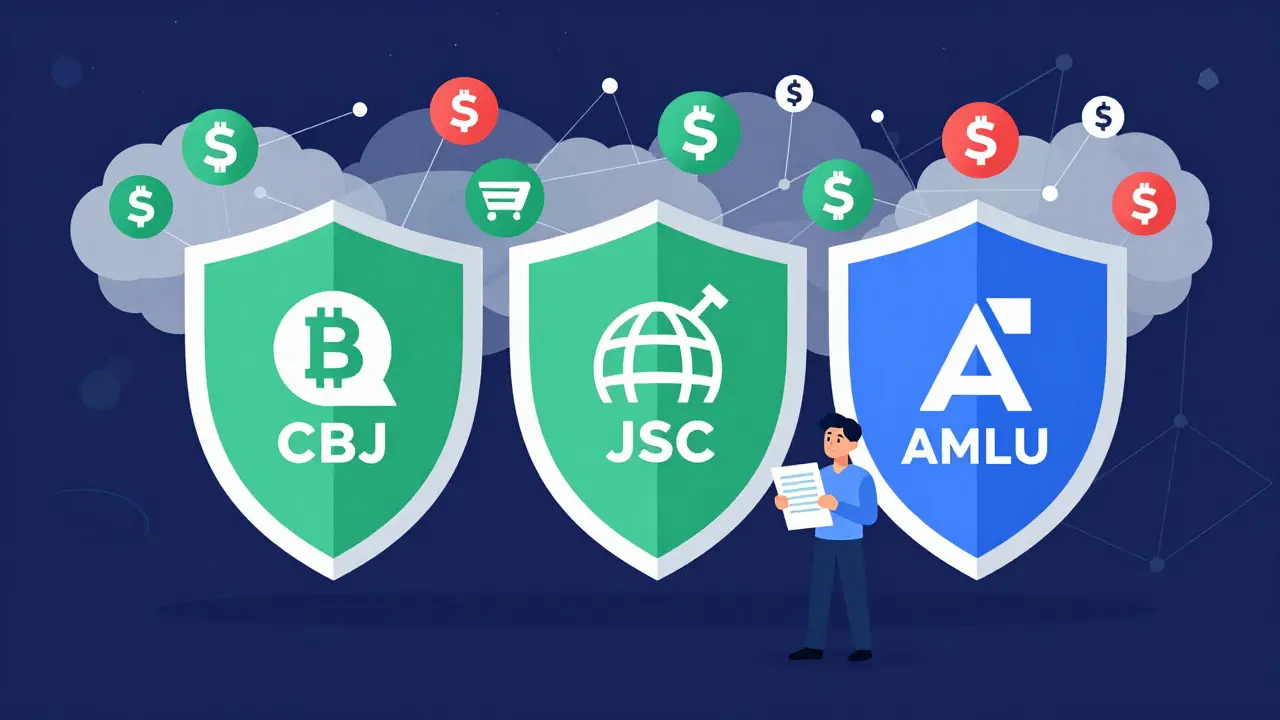
This isn’t just the CBJ’s job anymore. The oversight is split among several agencies, creating a multi-layered safety net. Think of it as a three-headed hydra protecting the financial system:
- Central Bank of Jordan (CBJ): Handles the monetary policy side. They approve banks to touch crypto and ensure the broader financial system stays stable.
- Jordan Securities Commission (JSC): Oversees the investment angle. If you are selling crypto as an investment product, they are watching.
- Anti-Money Laundering Unit (AMLU): Ensures compliance protocols are tight. They track suspicious activities and enforce AML rules.
Coordinating all this is a ministerial committee led by the Minister of Digital Economy and Entrepreneurship. This whole-of-government approach shows that Jordan isn’t treating crypto as a niche tech toy; it’s viewing it as a core part of the national economic strategy.
| Agency | Primary Role | Key Responsibility |
|---|---|---|
| Central Bank of Jordan (CBJ) | Monetary Policy & Banking Approval | Approves banks for VA activities; ensures systemic stability |
| Jordan Securities Commission (JSC) | Investment Oversight | Regulates crypto as investment products; protects investors |
| Anti-Money Laundering Unit (AMLU) | Compliance & Enforcement | Monitors transactions for illicit finance; enforces AML/CFT |
| Ministry of Digital Economy | Policy Coordination | Leads the ministerial committee; aligns tech with national goals |
Licensing Requirements for Service Providers
If you want to run a crypto exchange or a wallet service in Jordan, you need to become a Virtual Asset Service Provider (VASP). And no, you can’t just set up a website and start taking deposits. The bar is high.
VASPs must obtain a license before operating. The requirements mirror those of traditional banks:
- Know Your Customer (KYC): Rigorous identity verification for every user. No anonymous wallets.
- Enhanced Due Diligence: Extra scrutiny for high-risk transactions or customers from certain jurisdictions.
- Suspicious Activity Reporting: Mandatory reporting of any weird transaction patterns to the AMLU.
- Regular Audits: Independent audits to prove your books are clean and your tech is secure.
Note that this law specifically excludes digital securities, digital financial assets, and Central Bank Digital Currencies (CBDCs). Those fall under different, separate regulations. This nuance matters because it shows the regulators understand that not all 'digital things' are the same.
The Cost of Breaking the Rules
Here is where it gets serious. Before 2025, buying Bitcoin on Telegram was annoying but largely ignored. Today, it’s a criminal offense. Article 15 of Law No. 14 establishes harsh penalties for unlicensed activities.
If you operate without a license, you face:
- Imprisonment: At least one year behind bars.
- Fines: Between 50,000 and 100,000 Jordanian Dinars (approx. $70,000 - $140,000 USD).
- Closure: Immediate shutdown of your business premises.
- Confiscation: Seizure of all equipment used for the illegal activity.
This is a sharp pivot. The government is sending a clear message: if you want to play in the sandbox, follow the rules. If you play outside, you get kicked out-and hard. There is still some ambiguity around individual users using unlicensed foreign services, but for businesses, the risk is existential.
How Jordan Compares Regionally
In the Middle East and North Africa (MENA) region, Jordan is playing a unique game. Neighbors like Kuwait, Egypt, and Iraq still largely prohibit virtual assets. Meanwhile, the UAE has gone all-in, becoming a global hub with over 500,000 daily traders and federal-level regulation via the Securities and Commodities Authority.
Jordan is finding its middle ground. It’s not as aggressive as Dubai, but it’s far more structured than its immediate neighbors. By leveraging its FATF-compliant status and its existing FinTech Regulatory Sandbox (active since 2018), Jordan is positioning itself as a safe, compliant gateway for digital assets in the Levant. It’s betting on trust and stability rather than wild growth.
What This Means for You
So, what do you do now? If you’re a trader, expect your bank to eventually offer crypto exchange services, but check if they have the specific CBJ approval first. Don’t assume every bank is ready yet. If you’re an entrepreneur looking to launch a VASP, start talking to lawyers immediately. The compliance costs are high, but the market opportunity is real, especially given the lack of competition in neighboring countries.
The days of hiding your crypto trades are over. The infrastructure is being built, the laws are written, and the regulators are watching. The question is no longer 'is crypto legal in Jordan?' but 'are you complying with the new rules?'
Is cryptocurrency legal in Jordan in 2026?
Yes. As of September 2025, with the enactment of Law No. 14, virtual assets are legally recognized for payments, investments, and trading, provided they are conducted through licensed entities or approved banking channels.
Can I use my Jordanian bank card to buy Bitcoin?
Potentially, but only if your specific bank has obtained prior approval from the Central Bank of Jordan (CBJ) under Article 11 of the new law. Not all banks may have this authorization yet, so you should check with your institution.
What happens if I trade crypto without a license?
Under Article 15, unlicensed virtual asset activities carry severe penalties, including imprisonment for at least one year, fines between 50,000 and 100,000 JOD, closure of premises, and confiscation of equipment.
Does the new law cover CBDCs?
No. Law No. 14 explicitly excludes central bank digital currencies (CBDCs), digital securities, and digital financial assets. These categories are subject to separate regulatory treatments.
Which agencies regulate crypto in Jordan?
Oversight is shared among the Central Bank of Jordan (monetary policy/banking approval), the Jordan Securities Commission (investment oversight), and the Anti-Money Laundering Unit (compliance/enforcement), coordinated by the Ministry of Digital Economy.
Leave a comments