Have you seen the buzz about the KingMoney "Mjolnir" airdrop? If so, you are likely wondering if this is a legitimate way to get free tokens or just another marketing ploy. The name "Mjolnir"-Thor's hammer in Norse mythology-suggests a powerful new initiative from the KingMoney team. However, before you spend time connecting your wallet, it is crucial to understand what we actually know versus what is speculation.
The core issue here is transparency. While KingMoney is a Bitcoin-based digital currency launched in 2019 designed for network marketing industries, specific details on a "WKIM Mjolnir" program have not been widely verified by major crypto data aggregators like CoinGecko or CryptoCompare. This gap in public information means you need to approach this opportunity with caution and due diligence.
What is KingMoney (KIM)?
To evaluate the airdrop, you first need to understand the parent project. KIM is a niche cryptocurrency forked from Bitcoin, specifically tailored for multi-level marketing (MLM) and direct sales organizations. Unlike general-purpose coins like Ethereum or Bitcoin, KIM was engineered to solve specific problems in money transmission within network marketing structures.
The technical foundation of KIM differs significantly from its parent chain. Here are the key specifications that define the network:
- Block Time: Approximately 2 to 3 minutes per block, much faster than Bitcoin's 10-minute average.
- Max Supply: Capped at 747.44 million tokens.
- Mining Model: Primarily private mining rather than open public pools.
- Reward Halving: Occurs every 175,000 blocks, roughly once a year, creating a deflationary pressure over a 40-year period.
The project claims to offer three times faster transfer rates compared to traditional systems, which is a significant selling point for businesses needing quick commission payouts. However, because it targets a very specific vertical-network marketing-its utility outside this sector remains limited.
Decoding the "Mjolnir" and "WKIM" Terms
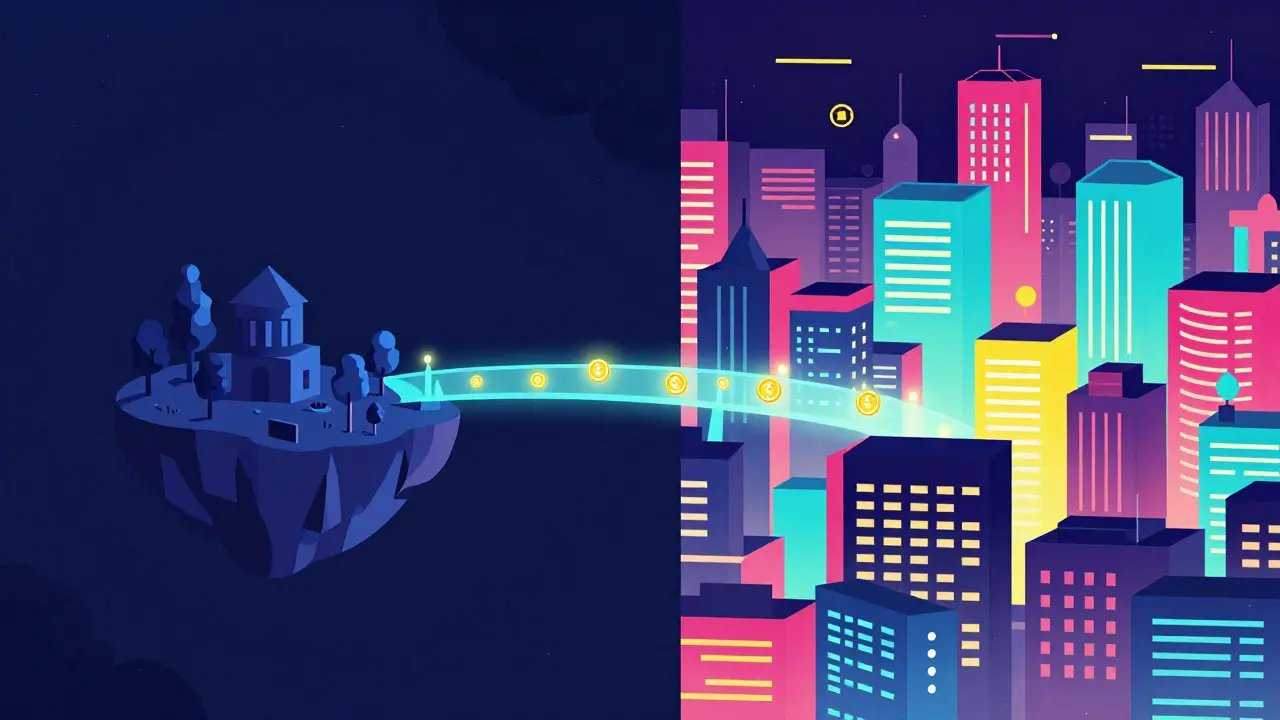
The term "Mjolnir" appears to be a branding choice for this specific distribution event. In crypto marketing, names often signal a "power-up" or a major upgrade. The prefix "W" in "WKIM" typically stands for "Wrapped," suggesting that these might be wrapped versions of the native KIM token, possibly bridged to another network like Ethereum or Binance Smart Chain for easier trading or integration with DeFi protocols.
Why would KingMoney create a wrapped version? Usually, it is to increase liquidity or accessibility. Native KIM has historically had low trading volume and inconsistent price data across different exchanges. By wrapping the token, the project might be trying to tap into larger decentralized finance ecosystems where users can trade, stake, or provide liquidity more easily.
| Attribute | Native KIM | Speculated WKIM (Mjolnir) |
|---|---|---|
| Network | Own Blockchain (Bitcoin Fork) | Potentially Bridged to ETH/BSC |
| Liquidity | Low / Niche Exchanges | Potentially Higher via DEXs |
| Primary Use Case | MLM Commission Payouts | DeFi Integration / Trading |
| Volatility Risk | High (Due to Low Volume) | Medium (Dependent on Bridge Stability) |
How to Verify the Legitimacy of the Airdrop
Since third-party data sources haven't fully indexed the "Mjolnir" program yet, you must rely on primary sources. Scams often mimic official announcements, so verifying the channel is critical. Do not trust random tweets or Telegram messages unless they link directly to the official domain.
- Check Official Social Media: Visit the official Facebook page, Twitter handle, and Telegram channel for KingMoney. Look for pinned posts or recent announcements mentioning "Mjolnir."
- Review the Whitepaper Updates: Has the whitepaper been updated to include details on wrapped tokens or new distribution methods? If not, the airdrop might be a community-led event rather than a core protocol change.
- Verify Contract Addresses: If the airdrop involves claiming tokens on a smart contract platform, verify the contract address on Etherscan or BscScan. Ensure the contract is verified and owned by the KingMoney team.
- Look for Deadlines and Criteria: Legitimate airdrops usually have clear eligibility criteria (e.g., holding X amount of KIM, completing KYC, or interacting with a dApp). Vague instructions are a red flag.
Be wary of any request for large amounts of gas fees upfront. While some airdrops require a small transaction fee to claim, asking for hundreds of dollars in gas for a free token giveaway is a common scam tactic.
Market Context and Price Discrepancies
One of the biggest hurdles for KIM holders is the lack of consistent market data. Different platforms report wildly different prices. For instance, one tracker might show KIM at $1,377, while another lists it at $12.25. This discrepancy usually indicates extremely low trading volume, meaning there aren't enough buyers and sellers to establish a stable market price.
If you receive WKIM tokens through the Mjolnir airdrop, you should expect similar volatility. The value of these tokens will depend heavily on whether the project successfully bridges them to a more liquid network. Without that bridge, the tokens may remain illiquid, making it difficult to sell them without crashing the price.
Keep in mind that the circulating supply of KIM is reported to be only around 205,000 tokens out of the total 592 million. This low circulation suggests that most tokens are held by insiders or miners. An airdrop could help distribute these tokens to a broader audience, but it also introduces sell pressure if early adopters decide to cash out immediately.
Risks to Consider Before Participating
Participating in a niche crypto airdrop comes with specific risks. Here is what you need to weigh before connecting your wallet:
- Liquidity Risk: Can you actually sell the tokens? If there are no active markets for WKIM, your tokens might be worth paper value only.
- Smart Contract Risk: If WKIM is a wrapped asset, it relies on the stability of the bridge. Bridges have historically been vulnerable to hacks.
- Regulatory Uncertainty: Network marketing regulations vary by country. If MLM faces stricter scrutiny, the utility of KIM could diminish.
- Opportunity Cost: Time spent researching and claiming niche airdrops could be better spent on projects with higher mainstream adoption and clearer roadmaps.
Always use a separate wallet for airdrops. Never connect your main wallet holding significant assets to an unverified dApp. A hardware wallet or a fresh software wallet dedicated to experiments is the safest approach.
Next Steps for Investors
If you decide to proceed, start by monitoring the official KingMoney channels daily. Set up alerts for keywords like "Mjolnir" and "WKIM." Once the official announcement drops, check the deadline and requirements carefully. If the process seems too complex or requires excessive upfront costs, step back and reconsider.
For those already holding KIM, this airdrop could be a sign of renewed activity from the development team. It might indicate efforts to expand beyond the niche MLM market. However, until the tokens are tradable on reputable exchanges with decent volume, treat this as a speculative play rather than a solid investment.
Is the KingMoney Mjolnir airdrop confirmed?
As of August 2026, major crypto data aggregators have not fully indexed the "Mjolnir" program. You should verify details directly through KingMoney's official social media channels and website to confirm legitimacy before participating.
What does WKIM stand for?
WKIM likely stands for "Wrapped KingMoney." This suggests the tokens are a bridged version of native KIM, possibly deployed on Ethereum or Binance Smart Chain to improve liquidity and DeFi compatibility.
How much does it cost to claim the airdrop?
Legitimate airdrops usually only require standard network gas fees for the transaction. Be cautious if the process asks for large upfront payments or high gas fees exceeding normal network standards, as this could be a scam indicator.
Where can I trade WKIM tokens after receiving them?
Trading availability depends on where the tokens are bridged. If deployed on Ethereum or BSC, they may be tradable on decentralized exchanges like Uniswap or PancakeSwap. Check the official announcement for specific DEX pairs.
Why is KIM price data inconsistent across platforms?
Inconsistent pricing is due to low trading volume and limited exchange listings. With few trades occurring, different platforms may update their price feeds at different times or rely on different data sources, leading to significant discrepancies.
Quang Thai Tran
23 08 26 / 03:30 AMIt is with a profound sense of skepticism that one must approach this so-called "Mjolnir" initiative, for the lack of verification on major aggregators is not merely an oversight but a glaring indictment of the project's opacity. One cannot help but wonder if the KingMoney team is engaging in a coordinated effort to obscure their true intentions from the discerning investor, hiding behind the veil of Norse mythology to mask a potential liquidity trap. The fact that CoinGecko and CryptoCompare have yet to index this program suggests a level of disinterest or perhaps deliberate exclusion by these gatekeepers of truth, which should alarm any rational market participant. Consider the implications: if the data is not there, where is it? Is it buried in private ledgers, accessible only to the inner circle of insiders who benefit most from such obscurity? This pattern mirrors countless past schemes where information asymmetry was used to extract value from the unwary masses before the rug was pulled. We must ask ourselves, what is the true purpose of wrapping a token with such low circulating supply? Is it to facilitate genuine DeFi integration, or to create a secondary market where prices can be manipulated without public scrutiny? The term "Mjolnir" itself reeks of marketing fluff, designed to evoke power and legitimacy without substance. Until we see transparent, immutable proof of contract ownership and distribution mechanics, this remains a speculative gamble at best. The risk of smart contract vulnerabilities is non-trivial, especially when bridging assets across networks with varying security postures. Furthermore, the regulatory landscape for MLMs is shifting, and KIM’s reliance on this niche sector makes it particularly vulnerable to legislative changes. One should never connect a primary wallet to such unverified entities; the cost of a single malicious interaction could be catastrophic. Let us remain vigilant, for in the crypto space, silence is often louder than any announcement.
Dianne Ritter
24 08 26 / 16:49 PMI think it's really interesting how they're trying to bridge the gap between a very specific use case like MLM and broader DeFi applications. It feels like a lot of projects are doing this right now, trying to find new ways to make their tokens useful outside their original scope. I'm curious to see if this actually helps with the liquidity issues mentioned in the article, or if it just adds another layer of complexity. Sometimes simpler is better, but maybe this is the step they needed to take to get more attention. Just hoping it goes smoothly for everyone involved!
Kate Staab
26 08 26 / 11:44 AMOh, how delightful it is to witness another grand gesture of corporate vanity masquerading as innovation! 🙄 The audacity to name an airdrop after Thor's hammer, as if swinging around a wrapped token will strike fear into the hearts of serious investors! One simply cannot help but feel a moral obligation to point out that transparency is not optional, it is a basic human right in financial dealings! And yet, here we are, staring at a void where data should be, wondering if the gods of blockchain have forsaken us all. It is truly a spectacle of modern finance, isn't it? The drama of it all is almost too much to bear, like watching a soap opera unfold in real-time on your portfolio. One expects nothing less from a project that seems to thrive on mystery rather than merit. But let us not lose hope, for even in the darkest corners of the crypto jungle, there are those who seek the light of truth. Or perhaps we are just waiting for the next big crash to prove our cynicism correct. Either way, the performance has been thoroughly entertaining. 💅
Calliope Clio
28 08 26 / 08:02 AMUgh, another one of these "wrapped" nonsense schemes. 😒 Honestly, who needs a wrapped version of a coin that barely trades? It’s like putting a fancy bow on a potato and calling it a gift. The price discrepancies alone tell you everything you need to know about the depth of this market. If you’re thinking about jumping in, maybe try looking at something with actual volume first? It’s exhausting pretending this is a serious investment opportunity when it’s clearly just a play for attention. But hey, if you want to gamble your savings on a meme coin with a mythological theme, go for it. 🙄 Just don’t say we didn’t warn you. The elitism of thinking this is a "power-up" is honestly laughable. It’s just marketing speak for "we ran out of ideas." Keep your wallets safe, people, because these kinds of projects love to drain gas fees under the guise of "claiming free stuff." It’s always the same old story, dressed up in new clothes. 😑
Tasha Davis
30 08 26 / 05:23 AMHey everyone! I think this could be a really cool chance to learn more about how these smaller projects work. I’ve been reading a lot about wrapped tokens lately and it seems like it’s a big trend. Maybe this is a good time to try it out with a small amount? I’m excited to see what happens next! Let’s keep the vibes positive and support the community! 🚀💪
Mike Baca
30 08 26 / 14:44 PMso its kinda wild how they picked the name mjolnir. feels like theyre trying to sound epic but its just a token wrap. i mean sure it might help with de-fi stuff but the whole m-l-m thing still bugs me. like who is actually using this for commissions? feels super niche. but hey if they can fix the liquidity issue thats a win right? im just confused why no one else is talking about it more. maybe im missing something obvious here. but the price diffs are crazy. $12 vs $1300?? that cant be real. anyway ill keep an eye on it. might do a tiny test claim if i feel brave. dont wanna lose my main wallet though. safety first always. its a risky game out there folks. stay sharp. 🤔
Jillian Groskreutz
31 08 26 / 14:18 PMOne must observe, with a degree of critical acumen, that the absence of data on reputable aggregators is, in itself, a damning indictment of the project’s viability; indeed, the notion that a "legitimate" entity would operate in such obscurity is, frankly, preposterous. Furthermore, the linguistic choice of "Mjolnir" suggests a marketing department operating on a budget of pure imagination rather than empirical evidence; one wonders if the developers possess any understanding of fundamental economic principles whatsoever. The wrapped token mechanism, while technically feasible, introduces unnecessary layers of risk-specifically, bridge vulnerability-which is a concern that many retail investors seem to overlook in their enthusiasm for "free money." It is imperative, therefore, that any prospective participant conduct a rigorous due diligence process, verifying not only the contract address but also the provenance of the team members themselves. To ignore these steps would be an act of negligence bordering on self-sabotage. Moreover, the historical volatility of KIM renders any short-term speculation highly precarious; one should not expect stability from a market with such thin order books. The regulatory risks associated with MLM structures are, moreover, non-trivial and could easily render the utility of the token moot overnight. In conclusion, while the potential for upside exists, the risk-reward ratio is decidedly unfavorable for the average investor; one would be wise to wait for clearer signals before committing capital. Do not be swayed by hype; be guided by data. 📉
Carmene Jackson
1 09 26 / 00:41 AMomg i am so stressed out about this whole thing. like does anyone else feel like we are all just guessing? i read the article and now i cant sleep. what if i miss out? but what if its a scam? ugh. my heart is pounding just thinking about connecting my wallet. i hope someone knows for sure. i feel like i am losing my mind over some random tokens. please let this be legit. i really need this to work out for me. it feels like so much pressure. i just want to make the right choice. but how do i know? it is so confusing. i am going to cry if i have to decide without knowing. help. 😭
Jennifer Ulmer
1 09 26 / 18:00 PMI think it is important to look at the bigger picture here. The project is trying to solve a specific problem for a specific group of people. That is not a bad thing. It just means it is not for everyone. I think we should be open to new ideas even if they seem strange at first. Maybe this will work well for the people who use MLMs. I hope it goes well for them. It is nice to see them trying to improve things. I think we should give them a fair chance. Not every project has to be the next Bitcoin. Some are just tools for specific jobs. I think that is okay. Let us hope for the best. It is always good to see innovation in any field. Even if it is a little weird. It shows that people are creative. I think that is a good sign. Let us keep an open mind. Who knows what will happen next. It is an exciting time for technology. I think we should enjoy the ride. Even if it is bumpy. Life is full of surprises. Let us be ready for them. Together we can understand this better. It is a learning experience for all of us. I think that is what matters most. Growth and understanding. Let us move forward together. With kindness and curiosity. That is the way to go. In the end it is about connection. And sharing knowledge. I think that is beautiful. Let us celebrate that. And learn from each other. It is a great community. We should be proud of it. And supportive of each other. Always. No matter what happens. We are in this together. Let us keep that spirit alive. And keep exploring. The world is full of possibilities. And we are part of it. Let us make the most of it. Every day is a new start. Let us embrace it. With joy and hope. And a little bit of caution. That is the balance. I think that is the key. To happiness and success. In life and in crypto. Let us strive for that. Every single day. It is worth it. I believe in us. And I believe in this. Let us see where it leads. Together. Always. Forward. 🌟
Stephanie Millar
2 09 26 / 00:54 AMFrom a British perspective, one might view this 'Mjolnir' initiative with a certain degree of scepticism, given the frequent tendency for such ventures to promise much and deliver little; however, the underlying concept of wrapping tokens for improved liquidity is certainly not without merit, provided the execution is sound. It is essential, therefore, to scrutinise the technical details thoroughly, ensuring that the bridge mechanisms are robust and that the governance of the wrapped asset is transparent. One should also consider the cultural context in which this project operates, as network marketing carries different connotations in various regions, potentially affecting adoption rates. Nevertheless, the potential for cross-border utility via DeFi protocols remains an intriguing proposition, warranting further investigation. It would be prudent to monitor official channels closely, as clarity on eligibility criteria and deadlines will be paramount in determining participation. Additionally, the discrepancy in reported prices serves as a stark reminder of the importance of reliable data sources in making informed decisions. In summary, while the risks are evident, the opportunities presented by this airdrop may be significant for those willing to engage in careful analysis. Let us proceed with measured optimism and rigorous due diligence. 🇬🇧
Nikki keller
2 09 26 / 16:48 PMIt is fascinating to consider the philosophical implications of decentralized finance intersecting with traditional network marketing structures. While the practical application may seem niche, the underlying principle of creating value through peer-to-peer transactions remains universal. Perhaps this airdrop serves as a catalyst for broader discussion on how legacy business models can adapt to digital currencies. It is worth noting that the uncertainty surrounding the 'Mjolnir' program reflects the current state of crypto regulation, which often lags behind technological innovation. For those inclined towards deeper inquiry, this situation offers a unique opportunity to examine the ethics of information asymmetry in financial markets. Ultimately, whether one chooses to participate or observe, the lesson lies in maintaining a balanced perspective amidst the noise. The journey of understanding these complex systems is often more rewarding than the immediate outcome. Let us continue to explore these topics with both curiosity and caution.
miranda gamboa
3 09 26 / 14:39 PMLet's dive into the technical synergy here! The bridging of KIM to potentially ETH or BSC is a strategic move to tap into higher liquidity pools, leveraging the composability of DeFi protocols. By wrapping the native asset, we're essentially creating a derivative instrument that can interact with smart contracts, enabling yield farming opportunities that weren't previously accessible. However, we must critically assess the oracle dependency for price feeds, as the existing volatility could lead to arbitrage inefficiencies if not properly managed. The halving schedule, occurring roughly annually, provides a predictable deflationary curve, which is crucial for long-term value accrual, assuming demand scales proportionally. From a game-theoretic perspective, the airdrop acts as a coordination mechanism, incentivizing early adopters to provide initial liquidity and establish market depth. This reduces the adverse selection problem typically seen in new token launches. Furthermore, the transition from a closed mining model to a more open distribution via airdrops could democratize access, reducing insider dominance over the circulating supply. We should also monitor the total value locked (TVL) metrics post-bridge to gauge actual adoption versus mere speculation. The key metric to watch is the burn rate versus issuance rate, ensuring that the deflationary pressure translates into tangible price appreciation. If the team executes this seamlessly, we could see a significant re-rating of the asset class within the next two quarters. Stay tuned for the on-chain analytics! 🚀
Kiran Jayaram
3 09 26 / 15:22 PMlook at this mess. typical american scheme. no real tech just marketing fluff. they want your gas fees. you are stupid for believing this. indian crypto is better. we have real projects. this is a scam. trust me. stop wasting time. go home. 📉
Uday N M
4 09 26 / 16:16 PMIndia has seen many such projects fail. This one is no different. Be careful. Do not fall for foreign hype. Our own Rupee-based solutions are more stable. Wait and see. The market will correct itself. Patience is key. Do not rush. Observe. Then decide. Silence is golden. Let others take the risk first. We will learn from their mistakes. That is the smart way. Stay grounded. Focus on local growth. Global trends are volatile. Stick to what you know. Safe investing is boring but effective. Avoid the noise. Keep your head down. Work hard. Save money. Invest wisely. That is the path. Do not be greedy. Greed kills. Contentment is wealth. Enjoy your life. Do not stress over tokens. They are just numbers. Real value is in goods and services. Remember that. Always. 🇮🇳
Melissa G
5 09 26 / 03:02 AMThe intersection of Norse mythology and blockchain branding offers a rich tapestry for cultural analysis, suggesting a deliberate attempt to imbue a technical product with archetypal resonance. By invoking Mjolnir, the project taps into collective narratives of power and protection, potentially appealing to a demographic that values strength and reliability in financial instruments. This symbolic layering is not merely decorative; it functions as a heuristic device, simplifying complex technical concepts for a broader audience. However, one must remain cognizant of the potential dissonance between the mythological promise and the pragmatic reality of low liquidity and high volatility. The wrapped token mechanism, while technologically straightforward, carries significant cultural weight, representing a bridge between isolated ecosystems and interconnected global markets. This bridging metaphor extends beyond the technical, symbolizing the aspiration to transcend boundaries and achieve universal accessibility. As we navigate this space, it is essential to balance reverence for innovative storytelling with rigorous analytical scrutiny. The narrative arc of the project will likely hinge on its ability to sustain engagement beyond the initial hype cycle. Ultimately, the success of such initiatives depends on aligning cultural expectations with operational realities. Let us observe this development with both scholarly interest and practical caution.
Patrick Pat
5 09 26 / 11:48 AMAh, the classic "Thor's Hammer" trick. You know, usually hammers are for driving nails, not for driving away your savings. But sure, let's pretend this wrapped token is going to smash through the barriers of liquidity. Brilliant strategy. Truly visionary. I'd love to hear more about the "private mining" aspect, unless you were afraid we'd notice the supply manipulation. Oh wait, you already did. Classic. Anyway, if you're feeling brave enough to connect your wallet, do it. I'll be here, safely tucked away in a hardware wallet, watching the circus from the sidelines. Cheers to your boldness. 🍻
Claudio Perrone
5 09 26 / 13:10 PMok so i think this is huge. like really huge. everyone is sleeping on this. its gonna moon. i can feel it. its like the universe is telling me to buy. dont listen to the haters. they are jealous. this is the future. we are all gonna be rich. trust the process. the mjolnir energy is strong. just do it. jump in. its easy. just connect wallet. click claim. done. profit. simple. why is everyone so complicated? just vibe with it. its magic. its crypto. its freedom. let it flow. catch the wave. ride the dragon. fly high. touch the sky. we are legends. remember that. always. 🐉🔥
Aaron Morrissey
6 09 26 / 17:40 PMIn the grand theatre of digital finance, the "Mjolnir" airdrop stands as a peculiar monologue, delivered by a cast whose script appears hastily written in the margins of obscurity. One observes, with a mixture of bemusement and caution, the juxtaposition of ancient mythological iconography against the cold, unforgiving backdrop of algorithmic trading volumes. It is a spectacle that invites reflection: are we witnessing a genuine evolution in tokenomics, or merely a elaborate smoke screen designed to obscure the fading embers of relevance? The wrapped nature of the asset suggests a desire to shed the skin of its origin, to crawl into the warmer, more liquid habitats of established DeFi ecosystems. Yet, the question remains: can a creature born in the shadows of niche MLM networks truly thrive in the sunlit arenas of mainstream finance? The answer, as ever, lies in the delicate dance of adoption, liquidity, and trust. Let us watch, with eyes wide and wallets secure, as this particular curtain rises on a stage that promises thunder but may deliver only static. The drama is unfolding, and we are all, unwillingly, part of the audience. 🎭