Finding a new place to trade crypto usually feels like a gamble. You see a platform promising low fees and a huge list of coins, but then you wonder: who actually runs this thing? That's the situation with Koinbay is a centralized cryptocurrency exchange launched in 2024 that offers a wide range of trading tools and assets. Also known as KoinBay Exchange, it operates under KOINBAY LTD, incorporated in the Union of Comoros. If you're looking for a fresh interface or a way to get into 200+ different tokens, it might look tempting. But before you move your funds, let's look at what's actually under the hood.
| Feature | Details |
|---|---|
| Launched | April 2024 |
| License Jurisdiction | Anjouan, Union of Comoros |
| Supported Assets | 200+ Cryptocurrencies |
| Payment Methods | Credit Card, Bank Transfer, Crypto Deposits |
| Network Support | ERC20, TRC20, BEP20, Polygon |
The Lowdown on Trading Features
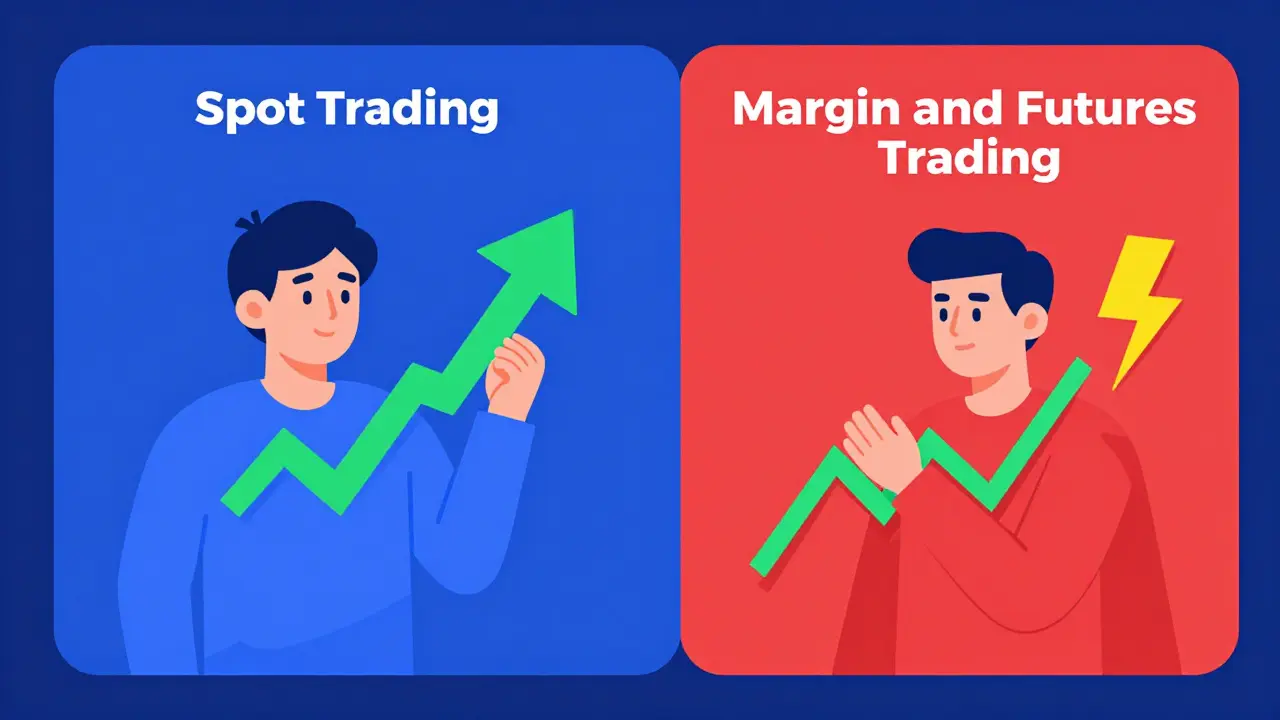
Koinbay doesn't just stick to simple buying and selling. They've packed the platform with several ways to trade, depending on how much risk you're willing to take. If you're a beginner, the Spot Trading is where you'll spend most of your time. It uses a standard order book where you can either set a Limit Order (buying only when the price hits your target) or a Market Order (buying instantly at the current price).
For those who want more heat, the platform offers Margin Trading and Futures Trading. These allow you to trade with leverage, meaning you can control a larger position than your actual balance allows. While this can multiply your gains, it can also wipe out your account just as quickly if the market swings the wrong way. They also have Grid Trading, which is great for sideways markets because it automatically buys low and sells high within a set price range.
Beyond the charts, there's an effort to give users a way to grow their holdings without active trading. You can use their staking services to earn rewards or apply for crypto loans. The Koinbay review process reveals a "Rewards Hub" where you can snag free USDT just for logging in or completing specific trades. It's a nice touch, though usually, these rewards are small compared to the actual volatility of the assets.
Getting Started and Funding Your Account
The onboarding process is pretty standard and doesn't feel like a chore. You sign up with an email, and then you hit the KYC (Know Your Customer) verification. To get Tier 1 status and unlock full functionality, you'll need to provide ID. Once that's cleared, you have two main ways to get money into the system.
If you already own crypto, you can transfer it from a private wallet or another exchange. Koinbay supports four major networks: ERC20 (Ethereum), TRC20 (Tron), BEP20 (Binance Smart Chain), and Polygon. Picking the wrong network during a deposit is the fastest way to lose your funds forever, so double-check the network on both ends.
For those who don't own any crypto yet, the platform allows direct purchases via credit cards and bank transfers. This removes the barrier for newcomers, though be aware that card purchases often come with higher fees than direct crypto deposits.
Security and Withdrawing Your Funds
When it comes to security, Koinbay uses a dual-layer verification system for withdrawals. You can't just click "send" and be done. You'll need an email confirmation code and a Two-Factor Authentication (2FA) code, typically generated via an app like Google Authenticator. This is a critical safety net; if someone steals your password, they still can't drain your account without your phone.
The withdrawal process follows a strict path: Overview > Withdraw > Select Coin > Enter Address > Verify. One thing to watch out for is the associated withdrawal fee, which can vary depending on the coin and the network congestion at that moment. If a deposit doesn't show up, the platform suggests using blockchain explorers to track the transaction ID-a standard practice in the industry.
The Reality Check: Risks and Red Flags
Here is where we need to be honest. Koinbay is a very new player, having only incorporated in April 2024. In the crypto world, a track record is everything. Established giants like Binance or Coinbase have survived multiple market crashes and hacks. Koinbay hasn't had that test yet.
Then there's the "White Label" aspect. Koinbay is described as a White Label Service Provider. In plain English, this means they didn't build their own trading engine from scratch. Instead, they bought a pre-made exchange software and put their own logo and colors on it. While this allows them to launch quickly with 200+ tokens, it means their technical uniqueness is limited.
The biggest question mark is the jurisdiction. Being licensed in the Union of Comoros (Anjouan) is a common move for new exchanges because it's business-friendly and has fewer hurdles. However, it doesn't offer the same level of investor protection or regulatory oversight you'd find in the US, EU, or Japan. If the exchange disappeared tomorrow, getting your money back through a Comoros court would be an uphill battle.
Who is Koinbay For?
If you're a professional trader who needs deep liquidity and institutional-grade security, you'll probably stick to the big names. But if you're looking for a simple interface to trade some niche tokens and try out their KBT Token (their native asset), Koinbay is a viable option.
It's particularly appealing to people who want a "one-stop shop"-trading, staking, and loans all in one place-without the overwhelming complexity of some pro-grade platforms. Just remember the golden rule of crypto: never keep more money on an exchange than you are willing to lose. Use a hardware wallet for your long-term holdings.
Is Koinbay a safe exchange?
Koinbay uses standard security measures like 2FA and email verification. However, it is a very new exchange (launched 2024) and is registered in the Comoros, which offers less regulatory protection than major financial hubs. Use it with caution and avoid storing large amounts of capital long-term.
What are the fees on Koinbay?
The platform claims to have "competitive low fees," but they don't publish a static percentage table. Fees usually vary by trading pair and whether you are a maker or a taker. Check the specific trading pair in the market section for real-time cost breakdowns.
How many cryptocurrencies can I trade?
Koinbay supports over 200 different cryptocurrencies and tokens, including major assets like Bitcoin (BTC), Ethereum (ETH), and Litecoin (LTC), as well as their own KBT Token.
Can I buy crypto with a credit card on Koinbay?
Yes, Koinbay allows users to purchase cryptocurrencies directly using credit cards and bank transfers, making it accessible for those who don't already own digital assets.
What is a White Label Service Provider?
A White Label provider is a company that uses a pre-existing software platform developed by another company and re-brands it as their own. This allows the exchange to offer advanced features without having to build the entire technical infrastructure from the ground up.
Next Steps and Troubleshooting
If you're ready to try Koinbay, start small. Deposit a tiny amount of crypto first to test the withdrawal process. If you run into issues with a deposit not showing up, check your transaction ID on a blockchain explorer like Etherscan or Tronscan. If the transaction is "confirmed" on the blockchain but not in your account, contact their support via their official channels.
For those worried about security, set up your 2FA immediately after registration. Don't rely on just a password. If you're trading futures or margin, spend a few days in the "Classic" interface before switching to "Advanced" to make sure you understand how the leverage settings actually affect your liquidation price.
Matthew Wright
8 04 26 / 00:59 AMWait, Union of Comoros... that's a massive red flag!!! Anyone who's been in crypto for more than a week knows that these offshore jurisdictions are basically black holes for your money... why would anyone risk it???
Siddharth Bhandari
9 04 26 / 00:35 AMActually, white label platforms aren't always bad, but they do mean the security is only as good as the provider they bought the software from. It's definitely a riskier bet than a proprietary build.
Emma Pease-Byron
9 04 26 / 18:56 PMImagine being actually impressed by "200+ tokens" in 2024. How quaint.
sekhar reddy
11 04 26 / 10:37 AMOMGGGGG this is literally a nightmare waiting to happen!! Who in their right mind would put money in a place from Comoros?? I'm actually shaking just thinking about the rugpull potential here!! Totally insane!!
Diana Martín Prieto
12 04 26 / 22:41 PMFor those just starting out, please remember to use a hardware wallet for your long-term assets. If you do want to try this platform for the niche coins, just keep the amount very small and move your profits out frequently. It's all about managing that risk effectively!
Erica Mahmood
14 04 26 / 20:55 PMbasically a generic wrapper for a white label engine no real liquidity depth’s gonna be an issue for anyone doing more than a few hundred bucks in volume
Trish Swanson
16 04 26 / 02:29 AMStill sounds sketchy... too new...
Bruce Micciulla Agency
16 04 26 / 17:50 PMthe absolute lack of transparency regarding the fee schedule is a classic sign of a low tier operation that hopes you dont notice the slippage until your balance is already drained by mid curve architecture and poor order book depth
Arwyn Keast
17 04 26 / 12:00 PMTypical rubbish. Another low-effort offshore play using a white-label stack. Honestly, the lack of regulatory arbitrage here is embarrassing for anyone calling themselves a trader. Absolute shambles.
akash temgire
18 04 26 / 02:48 AMThe lack of a published fee table is unacceptable.
Sharhonda Walker
18 04 26 / 04:14 AMi tried to sign up and the kyc process was kind of buggy but it eventualy worked just be careful with your docs
Suzanne Robitaille
20 04 26 / 02:52 AMIt feels like we are all just dancing on the edge of a volcano with these new platforms, doesn't it? Such a strange time to be alive, trusting our life savings to a company in the Comoros. Truly a testament to the chaos of the digital age!
Krystal Moore
20 04 26 / 04:02 AMThis is exactly why people lose everything! It's practically an invitation to get scammed and anyone who ignores the Comoros license is just asking for it. I can't believe people still fall for this!
Arlen Medina
20 04 26 / 08:25 AMListen, these offshore spots are where the real action is if you know how to play it. The big US exchanges are too suffocating with their rules. Just don't be a baby about the risk, that's how crypto works!
Manisha Sharma
21 04 26 / 16:04 PMTypical western fear of the east... this platform is prolly just more efficient than your bloated legacy systems. You guys just dont get the vision of a globalized finance system lol
Taylor Meadows
22 04 26 / 10:39 AMYou're all just pretending to be safe while your portfolios are bleeding. This place is a mirror of your own desperation for a quick win.
gladys christine
24 04 26 / 07:32 AMOmg just be safe everyone!!! Please please please use 2FA or you are literally leaving your door open for thieves!! Just be careful out there loves!!!
Evan Borisoff
25 04 26 / 11:39 AMThe systemic failure of these white-label protocols is precisely why we need a return to hard-asset backing and sovereign-grade security frameworks instead of relying on some random script bought off a shelf in an island jurisdiction that has zero oversight and zero accountability for the retail investor
Susan Payne
25 04 26 / 17:15 PMIt is profoundly disappointing to see such a lack of institutional rigor in the launch of this entity. The decision to incorporate in Anjouan is not merely a business convenience but a blatant admission of a desire to evade meaningful scrutiny. One must wonder why any sentient being would entrust their capital to such a precarious arrangement. The sheer audacity of calling this a "viable option" is laughable at best and negligent at worst. It is an affront to the very concept of financial security.