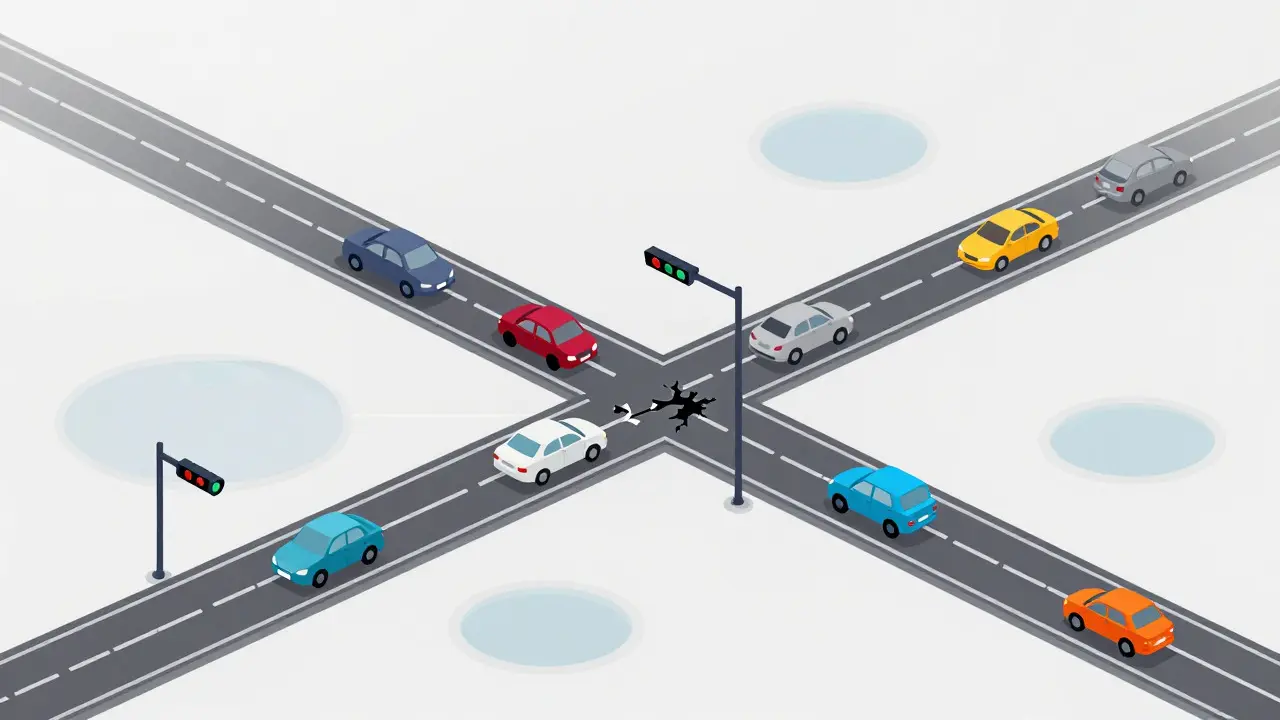
Imagine a highway system where every car is a different cryptocurrency, and the traffic lights are broken. That was the state of decentralized finance (DeFi) in 2017. Liquidity was scattered across dozens of isolated pools, making it hard to swap tokens efficiently. Enter Kyber Network, a protocol designed to fix this fragmentation by acting as a central hub for liquidity. Its native asset, Kyber Network Crystal v2 (KNC), serves as the fuel for this engine. If you are holding KNC or considering buying it, you need to understand that it is not just another speculative coin; it is an infrastructure play with specific utility in how money moves across blockchains.
The Core Identity: What is KNC?
KNC is the native utility and governance token of the Kyber Network ecosystem. Launched initially in 2017 by founders Loi Luu, Victor Tran, and Yaron Velner, the project evolved significantly with the "Katalyst" upgrade in March 2021. This update transitioned the network into a community-governed decentralized autonomous organization, known as KyberDAO. Today, KNC operates primarily as an ERC-20 token on Ethereum but functions across multiple chains through bridging solutions. It is the key that unlocks participation in one of the largest multi-chain liquidity hubs in the crypto space, connecting over $25 billion in total value locked (TVL) across more than 70 decentralized exchanges (DEXs).
How the Protocol Actually Works
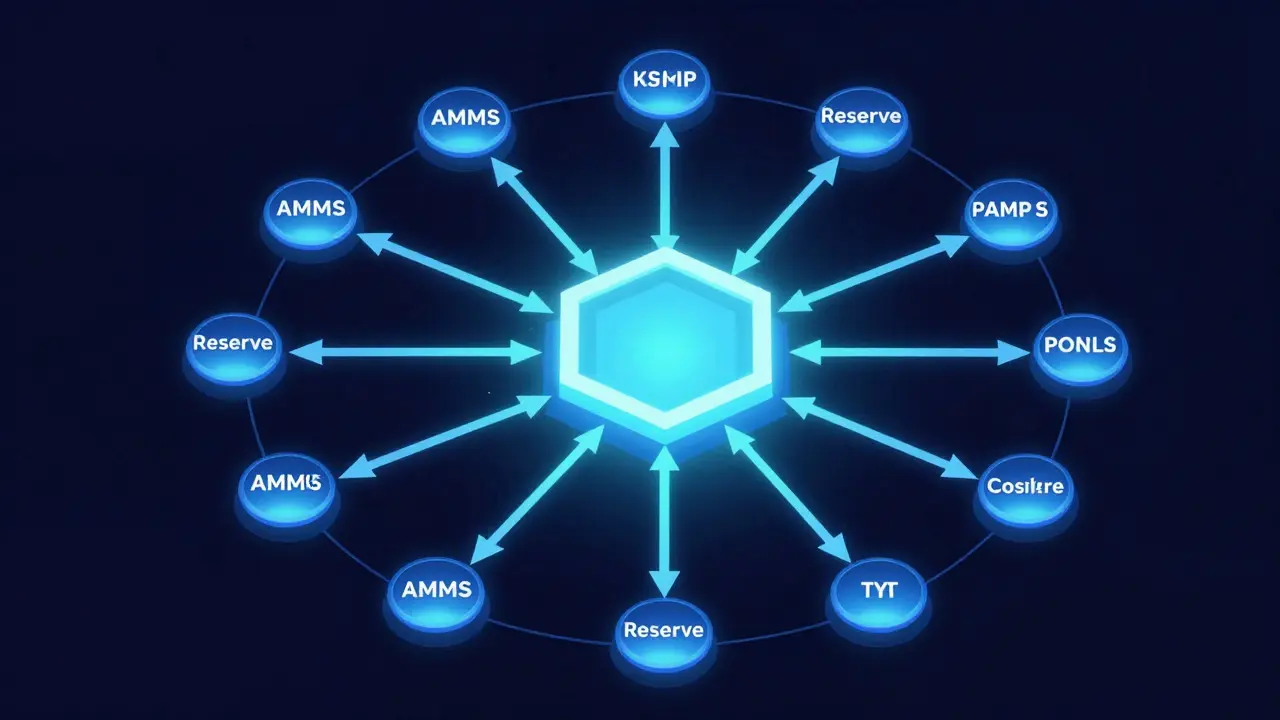
To grasp why KNC matters, you have to look at the mechanism behind it. Kyber uses a "Dynamic Market Maker" (DMM) model. Unlike traditional order books that match buyers and sellers directly, DMM relies on smart contracts that hold reserves of assets. When you initiate a swap, the contract calculates the best price based on these reserves and executes the trade in a single blockchain transaction. This process is fast, often handling 10-20 trades per second, and eliminates the need for intermediaries. The protocol scans various sources-including automated market makers (AMMs), reserve pools, and professional market makers-to find the optimal rate. For developers, this means integrating Kyber provides a single point of access to deep liquidity without having to connect to every individual exchange manually.
Tokenomics: Supply, Burns, and Value Accrual
The economic design of KNC is critical for understanding its long-term potential. The total supply is capped at 240.53 million tokens, with approximately 190.49 million currently in circulation as of late 2025. One of the most important features here is the burn mechanism. Whenever fees are collected by the protocol, 50% of those fees are used to buy back KNC from the open market and burn it permanently. This reduces the circulating supply over time, creating deflationary pressure if usage grows. Additionally, KNC holders can stake their tokens to participate in governance. Currently, around 40,920 holders actively vote on proposals ranging from fee structures to treasury allocations. To submit a basic proposal, you need to stake about 15,342 KNC, while high-impact changes require roughly 76,710 KNC. This ensures that only committed stakeholders influence major decisions.
| Feature | Kyber Network (KNC) | Uniswap (UNI) | PancakeSwap (CAKE) |
|---|---|---|---|
| Primary Role | Liquidity Infrastructure/Aggregator | Consumer-Facing DEX | Consumer-Facing DEX |
| Market Cap (Oct 2025) | $53.68 Million | $4.7 Billion | $1.8 Billion |
| Daily Volume | Infrastructure Layer (Powers other apps) | ~$1.2 Billion | High Retail Volume |
| Key Advantage | Cross-chain aggregation, developer APIs | Brand recognition, massive liquidity depth | Low fees, strong retail community |
| Target User | Developers, Institutions, Aggregators | Retail Traders, LPs | Retail Traders, LPs |
Competitive Landscape: Infrastructure vs. Front-End
It is easy to compare KNC to giants like Uniswap or PancakeSwap, but they serve different purposes. Uniswap is a destination; people go there to swap tokens. Kyber is a pipeline; it sends liquidity to other applications. Over 150 DeFi projects, including Synthetix, Curve, and Aave, use Kyber’s technology under the hood. This makes Kyber less visible to the average retail user but incredibly valuable to the ecosystem’s backbone. While competitors focus on acquiring end-users, Kyber focuses on developer adoption. However, this comes with a trade-off. Because KNC is not a front-end product, its value accrual is less obvious to casual investors who might prefer tokens with clearer revenue-sharing models or higher brand recognition. Changelly’s analysis notes that this infrastructure-focused model can limit adoption momentum among retail investors who don't fully grasp the technical benefits.
Developer Experience and Integration
If you are a developer looking to integrate Kyber, the experience is generally praised for its documentation quality. According to a 2025 survey, experienced Solidity developers typically spend 3-5 business days completing a full integration. Teams new to DeFi might take 10-14 days. The main challenges reported include managing gas optimizations across multiple chains and understanding the nuances of the fee structure. Support resources are robust, including a dedicated Discord channel with nearly 4,000 active members and weekly technical office hours. For those interested in building on top of Kyber, the API allows for seamless swaps with low slippage. One developer reported achieving 0.35% average slippage across 5,000 test swaps when using Kyber’s APIs, compared to 0.82% with direct Uniswap integration in certain scenarios. This efficiency is why many aggregators rely on Kyber as a primary source for routing trades.
Market Position and Future Outlook
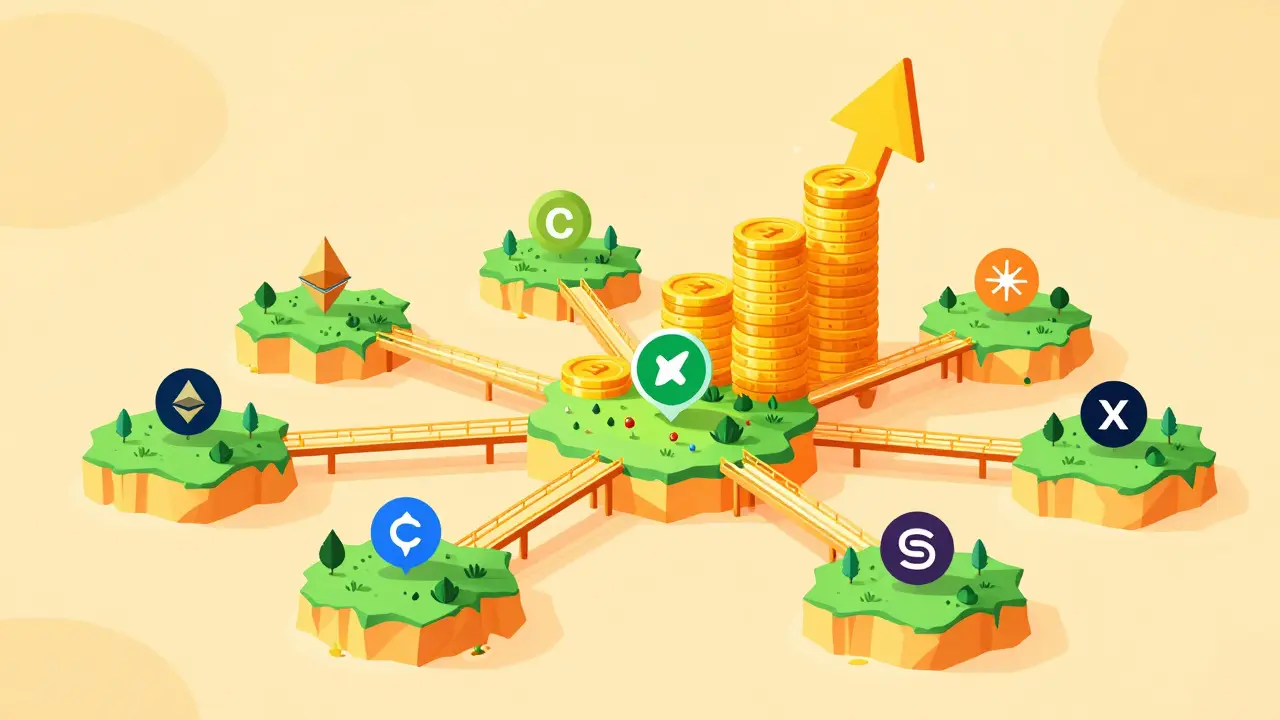
As of October 2025, KNC is ranked around #508 by market capitalization, trading at approximately $0.27 per token. This places it in the mid-cap category, far below the leaders but significant within the niche of liquidity infrastructure. The DeFi sector itself has grown rapidly, reaching a total market size of $112 billion. Kyber powers about 12% of all cross-chain swaps, according to Chainalysis data. Looking ahead, the roadmap includes expanding support from 13 to 25 blockchain networks by Q4 2026, adding chains like Solana and Cosmos. Recent innovations like "KyberSwap Elastic," launched in late 2024, introduce concentrated liquidity positions similar to Uniswap V3 but with dynamic fee tiers. Analysts remain split on the price trajectory. Some predict growth toward $0.45 in 2025 due to protocol fee increases, while others are more conservative, citing broader market uncertainties. The key factor will be whether the community can better communicate KNC's value to retail investors while maintaining its strength as a developer tool.
Frequently Asked Questions
Is KNC a good investment for beginners?
KNC is generally considered a more complex asset than mainstream coins like Bitcoin or Ethereum because its value is tied to developer adoption and protocol usage rather than pure speculation. Beginners should understand that it is an infrastructure token. If you believe in the growth of multi-chain DeFi and the importance of liquidity aggregation, KNC fits that thesis. However, it lacks the simple narrative of "store of value" or "smart contract platform," so it requires more research to justify holding.
What is the difference between KNC v1 and KNC v2?
The transition to KNC v2 happened during the Katalyst upgrade in 2021. The main change was the shift to a community-governed model via KyberDAO. While the core function remained the same, the governance rights became more structured, allowing token holders to vote on protocol parameters. Technically, the token still operates as an ERC-20 standard, but the social and governance contract changed significantly to decentralize control away from the founding team.
How does the KNC burn mechanism work?
Every time a swap occurs on the Kyber Network, a small fee is charged. 50% of these collected fees are used to purchase KNC from the open market and send it to a dead address, effectively removing it from circulation. This reduces the total supply of available tokens. If the demand for KNC remains stable or increases while the supply decreases, it creates upward pressure on the price. This is a common deflationary strategy used to align token value with protocol activity.
Which blockchains does Kyber Network support?
Kyber Network is multi-chain. It natively supports Ethereum and extends its functionality to EVM-compatible networks such as Polygon, BNB Chain, Avalanche, and Fantom. Through bridging solutions, it also connects to non-EVM chains. The roadmap aims to expand this reach further, with plans to integrate Solana and Cosmos by the end of 2026. This multi-chain presence is a key competitive advantage, allowing developers to access unified liquidity across different ecosystems.
Can I earn yield by staking KNC?
Yes, you can stake KNC to participate in KyberDAO governance. While the primary reward is voting power and influence over the protocol, staking often comes with additional incentives depending on current protocol proposals. These can include fee discounts or bonus rewards distributed from the treasury. You do not need to be a large holder to start, but submitting your own proposals requires meeting specific minimum staking thresholds, which vary based on the impact of the change you want to propose.
Rachel Etheridge
26 08 26 / 13:45 PMOh my gosh, did you guys see the part about the burn mechanism?? It is literally so important for us to understand how this works because it changes everything about supply! I feel like we are all just floating in space without these kinds of guides. The highway analogy at the start really stuck with me too. It makes DeFi feel a lot less scary when you break it down like that. I am so glad someone finally explained the DMM model without using too much jargon. It feels like we are learning together here which is amazing. Keep up the great work sharing this info!
Emmanuel Ogbomo
27 08 26 / 16:04 PMThe distinction between infrastructure and front-end is the most critical point here. Most retail investors chase the shiny object, the consumer-facing DEX, while ignoring the pipes that carry the water. If you look at the history of tech, the winners were often the boring companies building the rails, not the apps running on them. Kyber’s position as a middleware layer gives it a defensive moat that pure AMMs struggle to replicate. It is a philosophical question of where value actually accrues in a decentralized stack.
Dave Worth
28 08 26 / 20:45 PMThey are lying to you 🤡🚨 The 'burn' is just accounting trickery to make the chart go up so the insiders can dump on you. Look at the market cap vs Uniswap. $50M? That is nothing. They want you to think it is 'infrastructure' but really it is just a way to keep the token alive until they rug pull or the DAO votes to change the fees again. Wake up sheeple! 👁️👁️👁️
Sean Dalton
29 08 26 / 20:58 PMSplendid guide, truly. One must admire the audacity of comparing a mid-cap infrastructure token to Uniswap. It is like comparing a local plumber to the national grid. But then again, perhaps the Irish sensibility appreciates the humble utility over the flashy spectacle. The slippage numbers are impressive, I suppose, if one ignores the fact that gas fees on Ethereum still make the whole exercise a bit of a farce for the average person. Oh well, progress is progress, I guess.
Ashwini Chaskar
30 08 26 / 04:01 AMYou people always miss the moral implication of deflationary tokens. Is it not selfish to reduce supply for your own gain? I feel like we are being manipulated by these smart contracts. The governance part sounds nice but who really controls the vote? Probably the whales. I just know something is wrong when they talk about 'value accrual' so casually. It feels empty. Like a hollow promise. We need more transparency before we trust this again. Do you agree or are you just another bot?
Jane yuan
31 08 26 / 17:43 PMInfrastructure is unsexy. That is the problem. Americans love the brand, the logo, the meme. Who wants to buy the pipe when they can buy the water? The thesis is sound but the narrative is weak. Until KNC becomes a household name, it will remain a niche play for developers and institutions. The retail crowd will never care about API latency or slippage metrics. They care about green candles. So yes, great tech, poor marketing. Classic American oversight.
Kevin Payette
1 09 26 / 04:37 AMBullshit. The burn rate is negligible. You are looking at tiny fractions of a percent. The real story is the competition from Uniswap V3 concentrated liquidity. That killed the aggregator model. Why route through Kyber when you can just use the pool directly? The dev adoption numbers are inflated. Most of those integrations are legacy code that nobody updates. This token is a zombie. It has no pulse. Just waiting for the next bear market to die completely. Stop dreaming and look at the volume data. It is pathetic.
Rebecca Springer
2 09 26 / 00:20 AMI appreciate the balanced view here. It is rare to see a guide that acknowledges the trade-offs of an infrastructure token rather than just hyping it up. The comparison table was very helpful for visualizing where KNC sits relative to UNI and CAKE. I think the point about developer experience is crucial. If the integration takes 3-5 days, that is a significant barrier for smaller teams. But for larger protocols, it seems worth it. A good reminder that not all crypto investments need to be high-frequency trading plays.
J Shepherd
3 09 26 / 10:00 AMFrom a dev perspective, the API docs are solid. I integrated their swap module into a dApp last year. The slippage control is tight. You have to handle the gas optimization carefully though, especially if you are bridging across chains. The Discord support is actually responsive, which is a plus. Not many projects have dedicated office hours. If you are building, check out their SDK. It saves a lot of headache compared to writing custom routers. Solid tooling overall.
Kelechi Precious Nwachukwu
3 09 26 / 13:45 PMThis is such a beautiful explanation of how liquidity moves! I had no idea that 12% of cross chain swaps went through this. It makes me feel so proud to be part of this global community. The future looks so bright with Solana and Cosmos coming in. Can we imagine what that means for accessibility? It is going to change everything for people in emerging markets. Thank you for making this complex topic feel so welcoming and clear. Let us build together!
Valentine Okpala
4 09 26 / 00:09 AMCharming little article, isn't it? 🙄 All that talk about 'community governance' and 'decentralization'. As if the founding team hasn't been pulling strings since 2017. The 'burn' mechanism is just a tax on users to prop up the price for early holders. Typical. But I suppose if you like playing with blocks and watching charts, it's a fine toy. Don't expect it to save your portfolio, darling. 😏
Sam Ariafar
4 09 26 / 22:21 PMWe need to be careful with the word 'deflationary'. In economics, deflation can be bad if it slows down spending. Here, it is just reducing supply. But does it matter if the demand doesn't grow? If the protocol usage stays flat, burning tokens just means fewer tokens for the same amount of activity. It is a zero-sum game for the remaining holders. We should focus more on the actual revenue generation and less on the supply side mechanics. It is a subtle but important distinction that many miss.
Ian Munro
5 09 26 / 23:00 PMConcise and accurate. The DMM model is indeed superior for low-latency swaps. The 0.35% slippage figure is consistent with my own testing. Good read.
Trista Dennis
6 09 26 / 19:02 PMSo let me get this straight. You are telling me I should buy a token ranked #508 because it powers other apps? How do I even explain that to my mom? 'Oh, sweetie, this coin is invisible but it's very important.' She is going to laugh me out of the house. The only reason I hold any of this stuff is because I think it will moon. If it doesn't moon, does the infrastructure matter? I doubt it. Great write-up, though. Very dry. Like a glass of lukewarm water.
Steve Sulley
8 09 26 / 09:39 AMActually its quite simple. The real value is in the lockup. Everyone thinks burns are magic but its just math. If you look at the historical data the correlation with ETH price is stronger than any fundamental metric. So why bother reading all this technical nonsense? Just follow the big money. They know what they are doing. Or do they? Ha. Anyway cool post i guess. Maybe. Who knows. Its all a big illusion anyway.