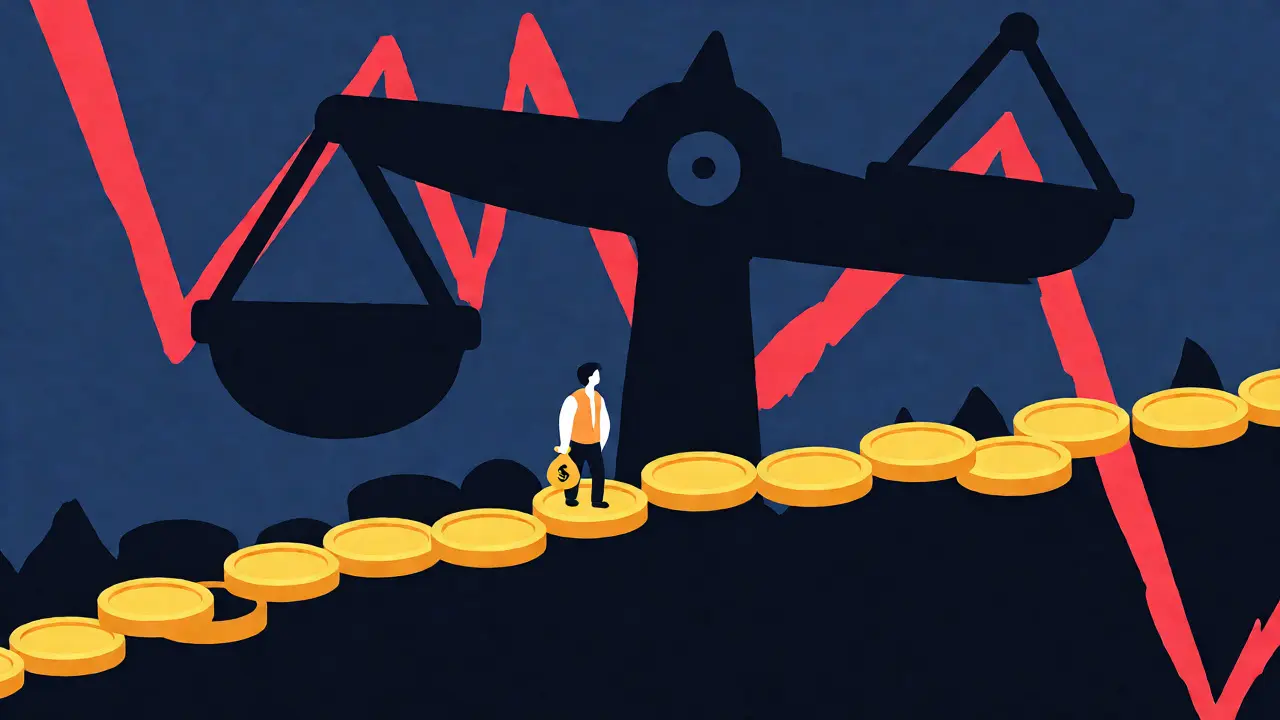
You put $100 into a trade. You use 10x leverage. Suddenly, you control a $1,000 position. The price moves up 5%. You feel like a genius because you just made 50% on your capital. But then the price drops 5%. You haven't just lost your profit; you've wiped out your entire account. This is the brutal reality of leverage risks for crypto traders.
Leverage is a double-edged sword that cuts deeper than most newcomers expect. While it amplifies gains, it equally amplifies losses. In traditional markets, a 2% move might be a bad day. In crypto, with extreme volatility and high leverage ratios, a 2% adverse move can trigger instant liquidation. If you are thinking about borrowing funds to trade Bitcoin or Ethereum, you need to understand exactly how this mechanism works before you lose your shirt.
How Leverage Actually Works in Crypto
When you trade with leverage, you aren't using your own money for the full position size. You are borrowing from an exchange. Your initial deposit is called margin. It acts as collateral. The exchange lends you the rest based on a ratio.
Let's break down the math. If you have $1,000 and use 10x leverage, you control a $10,000 position. Here is where it gets tricky. The exchange requires you to maintain a minimum amount of equity in the position. If the market moves against you, your equity shrinks. Once your equity falls below the maintenance margin requirement, the exchange automatically sells your position. This process is called liquidation. You don't get to choose when it happens. The system decides for you.
Crypto markets are different from stocks. They trade 24/7. There is no circuit breaker to pause trading during wild swings. A tweet from Elon Musk, a regulatory announcement from the SEC, or a hack at a major exchange can cause prices to swing 10-20% in hours. With 20x leverage, a mere 5% drop wipes you out completely. That is why professional traders treat leverage with extreme caution.
The Five Major Risk Vectors
Understanding the specific types of risk helps you build defenses. Most traders focus only on price direction, but that is just one piece of the puzzle.
- Market Volatility: Cryptocurrencies are notoriously unstable. Daily swings of 5-15% are common. High leverage turns these normal fluctuations into catastrophic events for your account.
- Liquidation Cascades: When many traders get liquidated at once, their forced selling pushes prices down further, triggering more liquidations. This chain reaction can crash prices instantly.
- Slippage: You set a stop-loss at $50,000. But if the market gaps down, you might actually exit at $48,000. You pay more than planned because there were no buyers at your desired price.
- Funding Rates: On perpetual futures contracts, you pay (or receive) fees every eight hours to keep the contract price aligned with the spot price. In bullish markets, longs often pay shorts. These costs eat into your profits over time.
- Exchange Risk: If your exchange goes bankrupt or suffers a technical outage during a volatile period, you cannot manage your positions. You are stuck holding a leveraged bag while the world burns.
Real-World Consequences of Overleveraging
The numbers don't lie. During the May 2021 correction, Bitcoin dropped over 30% in a single day. More than $8 billion worth of leveraged positions were liquidated across various exchanges. Imagine seeing billions of dollars vanish in twenty-four hours. That was real money lost by real people who thought they could predict the next tick.
A famous example involves a trader known as "qwatio." In May 2024, he lost $12.5 million in a single week. He wasn't unlucky; he was overexposed. After initial losses, he increased his leverage to recover quickly. This is a classic psychological trap. Trying to win back losses with higher stakes usually leads to total ruin. Automated liquidation engines do not care about your intentions. They execute orders mechanically when your margin hits zero.
Common Mistakes That Destroy Accounts
If you want to survive, avoid these frequent errors seen on forums like Reddit and BitMEX communities.
- Using Maximum Leverage: Just because Binance offers 125x doesn't mean you should use it. Beginners should stick to 2x or 3x. Even experienced pros rarely go above 10x unless they have a massive edge.
- Averaging Down Without Stops: Adding more money to a losing position feels logical until the trend continues. If you average down without adjusting your stop-loss, you increase your exposure to a falling knife.
- Ignoring Position Sizing: Many traders calculate their entry but forget to limit the percentage of their total portfolio at risk. Never risk more than 1-2% of your total capital on a single trade.
- Trading Without a Plan: Using leverage without a clear strategy turns trading into gambling. You need defined entry points, exit targets, and invalidation levels before you click buy.
- Emotional Decision Making: Fear and greed are amplified by leverage. Panic selling at the bottom or FOMO buying at the top becomes deadly when your account balance fluctuates wildly.
Essential Risk Management Strategies
Successful leverage trading isn't about predicting the future perfectly. It's about managing what happens when you're wrong. Here are concrete steps to protect your capital.
Use Isolated Margin
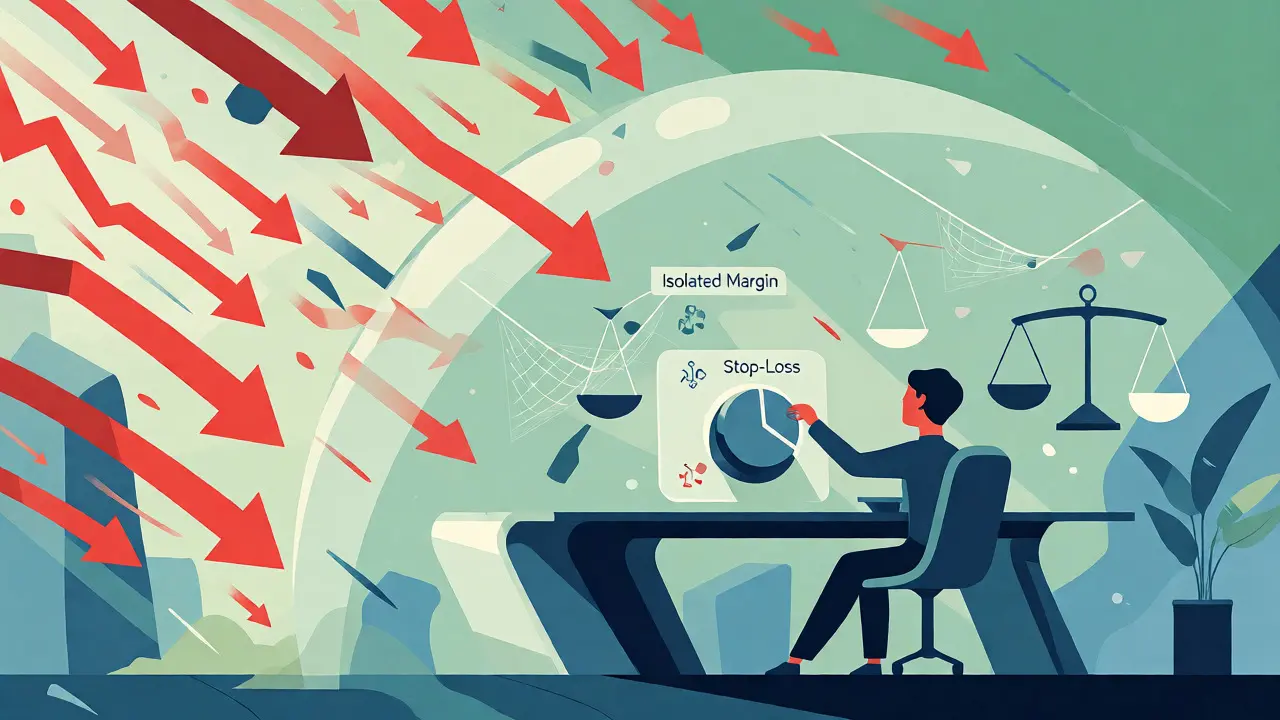
Most exchanges offer two modes: Cross Margin and Isolated Margin. In Cross Margin, your entire account balance backs your position. If one trade blows up, it can drain your whole wallet. In Isolated Margin, only the allocated collateral is at risk. Always start with Isolated Margin to prevent a single bad trade from wiping out your other holdings.
Set Hard Stop-Losses
Never enter a leveraged trade without a stop-loss order. Place it immediately after opening the position. Account for slippage by setting your stop slightly wider than your technical level. For example, if support is at $60,000, set your stop at $59,500. This gives the market room to breathe without liquidating you prematurely.
Calculate Liquidation Price
Before you open a trade, check the estimated liquidation price displayed by the exchange. Ask yourself: "Is this price realistic?" If your liquidation price is very close to the current market price, you are too leveraged. Give your trade room to fluctuate. A good rule of thumb is to ensure your liquidation price is at least 10-15% away from the entry price, depending on volatility.
Leverage Ratios and Their Impact
To visualize the danger, look at how different leverage levels react to market moves. The table below shows the impact of a 5% adverse price movement on a $1,000 investment.
| Leverage Ratio | Position Size | Loss on 5% Drop | Remaining Equity | Status |
|---|---|---|---|---|
| 1x (Spot) | $1,000 | $50 | $950 | Safe |
| 5x | $5,000 | $250 | $750 | Manageable Loss |
| 10x | $10,000 | $500 | $500 | High Risk |
| 20x | $20,000 | $1,000 | $0 | Liquidated |
| 50x | $50,000 | $2,500 | -$1,500 | Liquidated Early |
Notice how quickly things go wrong. At 20x leverage, a standard daily fluctuation wipes you out. At 50x, you are liquidated before the price even hits a 5% drop. This table demonstrates why high leverage is unsuitable for most retail traders.
DeFi Leverage: New Risks, Same Problems
Decentralized Finance (DeFi) platforms now offer leverage through smart contracts. While this removes counterparty risk associated with centralized exchanges, it introduces new dangers. Smart contract bugs can lead to hacks. Liquidity pools can dry up during high demand, causing poor execution prices. Governance token volatility can affect the stability of lending protocols. If you trade on platforms like Aave or Compound, remember that code is law, but code can also fail.
Who Should Avoid Leverage?
Honestly, most people should stay away from it. If you are new to crypto, trade spot first. Learn how the market behaves. If you panic sell when your portfolio drops 10%, you will definitely panic when a leveraged position drops 50%. Leverage requires emotional discipline and experience. If you cannot sleep at night because you are checking charts every hour, you are over-leveraged.
What is the safest leverage ratio for beginners?
For beginners, 2x to 3x leverage is generally considered safe. This allows for some amplification of gains without exposing the trader to immediate liquidation from minor market noise. Experienced traders might use 5x to 10x, but only with strict risk management.
Can I lose more money than I deposited?
In most modern crypto exchanges, liquidation prevents you from losing more than your initial margin. However, in rare cases of extreme market gaps or low liquidity, you might end up with a negative balance. Exchanges usually socialize these losses among all users, but it is still a risk.
Why did my stop-loss not work?
Stop-losses can fail due to slippage or market gaps. If the price jumps past your stop-loss level during a moment of low liquidity, your order executes at the next available price, which may be significantly worse. This is common during news events or flash crashes.
What is the difference between cross and isolated margin?
Cross margin uses your entire account balance as collateral for a position, reducing the chance of liquidation but risking the whole account. Isolated margin limits the collateral to a specific amount assigned to that trade, protecting the rest of your funds if the trade fails.
Are funding rates always paid by long traders?
No. Funding rates depend on market sentiment. In bull markets, longs typically pay shorts to keep the perpetual price above the spot price. In bear markets, shorts may pay longs. Check the current funding rate on your exchange before entering a long-term position.
Leave a comments