
Have you ever stumbled upon a cryptocurrency platform that promises the best of both worlds but feels suspiciously quiet? That is exactly the vibe surrounding Leverj, a hybrid cryptocurrency exchange attempting to bridge decentralized and centralized trading models. On paper, it sounds like the holy grail: self-custody features with the ease of a traditional interface. But when you dig into the actual data for 2026, the picture changes dramatically. The silence around this platform isn't peaceful; it's concerning.
If you are considering depositing funds into Leverj, you need to pause and look at the hard numbers. This isn't just about whether the website looks good. It is about liquidity, security transparency, and user trust. In a market dominated by giants like Binance and Coinbase, smaller players have to work incredibly hard to prove they aren't a risk. So far, Leverj has struggled to do that.
The Hybrid Promise vs. The Reality
Leverj markets itself as a bridge between DeFi (Decentralized Finance) and CeFi (Centralized Finance). The idea is appealing. You get the control of your private keys from a wallet while enjoying the fast matching engine of a centralized exchange. However, execution matters more than concept.
In practice, the technical details on how Leverj achieves this balance remain vague. Most reliable sources lack specific documentation on their security architecture. Do they use multi-signature wallets? Is there a proof-of-reserves audit? These answers are missing. For a platform handling real money, this opacity is a major red flag. When you trade on established platforms, you know exactly where your assets sit. With Leverj, that clarity is absent.
User Sentiment: A Warning Sign
Let’s talk about what users actually say. Or rather, what they don’t say. As of early 2026, Leverj sits at a mediocre 3.0 out of 5 rating on major comparison sites like Cryptogeek. But here is the kicker: that score is based on only two reviews. Two.
Compare that to the noise surrounding major exchanges. Platforms like Bybit or BingX have thousands of discussions, complaints, praises, and bug reports. That volume proves active usage. Leverj’s near-total absence from community forums suggests extremely low adoption. Low adoption means low liquidity. And low liquidity means slippage-your trades might not execute at the price you expect because there simply aren't enough buyers or sellers on the other side.
| Platform | User Rating (Avg) | Review Volume | Security Transparency | Market Position |
|---|---|---|---|---|
| Leverj | 3.0 / 5 | ~2 reviews | Low (Vague) | Niche / Emerging |
| Bybit | 4.5+ / 5 | Thousands | High (AI Risk Engines) | Top Tier |
| Coinbase | 4.0+ / 5 | Tens of Thousands | Very High (Regulated) | Institutional Leader |
| BingX | 4.2 / 5 | Thousands | Medium-High | Growing Contender |
The Leverj Gluon (L2) Token Problem
Every exchange has its own token, and Leverj uses Leverj Gluon, L2. Currently, L2 trades around $0.11. While that price seems stable, the future projections are wildly contradictory and deeply unsettling for investors.
Some analysts predict a modest rise to $0.15 by late 2025. Others, however, forecast a catastrophic drop to $0.001 in 2026. Why such a massive gap? Because there is no fundamental consensus on the utility of the token. Without strong demand drivers-like fee discounts that save significant money or governance rights that matter-the token becomes speculative vaporware.
If you buy L2 hoping for appreciation, you are gambling on hype rather than value. The volatility reflects the broader uncertainty of the platform itself. If the exchange fails to gain traction, the token likely follows suit. It is a classic case of 'buy the rumor, sell the news,' except the news never really arrives.

Why Security Should Be Your Top Priority
In 2026, crypto security is not optional; it is mandatory. Look at how leaders operate. Bybit employs AI-driven risk engines that prevented $79 million in fraud during suspicious withdrawal attempts alone. They use Merkle tree verification for proof of reserves. Coinbase offers institutional-grade compliance across the US, UK, and Europe.
Leverj offers none of this visible infrastructure. There is no public record of emergency response systems. There is no clear statement on insurance coverage for user funds. When an exchange doesn't advertise its security measures, it usually means they don't have much to show. For a beginner, this is dangerous territory. For an experienced trader, it is an unnecessary headache.
Better Alternatives for Your Trading Needs
You don't need to settle for obscurity. Depending on your goals, there are superior options that offer transparency, liquidity, and safety.
- For Beginners: Stick with Coinbase. It has free or low-cost on-ramping, excellent customer support, and regulatory clarity. You can sleep at night knowing your funds are protected by industry standards.
- For Advanced Traders: Bybit provides advanced tools, high leverage options, and robust security. Their automated risk management protects you from hacks and fraudulent withdrawals.
- For High Leverage: BingX offers up to 150x leverage on Bitcoin and 100x on Ethereum, with over 700 cryptocurrencies available. It is less known than Binance but far more established than Leverj.
These platforms compete directly for your attention because they deliver value. Leverj competes by being quiet. In the crypto world, silence is rarely golden.
Who Is Leverj Actually For?
If you must explore Leverj, understand that it is not for everyone. It might appeal to seasoned developers who want to test hybrid architectures without risking large capital. It could interest those specifically looking to speculate on the L2 token's potential rebound.
However, if you are looking for a primary wallet for your savings, a place to earn steady yield, or a safe entry point into crypto, Leverj is not the answer. The lack of community support means if something goes wrong, you won't find solutions on Reddit or Twitter. You will be on your own.
Final Verdict: Proceed with Extreme Caution
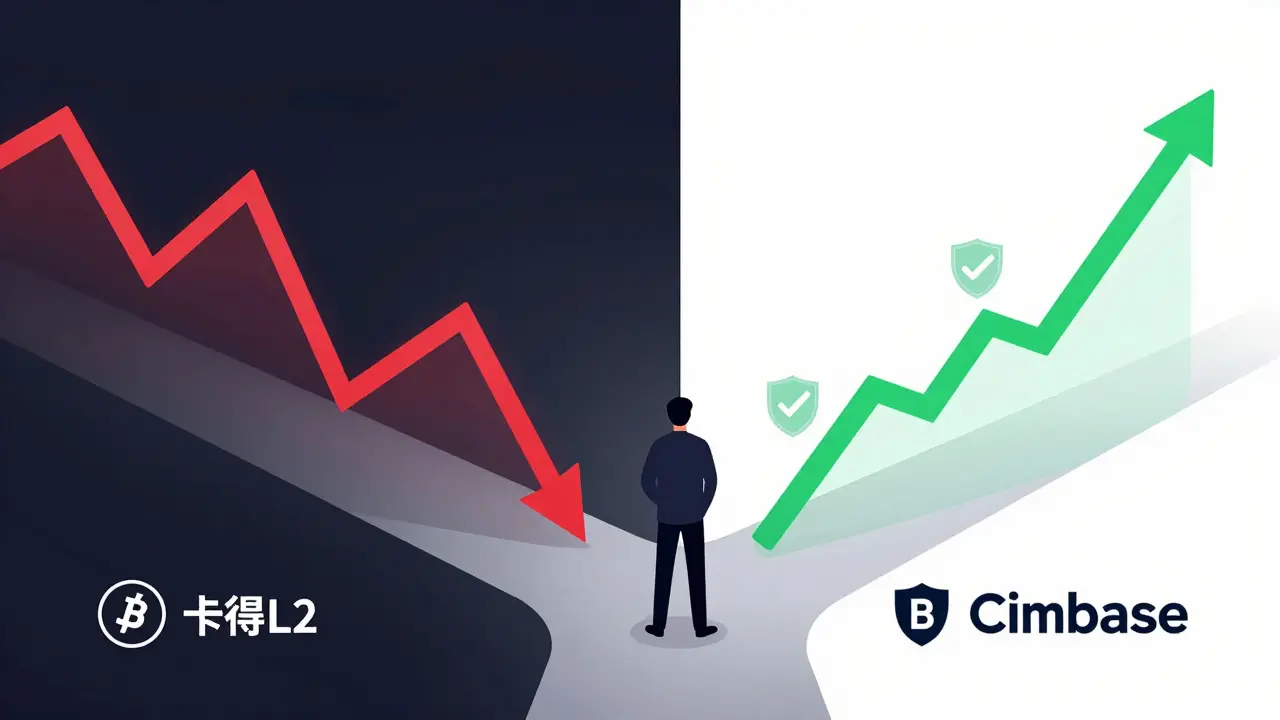
The crypto market rewards innovation but punishes negligence. Leverj presents an interesting concept but fails to back it up with the necessary transparency, user base, and security guarantees. The sparse reviews, volatile token predictions, and lack of technical detail create a perfect storm of risk.
Do not rush to join the next big thing if the big thing hasn't proven itself yet. Stick to exchanges with proven track records, clear fee structures, and active communities. Your capital deserves better than a guess.
Is Leverj a safe exchange for beginners?
No. Due to limited user reviews, vague security documentation, and low liquidity, Leverj is not recommended for beginners. New users should prioritize platforms like Coinbase or Kraken that offer educational resources, regulatory compliance, and robust customer support.
What is the Leverj Gluon (L2) token used for?
The L2 token serves as the utility token for the Leverj ecosystem. It is intended to facilitate transactions within the platform and potentially offer fee discounts. However, its value is highly speculative due to low adoption and contradictory price predictions.
How does Leverj compare to Binance or Bybit?
Leverj cannot currently compete with Binance or Bybit in terms of liquidity, security features, or user trust. Major exchanges offer AI-driven fraud protection, proof-of-reserves audits, and millions of daily users. Leverj lacks these critical infrastructure elements.
Why are there so few reviews for Leverj?
The scarcity of reviews indicates very low user adoption. This could mean the platform is new, has failed to attract a user base, or operates in a niche market. Lack of social proof makes it difficult to verify reliability and customer service quality.
Does Leverj offer proof of reserves?
There is no publicly available evidence that Leverj conducts regular proof-of-reserves audits using methods like Merkle trees. Users seeking transparency should choose exchanges that publish monthly audited reserve reports.
Can I trade Bitcoin with high leverage on Leverj?
Specific leverage limits for Bitcoin on Leverj are unclear due to limited public information. For high-leverage trading, platforms like BingX (up to 150x) or Bybit offer clearer terms, higher liquidity, and better execution speeds.
Bronwen Butler
10 05 26 / 07:50 AMeveryone is so quick to dismiss the hybrid model just because they dont see a flashy marketing campaign
i think the silence is actually a feature not a bug
less noise means less chance of getting caught in a pump and dump scheme
you guys are too focused on the big names that have already been compromised multiple times
Matt Davis
10 05 26 / 18:06 PMOh absolutely brilliant Bronwen, let us all trust our life savings to a platform with two reviews.
The sheer audacity of suggesting that 'silence' is anything other than a death knell for a financial product is staggering.
You are either paid to say this or you simply do not understand how liquidity works.
It is quite frankly insulting to anyone who has lost money on obscure altcoins.
Albert Lee
11 05 26 / 14:38 PMI hear what you are saying about the risk Matt but honestly it feels like we are missing the point of innovation here
We need platforms that try new things even if they fail
Imagine if every startup had to wait until they were as big as Coinbase before they could launch
The crypto space would stagnate completely
Let them try and learn from their mistakes rather than tearing them down immediately
Michelle Bonahoom
11 05 26 / 19:59 PMthis is why american users get screwed over constantly
we trust these shady foreign entities instead of sticking to regulated domestic options
it is embarrassing really
just use coinbase and stop trying to be clever with your money
Pauline Larocco71
13 05 26 / 07:27 AMi totally get where you are coming from Michelle but i think its a bit harsh to say everyone is stupid
some people just want lower fees or different features
its not always about safety sometimes its about finding a niche that fits your trading style
maybe leverj has something unique that the big guys dont offer yet
beti macedo
13 05 26 / 16:54 PMDear Pauline, while your perspective is certainly interesting, one must consider the fundamental principles of financial security
It is imperative that we prioritize platforms with established regulatory frameworks
To suggest otherwise is to invite unnecessary volatility into one's portfolio
Please exercise due diligence and consult with certified financial advisors before making such decisions
The integrity of the market depends on responsible participation by all stakeholders involved in this complex ecosystem
Yash Lodha
14 05 26 / 13:22 PMthe lack of transparency is clearly a deliberate obfuscation tactic designed to hide the true ownership structure of the exchange
they are likely using shell companies in tax havens to launder funds for illicit activities
do not trust any platform that does not publish their merkle tree proofs weekly
the globalist agenda is to keep you dependent on centralized intermediaries while they siphon off value through hidden fees and slippage manipulation
Ankush Pokarana
16 05 26 / 00:39 AMYash raises some valid points about the opacity of the system but perhaps we should look at the philosophical implications of trust in digital systems
When we outsource our security to an algorithm or a company we are essentially surrendering our autonomy to a third party entity that may have conflicting interests
The question is not just whether Leverj is safe but whether the entire model of centralized custody is inherently flawed in a world that promised decentralization
We must ask ourselves what it means to truly own our assets when the keys are held by someone else
Bianca Vilas Boas Lourenço
17 05 26 / 16:04 PMUgh, another conspiracy theory thread 🙄
Can we please focus on the actual data provided in the post?
The token price projections are literally contradictory which should be enough to scare anyone away
Why are we debating philosophy when the chart looks like a heart monitor flatlining? 😩
Jesse Alston
19 05 26 / 06:47 AMBianca is right to point out the data issues but let me break down the technical side for everyone here 📊
The L2 token utility is weak because there is no real demand driver beyond speculation
In healthy ecosystems tokens are used for governance fee discounts or staking rewards
Leverj offers none of these meaningful utilities which makes the token purely speculative
If you are looking for exposure to hybrid exchanges stick to projects with clear whitepapers and active development teams ✅
Sarah C
19 05 26 / 18:06 PMThanks for the detailed breakdown Jesse
I was wondering if there are any specific metrics we should watch to determine if a hybrid exchange is gaining traction
Is it daily active users or total value locked?
Jesse Alston
20 05 26 / 02:07 AMGreat question Sarah! 👍
For hybrid exchanges you want to look at both TVL and order book depth
High TVL shows confidence but deep order books show actual liquidity for traders
If you can buy large amounts without slippage that is a good sign
Also check if they have regular security audits published publicly 🔒
Kimberly Herbstritt
21 05 26 / 16:16 PMI feel like everyone is being too negative here
Maybe Leverj is just slow to start
Some of the best projects took years to gain adoption
Who knows maybe they will surprise us all in 2027
Its always fun to find a gem early isn't it?
Sudarshan Anbazhagan
22 05 26 / 14:03 PMKimberly your optimism is misplaced and borders on negligence
The absence of reviews is not a sign of potential it is a sign of irrelevance
In the financial sector reputation is everything and Leverj has none
To suggest waiting for a miracle is to ignore the basic principles of risk management
One must adhere to proven standards rather than chasing phantom opportunities
The market does not reward hope it rewards execution and transparency which Leverj lacks entirely
John Gonzalez Bentham
23 05 26 / 05:44 AMSudarshan is right but he writes like a robot
Look the fact is most small exchanges are scams
They build a website copy paste code and disappear with your money
Ive seen it happen too many times
Dont be a sucker
Ellie Riddell
24 05 26 / 01:07 AMFascinating how quickly the herd mentality kicks in
We all rush to judge based on a single article
But tell me this: does anyone here actually know the founders of Leverj?
Or are we just trusting the narrative presented by whoever wrote this review?
Silence might indeed be golden but skepticism is cheaper
Let the chips fall where they may
Destiny Kilby
25 05 26 / 18:24 PMEllie makes a fair point about the source of information
I have found that reading multiple sources gives a better picture
However the lack of community discussion is concerning
I prefer platforms where i can ask questions and get answers from other users
It builds a sense of trust that anonymous forums cannot provide
Jerry CUNNINGHAM SR
25 05 26 / 18:33 PMDestiny is correct that community engagement is vital for trust
As a user i always look for active discord servers or telegram groups
If a project cannot support a community how can they support their users during a crisis?
We must encourage developers to be transparent and open to feedback
This fosters a healthier ecosystem for everyone involved
Shelby Cantu
26 05 26 / 17:13 PMKeep it simple folks
Safe or unsafe?
Leverj is unsafe
Move on
Ruben Michel
28 05 26 / 05:08 AMShelby's brevity is appreciated though her analysis is lacking nuance
The distinction between 'unsafe' and 'unproven' is critical
Leverj is unproven which carries different risks than outright malicious intent
However for the average retail investor the distinction is irrelevant
Stick to tier-one exchanges unless you are prepared to conduct extensive due diligence yourself
The amateur trader has no place in the dark corners of the market