
Everyone talks about the "Blockchain Island," but few explain how you actually keep your money there. You might have heard that Malta offers a favorable crypto tax framework where you pay zero tax on digital assets. It sounds too good to be true, right? Usually, when something sounds this simple in finance, there’s a catch. In Malta's case, the catch isn't a hidden fee; it's a strict set of rules regarding residency and income remittance. If you get them wrong, you could face unexpected bills from the Commissioner for Revenue. If you get them right, you can legally structure your life so that your crypto profits remain untaxed while you enjoy the Mediterranean lifestyle.
This guide breaks down exactly how the Maltese system works for investors and traders. We will look at who qualifies for the 0% rate, what counts as taxable income, and why simply moving there doesn't automatically mean you stop paying taxes. By October 2026, with global regulations tightening under frameworks like MiCA, understanding these nuances is more critical than ever.
The Core Mechanism: Non-Domiciled Residency
The secret sauce of Malta’s tax appeal isn't a special "crypto law" that exempts Bitcoin specifically. Instead, it relies on the country's general tax regime for individuals who are resident but not domiciled in Malta. This is known as the non-dom residency status. To understand this, you need to grasp two concepts: residence and domicile.
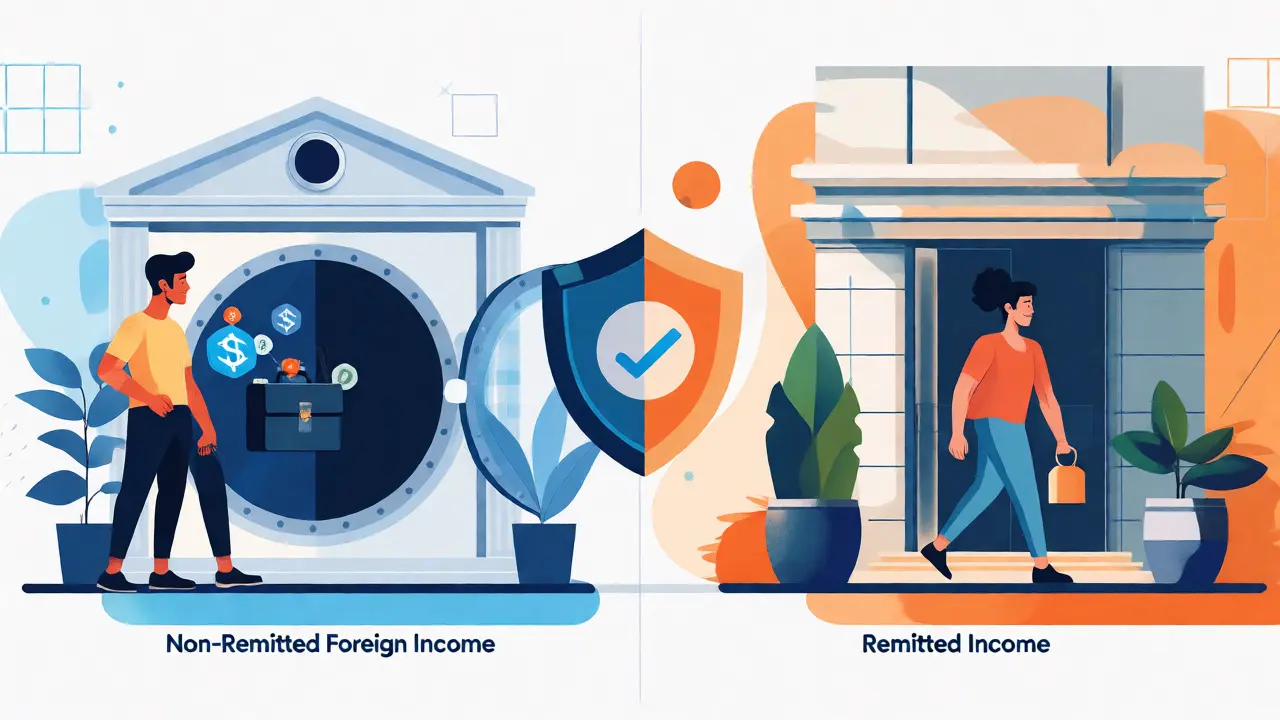
Residence is about where you live. Domicile is about your permanent home or origin, often linked to your birthplace or father’s domicile. If you are a foreigner living in Malta, you are likely resident (because you spend time there) but non-domiciled (because your permanent home is elsewhere). Malta operates on a remittance basis for these individuals. This means you only pay tax on:
- Income arising within Malta (taxed at progressive rates up to 35%).
- Foreign income that you bring into Malta (remitted).
Crucially, if you earn capital gains from selling cryptocurrency abroad and you do not transfer those funds into a Maltese bank account or use them for personal benefit in Malta, that income remains outside the tax net. For many long-term holders, this results in an effective tax rate of 0%. However, this requires discipline. You cannot just leave your cash in a local wallet and claim it wasn't "remitted." The definition of remittance is broad and includes using credit cards linked to foreign accounts for expenses in Malta.
Who Pays What? Investors vs. Traders
Not everyone gets the same treatment. The Maltese tax authorities distinguish between passive investors and active traders. This distinction determines whether your gains are treated as capital gains (potentially tax-free under non-dom rules) or business income (taxable).
| Activity | Tax Classification | Applicable Rate | Notes |
|---|---|---|---|
| Long-term Holding (Buy & Hold) | Capital Gain | 0% (if non-dom and not remitted) | Best for passive investors. |
| Frequent Trading / Day Trading | Business Income | 15% - 35% | Considered trade; subject to standard progressive rates. |
| Mining & Staking | Trade/Business Income | 15% - 35% | Requires meticulous record-keeping of costs. |
| ICO Participation | Income/Gain | Case-by-case | Depends on intent and holding period. |
If you buy Bitcoin, hold it for three years, and sell it for a profit, you are generally viewed as a passive investor. Your gain is a capital gain. If you are non-dom and don't remit the proceeds, you pay nothing. But if you are flipping tokens weekly, executing dozens of trades, and treating it like a job, the Malta Financial Services Authority (MFSA) and tax officials may classify you as running a business. Business income earned in Malta is taxed at progressive rates starting at 15% and rising to 35% for earnings over €60,000. Even for non-doms, if the activity is deemed to be carried out *in* Malta (e.g., you execute trades from your laptop in Valletta), it might be considered Maltese-source income, which is taxable regardless of remittance.
Regulatory Landscape: MFSA and FIAU
You can't talk about taxes without talking about regulation. Malta was one of the first countries to create a comprehensive legal framework for crypto, earning its "Blockchain Island" nickname. Today, this falls under the EU’s MiCA (Markets in Crypto-Assets Regulation), which harmonizes rules across Europe. Locally, the MFSA oversees licensing for exchanges and custodians, ensuring they meet capital and operational standards.
For individual investors, the regulatory burden is lighter, but anti-money laundering (AML) checks are strict. The Financial Intelligence Analysis Unit (FIAU) monitors transactions. When you open a bank account in Malta-which is essential for managing your finances-you will undergo rigorous KYC (Know Your Customer) procedures. Banks are cautious with crypto-related flows. They want to see clear trails of where your money came from. Having a clean tax strategy helps here because banks prefer clients who can demonstrate the legitimacy of their wealth.
Practical Steps to Establish Tax Efficiency
So, how do you actually set this up? It’s not enough to just fly in and rent an Airbnb. You need to establish formal tax residency.
- Secure Accommodation: You must rent or buy property in Malta. The minimum investment for a residence permit via rental is roughly €8,750 per year, or €220,000 for purchase. This proves you have a place to live.
- Apply for Residence: Obtain a residence permit through the Identity Malta agency. This document is key for opening bank accounts and registering with tax authorities.
- Register for Taxes: Register with the Department of Internal Revenue. Declare your status as non-domiciled. This is the step most people miss or botch. You must explicitly state that you are claiming non-dom status.
- Manage Remittances: Keep your crypto profits in offshore accounts (e.g., Switzerland, Singapore, or even US-based brokers) if you want to avoid tax. Only bring money into Malta for living expenses if you are willing to pay tax on that specific amount.
- Keep Records: Maintain detailed logs of all transactions, including dates, amounts, and counterparties. If audited, you need to prove the source of funds and that certain gains were not remitted.
A common pitfall is assuming that holding crypto in a hardware wallet means no tax event occurs. While the unrealized gain isn't taxed, the moment you convert it to fiat and move it, you trigger potential tax implications depending on how and where the conversion happened. Always consult a local tax advisor before making large moves. The rules are complex, and the Commissioner for Revenue has been known to scrutinize aggressive structures.

Comparing Malta to Other Jurisdictions
Why choose Malta over Dubai or Portugal? Each has pros and cons.
- Dubai: Offers 0% personal income tax with no requirement to physically reside there for most visa types. However, banking can be harder for non-residents, and you lose access to the EU market. Malta gives you EU access.
- Portugal: Used to be the go-to for crypto nomads with its NHR scheme, but recent changes have tightened rules, especially regarding short-term trading and employment income. Malta’s framework feels more stable for pure investors.
- Switzerland: Also favorable, but significantly more expensive to live in. Malta offers a lower cost of entry while still providing a robust legal environment.
Malta sits in a sweet spot: it’s in the EU, uses the Euro, has English as an official language, and offers a proven path to 0% tax on unremitted gains. The trade-off is the physical presence requirement (183 days) and the complexity of compliance.
Future Outlook: Stability Amidst Global Change
As we move deeper into 2026, global tax transparency is increasing. Initiatives like the OECD’s Crypto-Asset Reporting Framework (CARF) aim to make hiding crypto wealth harder. Malta is adapting to these standards rather than fighting them. The government continues to refine its approach, aiming to balance attractiveness with compliance. Recent amendments have clarified some gray areas, such as the treatment of crypto-to-crypto swaps, though some ambiguity remains.
For now, the message is clear: Malta rewards those who plan ahead. It is not a haven for tax evaders, but a structured jurisdiction for tax planners. If you are serious about optimizing your crypto portfolio, the effort required to establish proper residency and follow the remittance rules pays off in significant savings.
Do I pay tax on crypto gains in Malta?
It depends on your residency status and how you handle the funds. If you are a non-domiciled resident and you do not remit the gains to Malta, you typically pay 0% tax. If you are a domiciled resident or you remit the funds, you may pay up to 35% depending on the amount and nature of the income.
What is the difference between capital gains and business income for crypto?
Capital gains arise from passive investment activities, like buying and holding assets for long periods. Business income comes from active trading, mining, or staking conducted as a trade. Capital gains can be tax-free for non-doms if unremitted, while business income is generally taxable at progressive rates regardless of remittance status.
How many days must I stay in Malta to be a tax resident?
You generally need to spend at least 183 days in Malta during a calendar year to become a tax resident. Alternatively, staying more than 60 days and meeting other criteria (like not spending more than 183 days elsewhere and having a dwelling available) can also trigger residency.
Are mining and staking taxed differently?
Mining and staking are typically treated as trade or business activities. Therefore, the income generated is usually subject to income tax rates (15%-35%) rather than being treated as exempt capital gains. You can deduct allowable expenses related to the mining or staking operation.
Can I use my foreign crypto exchange account to avoid remittance tax?
Yes, keeping funds in a foreign account helps maintain the non-remitted status. However, be careful with indirect remittances, such as using a credit card linked to that foreign account for purchases in Malta. These can sometimes be classified as remittances by the tax authorities.
Leave a comments