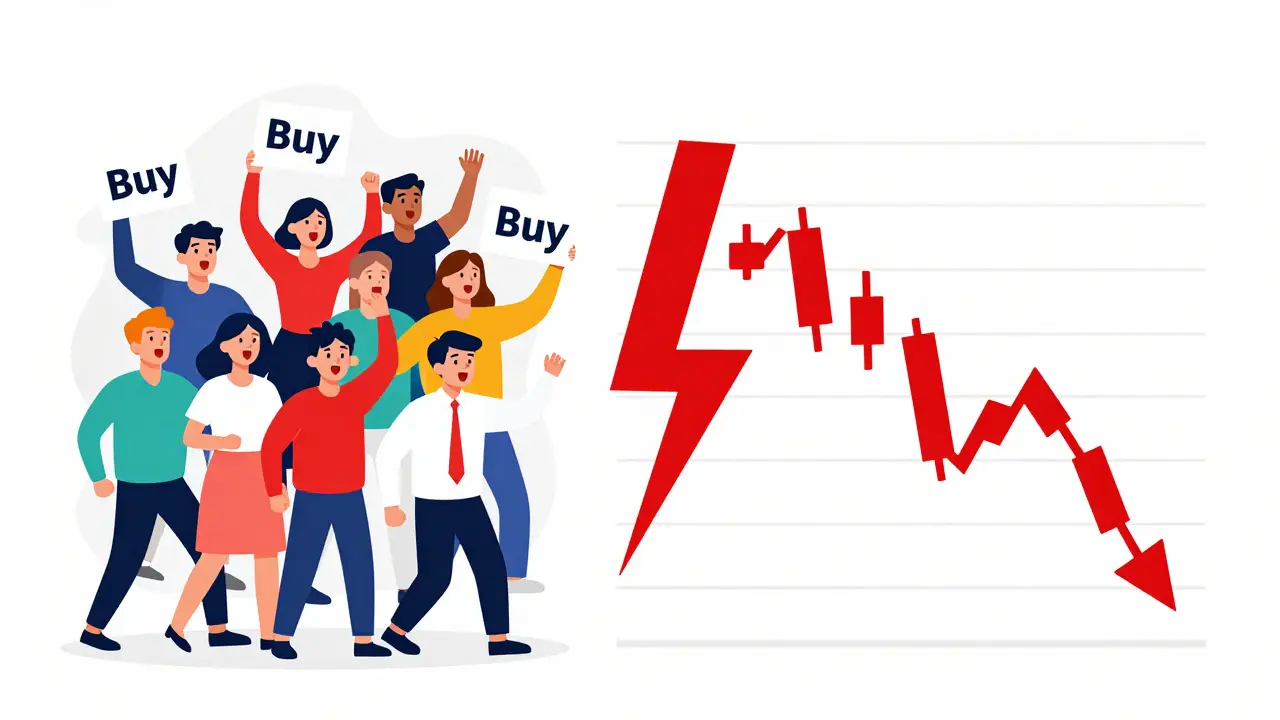
Imagine you're staring at a chart. The price of an asset is plummeting, but every news feed, Twitter thread, and analyst report is screaming that it's a "generational buying opportunity." Your brain is fighting a war: do you trust the red candles on the screen, or do you trust the overwhelming optimism of the crowd? This is the classic collision between Market Sentiment and the collective psychological state of traders, reflecting the overall mood of the market, and Price Action, the methodology of analyzing historical price movements to predict future direction without lagging indicators.
Most traders treat these as two different paths. They either become "chartists" who only care about candles, or "sentiment hunters" who trade based on the VIX or social media hype. But here is the reality: choosing one over the other is like trying to drive a car by only looking at the speedometer while ignoring the windshield. You might know how fast you're going, but you have no idea where you're heading.
The Quick Cheat Sheet: Sentiment vs. Price Action
Before we get into the weeds, let's look at how these two approach the market. Sentiment is about the why and the who (the crowd's mood), while Price Action is about the what and the where (the actual cost of the asset).
| Feature | Market Sentiment | Price Action |
|---|---|---|
| Core Focus | Trader Psychology & Mood | Price Movement & Patterns |
| Primary Tools | VIX, Put/Call Ratio, COT Reports | Candlesticks, Support/Resistance |
| Main Strength | Spotting Market Extremes | Precise Entry & Exit Points |
| Weakness | Can be lagging or manipulated | Subjective interpretation |
| Best Use Case | Macro Events / Turning Points | Trending Markets / Consolidation |
Decoding Market Sentiment: Trading the Crowd
Market sentiment isn't just a "vibe." In professional trading, it's quantified using specific tools. For example, the CBOE Volatility Index (VIX) is essentially the market's fear gauge. When the VIX spikes above 30, it usually means traders are panicking. Paradoxically, this is often where the smartest money starts buying. This is the essence of contrarian trading: when the crowd is maximally fearful, the opportunity is maximally high.
Then you have the Commitment of Traders (COT) report. These reports are gold because they show you exactly how "commercials" (the big institutional players who actually handle the physical assets) are positioned compared to "speculators" (the retail traders). If retail traders are 90% long while commercials are heavily short, the market is primed for a crash, regardless of how bullish the news feels.
The danger here is that sentiment can be a trap. Look at the 2021 GameStop short squeeze. Retail traders deliberately skewed sentiment indicators, making them useless for those relying on traditional metrics. When the crowd decides to move as one, the "math" of sentiment often breaks.
The Purity of Price Action: Let the Chart Talk
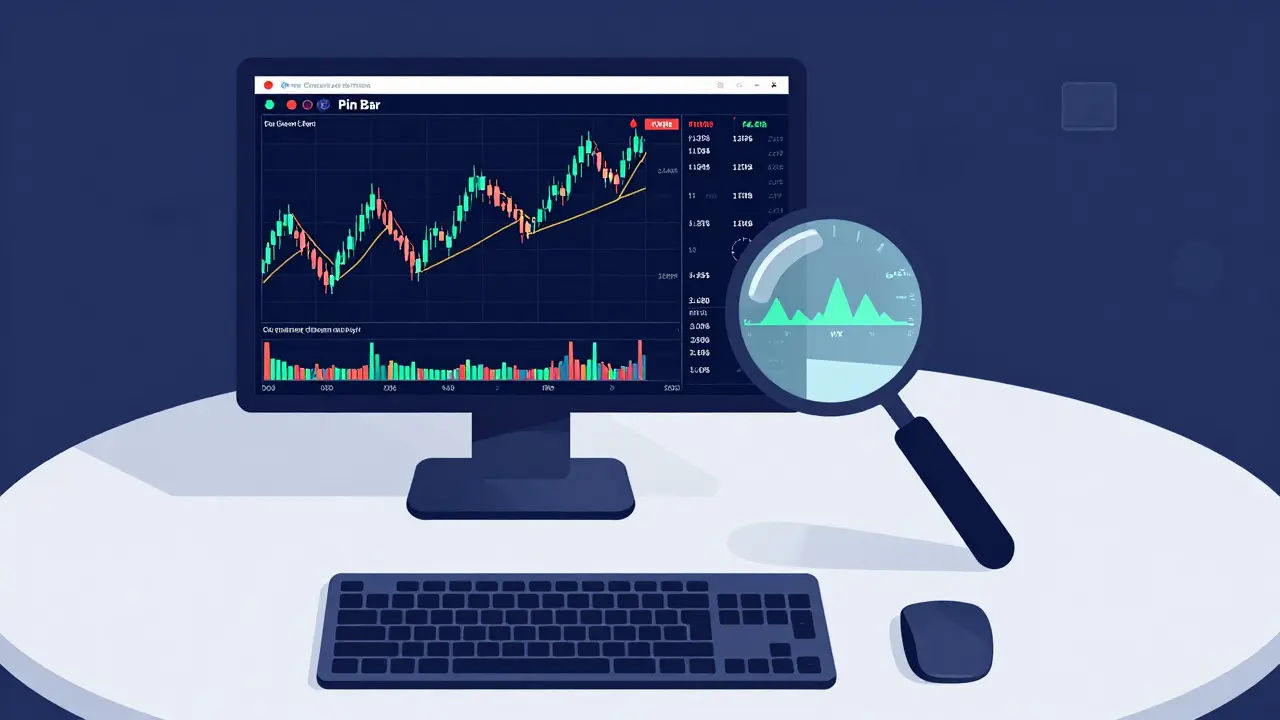
Price action traders believe the chart tells you everything. They don't care about the news or the VIX; they care about Japanese Candlestick Charting. They look for a Pin Bar-a candle with a long wick and small body-which signals that the market rejected a certain price level. If you see a pin bar at a major support level, you have a high-probability trade without ever checking a news feed.
This method is objectively faster. There's no lag because you're looking at the actual transaction price. Whether it's a "Head and Shoulders" pattern or a simple "Inside Bar," price action provides the exact coordinate for where to put your stop-loss and where to take profit. In fact, some studies show price action can offer risk/reward ratios as high as 1:2.3 because entries are so precise.
The catch? It's incredibly subjective. Two professional traders can look at the exact same chart and one will see a "bullish flag" while the other sees a "distribution phase." A study from the University of Chicago found a nearly 47% disagreement rate among pros interpreting the same patterns. It takes a lot of screen time-usually 200+ hours of raw chart observation-before your eyes stop deceiving you.

The Clash: When Sentiment and Price Action Disagree
What happens when the sentiment is bullish but the price action is bearish? This is where most traders lose their shirts. You'll see people on forums insisting a coin or stock is "going to the moon" (bullish sentiment) while the price is making "lower highs and lower lows" (bearish price action). In this battle, price action almost always wins in the short term, but sentiment wins the long-term narrative.
Think of it as a tug-of-war. Sentiment is the strength of the people pulling the rope; price action is the actual movement of the rope. You can have the strongest people in the world pulling (sentiment), but if the rope isn't moving toward their side (price action), you aren't winning the game.
However, sentiment is a powerful filter. If you only take price action trades that align with extreme sentiment, your win rate skyrockets. For example, a price action "reversal pattern" is much more likely to succeed if the VIX is over 35 (extreme fear) than if the market is just drifting sideways.
Practical Strategy: Building a Hybrid Model
If you want to actually make money, stop picking a side. The most profitable traders use sentiment as a filter and price action as a trigger. Here is a simple workflow to implement this:
- Check the Sentiment Filter: Look at the COT data or the Put/Call ratio. Are we at an extreme? If the crowd is 90% bullish, stop looking for "buy" signals. Start looking for "sell" signals.
- Wait for the Price Action Trigger: Now that you know you want to sell, don't just jump in. Wait for a specific pattern, like a bearish engulfing candle or a break of a key support level.
- Execute the Trade: Your entry is based on the chart, but your conviction comes from the sentiment.
This approach removes the guesswork. You aren't guessing when the trend will end; you're using sentiment to tell you when the end is near and price action to tell you exactly where to click the button.
Common Pitfalls and How to Avoid Them
The biggest mistake beginners make is "indicator overload." They add ten different sentiment gauges to their screen until they are paralyzed by conflicting data. This is called analysis paralysis. If the VIX says "sell" but the AAII survey says "buy," you've just created a mental knot that prevents you from trading.
Another trap is ignoring the "news gap." Price action often fails during major events like Federal Reserve announcements or NFP reports. During these times, sentiment takes over completely, and technical patterns are often blown through like tissue paper. If a high-impact news event is coming up, tighten your stops or move to the sidelines.
Which is better for beginners: sentiment or price action?
Price action is generally better to start with because it teaches you how the market actually moves and doesn't require expensive data subscriptions. However, it has a steeper learning curve because pattern recognition takes months of practice. Sentiment analysis is easier to understand initially but can lead to costly mistakes if you don't understand the contrarian nature of the market.
Can I trade using only sentiment analysis?
It is very risky. Sentiment tells you the general direction but not the timing. If you buy simply because sentiment is "extremely bearish" (expecting a reversal), the market could stay bearish for months while you lose your entire account. You need price action to tell you when the reversal has actually started.
How long does it take to master price action?
Most experienced traders suggest it takes between 9 to 12 months of daily chart study to become proficient. You need to develop "chart eye," which is the ability to see patterns instinctively without having to consciously search for them.
What are the most reliable sentiment indicators?
The VIX is the gold standard for volatility and fear. For positioning, the COT (Commitment of Traders) reports are the most reliable because they show institutional money. For retail-specific mood, the Put/Call ratio and the AAII sentiment surveys provide a good look at where the "dumb money" is leaning.
Does AI change the way we use these strategies?
Yes. AI tools like Bloomberg's SentimentIQ can now analyze millions of articles in seconds, giving a real-time sentiment score that was previously impossible for humans. Similarly, AI-driven pattern recognition can identify price action setups with over 80% accuracy, reducing the subjectivity that historically plagued chartists.
Next Steps for Your Trading Journey
If you're feeling overwhelmed, start small. Spend the next month doing nothing but marking support and resistance levels on a clean chart-no indicators, no news. Once you can see the "skeleton" of the market, start adding one sentiment filter, like the VIX. Notice how the price reacts when the VIX hits an extreme. The goal isn't to find the "perfect" system, but to build a toolkit that keeps you on the right side of the trade when the volatility hits.
Robert Preston
17 04 26 / 21:06 PMCombining these two is the only way to survive in this market. Using sentiment as a filter keeps you from fighting the overall tide while price action ensures you aren't just guessing where the bottom is.
Nishant Goyal
19 04 26 / 03:43 AMGood perspective.
Ian Chait
21 04 26 / 03:17 AMWake up sheeple!! The COT reports are cooked by the globalists to trap retail liquidity. The whole 'price action' game is just a way to make us feel in control while the algorithms frontrun every single pin bar. Its all a simulation to keep the fiat system alive while they transition to CBDCs and total control. Dont trust the charts, trust the hidden agendas.
Joshua Salwen
21 04 26 / 23:49 PMOMG literally everyone knows that indicators are lagging!!! Like, why are we even talking about this??? I've seen so many people blow their accounts tryin to use the VIX like it's some magic crystal ball and its honestly just sad at this point. The DRAMA of a market crash is the only time these 'experts' actually make money lol!!
Andrew Southgate
22 04 26 / 08:38 AMFor those just starting out, I really want to emphasize that the 'chart eye' mentioned here isn't something that happens overnight, but it is incredibly rewarding once it clicks. I remember spending my first six months just staring at the 4-hour charts of major forex pairs without a single indicator, and while it felt like I was making no progress, suddenly the patterns just started jumping out at me. The key is consistency and not letting the noise of social media sentiment distract you from what the price is actually doing in real-time. If you can master the discipline of waiting for that specific price action trigger after identifying a sentiment extreme, you'll find your trading becomes much more mechanical and less emotional, which is where the real profit lives. Keep grinding and don't get discouraged by the initial losses because they are just the tuition fee for your market education.
Alex Long
23 04 26 / 19:16 PMthis is all basic stuff. boring.
Sandeep Bhoir
24 04 26 / 21:23 PMSure, because everyone loves the idea of spending 200 hours staring at candles just to be 47% disagreeing with another pro. Truly the pinnacle of financial science.
Keri Pommerenk
26 04 26 / 10:46 AMreally helpful breakdown for anyone feeling lost in the noise. just remember to keep your risk management tight regardless of the strategy
Gaurav Undirwade
27 04 26 / 11:29 AMIt is utterly lamentable that one must explain the basic tenets of market discipline to the masses. The lack of intellectual rigor in modern trading discourse is a testament to the decay of professional standards. One does not simply 'click a button' without a profound understanding of the ethical implications of speculation.
Abhinav Chaubey
28 04 26 / 13:05 PMActually, the Indian markets have shown that price action is far superior to sentiment because our retail volume is so massive that sentiment indicators just get skewed. Most of these 'global' strategies don't even work in Nifty or Bank Nifty without heavy modification. The author is barely scratching the surface of how liquidity actually flows.
Mark Pfeifer
29 04 26 / 23:27 PMI'm curious if anyone has found a specific sentiment tool that works better for crypto given how volatile the 'crowd' is compared to equities. The VIX is great for stocks, but for BTC, it feels like the sentiment shifts every five minutes.
Trudy Morse
29 04 26 / 23:57 PMPrice is the only truth. Everything else is just a story we tell ourselves to feel better about our losses.
siddharth narula
1 05 26 / 08:52 AMThe duality of the chart and the mind is a reflection of our own inner turmoil 🧘♂️. We seek patterns in the candles because we fear the chaos of the void. Only through the surrender of the ego can a trader truly see the market as it is, not as they wish it to be.
Chintu Parikh
3 05 26 / 01:15 AMI completely agree with the hybrid approach proposed here! It is an excellent way to harmonize the emotional aspects of trading with the technical requirements. By utilizing sentiment as a strategic filter and price action as the tactical trigger, we can all achieve a more balanced and sustainable way of interacting with the markets. Let's support each other in implementing this workflow!
Yuhan Mo
3 05 26 / 13:47 PMThe confluence of high-frequency trading (HFT) and retail sentiment has definitely created a lot of noise in the current microstructure. The delta between sentiment and price action is often where the most significant alpha is found, provided one has the risk appetite for the volatility.
Adam Mann
4 05 26 / 20:23 PMThis is such a welcoming way to explain something that usually feels so intimidating to newcomers! I love how it breaks down the 'war' in your head when the news says one thing and the chart says another. It's really encouraging to know that even the pros struggle with subjectivity and that it's just a matter of putting in the hours to develop that intuition. Everyone should just take it one step at a time, maybe starting with those support and resistance levels like the author suggested, and just enjoy the process of learning. It's not about getting rich quick, it's about the journey of understanding the global economy and how we all react to fear and greed together as a community!
Evan Iacoboni
5 05 26 / 11:43 AMWait, if the COT reports are the gold standard for institutional positioning, why aren't they mentioned more in basic trading courses? It feels like there's a gap between what 'guru' courses teach and what actually happens at the institutional level.