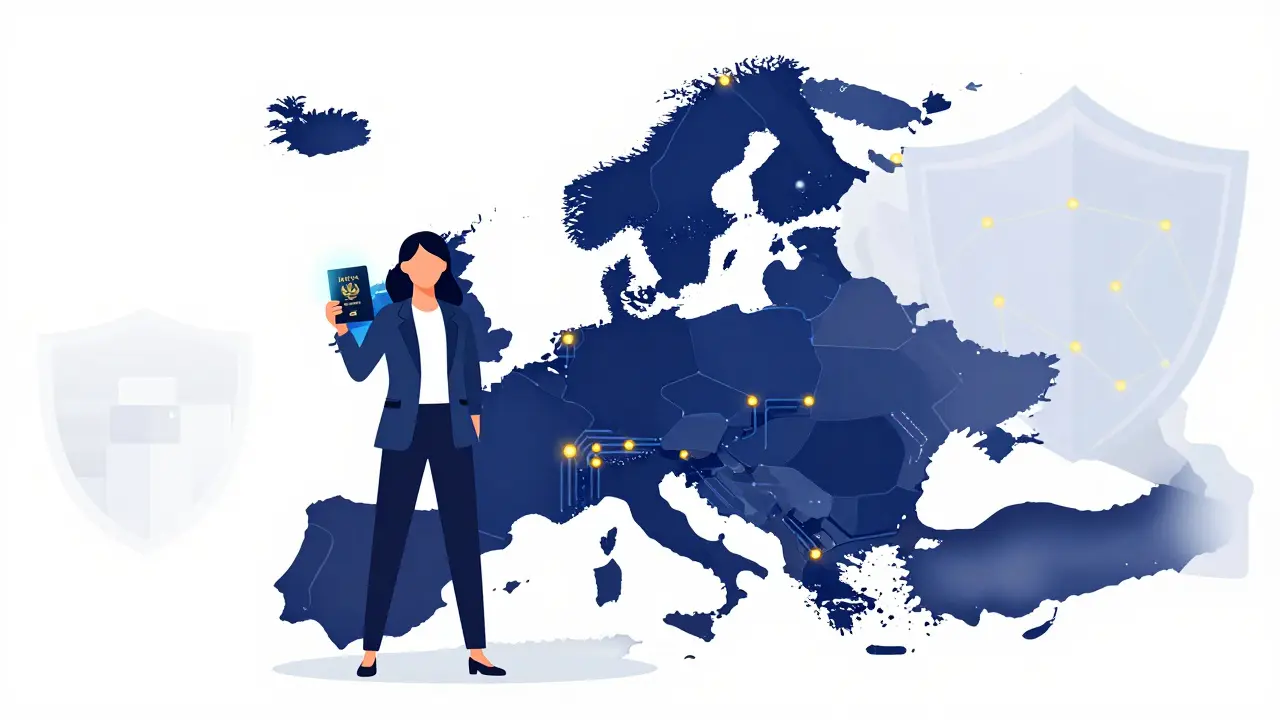
The European Union has changed the game for digital assets. If you run a crypto business and serve customers in Europe, the old days of regulatory ambiguity are over. The Markets in Crypto-Assets (MiCA) is the EU's comprehensive legal framework governing crypto-assets, establishing uniform market rules across all 27 member states is now fully active. This isn't just another guideline; it is binding law that dictates how you issue tokens, operate exchanges, and handle user funds.
For many founders, MiCA feels like a wall of red tape. For others, it’s a golden ticket to legitimacy. The reality sits somewhere in between. You need to navigate specific licensing requirements, strict capital reserves, and detailed disclosure mandates. Getting this wrong can mean heavy fines or being forced out of the market entirely. Let’s break down exactly what you need to do to stay compliant and competitive.
Understanding the Scope: Who Does MiCA Cover?
First, you need to know if MiCA applies to you. The regulation covers almost all crypto-asset activities within the EU, unless they already fall under existing financial services laws like MiFID II. This means traditional securities issued as tokens are handled differently, but most utility tokens, payment tokens, and stablecoins are squarely in MiCA’s sights.
The regulation targets two main groups:
- Crypto-Asset Service Providers (CASPs): These are entities offering services such as custody, exchange, order execution, or portfolio management. If you run an exchange or a wallet provider, you are a CASP.
- Token Issuers: Any entity issuing asset-referenced tokens (ARTs) or e-money tokens (EMTs) must comply with issuer-specific rules. Even issuers of other crypto-assets must publish a whitepaper if they offer them to the public in the EU.
If your service is available to EU residents, you likely need authorization. There is no small-business exemption here. However, the level of scrutiny depends on your size. Services providing custody or exchange to fewer than 15 million users face standard supervision. Cross that threshold, and you become a Significant Crypto-Asset Service Provider (sCASP), inviting direct oversight from the European Securities and Markets Authority (ESMA).
The CASP License: Your Entry Ticket to the EU Market
Operating without a license is not an option. To get authorized as a CASP, you must apply through a National Competent Authority (NCA) in one of the 27 EU member states. Once approved, you benefit from the 'passporting' mechanism. This allows you to operate across the entire EU without needing separate licenses in every country. It’s a huge efficiency gain compared to the pre-MiCA patchwork.
Here is what the baseline requirement looks like:
- Registered Office: You must have a physical presence in the EU.
- Management: At least one director must reside in the EU member state where you seek authorization.
- Capital Requirements: Minimum €100,000 for most services. This jumps to €150,000 if you provide order execution services.
- AML Compliance: You must implement robust Anti-Money Laundering procedures aligned with the 5th Anti-Money Laundering Directive (AMLD5).
Don’t underestimate the timeline. Industry data from late 2024 suggests the authorization process takes between 6 to 9 months. Luxembourg and France tend to be faster, averaging around 5.2 months, while Germany and Italy can take closer to 9 months. Plan your cash flow accordingly.

Stablecoins and Token Issuance: Strict Reserve Rules
If you issue stablecoins, the rules tighten significantly. MiCA distinguishes between Asset-Referenced Tokens (ARTs) and E-Money Tokens (EMTs). ARTs peg their value to multiple currencies or assets, while EMTs peg to a single fiat currency, usually the Euro.
The core demand is transparency and safety. Issuers must hold reserves equal to the number of tokens in circulation. For EMTs, these reserves must be in high-quality liquid assets, typically euro-denominated deposits. For ARTs with a market cap exceeding €1 billion, the scrutiny intensifies. These 'major' ART issuers face enhanced supervision, including daily redemption rights for holders and stricter reserve composition rules.
You also cannot hide behind anonymity. MiCA prohibits anonymous wallets for transactions above certain thresholds, enforcing the 'Travel Rule.' This means you must transmit sender and receiver information for transfers exceeding €1,000. This aligns with global AML standards but requires significant technical integration for your platforms.
Whitepapers and Disclosure: No More Vague Promises
Gone are the days of launching a token with a vague roadmap. Under Article 16 of MiCA, issuers must publish a detailed whitepaper approved by the relevant NCA. This document is not marketing fluff; it is a legal instrument.
Your whitepaper must include:
- Technical Specifications: Clear details on the underlying technology and consensus mechanism.
- Risk Factors: Honest assessment of technical, operational, and market risks.
- Environmental Impact: A new requirement. You must disclose the energy consumption and environmental footprint of your network. This is particularly challenging for Proof-of-Work chains, though ESMA has provided clarifications for Proof-of-Stake mechanisms.
- Governance Structure: Who controls the protocol? What are the voting rights?
Misleading information in the whitepaper can lead to severe penalties. Regulators are watching for 'greenwashing' in environmental disclosures and exaggerated claims about utility. Be precise, be conservative, and let your lawyers review every sentence.
| Feature | Pre-MiCA Era | Under MiCA |
|---|---|---|
| Licensing | Fragmented national approaches | Single EU passport via one NCA |
| Capital Requirement | Varied by country, often unclear | Standardized: €100k-€150k minimum |
| Stablecoin Reserves | Voluntary or loosely audited | Mandatory 1:1 high-quality liquid assets |
| Market Abuse | Unclear application of securities laws | Explicit prohibitions with defined penalties |
| Consumer Protection | Inconsistent across borders | Uniform disclosure and liability rules |

Costs and Resources: Budgeting for Compliance
Compliance is expensive. You need to budget for more than just the license fee. Initial setup costs for a mid-sized CASP can range from €500,000 to €1.2 million. This includes legal fees, technology upgrades for AML screening, and hiring specialized staff.
Key personnel requirements include:
- EU-Resident Director: Someone with financial services experience who lives in the jurisdiction of your license.
- Compliance Officer: Ideally holding a Certified Anti-Money Laundering Specialist (CAMS) certification.
- CTO/Security Lead: To ensure your systems meet the NIS2 Directive standards for cybersecurity.
Technology costs are recurring. Expect to spend €80,000 to €200,000 annually on AML monitoring tools. Whitepaper preparation alone can cost €35,000 for simple utility tokens up to €150,000 for complex stablecoin projects. These are not optional expenses; they are the price of admission to the EU market.
Market Impact and Future Outlook
Since full implementation began in late 2024, the market has consolidated. Smaller, non-compliant players have exited or geo-blocked EU users. Larger, well-capitalized firms have thrived. Traditional banks like BNP Paribas and Deutsche Bank have entered the space, leveraging MiCA to launch crypto subsidiaries. This brings institutional credibility but also fierce competition.
Looking ahead, expect further refinements. ESMA is reviewing stablecoin provisions, potentially adjusting the €1 billion threshold for major issuers. Discussions with the UK and Switzerland on regulatory equivalence could expand the passporting zone beyond the EU. For businesses, the key is agility. Build a compliance-first culture now, and you will be positioned to capitalize on the next wave of innovation.
Does MiCA apply to decentralized finance (DeFi) protocols?
This is a complex area. MiCA primarily targets identifiable legal persons (CASPs). Purely decentralized protocols with no central operator may currently fall outside direct scope. However, if a foundation or development team exercises control or offers services to EU users, regulators may deem them responsible for compliance. Many DeFi projects are choosing to establish compliant entities to avoid future enforcement actions.
How long does it take to get a MiCA license?
Based on early data from 2024, the process typically takes 6 to 9 months. Preparation time should be added before applying. Jurisdictions vary: Luxembourg and France are generally faster (around 5 months), while Germany and Italy can take longer (up to 9 months). Start your application early to avoid delays in launching services.
What happens if I don't comply with MiCA?
Non-compliance can result in severe penalties. These include substantial fines, which can be up to twice the profit gained or loss avoided from the violation. Authorities can also suspend or withdraw your license, ban you from operating in the EU, and impose temporary bans on directors. In cases of serious market abuse, criminal sanctions may apply.
Can I use a third-party provider for custody under MiCA?
Yes, but you remain liable. If you outsource custody to another CASP, you must ensure they are properly authorized under MiCA. You cannot delegate your responsibility for consumer protection. Due diligence on third-party providers is mandatory, and contracts must clearly define roles and liabilities.
Does MiCA cover NFTs?
It depends on the nature of the NFT. If an NFT represents a security or a commodity, it may fall under other regulations. If it is a pure collectible with no financial promise, it might be excluded. However, if the NFT is used as a payment method or provides access to services regulated under MiCA, compliance requirements may apply. Always consult legal counsel to classify your specific asset.
Leave a comments