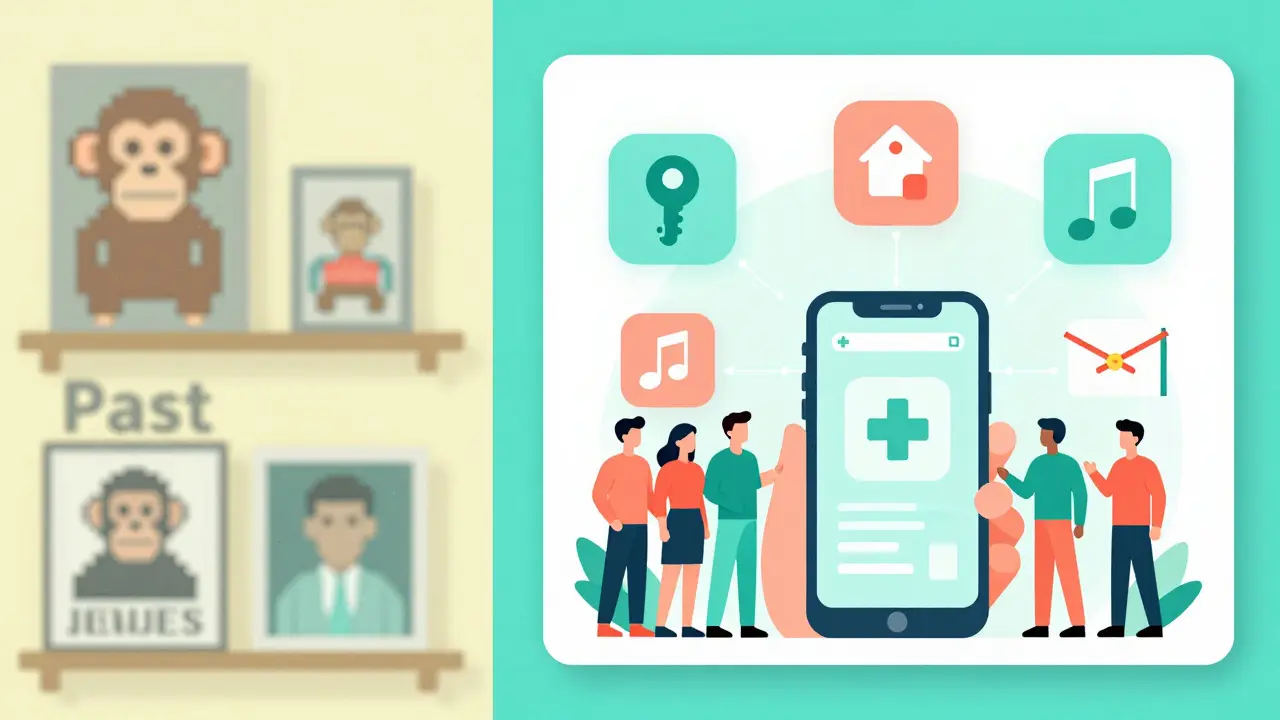
Remember the days when buying an NFT meant paying thousands of dollars for a pixelated monkey or a blurry jpeg? That era is largely behind us. While NFTs are unique, blockchain-based tokens that act as verifiable certificates of ownership or rights to specific digital or physical assets still dominate headlines during market booms, the real revolution is happening quietly in the background. By 2026, the technology has matured from a speculative toy into a foundational layer for verifying ownership across industries.
We need to stop looking at NFTs as just "digital art" and start seeing them for what they truly are: programmable receipts. They are immutable records stored on a distributed ledger that prove who owns what, when it was created, and where it has been. This shift from speculation to utility is reshaping how we handle everything from our medical records to our property deeds.
Gaming and Virtual Economies
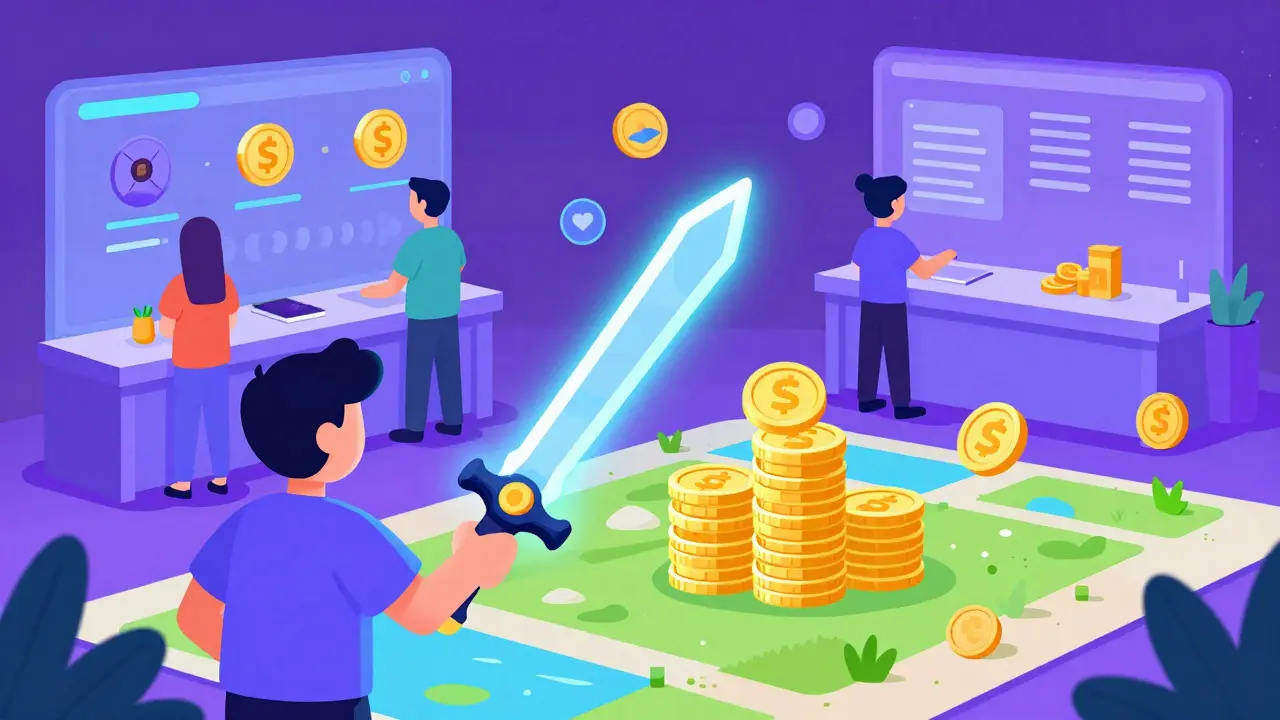
If you’ve ever spent hundreds of dollars on skins or weapons in a traditional video game, you know the pain of losing access when a server shuts down or your account gets banned. In those legacy Web2 games, you don’t actually own anything; you’re just renting a license from the publisher. NFTs change this dynamic completely.
In modern Web3 gaming ecosystems, your in-game items-characters, swords, land parcels-are minted as ERC-721 tokens are a standard protocol used on Ethereum to create non-fungible tokens with unique identifiers. This means you hold the private key to these assets. You can trade them on secondary markets, sell them for cryptocurrency, or even use them in other compatible games if the developers choose interoperability.
This creates a true player-owned economy. Developers like those building on Hedera Hashgraph is a public distributed network using hashgraph consensus algorithm, known for high throughput and low fees leverage this to offer carbon-negative gaming experiences where players earn real value. However, the "play-to-earn" model has evolved; it’s no longer about getting rich quick but about having genuine ownership over the digital goods you invest time in acquiring.
Real Estate and Fractional Ownership
Buying a house is notoriously slow, expensive, and opaque. It involves lawyers, notaries, title companies, and weeks of waiting. NFTs streamline this by putting property titles on the blockchain. When a deed is tokenized, the transfer of ownership becomes a near-instantaneous transaction verified by code rather than bureaucracy.
But the bigger game-changer is fractional ownership. Imagine a $5 million commercial building in downtown Wellington. Traditionally, only wealthy investors could buy into this. With NFTs, that building can be split into 5,000 tokens, each representing a small equity stake. You can buy one token for $1,000 and instantly become a partial owner.
These tokens can be traded 24/7 on global markets, providing liquidity to an asset class that is usually stuck for years. Smart contracts automatically distribute rental income to token holders based on their share, removing the need for complex management firms to handle payouts. While regulatory frameworks are still catching up in many jurisdictions, the efficiency gains are undeniable.
Supply Chain and Luxury Goods Verification
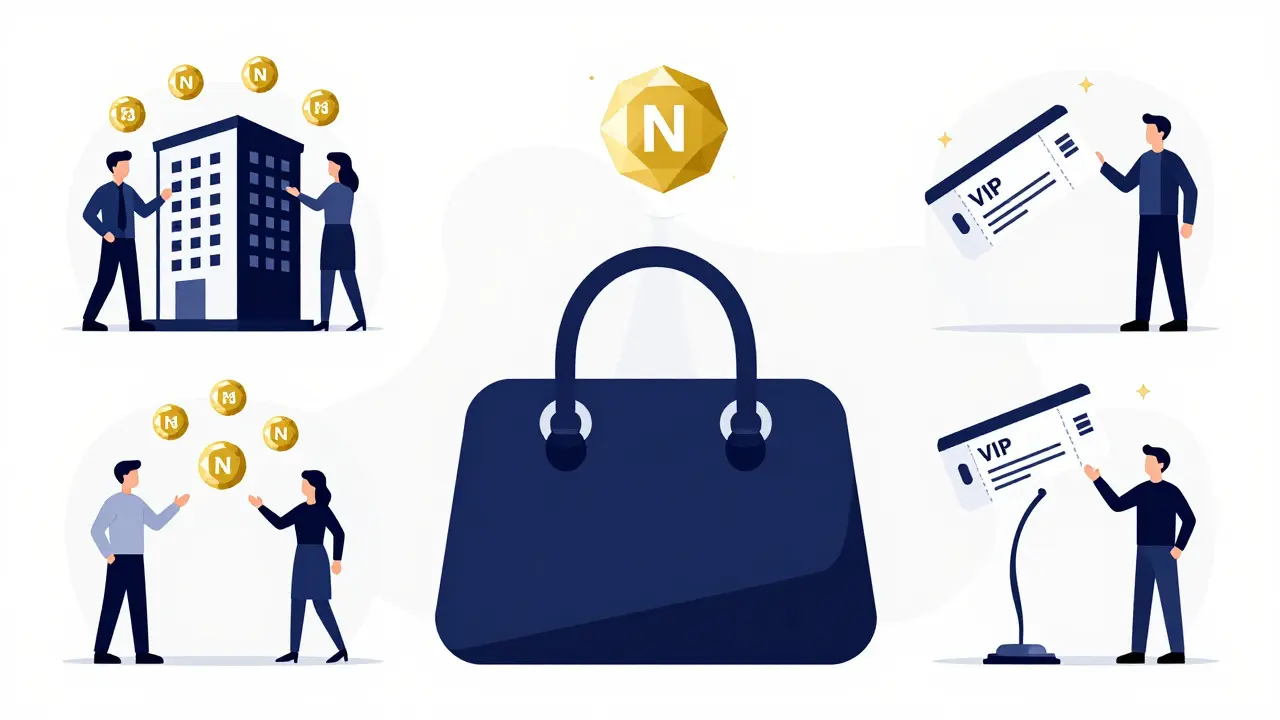
Counterfeiting costs the luxury industry billions annually. How do you know that designer handbag is authentic? Usually, you trust the receipt or hope the seller isn’t lying. NFTs solve this by creating a digital passport for physical products.
When a luxury brand manufactures a bag, they mint an NFT linked to its serial number. As the item moves from factory to distributor to retailer, each step is recorded on the blockchain. When you buy the bag, you receive the NFT (often via a QR code scan). If you try to resell it later, the buyer can scan the code and see the entire provenance history, proving it’s genuine.
This isn't limited to fashion. The food industry uses similar systems to track organic produce from farm to table, ensuring that "organic" labels aren't greenwashing. Companies like VeChain have pioneered this approach, anchoring physical reality to digital verification.
Digital Identity and Academic Credentials
Passwords are broken. We all have dozens of them, written on sticky notes or reused across sites, making us vulnerable to data breaches. NFTs offer a more secure alternative for digital identity. Instead of storing your personal data on a company’s vulnerable server, you hold your credentials in your wallet.
Universities are increasingly issuing degrees as NFTs. Instead of mailing a paper diploma that can be forged, a student receives a token that proves their graduation. Employers can verify this credential instantly by checking the blockchain, eliminating the need for costly background checks that take days. This reduces fraud, as fake diplomas are easy to spot when the official record lives on an immutable ledger.
Beyond education, professional licenses, driver’s permits, and even medical histories can be managed this way. You control who sees your data. You grant temporary access to a hospital or employer via a smart contract, then revoke it. No middleman, no database breach risk for the issuer.
Ticketing and Event Access
Have you ever tried to buy concert tickets only to find them sold out in seconds, only to reappear on resale sites for triple the price? Scalpers use bots to hoard inventory, frustrating fans and hurting artists. NFT ticketing puts an end to this.
Event organizers can mint tickets as NFTs with embedded rules. For example, the smart contract can cap the resale price at face value plus a small fee, or ensure that a percentage of every resale goes back to the artist. Because the ticket lives on the blockchain, counterfeiting is impossible. There is no such thing as a fake NFT ticket.
Moreover, these tickets can evolve. After the event, the NFT might unlock exclusive content, like backstage photos or a discount on future merch. This turns a single-use ticket into a lasting connection between the fan and the creator, fostering community rather than just transaction.
Intellectual Property and Music Royalties
The music industry has long struggled with fair compensation. Artists often see pennies per stream while labels and distributors take the lion's share. NFTs allow musicians to bypass these intermediaries entirely.
An artist can release an album as a collection of NFTs. Buyers get the high-quality audio files, but they also get a direct link to the creator. More importantly, smart contracts can automate royalty payments. Every time that NFT is resold on the secondary market, a predefined percentage automatically flows back to the artist’s wallet. No collecting societies, no delayed payments, no disputes.
This model extends to patents and designs too. Inventors can timestamp their ideas on the blockchain, creating an indisputable proof of creation date. This helps protect intellectual property in a world where digital theft is rampant.
Environmental Assets and Carbon Credits
Climate action requires transparency. Currently, the carbon credit market is plagued by double-counting and vague claims. A tree planted in one country might be counted as an offset by two different corporations. NFTs fix this by ensuring each credit is unique and can only be retired once.
When a conservation project verifies that a certain amount of CO2 has been sequestered, they mint corresponding NFTs. These tokens represent specific environmental assets. When a company buys and retires these credits, the transaction is public and permanent. Investors can trace exactly which forest or solar farm their money supported. This level of granularity builds trust in ESG (Environmental, Social, and Governance) initiatives, attracting serious institutional capital to green projects.
| Industry | Traditional Method | NFT Solution | Key Benefit |
|---|---|---|---|
| Real Estate | Paper deeds, manual transfers | Tokenized titles, instant settlement | Speed, fractional ownership |
| Luxury Goods | Serial numbers, receipts | Digital passports on-chain | Anti-counterfeiting, provenance |
| Music | Label-controlled royalties | Smart contract auto-payments | Fairer artist compensation |
| Education | Paper diplomas, HR verification | Verifiable credential tokens | Fraud prevention, instant check |
Challenges and Future Outlook
Despite the potential, hurdles remain. User experience is still clunky for non-technical people. Managing private keys and understanding gas fees can be intimidating. Successful adoption will require wallets that hide this complexity, presenting users with familiar interfaces while handling the blockchain mechanics in the background.
Regulation is another piece of the puzzle. Governments are still figuring out how to tax and classify tokenized assets. Clear legal frameworks are essential for mainstream institutions to feel safe deploying NFTs for things like real estate or healthcare data. Privacy concerns also persist; while blockchains are transparent, personal data needs careful handling, often requiring zero-knowledge proofs to verify identity without exposing sensitive details.
Yet, the trajectory is clear. We are moving past the hype cycle into the utility phase. The companies and individuals who understand that NFTs are about ownership, verification, and automation-not just flipping JPEGs-will lead the next wave of digital innovation.
Are NFTs still a good investment in 2026?
It depends on what you buy. Speculative art NFTs remain volatile and risky. However, NFTs tied to real-world assets like real estate fractions, carbon credits, or revenue-generating IP can offer tangible value and steady returns, similar to traditional investments but with greater liquidity.
How do NFTs help prevent counterfeit goods?
Each physical product is linked to a unique NFT that records its journey from manufacture to sale. Buyers can scan a code to verify this unchangeable history on the blockchain, ensuring the item is authentic and hasn't been duplicated.
Can I really own a fraction of a house with an NFT?
Yes, through real estate tokenization. A property’s ownership is divided into multiple NFTs. Buying one gives you a proportional share of the asset and any rental income, allowing smaller investors to participate in high-value markets.
Is my data safe if I store credentials as NFTs?
Generally, yes, because the NFT itself doesn't contain your sensitive data. It acts as a key to verify information stored off-chain. Advanced techniques like zero-knowledge proofs allow you to prove you have a degree or license without revealing your full personal history.
What is the difference between an NFT and a regular cryptocurrency?
Cryptocurrencies like Bitcoin or Ether are fungible, meaning one coin is identical to another and can be swapped directly. NFTs are non-fungible, meaning each token is unique with distinct metadata, making them suitable for representing one-of-a-kind assets like art, property, or identities.
Billy Cunningham
13 08 26 / 18:36 PMFinally someone gets it 🙌
Lorraine Surringer
14 08 26 / 17:30 PMi mean sure but why do we need blockchain for a ticket?? just use a normal database you know? its so much simpler and cheaper. people are just obsessed with crypto for no reason honestly. it feels like a solution looking for a problem every single time. like who cares if the ticket is on a chain? i just want to see the concert without paying $500 to scalpers. but okay, keep telling yourself its about 'ownership' when its really just hype.
Alex Di Mango
16 08 26 / 00:14 AMI think there's a lot of merit in what Lorraine is saying regarding the complexity, but the fractional ownership part actually makes sense for real estate. It opens up markets that were previously locked behind massive capital requirements. The key is making the user experience seamless so people don't have to worry about private keys or gas fees. If done right, this could democratize investment significantly.
Subhash Kashyap Dm
17 08 26 / 15:36 PMtheyre lying about the carbon credits obviously. centralized entities control the minting process so they can double count whenever they want. the ledger only proves the token exists not that the tree is actually there. typical greenwashing scam by big tech to distract from their actual pollution. trust nothing.
Ed Wallace
19 08 26 / 14:38 PMThe philosophical implication of owning a digital object is fascinating. We've moved from possessing things to accessing them, and now back to possessing via code. It’s a strange loop. But I wonder if true ownership requires physical presence. Can you truly own a sword if you can’t feel its weight? Or is the value purely in the social consensus of its scarcity?
Amor Jordan
20 08 26 / 15:43 PMI’m really excited about the medical records aspect!
Having control over your own data instead of relying on hospitals to keep it safe sounds like a dream come true. It’s terrifying how many breaches happen every year. If I can grant temporary access to a specialist and then revoke it, that gives me such a sense of security. I hope this becomes standard soon because privacy matters so much to me personally.
Eden Tadesse
22 08 26 / 12:35 PMmy degree was stolen last year and it took forever to get a replacement. if universities used nfts this would be so much easier. no more waiting weeks for verification. i wish more schools would adopt this tech already. its frustrating dealing with bureaucracy when technology can fix it instantly.
Eric Zehr
22 08 26 / 17:57 PMEden is absolutely right. The administrative burden of verifying credentials is huge for HR departments too. Instant verification via blockchain would save millions of hours globally. It’s not just about convenience; it’s about efficiency and reducing fraud. I’d love to see a pilot program in my industry.
Namrata Mapgaonkar
23 08 26 / 13:05 PMin india we still use paper certificates mostly :( but yes it would be great. also the music royalty thing is important here. artists dont get paid enough. maybe this helps them earn better? :)
SUBHAM CHOUDHURY
23 08 26 / 14:39 PMGreat points Namrata! The music industry needs a shakeup. Smart contracts ensuring fair pay directly to creators is the future. Let’s support artists who are adopting this model!
Joy Kwant
23 08 26 / 17:03 PMYou people are all so naive. This is just another way for corporations to extract value from us under the guise of 'innovation'. They’ll sell your data anyway once they figure out how to monetize the metadata. Don’t let the shiny tech fool you into giving up your privacy rights. It’s always about profit, never about you.
amy miranda
23 08 26 / 18:06 PMJoy is being overly dramatic as usual, but she has a point about corporate greed. However, dismissing the entire technology because of potential misuse is lazy thinking. The utility in supply chain verification alone is undeniable. Luxury brands are already doing this to stop counterfeits. It’s practical, not just speculative.
Pernelia Wahkan
25 08 26 / 11:09 AMThe jargon is heavy, but the concept of a 'digital passport' for goods is brilliant. Imagine buying a vintage watch and scanning it to see every owner since the 1950s. That provenance adds immense value. It transforms a commodity into a story. I find that incredibly appealing.
Joshua Hofford
26 08 26 / 06:34 AMPernelia, that’s a beautiful way to put it. It’s about the narrative attached to the asset. In many cultures, history and lineage define value. NFTs digitize that tradition. It’s a cool blend of old-world values and new-world tech.
Marcia Albert
26 08 26 / 13:42 PMI’m just watching from the sidelines. The gaming part seems interesting though. Actually owning your loot sounds nice compared to losing everything when a server shuts down. But I’m skeptical about the 'interoperability' claims. Developers rarely play nice together.
Emma Smith
27 08 26 / 20:54 PMyou guys are missing the bigger picture its about decentralized identity ultimately. web3 is the next evolution of the internet where users hold the keys. currently we are just serfs on platforms owned by faang companies. nfts are the first step toward reclaiming our digital sovereignty. wake up sheeple.
Ed Mitchell
28 08 26 / 12:48 PMEmma is spouting nonsense again. Decentralized identity is a myth because the hardware wallets are centralized products made by corporations. And don’t get me started on the energy consumption of proof-of-work chains, even if some claim to be carbon negative. It’s all a facade to control the population through financial dependency.
Erica Johnson
30 08 26 / 03:56 AMActually Ed, most major chains have moved to proof-of-stake which uses 99% less energy. So your argument is outdated. Also, hardware wallets are just USB drives with extra steps. You can store keys on paper too. The technology is sound, your conspiracy theories are not.