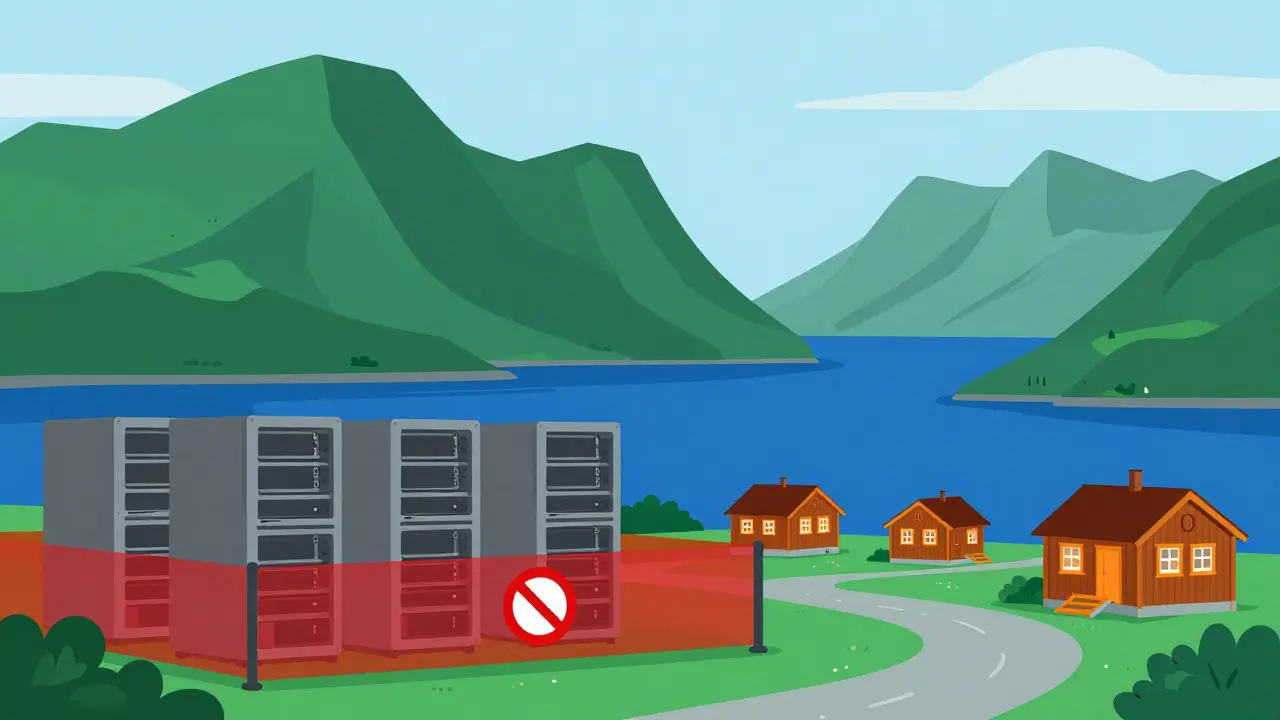
The relationship between Norway and digital assets reached a turning point in mid-2025.
If you have been following energy policies in Scandinavia, you know the stakes are high. In June 2025, the Labour Party government announced a major shift in how the country handles cryptocurrency mining a process where powerful computers solve complex math problems to secure blockchain networks, consuming vast amounts of electricity.. The plan was straightforward: stop new operations dead in their tracks. By the time we reached April 2026, the dust had settled on that announcement, leaving many asking exactly what changed and why.
This isn't just about banning Bitcoin. It is about a nation deciding its clean energy belongs to local communities first. Here is the breakdown of what happened, the reasoning behind it, and how it compares to the rest of the world.
What Does the Ban Actually Cover?
To understand the scope, we need to look at the specifics laid out by the Minister for Digitalization and Public Administration, Karianne Tung. She made it clear that the goal was to limit power-intensive operations that do not provide significant economic return.
The legislation targeted something very specific: establishing new facilities. It did not retroactively shut down every single machine that was already running before the deadline. Instead, it created a moratorium on new applications. If a company wanted to build a fresh data center a facility used to house computer systems and associated components, such as telecommunications and data storage devices dedicated to mining in late 2025, they would face a legal wall.
- New Construction: Completely prohibited under the temporary order.
- Existing Operations: Allowed to continue subject to registration and monitoring.
- Scope:
Applied primarily to Proof-of-Work cryptocurrencies like Bitcoin and similar variants requiring high computational power.
This distinction matters because it prevented total panic among operators who had already invested millions into infrastructure. It allowed for a phased approach where the government could study the actual energy load versus the economic benefit before making permanent changes.
Why Did Norway Make This Choice?
You might wonder why a country famous for hydroelectric power would restrict mining. After all, clean energy usually pairs well with tech growth. The answer lies in opportunity cost.
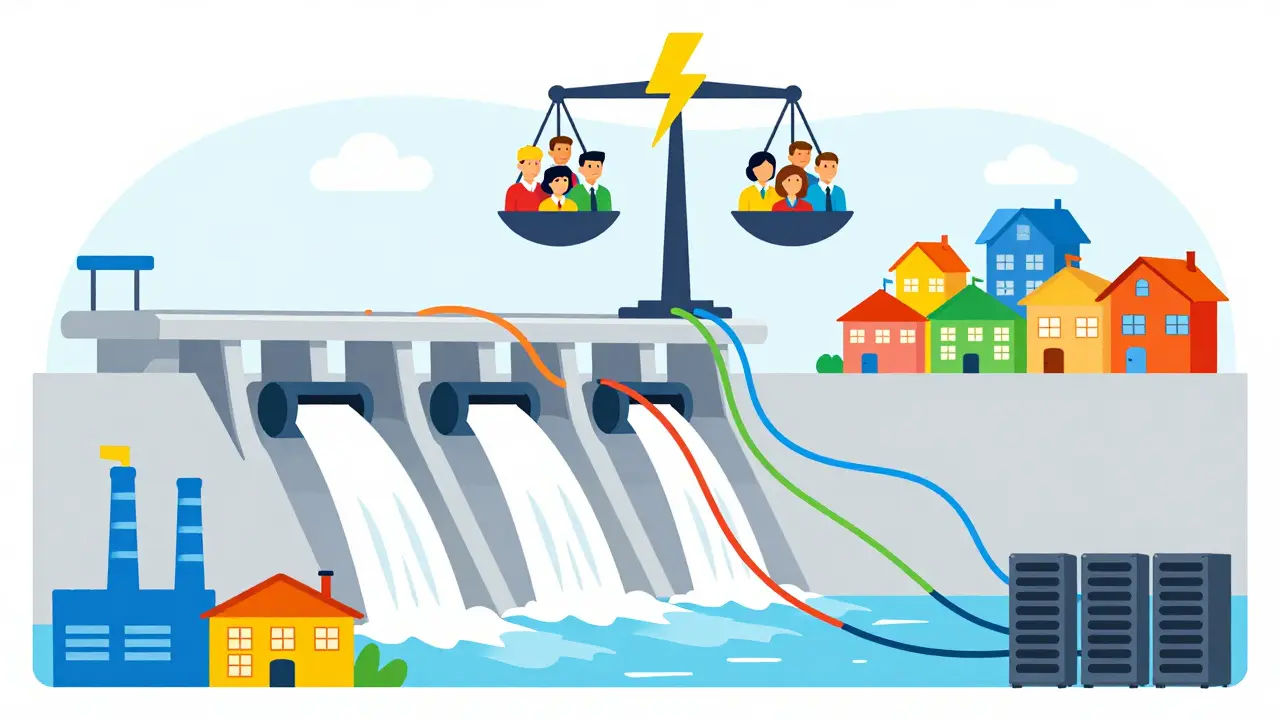
Norway produces a massive amount of renewable energy through water power. While this energy is green, it is finite. When Bitcoin mining operations moved in, they gobbled up capacity that local manufacturers, heating grids, and transport sectors needed. During winter months, when demand spikes, the competition becomes fierce.
Officials pointed out a stark reality: these mining farms generate very few jobs per megawatt compared to traditional heavy industry. A paper mill or an aluminum smelter brings in thousands of workers to towns across the region. A server rack farm often requires only a handful of technicians to monitor cooling systems. The net income for the local community simply doesn't match the energy drain.
| Factor | Crypto Mining Facility | Traditional Manufacturing |
|---|---|---|
| Local Jobs Created | Low (Highly automated) | High (Labor intensive) |
| Tax Revenue Potential | Volatile / Uncertain | Steady / Predictable | Energy Stability | Constant Load | Scheduled Usage |
Furthermore, the timing coincided with broader European instability. With geopolitical tensions affecting oil and gas supplies from Russia, energy security became a national priority. Relying on volatile external markets meant the domestic grid needed a buffer. Protecting that buffer required cutting off non-essential high-consumption users.
How Was This Enforced Legally?
There was no need to pass entirely new criminal laws to execute this strategy. The government utilized existing frameworks. Specifically, they leaned on the Planning and Building Act.
This legislation gives local authorities significant control over zoning and resource allocation. By classifying crypto mining facilities under specific energy-allocation provisions, municipalities gained the power to deny permits. If a business applied to build a mine, the local council could reject it based on "insufficient public interest" criteria.
Registration was also mandated. Under new data center regulations introduced alongside the ban, operators had to report their existence. This wasn't just bureaucracy; it was a data-gathering mission. Authorities admitted they didn't fully know the scale of the problem. By forcing registration, they created a dataset to measure exactly how much power was disappearing into the digital ether.
Is Norway Alone in This?
This move places Norway in a growing club of countries prioritizing grid stability over crypto speculation. While many nations debated regulations, others took hard action earlier.
China: In 2021, Beijing imposed a comprehensive prohibition. They shut down the mines completely, driving operations to the US and Canada. Norway's approach is softer-it allows existing setups to finish-but the long-term direction is similar.
Russia: In January 2025, the Russian Federation banned mining in ten regions facing blackouts. Like Norway, the driver was reliability, not ideology. When lights flicker in cities, mining farms become the enemy.
New York State: The US state put a two-year moratorium on mining powered by carbon sources. They drew a line at 100% renewables. Norway's advantage is that nearly 95% of their grid is renewable, so the argument isn't about "dirty power," it's about "too much power taken away from neighbors."
Kosovo: They faced rolling blackouts due to soaring global prices and plant shutdowns, leading to an early 2022 ban. These examples show a pattern: when energy gets tight, mining goes first.

Economic Consequences for the Local Community
The core friction point remains the definition of "benefit." Crypto proponents argue that high-tech facilities increase property values and attract skilled engineers. Opponents, backed by the Labour Party, argue those jobs are negligible compared to what hydro power supports naturally.
Consider a town in Western Norway. It relies on seasonal industries-tourism in summer, fishing and forestry in winter. If a mining company leases a large warehouse in the town center solely to run servers, the warehouse owner earns rent, but the locals see no difference in daily life. Meanwhile, the cost of electricity rises slightly for everyone else because the supply is diverted. That price hike hits pensioners and families the hardest.
The government decided this trade-off was bad mathematics. Redirecting that power toward heat production or electric vehicle charging creates tangible utility for residents. It ensures the transition to a greener society moves faster than it would if the electrons went to mining foreign tokens.
Is the Ban Permanent?
For now, the restriction is labeled "temporary." This keyword signals flexibility. The government intends to reassess once they have the registration data complete.
If technology advances and mining hardware becomes vastly more efficient, the debate could reopen. If the energy consumption drops significantly per transaction, the "opportunity cost" might shrink enough to justify allowing new licenses again. Until then, the door for expansion is firmly closed.
This strategy protects the government from making a permanent error. It treats the policy as an experiment in resource management rather than a moral judgment on digital assets themselves. Owners of crypto can still buy and sell, they just cannot build the factories to process them within Norway's borders easily.
Can I still own Bitcoin in Norway?
Yes. The ban targets the physical act of mining (extracting coins via computation), not the ownership or trading of digital assets. You can hold, buy, and sell cryptocurrency legally.
Are existing mining farms forced to shut down?
No. The policy focuses on preventing new construction. Existing facilities can generally continue operating, though they may face stricter registration requirements.
Will this affect electricity prices for regular people?
Ideally, yes. By freeing up capacity previously consumed by miners, supply for households and essential industries increases, potentially stabilizing prices.
When was this ban scheduled to take effect?
The implementation target was Autumn 2025. Given the current timeline, the regulations are active.
Does this apply to all types of crypto?
It primarily targets power-intensive Proof-of-Work chains like Bitcoin. Low-energy consensus mechanisms are less likely to fall under the ban.
Leave a comments