
Imagine waking up to find that the "anonymous" exchange you used to swap coins has been completely wiped off the map. Not just the website, but every single backup and development server. For thousands of users of Russian-language crypto services, this became a reality on September 19, 2024. The German Federal Criminal Police didn't just shut down a few sites; they launched Operation Final Exchange is a massive enforcement action targeting 47 Russian-language cryptocurrency exchanges that operated without customer identification requirements. It was a surgical strike designed to kill the infrastructure that cybercriminals use to hide their tracks and dodge international sanctions.
The Day the Anonymity Ended
Most crypto takedowns follow a predictable pattern: a site goes down, the operators move their data to a new server, and they're back online in 48 hours. Germany's Bundeskriminalamt (or BKA) is the federal criminal police agency of Germany responsible for national and international crime fighting decided to change the script. Instead of just hitting the front door, they seized everything. We're talking about production servers, development environments, and backup systems all at once.
The psychological blow was just as heavy as the technical one. The BKA left a chilling message for the users: "We have found their servers and seized them... We have their data - and therefore we have your data." By seizing over 8 terabytes of information, the authorities didn't just stop the services; they created a goldmine of evidence. They now have IP addresses, registration data, and full transaction histories. If you thought a "no-KYC" service meant you were invisible, this operation proved that the trail always leads somewhere.
Why No-KYC Exchanges Were the Target
To understand why this happened, you have to look at how these platforms worked. Most reputable exchanges require KYC is Know Your Customer, a mandatory process of identifying and verifying the identity of clients protocols-think passports and selfies. But these 47 targeted exchanges were "instant-swap" style services. They asked for nothing. No name, no email, no phone number. Just your coins and the coin you wanted in return.
This anonymity makes them a playground for specific types of crime. These platforms became the primary bridge for sanctioned Russian banks to move money into the global crypto market, effectively bypassing financial restrictions. Beyond sanctions, they served as the laundry for ransomware proceeds and darknet drug sales. Because there was no identity check, a cybercriminal could turn stolen Bitcoin into a different asset and move it toward a fiat currency on-ramp without ever triggering a red flag.
| Feature | Regulated Exchange | No-KYC (Operation Final Exchange Targets) |
|---|---|---|
| Identity Verification | Required (Passport/ID) | None required |
| Compliance Monitoring | AML/CTF screening | None / Ignored |
| Sanctions Checks | Strictly enforced | Actively bypassed |
| Data Privacy | Corporate data policies | False sense of anonymity |

The Ripple Effect on the Crime Ecosystem
The aftermath of the operation sent shockwaves through the darker corners of the internet. On forums like Reddit's r/cryptocurrency and various Telegram channels, the mood shifted from curiosity to panic. For the average privacy enthusiast, it was a wake-up call. For professional money launderers, it was a catastrophe. Darknet vendors reported that their usual routes for cleaning money were suddenly dead ends.
This operation also highlighted the critical role of Chainalysis is a leading blockchain data platform that provides government and business solutions for cryptocurrency investigation . By using advanced blockchain analytics, law enforcement can now map out the flow of funds even when the exchange itself is designed to be opaque. When you combine on-chain tracing with the 8 terabytes of server data seized by the BKA, the "anonymous" nature of these trades evaporates. The BKA essentially turned the exchanges' own databases against their users.
How This Changes Crypto Enforcement
Operation Final Exchange isn't just a one-off win; it's a blueprint for future raids. The key takeaway is the comprehensive seizure strategy. By hitting backups and development servers simultaneously, the BKA prevented the "whack-a-mole" effect where a site simply migrates to a new domain. This level of coordination suggests that law enforcement agencies are getting much better at mapping the physical infrastructure of the cloud, not just the digital addresses.
We are seeing a shift toward "aggressive enforcement." Germany has already taken down ChipMixer is a cryptocurrency mixing service that was seized for facilitating the laundering of millions of euros in criminal proceeds , and this latest move shows they are doubling down. The focus has moved from simply regulating companies to dismantling the very tools that allow criminals to evade those regulations. This is particularly true for sanctions enforcement, where crypto is often the last remaining loophole for isolated economies.
What This Means for the Average User
If you're a regular user who just cares about privacy, the lesson here is that "no-KYC" does not mean "no-record." Every transaction is recorded on the public blockchain, and every interaction with a server leaves an IP trail. When a government seizes a server, they get the map that connects your real-world identity (via IP or registration) to your wallet address.
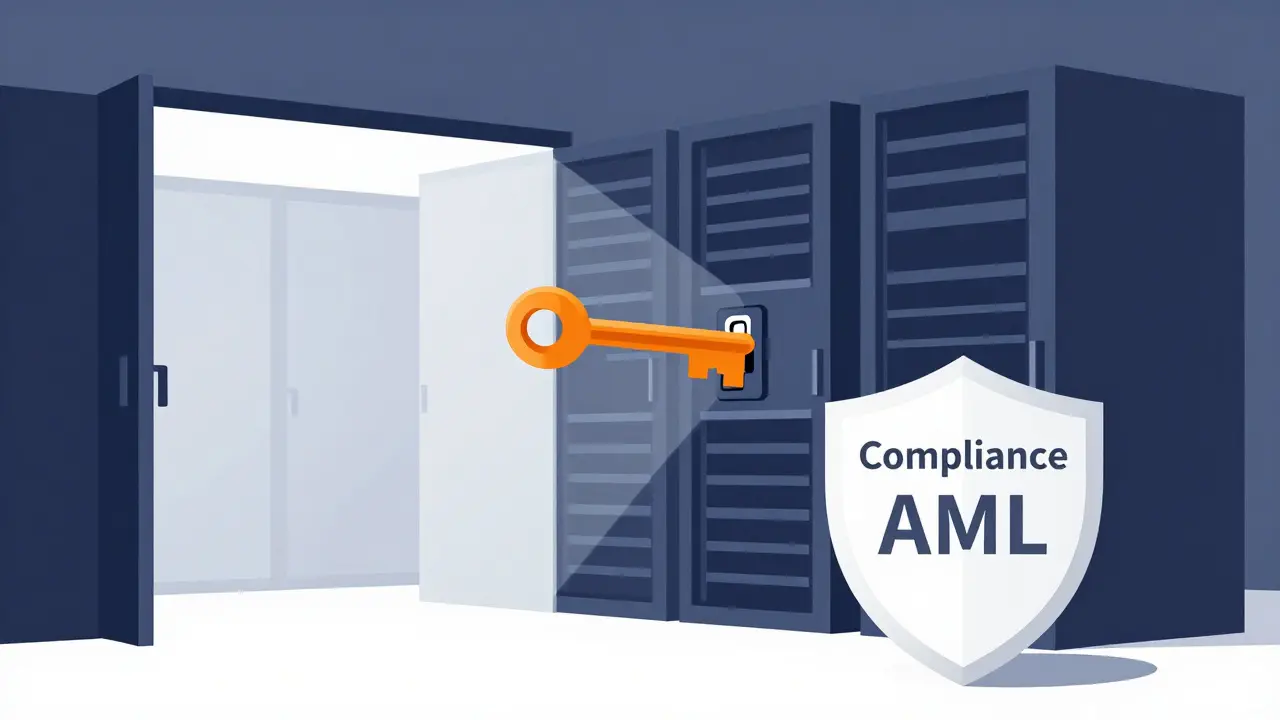
For those in the industry, this is driving a massive surge in the compliance market. Businesses are realizing that the cost of implementing strict AML (Anti-Money Laundering) tools is far lower than the risk of being caught in a BKA-style dragnet. The global cryptocurrency compliance market hit $1.2 billion in 2024 for a reason: the era of the wild west is ending, and the regulators have found the keys to the server room.
Was Operation Final Exchange just about banning Russian users?
Not exactly. While it targeted Russian-language exchanges to disrupt sanctions evasion, the broader goal was to dismantle infrastructure used for ransomware attacks, botnets, and darknet drug sales. It was about stopping financial crime in general, using the Russian-language networks as the primary entry point.
Can the BKA really identify me if I didn't provide a name?
Yes. Even without a name, servers log IP addresses, device IDs, and timestamps. When these logs are combined with data from internet service providers (ISPs) and blockchain analysis, law enforcement can often pinpoint a specific person or household with high accuracy.
What happened to the funds on the seized exchanges?
When servers are seized, access to the platforms is cut off. While the BKA's primary goal was data seizure for intelligence, the disruption effectively freezes the ability of criminals to move their funds through those specific channels.
Why did they target 47 exchanges at once?
Simultaneous strikes prevent operators from warning each other or moving data to "safe" servers. By hitting all 47 at the same time, the BKA ensured a maximum amount of data was captured and the network of services was crippled instantly.
Is it safe to use no-KYC exchanges now?
From a legal and security standpoint, no-KYC services are increasingly risky. This operation proves that law enforcement views them as primary targets. Users should be aware that using these services may flag their wallets for future investigations if the exchange is ever compromised or seized.
Next Steps and Realities
If you are operating a crypto business, the move is clear: integrate robust compliance and AML tools now. Waiting for a regulatory nudge is a gamble you can't afford. For those who previously used these 47 exchanges, the focus now is on monitoring your wallet's association with "tainted" addresses. As the BKA processes the 8 terabytes of data, more wallets will likely be flagged as linked to criminal activity.
Expect more of these "Final Exchange" style operations. The success in Germany has already sparked discussions across the EU to expand these capabilities. The strategy of targeting the underlying server infrastructure, rather than just the web interface, is the new gold standard for crypto enforcement. The hunters have the data; the only question left for the users is whether they are on the list.
Leave a comments