
The crypto market is crowded. Every week, a new exchange pops up promising the best fees, the fastest trades, or the hottest new tokens. But if you're looking beyond the big names like Binance or Coinbase, one platform keeps showing up in niche circles: P2B is a centralized cryptocurrency exchange launched in January 2018 and headquartered in Lithuania. Also known as P2PB2B, it rebranded in 2022 and now claims to be the #1 exchange by token variety, with over 200 cryptocurrencies listed and more than 51 blockchains supported.
More Than Just a Trading Platform
P2B doesn’t act like most exchanges. While others compete on volume, liquidity, or derivatives, P2B built its reputation on something else: launching new crypto projects. Since its start, it’s helped over 3,000 new tokens go live. That’s not a typo. Three thousand. Most exchanges list a handful of new coins per year. P2B does 30+ every month. If you’re into early-stage crypto - the kind that hasn’t hit CoinMarketCap yet - this is one of the few places where you can actually get in before the price spikes.
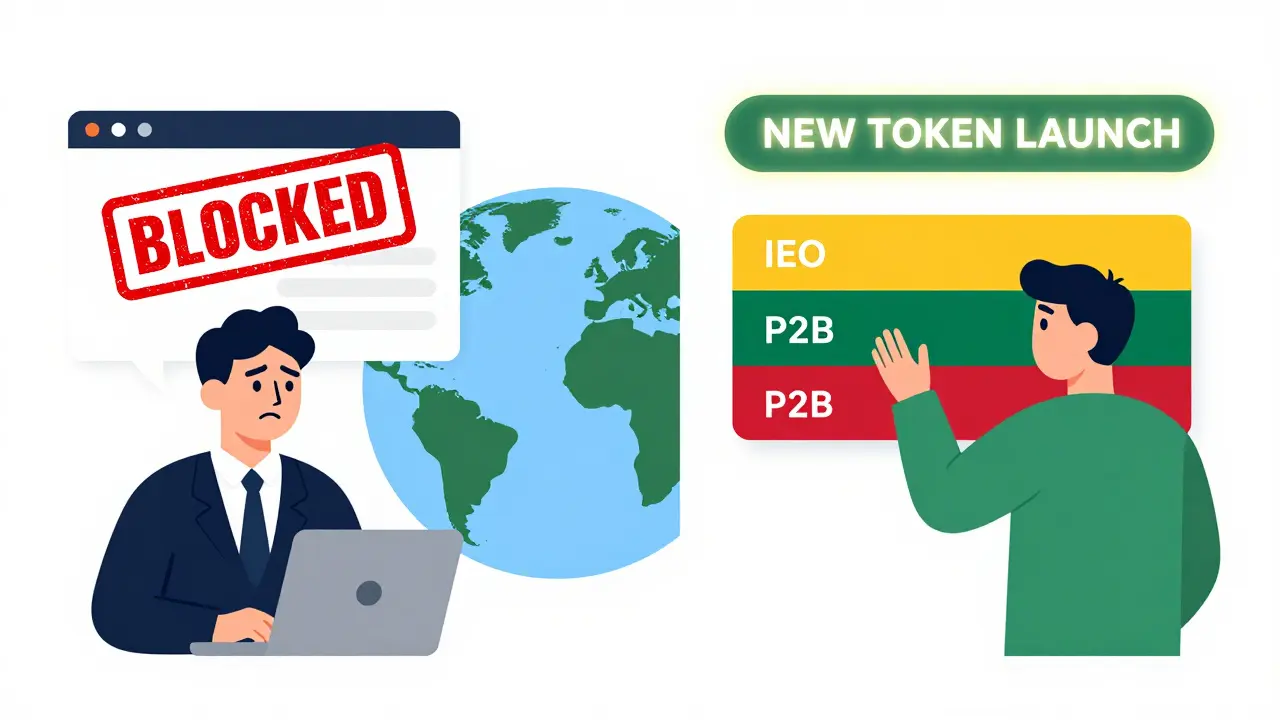
It’s not just about listing, either. P2B runs its own launchpad where projects raise funds directly from users through IEOs and IDOs. You don’t need to hold a specific token to participate. That’s rare. Most platforms lock access behind token staking or long-term holder requirements. P2B lets anyone with a verified account jump in. That’s why traders who chase early momentum keep coming back.
What You Can Trade
P2B supports over 200 cryptocurrencies and 900 trading pairs. That’s more than most exchanges. You’ll find Bitcoin, Ethereum, Solana, and Cardano - but also obscure coins like $MOON, $NEOZ, or $TOKI that you won’t find anywhere else. The platform integrates 51+ blockchains, meaning you can deposit and withdraw tokens from networks most exchanges ignore, like Polygon, Avalanche, and even lesser-known ones like Kava or Injective.
Fiat is supported too - EUR, USD, and GBP. You can buy crypto directly with a bank transfer or card. But don’t expect the same ease as Coinbase. The fiat on-ramp is functional, not smooth. Withdrawals can take 2-5 business days. And if you’re in the U.S., Iran, Russia, or one of over 20 other restricted countries, you’re out of luck. No workaround. No VPN loophole. P2B blocks those regions hard.
Trading Fees and Costs
The standard trading fee is 0.2% - higher than Binance’s 0.1% or Kraken’s 0.16%. But here’s the catch: fees drop as you trade more. If you hit 50 BTC in monthly volume, your fee falls to 0.1%. If you hit 500 BTC, it’s 0.05%. That’s competitive for high-volume traders. But for casual users? It’s a turnoff. No zero-fee pairs. No maker-taker rebates. You pay, period.
Withdrawal fees vary by coin. Bitcoin withdrawals cost around 0.0005 BTC. Ethereum is about 0.005 ETH. Not outrageous, but not cheap either. And unlike some exchanges, P2B doesn’t offer fee discounts for using its native token - because it doesn’t have one.
Security and Safety
P2B claims 96% of crypto is stored in cold wallets. That’s a solid number. Most exchanges keep between 80% and 90%. They also use a Web Application Firewall (WAF) to block hacking attempts. The system reportedly stops over 10 million attacks per month. That’s impressive. But here’s the problem: they’re not regulated.
No financial authority oversees P2B. Not the EU, not the UK, not the U.S. That’s a red flag for many. BrokerChooser outright says they wouldn’t trust it with their own money. And while P2B says it’s compliant with EU AML rules, that’s not the same as being licensed. If the exchange gets hacked or goes offline, you have no legal recourse. No deposit insurance. No government protection. You’re on your own.
KYC is mandatory. You need to upload ID, proof of address, and sometimes a selfie. The process can take up to 72 hours. Some users report delays. Others say it’s fast. It depends. But once verified, you get 24/7 customer support in 12 languages - except Hindi. That’s odd. Why leave out Hindi speakers? It’s unclear.
User Experience: Easy or Confusing?
The interface is clean. The basic trading screen looks like most modern exchanges: order book, chart, buy/sell buttons. But the advanced mode? It’s dense. Charts are basic. Indicators are limited. No built-in alerts. No copy trading. If you’re used to platforms like Bybit or KuCoin, you’ll miss those features.
The mobile app works, but it’s not polished. It lacks the smoothness of Binance’s app. Order execution can lag during high volatility. And the documentation? Mixed reviews. Technical API docs are okay. But beginner guides? Barely there. If you’re new to crypto, you’ll need to learn elsewhere.

Who Is P2B For?
P2B isn’t for everyone. If you want to buy Bitcoin and hold it, use Coinbase. If you want to trade futures, use Bybit. If you want regulatory safety, use Kraken.
P2B is for one type of trader: the early adopter. The person who reads crypto Twitter at 2 a.m. and jumps on new tokens the moment they launch. The trader who believes the next 100x coin is still in its first week. If that’s you, P2B is one of the few places where you can actually find those projects.
It’s also great for developers launching new tokens. The platform’s listing process is faster than most. Projects go live in days, not weeks. That’s why so many small teams choose it.
The Downsides
Let’s be honest - P2B has real flaws.
- No regulation. No safety net.
- High fees for low-volume traders.
- Restricted countries - including the U.S., which is a huge market.
- Weak educational resources for beginners.
- Withdrawal delays reported by users.
- Trading tools are basic compared to top-tier exchanges.
Its Trustpilot score is 3.6/5. That’s average. Positive reviews praise the token variety and fast support. Negative ones call it risky and unprofessional. The mix is real.
What’s Next for P2B?
P2B isn’t standing still. They’re rolling out AI-powered trading signals, NFT marketplace integration, and cross-chain liquidity pools. They’ve cracked the CoinMarketCap Top 20. They’ve spoken at major crypto conferences. They’re trying to grow beyond just being a launchpad.
But their future depends on two things: regulation and project quality. If governments crack down on unlicensed token launches, P2B could be hit hard. If the projects they list start failing - and many do - users will lose trust.
Right now, they’re betting that the crypto world still believes in the wild west. And for now, enough people do.
Is P2B a safe crypto exchange?
P2B has strong security measures - 96% of funds in cold storage and a WAF that blocks millions of attacks. But it’s not regulated by any financial authority. That means no legal protection if something goes wrong. It’s safe from hackers, but not from regulatory risk or platform failure.
Can I use P2B if I live in the United States?
No. P2B blocks users from the U.S., Iran, Russia, North Korea, and over 20 other countries. Even if you use a VPN, your account may be frozen if detected. There’s no workaround.
What’s the best way to use P2B?
Use P2B to trade newly launched tokens you can’t find elsewhere. Don’t use it for long-term holding, large fiat deposits, or advanced trading strategies. Stick to small amounts, focus on IEOs/IDOs, and treat it as a niche tool - not your main exchange.
Does P2B have a native token?
No. P2B does not have its own native token. Unlike Binance (BNB) or KuCoin (KCS), there’s no token to buy for fee discounts or staking rewards. This makes it different from most competitors.
How fast are withdrawals on P2B?
Crypto withdrawals usually process within 15-60 minutes. Fiat withdrawals (EUR, USD, GBP) take 2-5 business days. Some users report delays due to manual reviews, especially for large amounts. Always check the status in your transaction history.
Is P2B good for beginners?
Not really. The interface is simple, but the platform is built for experienced traders chasing new tokens. There’s little educational content, no copy trading, and limited tools. Beginners should start with Coinbase or Kraken first.
How many cryptocurrencies does P2B support?
P2B supports over 200 cryptocurrencies and 900 trading pairs. It also integrates 51+ blockchains, giving users access to tokens from networks most exchanges don’t support.
Does P2B offer copy trading?
No. P2B does not offer copy trading, social trading, or automated follower features. This is a major gap compared to platforms like Bybit, KuCoin, or eToro.
If you’re looking for a place to find the next big crypto project before it explodes - P2B is one of the few left that still lets you in. But if you want safety, simplicity, or regulation - keep looking.
Felicia Eriksson
25 02 26 / 11:56 AMHonestly? I just use it for the weird tokens no one else has. If you're not chasing 100x plays, you're wasting your time here. But man, when you catch one early... worth it.
Elizabeth Smith
26 02 26 / 11:13 AMNo native token? That's the whole problem. Every other exchange makes you buy their coin to get discounts. P2B's just... naked. No loyalty program. No rewards. Just raw trading. And honestly? I respect that. But also... why?
Cathy Sunshine
27 02 26 / 19:05 PMThey're not regulated because they don't want to be. They're the last free port in crypto. The real traders know this. The regulators are coming. And when they do, it'll be like watching a castle burn. I'm already taking profits.
Don B.
28 02 26 / 13:38 PMI tried to deposit USD and it took 4 days. Then they flagged my account for 'suspicious activity' because I sent $200. I literally cried. This isn't a platform. It's a vibe. And I'm not vibing.
Cameron Pearce Macfarlane
28 02 26 / 18:16 PMThe fact that they block the U.S. is the best thing about them. No regulation means no IRS snooping. No compliance means no paperwork. If you're not in a restricted country, you're probably not the kind of trader they want anyway.
Elana Vorspan
1 03 26 / 17:19 PMI came for the new launches and stayed for the community. People here actually talk about tech, not just price charts. It's rare. And yeah, the app lags. But I'll take a clunky interface over another soulless exchange any day.
Tracy Whetsel
3 03 26 / 16:30 PMI love that they let anyone join IEOs. No staking. No gatekeeping. Just your wallet and a verified ID. It feels like crypto used to be - open, wild, and kinda beautiful. Even if it’s risky.
Daisy Boliaan
4 03 26 / 07:31 AMI went to their support page asking about Hindi. They didn't answer. Then I saw they have 12 languages but not Hindi. I mean... come on. Are they scared of 1.4 billion people? Or just lazy? Either way, I'm out.
Kenneth Genodiala
6 03 26 / 01:33 AMYou're telling me P2B has 3,000+ token launches? That's not innovation. That's a graveyard. Most of those coins are dead within 6 months. You're not an early adopter. You're a tomb raider.
Danny Kim
7 03 26 / 14:51 PMSo let me get this straight. You're praising an unregulated exchange that blocks half the world and has zero fee discounts... because it has obscure tokens? Honey. That's not a strategy. That's a cry for help.
Leslie Cox
8 03 26 / 16:48 PMIt's fascinating how people romanticize unregulated spaces. It's not freedom. It's just absence of accountability. If you're okay with losing everything because 'they didn't have insurance,' you're not a trader. You're a gambler with a spreadsheet.
aaron marp
8 03 26 / 18:19 PMI started with P2B because I was tired of the same 50 coins everywhere. Found a project called $NEOZ that’s now on CoinGecko. No one else had it. That’s the magic. Yeah, the UI is basic. But the opportunity? Priceless.
Patrick Streeb
8 03 26 / 19:04 PMThe platform’s operational framework exhibits a commendable adherence to decentralized principles, particularly in its token listing protocol. However, the absence of formal regulatory oversight presents a non-trivial counterbalance to its utility as a long-term financial infrastructure. One must weigh the allure of innovation against the imperative of fiduciary security.
Nicki Casey
9 03 26 / 11:59 AMLet’s be clear: P2B is a front for unlicensed securities trading. They don’t have a license because they don’t want one. They don’t want one because they’re facilitating pump-and-dump schemes under the guise of 'early access.' The 3,000+ tokens? 97% are rug pulls. The WAF? Just a distraction. The real security flaw is the human greed they enable.
Shannon Black
10 03 26 / 08:48 AMAs someone who’s worked in fintech across three continents, I find P2B’s model culturally fascinating. Lithuania as a hub, no native token, no U.S. access - it’s like they built a crypto island. Not perfect. But intentional. That’s rare.
Tracy Whetsel
11 03 26 / 00:19 AMTo the person who said 'this is a graveyard' - I found my first 100x on $TOKI there. You don’t get that on Coinbase. Sometimes you have to walk through the graveyard to find the gold.