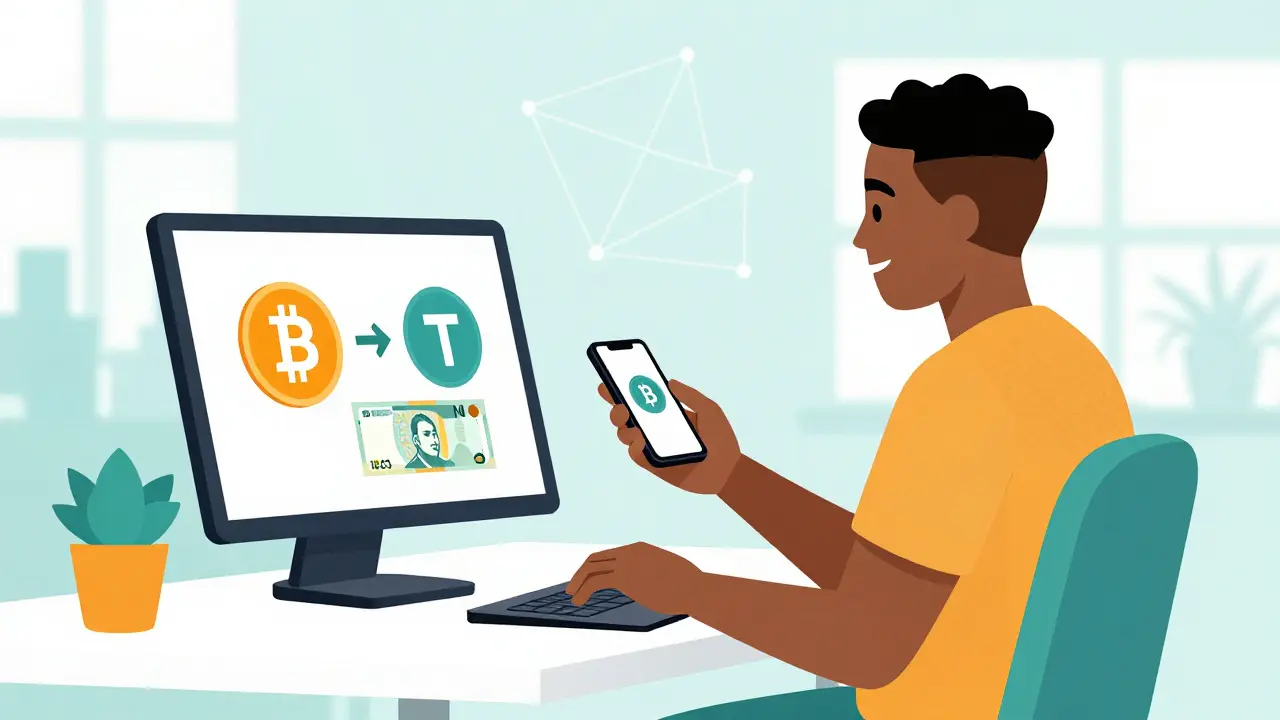
Buying Bitcoin or USDT with Nigerian Naira used to be a headache. You had to navigate bank blocks, confusing rates, and the constant fear of your account being frozen. But today, the landscape looks completely different. Peer-to-peer (P2P) trading has become the backbone of Nigeria’s digital economy. It is no longer just a workaround; it is the primary way millions of Nigerians move money, save against inflation, and receive international payments.
With the Central Bank of Nigeria (CBN) lifting its ban on banks servicing crypto businesses in 2023 and the new Investments and Securities Act (ISA 2025) bringing clear rules, the market has matured. The question is no longer 'Is it safe?' but rather 'Which platform fits my needs?'. Whether you are a freelancer getting paid in dollars, a merchant accepting crypto, or someone trying to preserve the value of their savings, choosing the right P2P platform matters more than ever.
Why P2P Dominates Nigeria's Crypto Market
To understand why P2P is so popular, you have to look at the economic reality on the ground. Inflation in Nigeria hit over 24% in 2023, and the Naira has lost more than 75% of its value against the US dollar since 2016. Holding cash is like holding ice in the sun-it melts fast. For many Nigerians, converting Naira into stablecoins like USDT or Bitcoin is a survival strategy, not a speculative gamble.
Traditional banking systems often fail here. Remittances can cost up to 8% per transaction when sent through traditional channels. P2P platforms cut out the middlemen. They connect buyers and sellers directly, using local payment methods like bank transfers, USSD codes, or mobile wallets. This creates a decentralized financial ecosystem that works even when formal infrastructure struggles. According to 2024 metrics, Nigeria ranks second globally in cryptocurrency adoption. With about 36% of adults remaining unbanked, P2P offers a lifeline for financial inclusion that traditional banks simply cannot match.
The shift wasn't overnight. After the CBN’s 2021 circular prohibited banks from dealing with crypto firms, traders moved underground. When the ban was lifted in 2023, and especially after the ISA 2025 established the Securities and Exchange Commission (SEC) as the regulator, the market exploded into the light. Monthly transaction volumes now exceed $500 million. This isn't a niche hobby anymore; it's mainstream finance.
Top P2P Platforms Compared: Who Wins?
Not all platforms are created equal. Some prioritize speed, others focus on security, and some offer better exchange rates. Here is how the major players stack up based on recent performance data from 2025 and early 2026.
| Platform | Key Strength | Fees | Regulatory Status | Best For |
|---|---|---|---|---|
| Binance P2P | Largest liquidity & user base | 0.1% taker/maker | Provisional License | High-volume traders & beginners |
| Bybit | Local language support (Yoruba, Igbo, Hausa) | Competitive maker/taker fees | Provisional License | Users needing local customer service |
| YellowCard | Instant Naira deposits/withdrawals | Zero trading fees | Licensed in 20 African countries | Frequent small transactions |
| Breet | Speed (98% under 5 mins) | Low spread costs | Operational | Urgent bank payouts |
| Busha | First SEC-licensed exchange | Standard exchange fees | SEC Licensed (ISA 2025) | Risk-averse users seeking compliance |
Binance P2P dominates the market with roughly 45% share. Its strength lies in liquidity. Because so many people use it, you can almost always find a buyer or seller at a competitive rate. However, this popularity comes with crowds. Dispute resolution can be slow, and verification requirements have tightened significantly.
Bybit has carved out a strong niche by focusing on local integration. Their 24/7 support in Yoruba, Igbo, and Hausa is a game-changer for non-English speakers who feel left behind by global tech companies. Shennon Hewa, a crypto trader with eight years of experience, notes that Bybit’s deep integration with Nigerian banking infrastructure gives it a 12-15% performance advantage in local transaction processing.
YellowCard stands out for its zero trading fees and instant Naira withdrawals. If you are moving smaller amounts frequently, the lack of fees adds up. They also lead in education, offering over 120 tutorial videos in local languages. However, their app stability has been questioned, with stress tests showing crashes during peak hours in nearly half of cases.
Busha is the poster child for the new regulatory era. As the first exchange licensed under the ISA 2025, it appeals to those who want maximum legal safety. Dr. Amina Bello, Chief Economist at ChainUp Africa, points out that while licensing delays caused temporary consolidation, Busha’s compliance-first approach reduces long-term risk.
Navigating the New Regulatory Landscape: ISA 2025
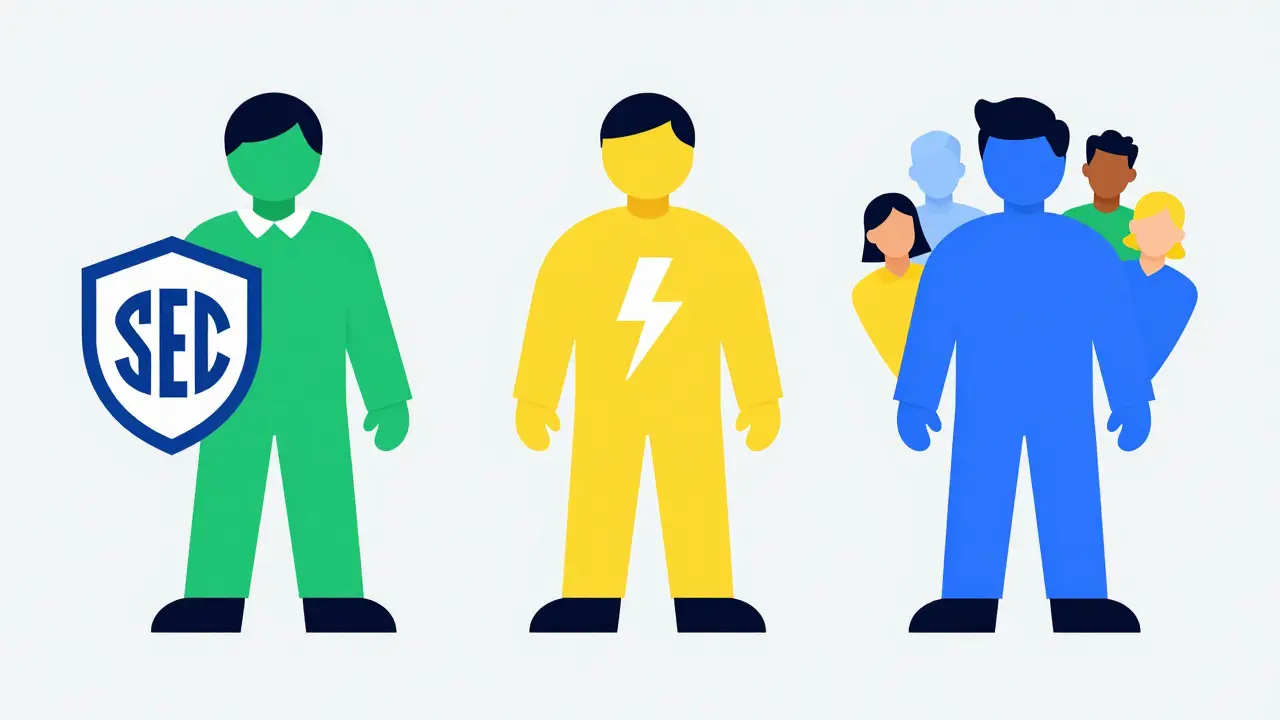
The introduction of the Investments and Securities Act (ISA 2025) changed everything. Before this, the regulatory environment was murky. The Central Bank of Nigeria (CBN) issued warnings, then reversed them, leaving banks confused and cautious. Now, the Securities and Exchange Commission (SEC) is the primary regulator for digital assets.
This clarity has reduced scam incidents by 63% compared to late 2024, according to Dr. Bello. Why? Because platforms now have to prove their legitimacy to get a license. Unregulated actors are being pushed out. However, this transition isn't without friction. Licensing delays have favored early-approved platforms like Busha and Quidax, creating a temporary monopoly effect.
Looking ahead, the SEC announced in July 2025 that all platforms must implement real-time transaction monitoring systems by December 31, 2025. This means stricter Know Your Customer (KYC) checks and faster flagging of suspicious activity. For users, this translates to smoother experiences but less anonymity. If you were relying on crypto to hide transactions, those days are over. The goal is to attract institutional participation, which requires trust and transparency.
Safety First: Avoiding Scams and Account Freezes
Even with better regulation, risks remain. The Economic and Financial Crimes Commission (EFCC) reported that 22% of fraud cases in Q2 2025 involved impersonation of verified sellers. Scammers are getting smarter. They create fake profiles that look identical to legitimate traders, complete with high completion rates and positive feedback.
Here is how to protect yourself:
- Never release crypto before receiving funds. This is the golden rule. P2P platforms hold your crypto in escrow until you confirm receipt of payment. Do not let pressure from a "seller" make you break this rule.
- Check the seller's history. Look for traders with over 1,000 completed orders and a 95%+ completion rate. New accounts with high limits are red flags.
- Use the chat function only. Never communicate via WhatsApp or Telegram outside the platform. If a dispute arises, the platform can only review chats within their system. External messages provide no proof.
- Beware of "stolen card" scams. Sometimes, a buyer pays you with stolen money. The original owner later disputes the transaction, and your bank reverses the payment, but the crypto is gone. To mitigate this, wait 24 hours before withdrawing large fiat sums if possible, or use platforms with robust chargeback protection.
Security researcher Chinedu Okoro highlights a critical vulnerability: 68% of Nigerian users disable Two-Factor Authentication (2FA) due to SMS delivery issues. This is dangerous. Instead of disabling 2FA, switch to an authenticator app like Google Authenticator or Authy. It is free, works offline, and is far more secure than SMS.
Practical Guide: How to Trade Safely and Efficiently
Starting your first trade doesn't need to be complicated. Most users report needing 2-3 hours for initial setup, including KYC verification. Here is a streamlined approach:
- Choose your platform wisely. If you value speed, try Breet. If you want variety, go with Binance. If you want regulatory peace of mind, choose Busha.
- Complete KYC immediately. Upload your BVN (Bank Verification Number), passport photo, and ID. Delays in verification are the most common reason for failed first trades.
- Start small. Do not dump your life savings into one trade. Test the process with ₦5,000 or ₦10,000. See how fast the funds arrive and how responsive support is.
- Compare rates, not just prices. A slightly lower price might mean slower payout or higher hidden fees. Look at the "Total Cost" including network fees and withdrawal times.
- Keep records. Screenshot every transaction confirmation. Save chat logs. These are your insurance policies in case of disputes.
Payment verification delays affect 65% of users at some point. This usually happens when banks flag unusual crypto-related transactions. To avoid this, maintain consistent trading patterns. Don't suddenly move ₦5 million if you've only ever traded ₦50,000. Gradual increases signal normal behavior to bank algorithms.
The Future of P2P in Nigeria
The trajectory is clear. Nigeria's crypto ecosystem was valued at $2.3 billion in 2025, growing 34% year-over-year. Analysts predict it could reach $5.1 billion by 2027. The P2P segment makes up 68% of all crypto activity in the country, far higher than the global average of 29%.
Institutional players are waking up. Dr. Bello predicts a 40-50% increase in institutional participation by 2026 as regulatory clarity attracts traditional financial firms. We are already seeing features like Binance's "Naira Direct," which reduces conversion steps and cuts transaction time by 38%. YellowCard is expanding into five more African countries, leveraging its Nigerian success.
However, challenges persist. Technological infrastructure limitations still affect 31% of rural users. Internet connectivity and smartphone access remain barriers for many. Additionally, 42% of new users fall victim to scams in their first month. Education is key. Platforms like YellowCard and Busha are investing heavily in tutorials and webinars to bridge this gap.
For the everyday Nigerian, P2P crypto is no longer a risky experiment. It is a vital tool for financial resilience. By choosing licensed platforms, practicing strict security hygiene, and staying informed about regulatory changes, you can navigate this boom safely. The future of finance in Nigeria is peer-to-peer, decentralized, and increasingly regulated.
Is P2P crypto trading legal in Nigeria in 2026?
Yes. While the Central Bank of Nigeria previously restricted banks from servicing crypto businesses, this ban was lifted in 2023. Furthermore, the Investments and Securities Act (ISA 2025) established the Securities and Exchange Commission (SEC) as the regulator for digital assets. Trading on licensed P2P platforms is legal and protected under this framework.
Which P2P platform is fastest for Naira withdrawals?
Breet is currently the leader in speed, with 98% of transactions completing within 5 minutes. YellowCard also offers instant Naira withdrawals, typically taking under 3 minutes. Binance P2P is reliable but can take longer during peak hours due to high volume.
How do I avoid scams on P2P platforms?
Always trade within the platform's chat system, never release crypto before confirming bank receipt, and check the seller's completion rate (aim for 95%+). Enable Two-Factor Authentication (2FA) using an authenticator app, not SMS. Be wary of sellers offering rates significantly better than the market average, as these are often bait for scams.
What is the ISA 2025 and how does it affect me?
The Investments and Securities Act (ISA 2025) is the new regulatory framework governing digital assets in Nigeria. It designates the SEC as the primary regulator. For users, this means increased security, reduced scams, and clearer recourse in case of disputes. However, it also means stricter KYC requirements and real-time transaction monitoring.
Can I use my BVN for crypto trading?
Yes. Since the CBN lifted its ban in 2023, banks are allowed to service licensed crypto businesses. Using your BVN-linked bank account for P2P transactions is standard practice. Ensure you are using a platform that complies with SEC regulations to minimize the risk of account freezes.
Brad Ranks
8 06 26 / 13:36 PMOh wow, another article pretending that crypto is just a normal banking tool now. The sheer audacity of these platforms to act like they are the backbone of an economy while charging fees and playing games with escrow is breathtaking. I have seen accounts frozen for no reason, support bots that loop you in circles, and sellers who vanish into thin air after the transfer. It is not a 'survival strategy,' it is a high-stakes gamble where the house always has an edge disguised as a 'spread.'
Lee Paige
9 06 26 / 18:44 PMThe entire premise of this financial ecosystem is built on sand because it relies on foreign technology and unregulated actors operating within sovereign borders. The Central Bank lifting the ban was a mistake that exposed our national treasury to global market manipulation. These P2P platforms are essentially fronting operations for international money laundering rings that care nothing for local economic stability. We need to shut down access to Binance and Bybit immediately to protect the integrity of the Naira and prevent external entities from dictating our monetary policy through digital backdoors.
Madhu Menon
11 06 26 / 11:40 AMOne must consider the philosophical implications of trust in a decentralized system. When we remove the central authority, do we truly gain freedom or merely shift the burden of verification onto the individual? The concept of value is subjective, yet USDT claims to hold objective parity with the dollar, which itself is a fiat construct backed by nothing but collective belief. Perhaps the real innovation here is not the technology, but the human willingness to believe in digital scarcity amidst physical abundance. 🌿
Narendra Kulkarni
12 06 26 / 11:39 AMHey guys, just wanted to say tht this guide is really helpful for me. I been using yellowcard for sm time nd it works gud for small amunts. No stress wit d fees like u said. But i still worry bout my account gettin frozen sometimes. Maybe we should all stick to licensed ones like Busha to be safe. Good info tho! 👍
verna kennedy
12 06 26 / 13:09 PMIt is quite amusing how people ignore the basic principles of security hygiene. If you cannot manage a two-factor authentication app correctly, you do not deserve to participate in digital finance. The suggestion that SMS issues justify disabling 2FA is absurd and displays a lack of technical competence that is frankly embarrassing. You are leaving your assets wide open to SIM swapping attacks, which are trivial to execute for anyone with minimal skill. Educate yourself before risking capital.
Kelly Tenney
13 06 26 / 01:11 AMI completely understand the hesitation many feel when navigating these new waters. It can be overwhelming to keep up with regulatory changes and platform updates. However, remember that every expert was once a beginner who took the first step cautiously. Starting with small amounts, as suggested in the guide, is a wonderful way to build confidence without significant risk. Let us support each other in learning these tools safely and effectively.
Greg Lewis
14 06 26 / 20:39 PMso you think busha is safer cause its licensed huh? thats cute. licenses dont stop hackers or bad code. i use breet mostly cause speed matters more than some paper certificate from a government agency that cant even fix the roads. why waste time on compliance when you can just move the money fast? also does anyone know if binance will crash again next week? just curious lol
JEVON HALL
14 06 26 / 23:58 PMActually, there is a nuance here regarding the ISA 2025 that many miss. The SEC licensing isn't just about safety; it's about institutional adoption. Big players won't touch unlicensed platforms, so liquidity will eventually migrate to Busha and Quidax. For now, Binance has the volume, but long-term, the compliant exchanges will win. Also, make sure you check the spread on YellowCard during peak hours, it gets nasty. 💡📉
Dr Lynea LaVoy
15 06 26 / 06:50 AMFrom a psychological perspective, the fear of missing out drives much of this activity. People see others profiting from inflation hedging and rush in without understanding the mechanics. This leads to poor decision-making, such as ignoring KYC requirements or trading with unknown sellers. It is crucial to approach this with a calm mind and thorough research rather than emotional urgency. Protecting your mental well-being is just as important as protecting your funds.
Matthew Malone
17 06 26 / 00:17 AMThis whole narrative of crypto saving Nigeria is a joke. It is just another way for the elite to hide their wealth offshore while the common man struggles with exchange rates. The 'regulatory clarity' is just a tax grab waiting to happen. Once the SEC gets its hooks in, they will impose fees that will crush the average trader. Don't fall for the hype. Real wealth comes from tangible assets, not digital tokens controlled by Silicon Valley tech brocs.
aaliyah zahid
17 06 26 / 19:21 PMWell, it seems everyone has an opinion on what is best for them. In my experience, Bybit's local language support has been a lifesaver for my elderly parents who struggle with English interfaces. It bridges a cultural gap that global platforms often ignore. While I appreciate the skepticism, dismissing the utility of these tools overlooks the real benefits for those excluded from traditional banking systems. Diversity in options is key. 😊
Erik Kirana
18 06 26 / 01:06 AMThe author fails to mention the catastrophic failure rate of dispute resolution on Binance during high volatility periods. It is a systemic flaw that renders the platform unreliable for serious traders. Furthermore, the claim that Busha is 'risk-averse' is misleading; it is simply slower due to bureaucratic overhead. True efficiency requires cutting corners, not adhering to stifling regulations. The future belongs to decentralized autonomous organizations, not licensed exchanges. 🚀💸
dan kaffeman
18 06 26 / 01:55 AMYou people are pathetic for relying on these apps. Real men build businesses that generate cash flow, not chase spreads on USDT. This entire industry is a distraction from actual productivity. While you sit there refreshing your portfolio, someone else is working hard. Get a job that doesn't involve staring at charts and hoping for a green candle. It is weak behavior.
Meg Gran
18 06 26 / 22:29 PMlol yeah right like the sec cares about us little guys. they only step in when the big fish are swimming. meanwhile were over here worrying bout 2fa and kyc while the system eats us alive. its funny how they call it 'protection' when its really just control. but sure, keep telling yourself its safe. maybe if we squint hard enough the scams wont show up. 🙄
Alexander DeVries
20 06 26 / 10:56 AMLet us look at the data objectively. The growth trajectory is undeniable. Whether one likes it or not, P2P is the dominant force in Nigerian finance. Ignoring it is not a strategy; it is negligence. The key is to leverage these tools wisely. Use Busha for large, secure transactions. Use Breet for speed. Diversify your risk. Do not let emotion dictate your financial decisions. Stay disciplined and stay informed.
Mark Corpuz
21 06 26 / 02:13 AMThe article provides a comprehensive overview of the current landscape. It is important to note that the regulatory framework under ISA 2025 is still evolving. Users should remain vigilant about changes in policy. Additionally, the emphasis on KYC is not merely bureaucratic; it is essential for preventing illicit activities that could harm the broader financial system. Adherence to these protocols ensures the longevity and stability of the ecosystem.
Yogendra Dwivedi
22 06 26 / 09:19 AMI have been observing the trends in Indian crypto markets as well, and there are similarities. The push for regulation is global. What interests me is how local languages play a role in adoption. Bybit supporting Yoruba and Igbo is a smart move. It lowers the barrier to entry significantly. Have any of you tried using USSD codes for transactions? It seems promising for areas with poor internet connectivity.
Sylvia Mossman
23 06 26 / 08:14 AMEveryone says 'start small' but that is just cowardice. If you want to beat inflation, you need exposure. Holding Naira is suicide. Yes, there are risks, but staying in cash is a guaranteed loss. Stop listening to these cautious voices and take calculated risks. The ones who hesitate are the ones left behind. Bold moves yield bold results. Don't be sheep.
Alexis Abster
23 06 26 / 10:24 AMMy heart goes out to those who have lost money to scams. It is a traumatic experience that shakes one's faith in the system. However, despair is not a solution. We must learn from these incidents and strengthen our defenses. The community can be a source of strength if we share knowledge openly. Let us lift each other up and ensure that no one falls victim to fraud again. Together, we are stronger. ❤️