
Using cryptocurrency to bypass international sanctions isn't just a gray-area loophole anymore. It's a federal crime that can land you in prison for 30 years. This isn't a hypothetical threat-it's happening right now. In 2025, prosecutors in the U.S., UK, and across Asia are stacking charges like never before, turning what used to be a regulatory fine into a decades-long prison sentence. If you thought crypto was anonymous and untraceable, think again. The tools to track it are too powerful, and the penalties are too severe to ignore.
How Crypto Became a Sanctions Target
Cryptocurrency was once seen as a tool for financial freedom. But when sanctioned entities-like Russian oligarchs, North Korean hackers, or terrorist financiers-started using it to move money across borders, governments shifted gears fast. Unlike banks, which can block suspicious transfers, most crypto platforms can't stop incoming transactions. That made them a magnet for bad actors. And regulators responded with force. The UK’s Office for Financial Sanctions Implementation (OFSI) made it crystal clear in July 2025: "Circumvention using crypto-assets is a serious criminal offence." No more excuses. No more "I didn’t know." Passive compliance is dead. If your platform handles crypto and doesn’t actively screen for sanctioned addresses, you’re already in legal danger.The $5.1 Billion Crackdown
In 2024 alone, global penalties for crypto-related sanctions violations hit $5.1 billion. The U.S. led the charge, collecting $2.4 billion of that total. But it wasn’t just about fines. Eighty-three percent of those penalties came from failures in Anti-Money Laundering (AML) and Know Your Customer (KYC) checks-exactly the kind of gaps that let sanctions evaders slip through. Take the Asia-Pacific region. It saw a 55% spike in enforcement actions in 2024. Singapore and Japan didn’t just update their rules-they started enforcing them aggressively. Exchanges that used to operate with loose oversight suddenly found themselves shut down, fined, or handed over to criminal investigators.OKX: A $500 Million Warning Shot
The most public example came in February 2025, when the DOJ fined OKX Crypto Exchange over $500 million. Founded in 2017 and based in Seychelles, OKX claimed to ban U.S. users. But internal messages showed staff telling American customers how to fake ID documents to access the platform. Over $5 billion in suspicious transactions flowed through their system. The company pleaded guilty. The CEO and key operators faced criminal charges. OKX didn’t just lose money-it lost its reputation, its license, and its future. This wasn’t a case of a few bad actors. It was systemic failure. And prosecutors made sure everyone knew it: if you run a crypto business and don’t fix your compliance, you’re not just risking a fine-you’re risking prison.
The Iurii Gugnin Case: When Charges Stack Up
In June 2025, Iurii Gugnin, founder of the crypto payments firm Evita, was indicted on seven federal charges. He allegedly funneled over $500 million in payments tied to sanctioned Russian entities through U.S. banks and crypto exchanges. The charges? Wire fraud, bank fraud, operating an unlicensed money transmitting business, money laundering, and failing to file Suspicious Activity Reports. Here’s the key: no single charge carries a 30-year sentence. But when prosecutors pile them on-conspiracy (up to 20 years), bank fraud (up to 30 years per count), wire fraud (up to 20 years per count)-the total adds up fast. Gugnin’s case is now a blueprint. Prosecutors aren’t going after one violation. They’re going after the whole criminal enterprise.North Korea, Trickbot, and the $7.74 Million Trace
North Korea’s cyber units have been quietly laundering crypto for years. In June 2025, the DOJ filed a civil forfeiture complaint seeking $7.74 million in crypto linked to North Korean hackers. The method? Remote workers in Southeast Asia mined or traded crypto, then used mixing services and peer-to-peer platforms to send funds back to Pyongyang. The U.S. didn’t just freeze assets-they traced every step, down to the IP addresses and wallet addresses used. Meanwhile, the Trickbot ransomware group, long tied to Russian cybercrime, was hit with sanctions targeting 14 crypto addresses. The result? Inflows to those wallets dropped by 80% within three months. It’s not that they disappeared. It’s that the money became toxic. No exchange dares touch it. No wallet provider wants the heat.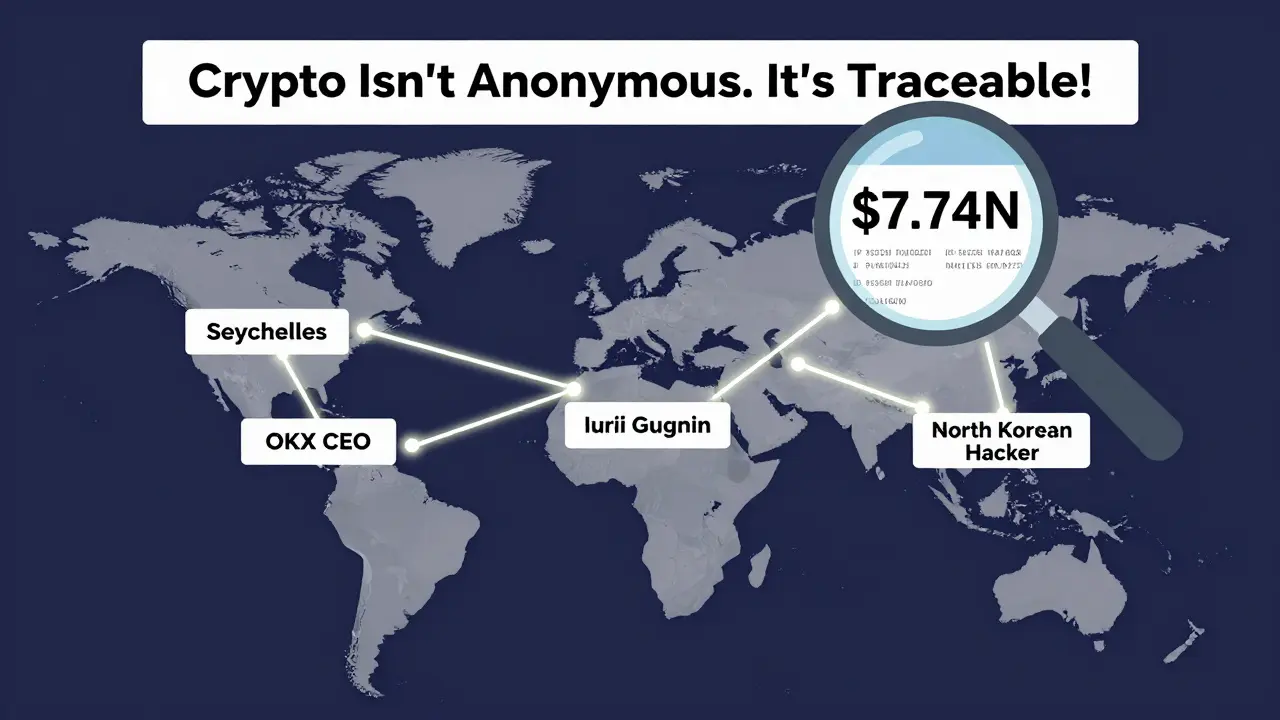
Who’s Really at Risk?
It’s not just big exchanges. Anyone running a crypto service-whether it’s a P2P platform, a payment processor, or even a decentralized app-can be targeted. The UK’s new "Failure to Prevent Fraud" law means senior executives can be personally prosecuted if their company’s systems allow sanctions evasion. No more hiding behind "I didn’t know." If you’re in charge and didn’t implement blockchain analytics, real-time monitoring, or proper screening, you’re liable. The sanctions list is growing. In 2024, OFAC designated 86 crypto addresses linked to Russia, North Korea, and cybercriminal networks. Exchanges like NetEx24, Bitpapa, and Cryptex were shut down overnight. Their users? Frozen out. Their funds? Seized. Their founders? Facing extradition.What You Need to Do Now
If you’re running a crypto business, here’s what you must have:- Blockchain analytics software-tools like Chainalysis, Elliptic, or TRM Labs that flag sanctioned addresses in real time.
- Automated KYC/AML checks-not just ID verification, but ongoing monitoring of transaction patterns.
- A compliance officer with legal authority-someone who can shut down transactions without needing approval from the CEO.
- Training for staff-if your customer service rep tells a user how to bypass restrictions, you’re already guilty.
The New Reality
Thirty years in prison isn’t a scare tactic. It’s the legal ceiling for serious sanctions evasion. And it’s being used. The message from regulators is clear: crypto doesn’t make you invisible. It makes you traceable. And if you use it to break sanctions, you’re not a pioneer-you’re a target. The era of crypto being a wild west is over. The law has caught up. And the prison doors are wide open.Can you really get 30 years in prison just for using crypto to send money?
Yes-if you’re facilitating sanctions evasion on a large scale. A single person using crypto to pay a friend in Russia won’t get 30 years. But if you run a business that helps sanctioned entities move money, and you ignore red flags, prosecutors can stack charges: money laundering, bank fraud, wire fraud, operating an unlicensed money service. When added up, those charges can easily total 30 years or more. The 2025 case against Iurii Gugnin is proof-it’s not theoretical anymore.
Are all crypto exchanges being monitored?
Yes. Major exchanges like Binance, Kraken, and OKX are under constant scrutiny. But so are smaller platforms, especially those based in jurisdictions with weak oversight. Regulators now use blockchain analytics to trace transactions across hundreds of platforms. If your exchange handles more than $1 million a month and doesn’t screen for sanctioned addresses, you’re already on a watchlist. The U.S. DOJ and UK OFSI share data globally-there’s no safe haven.
What happens if I accidentally send crypto to a sanctioned address?
If it’s a one-time mistake and you report it immediately, regulators usually treat it as a compliance failure-not a criminal act. But if you ignore the warning, keep sending, or try to cover it up, that’s when you cross into criminal territory. The key is transparency. Most platforms now have automated alerts that flag sanctioned addresses. If you see one, freeze the transaction and report it. That’s your legal shield.
Can individuals be charged, not just companies?
Absolutely. The Gugnin case and the OKX prosecution both targeted individuals-not just corporations. Executives, compliance officers, even customer support staff who helped users bypass rules are being arrested. The UK and U.S. now hold individuals personally liable if they fail to implement "reasonable procedures." If you’re in a leadership role and didn’t act, you’re at risk.
Is there any way to legally use crypto with sanctioned countries?
No. There are no legal loopholes. Even humanitarian aid to sanctioned countries must go through licensed intermediaries with explicit government approval. Any crypto transaction involving a sanctioned entity-even if it’s for food or medicine-is illegal unless authorized by OFAC, OFSI, or the equivalent body in your country. There are no exceptions. Don’t assume good intentions make it legal.
How do regulators find out about crypto sanctions evasion?
They use blockchain analytics tools that trace every transaction across public ledgers. These tools link wallet addresses to real-world identities through exchange records, IP logs, and metadata. They also rely on tips from insiders, whistleblowers, and international cooperation. The U.S., UK, Singapore, and Japan now share data in real time. If you’re involved, they’ll find you.
What’s the difference between a fine and a prison sentence in these cases?
A fine is a financial penalty-usually paid by the company. A prison sentence targets individuals. If prosecutors believe you knowingly helped evade sanctions, they’ll charge you personally. Fines can be paid off. Prison time can’t. That’s why regulators now go after both: they fine the company to deter others, and they jail the people who made it happen.
Do decentralized exchanges (DEXs) offer protection?
No. DEXs don’t have KYC, but that doesn’t make them legal. Regulators don’t care if you used Uniswap or a centralized exchange. If you’re involved in laundering funds from sanctioned entities, you’re still liable. In fact, DEXs are now being monitored more closely because they’re harder to track. If you’re using them to avoid detection, you’re making yourself a target.
Can I get a reduced sentence if I cooperate?
Yes. The DOJ and UK authorities offer cooperation deals. If you provide evidence against others involved in the scheme, you may get a reduced sentence or even avoid prosecution. But this only works if you come forward before being charged. Once prosecutors have enough evidence to indict you, cooperation becomes a negotiation-not a guarantee.
What’s next for crypto sanctions enforcement?
Expect more global coordination, more individual prosecutions, and more use of RICO-style charges to treat crypto sanctions evasion as organized crime. Countries are building joint task forces. AI-powered monitoring tools are getting smarter. And regulators are training prosecutors to treat crypto like cash-but with a digital trail. The next five years will see even harsher penalties, not softer ones.
Adam Ashworth
11 03 26 / 15:56 PMThey’re not bluffing anymore. I’ve seen the internal memos from compliance teams at mid-sized exchanges - they’re panic-adding Chainalysis feeds overnight. One guy told me his boss literally cried when he realized their KYC was just a checkbox. This isn’t about crypto anymore. It’s about liability. If you’re running anything that touches funds and don’t have real-time on-chain monitoring, you’re already on the DOJ’s radar. No more "I didn’t know" - that excuse died when OKX’s CEO got served in a suit and tie.
Allison Davis
13 03 26 / 00:35 AMLet’s not sugarcoat it: the 30-year sentence isn’t for Joe Schmoe sending $500 to his cousin in Moscow. It’s for the people who built the infrastructure - the devs who coded bypass tools, the execs who ignored red flags, the customer service reps who coached users on fake IDs. That’s the target. And the system is now built to catch them. Every transaction leaves a fingerprint. The blockchain doesn’t forget.
Anthony Marshall
14 03 26 / 13:05 PMSTOP acting like this is some dystopian overreach. This is justice. These people aren’t freedom fighters - they’re enablers of war criminals and cyberterrorists. North Korea’s hackers are starving children while they pump crypto through your "decentralized" app. If you’re still defending anonymity as a virtue in this context, you’re part of the problem. Time to wake up and stop romanticizing criminals.
Lindsay Girvan
15 03 26 / 19:31 PM30 years? That’s not punishment. That’s a warning shot to every founder who thought they could outsmart regulators.
Douglas Anderson
16 03 26 / 21:35 PMMy cousin works in compliance at a regional crypto firm. They just fired three people last month for ignoring flagged wallets. One guy thought "it’s just one transaction" - turns out it was part of a $200M laundering ring tied to a sanctioned entity. They’re not just fining companies anymore. They’re dragging people out of their homes in handcuffs. If you’re running a service, you need a lawyer on speed dial. Not because you’re guilty - but because you can’t afford to be wrong.
Tina Keller
18 03 26 / 01:44 AMThere’s a quiet revolution happening here. We used to think of crypto as a tool for liberation - decentralized, borderless, unshackled. Now it’s becoming the most tightly monitored financial system on Earth. Every wallet is a fingerprint. Every swap, a trail. The irony? The very tech that promised freedom is now the cage that traps those who abuse it. It’s not that regulators are evil - they’re just no longer blind. And for the first time, the invisible are being made visible.
vasantharaj Rajagopal
19 03 26 / 07:16 AMFrom an Indian fintech compliance officer’s POV: The FATF travel rule is now being enforced with surgical precision. Even P2P platforms in Tier-2 cities are being audited. We’re seeing a 400% spike in SAR filings from Indian exchanges since Q1 2025. The real issue? Most devs don’t understand blockchain analytics. They think if it’s "decentralized," it’s beyond reach. Wrong. The metadata is everywhere. IP logs, device fingerprints, exchange onboarding records - all stitched together. This isn’t sci-fi. It’s operational reality.
ann neumann
20 03 26 / 23:05 PMThey’re using this to destroy crypto entirely. It’s not about sanctions - it’s about control. The same people who banned cash are now banning crypto because they can’t tax it or track it. This is the beginning of the end. They’re setting up a global digital ID system where every transaction is monitored, and if you dare move money without permission, they throw you in prison for 30 years. This isn’t law. It’s tyranny. Wake up. They’re coming for your wallet next.
William Montgomery
21 03 26 / 04:00 AMYou think you’re safe because you’re "just a user"? Bullshit. If you used a mixing service even once, you’re already flagged. If you sent crypto to a wallet that ever touched a sanctioned address - even indirectly - you’re a person of interest. The system doesn’t care about intent. It cares about connection. And if you’re connected, you’re guilty until proven innocent. Good luck proving innocence when the government has your entire chain history.
Mara Alves Mariano
22 03 26 / 04:59 AMOh wow, another pro-regulation sermon. Let me guess - you’re one of those people who thinks the government should control every dollar. Crypto was supposed to be the people’s money. Now they’re turning it into a surveillance tool with prison terms. This isn’t justice - it’s power consolidation. The same elites who caused the 2008 crash are now using crypto to lock down financial freedom. They don’t want you to be free. They want you to beg for permission to send money. And if you don’t? 30 years. Welcome to the new feudalism.
Grace van Gent-Korver
22 03 26 / 08:31 AMMy mom sent crypto to her sister in Ukraine last year. She didn’t know about sanctions. She just wanted to help. What happens to her?
Zephora Zonum
22 03 26 / 17:40 PMIt’s fascinating how the narrative shifts from "crypto is the future" to "crypto is a criminal tool" - all within five years. The irony is that the same institutions that created the conditions for this chaos - fractional reserve banking, fiat inflation, opaque financial systems - are now the ones policing the only alternative. They didn’t fix the system. They just made the alternative illegal.
vishnu mr
24 03 26 / 12:14 PMbro this is wild but i think we need to chill 😅 like i get the sanctions part but like… what if someone just wants to send money to family? not all crypto use is bad. we need nuance man 🙏
Sherry Kirkham
24 03 26 / 13:44 PMWhat’s being ignored here is the human cost. Families are being torn apart because someone’s cousin used a P2P app to send $2,000 for medical bills. The law doesn’t distinguish between intent and scale. And now, compliance officers are forced to freeze innocent accounts just to avoid liability. We’re building a system where good people get punished to catch bad ones. That’s not justice - it’s systemic fear.
Jennifer Pilot
24 03 26 / 13:54 PMWhile the enforcement mechanisms are indeed robust, one must consider the epistemological implications of algorithmic surveillance in decentralized ecosystems. The very architecture of blockchain - immutable, transparent, and pseudonymous - is being weaponized against its own foundational principles. This is not merely regulatory overreach; it is the co-optation of cryptographic autonomy by statist apparatuses.
Sharon Tuck
26 03 26 / 11:23 AMI’m a small business owner who accepts crypto. I use TRM Labs. I check every wallet. I report anything suspicious. I don’t want to be the one who accidentally helps a war criminal. But I also don’t want to be punished for doing the right thing. Can someone explain how to document my compliance so I’m protected? I’m scared I’ll get dragged in even if I’m clean.
karan narware
28 03 26 / 01:51 AMOh wow, so now we’re criminalizing financial innovation because some bad apples used it? How about we fix the banking system instead of banning the only thing that gives ordinary people a shot? The real crime is letting governments turn money into a permission slip.
Michael Suttle
29 03 26 / 17:42 PMThey’re using this to push CBDCs. This is all a setup. Once they jail enough people for using crypto, they’ll say "See? We need a digital dollar. No more chaos." And then they’ll track every coffee you buy. You think you’re safe? You’re already in the system. They’re just waiting for you to panic and sign up.
Jenni James
30 03 26 / 21:14 PMOne must question the legitimacy of prosecuting individuals under statutes that were never intended for decentralized, peer-to-peer technologies. The legal framework is anachronistic. The application is arbitrary. The punishment is disproportionate. This is not rule of law - it is the rule of bureaucratic convenience.
Adam Ashworth
1 04 26 / 20:45 PMGrace asked what happens if someone sends money to family. Short answer: if it’s under $10k, one-time, no mixing, no known links to sanctioned wallets - you’re fine. But if you use a P2P app like Bitpapa, and the recipient’s wallet was ever flagged - even years ago - your transaction gets auto-flagged. Then compliance has to investigate. And if you don’t respond? They freeze everything. So yes, innocent people get caught. That’s the cost of the system. The fix? Use regulated exchanges. Don’t gamble on anonymity.