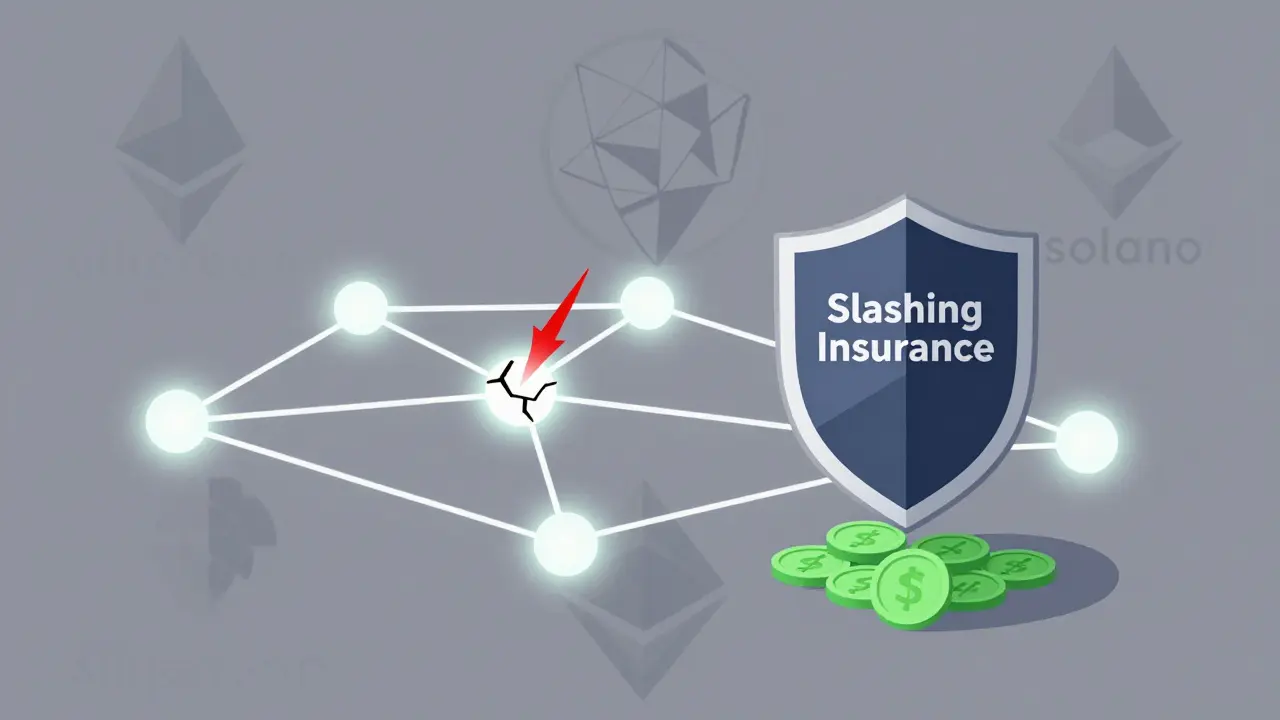
When you stake your cryptocurrency on a Proof-of-Stake (PoS) blockchain, you’re not just earning rewards-you’re also taking on risk. One of the biggest risks? Slashing. It’s not a glitch. It’s not a bug. It’s built into the code. And if your validator misbehaves-even accidentally-you could lose a chunk, or even all, of your staked assets. That’s where slashing insurance comes in.
What Is Slashing, Really?
Slashing is a punishment mechanism in PoS networks like Ethereum, Polygon, or Solana. Validators-nodes that verify transactions and propose new blocks-are required to stay online, sign blocks correctly, and avoid conflicting actions. If they fail? The network automatically slashes them. That means a portion of their staked tokens is destroyed. For delegators (people who stake through a validator), that loss gets passed down. You didn’t do anything wrong. But your validator did. And now your balance is down. There are three main reasons slashing happens:- Downtime slashing: Your validator goes offline for too long. Maybe the server crashed. Maybe the internet went out. Maybe the power flickered. Doesn’t matter. The network doesn’t care.
- Double signing: Your validator signs two different blocks at the same height. This is a serious violation-it’s like voting twice in an election. Even if it was an honest mistake, the penalty is severe.
- Malicious behavior: Intentional attacks, like trying to manipulate the chain. This is rare, but the penalty is the harshest: total loss of stake.
The scary part? Slashing is automatic. No warning. No appeal. Just a transaction on-chain that burns your tokens. And because PoS networks are global and decentralized, there’s no customer service line to call.
Why Slashing Insurance Exists
Institutional investors-banks, hedge funds, custodians, trusts-can’t afford to lose millions in staked assets because of a server outage. Traditional financial systems require risk mitigation. That’s why slashing insurance became a necessity, not a luxury. Before insurance, staking was a gamble. Now, providers like Blockdaemon, Figment, DAIC Capital, and Luganodes offer protection. These aren’t gimmicks. They’re structured financial products built on real risk modeling.Think of it like car insurance. You don’t hope you won’t crash. You buy coverage because crashes happen-even to careful drivers. Slashing insurance works the same way. It doesn’t prevent slashing. It just absorbs the loss.
How Slashing Insurance Works
There’s no single model. Different providers use different layers. Here’s how the major ones do it:1. Internal Coverage (Self-Funded Reserves)
DAIC Capital runs its own slashing insurance fund. When a slashing event happens, they pay out from that fund. The amount is calculated based on the blockchain’s slashing fraction-for example, if Ethereum slashes 0.5% of stake for downtime, and you staked $10,000, they refund $50. But there’s a catch: the fund has limits. If too many validators get slashed at once, payouts might be capped or delayed.2. Third-Party Insurance (External Providers)
Luganodes partners with Chainproof, a blockchain-specific insurer, which in turn is reinsured by Munich Re-one of the world’s largest reinsurers. That’s a big deal. Munich Re doesn’t back risky bets. They only insure assets with predictable, actuarially sound risk profiles. Their involvement signals that slashing risk is now seen as measurable, manageable, and insurable by mainstream finance.3. Hybrid Models (Combined Coverage)
Figment offers two layers: their own internal coverage for downtime slashing, plus an optional add-on through Nexus Mutual for double signing protection on Ethereum. Together, they can cover up to 100% of losses. Their infrastructure is SOC 2 and ISO 27001 certified-meaning they meet strict security and operational standards. They also monitor validators in real time and alert clients before slashing occurs.4. Industry Pioneer: Blockdaemon
Blockdaemon claims to be the first to offer comprehensive slashing insurance across 29 PoS networks. Their clients include Fortune 500 companies and major crypto custodians. They don’t publish exact coverage percentages or pricing, but their product is designed for enterprise-grade risk tolerance. If you’re managing staking for a bank, Blockdaemon’s insurance is often a dealbreaker.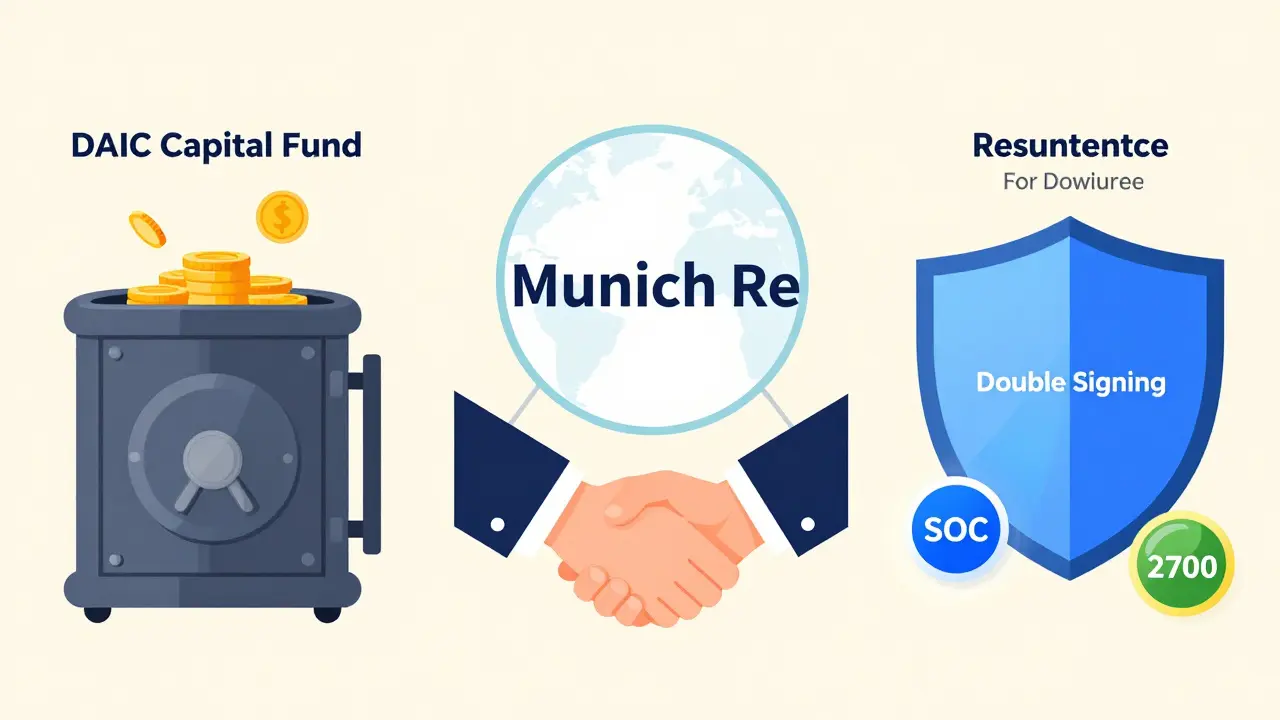
What’s Covered? What’s Not?
Coverage varies by provider. Always check the fine print.- Usually covered: Downtime slashing, double signing, malicious behavior (if caused by infrastructure failure, not user error).
- Usually not covered: Slashing caused by your own misconfiguration (e.g., manually running two validators), theft from your wallet, or network upgrades that trigger temporary penalties.
Some providers cover only specific networks. Figment’s Nexus Mutual coverage is for Ethereum only. DAIC Capital focuses on downtime slashing across multiple chains. Luganodes includes coverage for all institutional clients-no opt-in needed. Blockdaemon covers 29 networks but doesn’t disclose details.
Who Needs It?
Enterprise clients absolutely need it. Regulatory compliance, fiduciary duties, and internal risk policies often require insurance before staking. Large staking pools and validators managing millions in delegated assets also rely on it. A single slashing event could wipe out months of rewards. Individual stakers? Most retail users don’t have access to formal slashing insurance. Some platforms like Coinbase offer educational resources and basic uptime guarantees, but no financial protection. That’s changing. As the market matures, retail-focused insurance products are expected to emerge.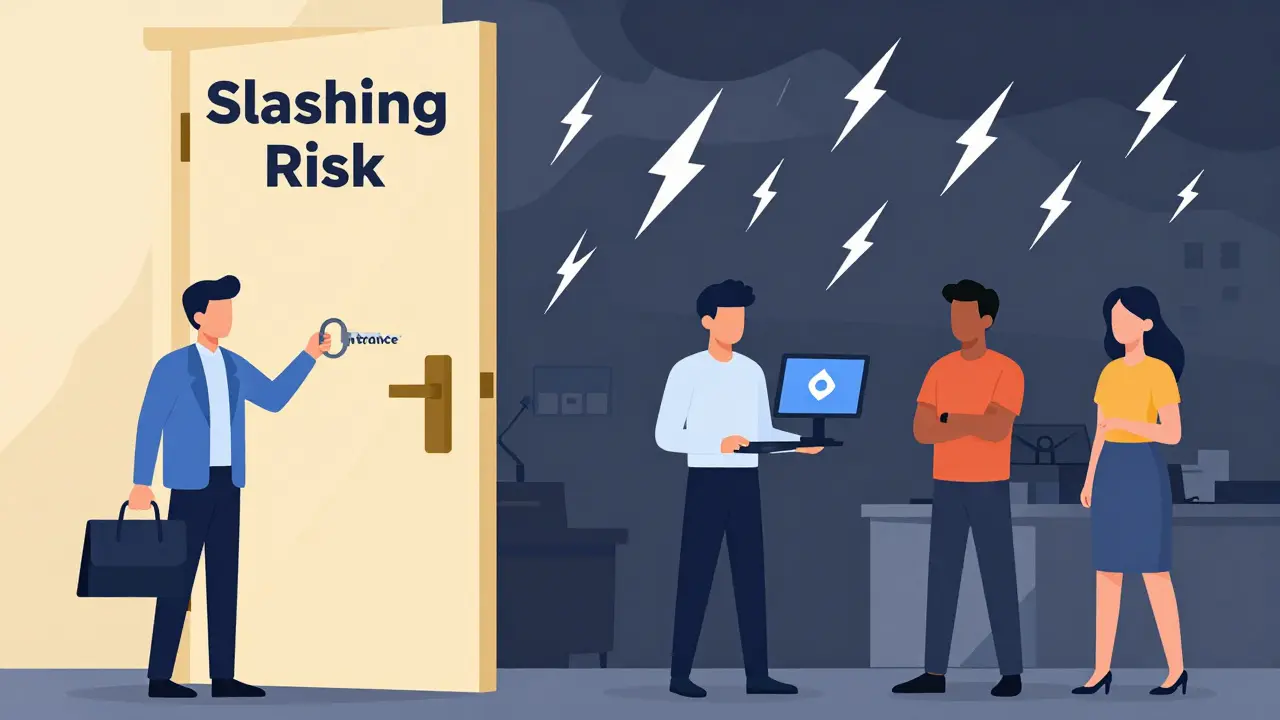
How to Choose the Right Provider
Don’t just pick the one with the biggest name. Ask these questions:- What types of slashing are covered? Downtime? Double signing? Both?
- Is coverage automatic or optional? Luganodes includes it. Figment makes you pay extra. DAIC uses a fund with limits.
- Who backs the insurance? Is it just the provider’s own money? Or is there real reinsurance from Munich Re, Aon, or another major insurer?
- How fast are payouts? Some funds take weeks to process claims. Others auto-pay on-chain.
- Is there a cap? Does coverage max out at 80%? 95%? 100%?
Also look at infrastructure. Providers with SOC 2 or ISO 27001 certification have proven security practices. That matters. If your validator gets hacked because of poor ops, no insurance will help.
Insurance Isn’t a Silver Bullet
Even with insurance, you still need good practices:- Use multiple geographic regions for validator nodes.
- Monitor uptime with tools like Prometheus or Grafana.
- Set up alerts for validator downtime.
- Don’t run multiple validators on the same server.
- Keep software updated. Outdated clients cause more slashing than you think.
Insurance covers the loss. It doesn’t prevent the mistake. The best protection is still solid infrastructure and vigilant monitoring.
Solo validators should also think about operational continuity. If the primary operator becomes unavailable, validator keys and runbooks need to reach a trusted backup. Services like Vaulternal handle this by storing encrypted credentials in vaults that are released to a designated person only when predefined conditions are met.
The Future of Slashing Insurance
The market is young but growing fast. In 2025, Blockdaemon launched its full insurance suite. Figment deepened ties with Nexus Mutual. Aon started building blockchain-specific insurance products. Munich Re’s involvement isn’t a fluke-it’s a signal. Expect three big shifts:- Standardization: Coverage terms will become more uniform across providers. Right now, it’s a Wild West of definitions.
- Retail access: As PoS adoption grows, expect insurance to be bundled into wallets and staking apps for individual users.
- Regulatory clarity: Governments are starting to look at staking as a financial service. Insurance will be required for compliance.
Slashing isn’t going away. It’s a core feature of PoS security. But now, you don’t have to accept it as an unavoidable cost of doing business. Insurance turns risk into a manageable line item.
What happens if my validator gets slashed and I have insurance?
If your staking provider offers slashing insurance, they’ll calculate the amount lost based on the blockchain’s slashing rules and refund you-either in crypto or sometimes in fiat, depending on the provider. For example, if Ethereum slashes 0.5% of your stake for downtime and you staked 10 ETH, you’d get 0.05 ETH back. Some providers pay automatically; others require a claim submission.
Is slashing insurance available for retail stakers?
Most slashing insurance today is aimed at institutional clients. Retail stakers typically don’t have direct access. However, some staking platforms (like Coinbase or Kraken) offer uptime guarantees or partial loss protection as part of their service. Full insurance coverage for individuals is expected to become available as the market matures, likely by 2027.
Can I get insurance if I run my own validator?
Yes-but only if you use a provider that offers it to self-hosted validators. Most insurance is tied to the staking service, not the individual. For example, Luganodes includes coverage for institutional clients running their own nodes. Blockdaemon and Figment may offer it under enterprise contracts. If you’re a solo operator, you’ll likely need to join a staking pool that includes insurance.
Does slashing insurance cover me if I misconfigure my node?
Generally, no. Insurance covers losses from infrastructure failures, network issues, or third-party errors-not user mistakes. If you accidentally run two validators on the same machine and cause a double sign, that’s considered user error. Insurance won’t pay out. That’s why monitoring tools and proper setup are just as important as coverage.
How much does slashing insurance cost?
Pricing isn’t public for most providers. For institutional clients, it’s often bundled into service fees-no separate charge. For optional add-ons (like Figment’s Nexus Mutual coverage), expect to pay a small percentage of staked value annually-likely between 0.1% and 0.5%. Retail options, when they arrive, may be priced as flat monthly fees or percentage-based premiums.
rajan gupta
15 03 26 / 09:42 AMbro this is why i stopped staking 😭 i had 3 ETH get slashed because my router rebooted during a power surge. no warning, no mercy. just gone. like, i didn't even know i was running a validator until i checked my balance and saw -0.5 ETH. i cried. literally cried. 🥲
Billy Karna
15 03 26 / 21:02 PMThere's a fundamental misunderstanding here that needs to be addressed: slashing insurance isn't actually insurance in the traditional actuarial sense-it's a risk-mitigation service bundled into validator-as-a-service offerings. True insurance requires third-party underwriting, capital reserves, and regulatory oversight, which only Luganodes+Chainproof+Munich Re actually delivers. Most providers like DAIC and Blockdaemon are just using pooled client funds as a self-insurance mechanism, which is fine until a systemic event hits-like a major network upgrade or coordinated DDoS. In that case, you're not getting paid. You're just part of a queue. And if you're relying on this for institutional capital? You're playing with fire. The real innovation isn't the insurance-it's the real-time monitoring and automated failover systems that prevent slashing before it happens. That's where the value is.
Arlene Miles
17 03 26 / 17:33 PMI just want to say-this is beautiful. You took something that sounds terrifying and turned it into a story of resilience. Slashing isn't evil. It's the blockchain's immune system. And insurance? It's not a crutch. It's a safety net woven from experience, from failures, from people who lost everything and said 'not again.' I've seen validators cry because their 100 ETH got slashed. I've seen funds collapse. But now? We're building systems that don't just react-we anticipate. You're not just staking. You're participating in the evolution of decentralized finance. And that? That's worth every dollar of premium. Keep going. We're all rooting for you.
Jessica Beadle
18 03 26 / 10:22 AMThe terminology here is dangerously imprecise. 'Slashing insurance' is a misnomer. Insurance, by definition, requires risk pooling, actuarial modeling, and capital adequacy ratios under Solvency II or similar frameworks. What these providers offer are indemnity agreements-contractual promises backed by internal reserves or non-regulated third parties. Munich Re's involvement is not a stamp of approval; it's a reinsurance treaty with limited exposure caps. They're not underwriting slashing risk-they're underwriting the solvency of Luganodes. Big difference. And let's not pretend retail access is coming soon. Regulatory bodies like the SEC are still classifying staking as a security. No licensed insurer will touch this until there's legal clarity. Until then, this is just financial theater.
Tony Weaver
18 03 26 / 20:23 PMAh yes, the classic 'slashing insurance' hustle. Let me get this straight-you're telling me that a company that already makes money from staking fees now wants to charge you MORE for 'insurance' that they themselves created? Brilliant. The entire model is a circular arrangement: they take your ETH, they run your node, they cause the slashing (through poor infrastructure), then they 'refund' you with their own money. It's like a casino giving you back $10 after you lose $100 because you 'got lucky.' And don't get me started on 'enterprise-grade.' If your bank needs this, they should be fired. Real institutions use custody solutions with cold multisig, not this theater. This isn't innovation. It's a tax on naivety.
Patty Atima
20 03 26 / 16:09 PMI just staked my first 5 ETH and didn't even know about slashing until today. Thanks for the heads up. I'm switching to Coinbase now. Simple, clean, no drama. 💚
Lucy de Gruchy
22 03 26 / 14:35 PMThis is all a government-backed crypto scam. Slashing doesn't exist. It's a myth created by the blockchain elites to scare people into paying for 'insurance' so they can siphon more fees. The 'network' isn't punishing validators-it's laundering your money into their corporate wallets. Munich Re? They're owned by the same people who run the Fed. This isn't decentralization. It's Wall Street with a new logo. And you're all falling for it. Wake up.
Tobias Wriedt
24 03 26 / 06:48 AMI'm so tired of people acting like slashing is some scary monster. It's just code. If you can't handle a little risk, don't touch crypto. I've been staking since 2020. I've had 3 slashing events. Lost 1.2 ETH total. Felt bad for a day. Then I moved on. Insurance? Nah. I'd rather take the loss and learn. That's how you grow. 🤷♂️🚀
iam jacob
25 03 26 / 20:05 PMi just want to say... i feel seen. my validator went down for 3 hours because my cat knocked over the power strip. i lost 0.03 ETH. i didn't cry. but i did stare at the wall for 20 minutes. like... why? why me? why now? why did i ever think this was a good idea? 😔
Jesse Pals
27 03 26 / 00:16 AMyo i run my own node on a raspberry pi in my closet and i got slashed once. it was wild. but here's the thing-I didn't buy insurance. i bought a UPS, a backup router, and a dumbbell. i hit the dumbbell every time i get an alert. it's my stress relief. now i haven't been slashed in 18 months. insurance is nice. but discipline? that's the real MVP. 🏋️♂️⚡
Bruce Doucette
27 03 26 / 20:41 PMOh wow. So you're telling me that if I'm dumb enough to run a validator without monitoring, someone will PAY ME BACK? That's not insurance. That's a subsidy for incompetence. Next you'll tell me Tesla will refund you if you crash because you didn't look at the road. This isn't finance. It's a daycare for tech bros who think blockchain is a game. And you're all clapping like it's genius. 🤦♂️
Marie Vernon
28 03 26 / 22:11 PMThis is actually really cool. I'm from a country where crypto is still seen as shady, and reading this made me feel like maybe there's hope. People are building real solutions-not just hype. Even if it's imperfect, it's progress. I'm going to dig deeper into Figment's hybrid model. Maybe one day, my grandma can stake safely too. 🌍❤️