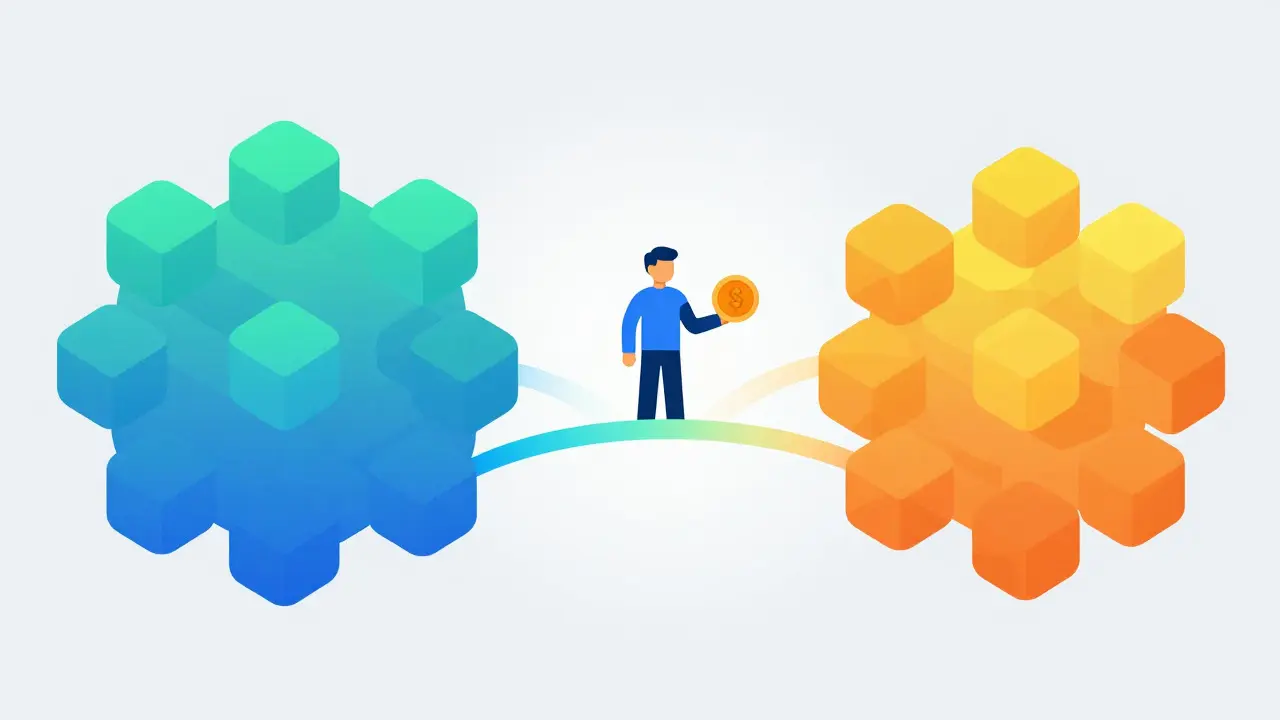
Swapping crypto between different blockchains usually feels like a chore. You bridge your assets, wait for confirmations, hope the wrapped token doesn’t depeg, and pray no bridge gets hacked. It’s messy, risky, and often expensive. But what if you could trade native assets directly? No wrappers. No intermediaries. Just a clean, trustless swap from one chain to another?
That is the promise of Spectrum Finance, a decentralized exchange (DEX) designed specifically for cross-chain trading. Unlike most exchanges that keep you siloed within one ecosystem, Spectrum Finance connects networks like Cardano and Ergo at the protocol level. For traders holding ADA or ERG, this platform offers a unique solution to interoperability. But does it actually work well in practice, or is it just another niche DeFi project with limited utility? Let’s break down how it works, who it’s for, and whether it deserves a spot in your portfolio.
What Is Spectrum Finance?
Spectrum Finance is an open-source, non-custodial cross-chain decentralized exchange. Launched in 2022, it sits on top of the Spectrum Network, which acts as a messaging layer between blockchains. Think of it as a translator that allows two different languages (blockchains) to understand each other without needing a middleman to hold the money.
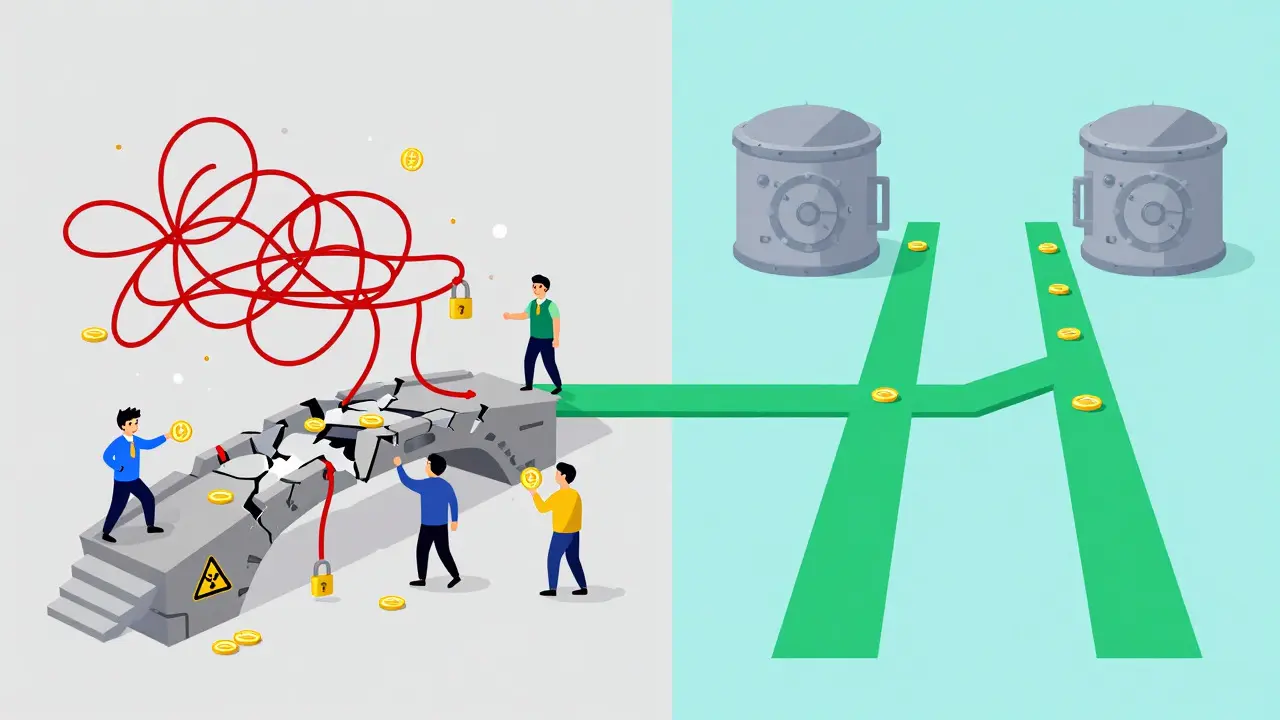
The core innovation here is the elimination of wrapped assets. Most cross-chain swaps require you to lock your original coin and receive a “wrapped” version on the destination chain. Wrapped tokens carry risk-if the bridge fails, your funds can be stuck or stolen. Spectrum Finance avoids this by using atomic swaps. This means the transaction either completes entirely on both chains or reverts completely. Your funds never sit in a vulnerable pool waiting for a bridge confirmation.
Currently, the platform focuses heavily on the Cardano and Ergo ecosystems. While this might seem limiting compared to giants like Uniswap, it allows for deeper liquidity and better performance within these specific networks. If you are a Cardano user looking to diversify into Ergo’s smart contract capabilities, or vice versa, this is one of the few direct routes available.
How Does the Technology Work?
To use Spectrum Finance effectively, you need to understand the mechanics behind the scenes. It isn’t magic; it’s complex cryptography working in real-time.
- Atomic Swaps: The engine of the platform. These are peer-to-peer transactions that ensure fairness. If Chain A sends funds but Chain B doesn’t receive them, the entire deal cancels out. You don’t lose money due to network failures.
- Automated Market Maker (AMM): Spectrum uses an AMM model similar to Uniswap but adapted for cross-chain logic. Liquidity providers deposit pairs of assets (e.g., ADA and ERG) into pools. Traders swap against these pools, paying a small fee that goes to the providers.
- Permissionless Liquidity: Anyone can create a new trading pair. If there is demand for a specific asset combination that isn’t listed yet, users can build the pool themselves and start earning fees immediately.
The technical barrier is moderate. You won’t find a simple “Connect Wallet” button that works with every browser extension. Instead, you need compatible wallets for the specific chains involved. For Cardano, this typically means Nami or Eternl. For Ergo, you’ll likely use Yoroi or Nautilus. The interface guides you through connecting these, but it requires a bit more setup than swapping ETH for USDT on a centralized exchange.
User Experience and Interface
When you first visit the Spectrum Finance dashboard, it looks clean and functional, not cluttered with ads or unnecessary widgets. The main screen displays available trading pairs, current prices, and liquidity depth. However, simplicity shouldn’t fool you into thinking it’s beginner-friendly.
The process involves several steps that demand attention:
- Select your input asset (e.g., ADA).
- Select your output asset (e.g., ERG).
- Enter the amount you wish to swap.
- Review the estimated output, including slippage tolerance and network fees.
- Confirm the transaction in your respective wallets.
One thing users notice immediately is the speed. Early versions of cross-chain swaps took up to 30 minutes. Recent updates have reduced this latency significantly, with many swaps completing in under 15 minutes. Still, this is slower than instant swaps on a single chain. You aren’t clicking and forgetting; you are monitoring a process.
Mobile support is currently lacking. As of mid-2026, there is no dedicated mobile app. You can access the web interface via a mobile browser, but the experience is optimized for desktop. If you trade primarily from your phone, this will be a friction point.
Fees and Costs
In decentralized finance, fees come from two sources: the protocol fee and the blockchain network fee. Spectrum Finance keeps its protocol fees competitive to attract volume.
| Fee Type | Description | Estimated Cost |
|---|---|---|
| Trading Fee | Paid to liquidity providers | ~0.3% - 0.8% |
| Network Gas Fees | Paid to Cardano/Ergo validators | Variable (low on Cardano) |
| Slippage | Price difference during execution | Depends on liquidity depth |
Compared to centralized exchanges like Binance or Coinbase, where fees might be 0.1%, Spectrum’s trading fees are higher. However, you are paying for custody-free security. On a centralized exchange, you trust the company with your keys. Here, you pay slightly more to keep control of your assets throughout the process. For large trades, slippage can become a factor if the liquidity pool is shallow. Always check the “price impact” warning before confirming large swaps.
Security and Trustlessness
Security is the primary reason people choose decentralized exchanges over centralized ones. Spectrum Finance is non-custodial, meaning the platform never holds your funds. Your assets move directly from your wallet to the recipient’s wallet via the atomic swap mechanism.
This architecture reduces the attack surface. There is no central vault to hack. However, smart contracts are still code, and code can have bugs. The Spectrum Finance contracts are open-source, allowing developers to audit the code publicly. While no major exploits have been reported since its launch, the complexity of cross-chain communication always carries inherent risks. Always verify the URL (spectrum.fi) to avoid phishing sites, which remain a common threat in DeFi.
The governance token, SPF, plays a role in the ecosystem’s security and direction. Holders can vote on protocol upgrades and fee structures. Holding SPF can also reduce trading fees, incentivizing long-term participation. However, remember that governance tokens are speculative assets. Their value fluctuates based on market sentiment and adoption rates.
Pros and Cons
No platform is perfect. Before committing funds, weigh these factors carefully.
Pros:
- True Cross-Chain Trading: Swap native assets without wrapping, reducing counterparty risk.
- Non-Custodial: You retain full control of your private keys and funds.
- Low Barrier to Entry for LPs: Create liquidity pools easily and earn fees.
- Strong Focus on Niche Chains: Excellent option for Cardano and Ergo users who lack good alternatives.
Cons:
- Limited Asset Selection: Only supports a handful of coins and pairs (currently around 7 pairs). Not suitable for trading obscure altcoins.
- Slow Execution: Cross-chain swaps take minutes, not seconds.
- Steep Learning Curve: Requires familiarity with multiple wallets and DeFi concepts.
- No Mobile App: Desktop-only interface limits convenience.
Who Should Use Spectrum Finance?
Spectrum Finance isn’t for everyone. If you are a casual investor who buys Bitcoin and holds it, this platform adds unnecessary complexity. It is designed for a specific type of user:
DeFi Enthusiasts: Users who already understand wallets, gas fees, and slippage. If you’ve used Uniswap or SushiSwap, you’ll grasp the basics quickly.
Cardano and Ergo Ecosystem Participants: If you hold significant amounts of ADA or ERG and want to diversify within these ecosystems without leaving the comfort of native assets, Spectrum is one of the best tools available.
Liquidity Providers: If you have idle assets and want to earn yield by providing liquidity, the permissionless nature of Spectrum allows you to capitalize on emerging trading pairs.
If you are looking to trade Ethereum for Solana, or Bitcoin for Dogecoin, look elsewhere. Spectrum’s strength lies in its deep integration with specific, technically sophisticated blockchains rather than broad market coverage.
Final Verdict
Spectrum Finance fills a critical gap in the decentralized finance landscape. By enabling trustless, native asset swaps between Cardano and Ergo, it removes the reliance on risky wrapped tokens and centralized bridges. It is secure, transparent, and empowers users with true ownership of their assets.
However, it demands patience and technical know-how. The limited number of trading pairs and the absence of a mobile app make it less convenient for mainstream users. For now, it remains a specialized tool for those deeply embedded in the Cardano and Ergo communities. As the project expands its chain support and improves swap speeds, it has the potential to become a standard infrastructure piece for cross-chain DeFi. Until then, treat it as a high-value utility for specific use cases, not a general-purpose exchange.
Is Spectrum Finance safe to use?
Yes, Spectrum Finance is considered safe because it is non-custodial and uses atomic swaps. This means your funds are never held by the platform, reducing the risk of hacks targeting central vaults. However, as with any DeFi protocol, you should always verify URLs and be aware of smart contract risks.
Which cryptocurrencies can I trade on Spectrum Finance?
Currently, Spectrum Finance primarily supports native assets from the Cardano (ADA) and Ergo (ERG) blockchains. The exact list of supported pairs changes as new liquidity pools are created, but it generally includes around 7 major trading pairs focused on these two ecosystems.
Do I need to wrap my tokens to use Spectrum Finance?
No, one of Spectrum Finance's key features is that it eliminates the need for wrapped assets. It enables direct swaps of native tokens between chains using atomic swap technology, which enhances security and reduces dependency on bridge protocols.
How long does a cross-chain swap take?
Swap times vary depending on network congestion and the specific assets involved. Recently, the protocol has improved latency, with many transactions completing in under 15 minutes. Previously, swaps could take up to 30 minutes.
Can I provide liquidity on Spectrum Finance?
Yes, Spectrum Finance is permissionless, meaning anyone can create a liquidity pool and start earning trading fees. You will need to deposit pairs of assets (like ADA and ERG) into the pool. Be aware of impermanent loss risks associated with AMM models.
Is there a mobile app for Spectrum Finance?
As of mid-2026, there is no dedicated mobile application for Spectrum Finance. Users must access the platform via a web browser on a desktop or laptop computer for the best experience.
What wallets do I need to use Spectrum Finance?
You need wallets compatible with the specific blockchains you are trading. For Cardano, popular choices include Nami and Eternl. For Ergo, Yoroi and Nautilus are commonly used. Ensure your wallets are updated and securely backed up before connecting.
Rodmun Tarnowski
30 07 26 / 10:44 AMIt is truly remarkable how Spectrum Finance addresses the persistent issues of wrapped assets! The atomic swap mechanism is a brilliant solution for security enthusiasts. I have been following the Cardano ecosystem closely, and this integration seems highly promising for long-term holders. The emphasis on trustless transactions is exactly what we need in DeFi.
Don Fizy
31 07 26 / 21:04 PMHey folks! If you are new to cross-chain swaps, Spectrum is a great starting point because it keeps your keys safe. Just make sure you connect Nami or Eternl correctly before swapping ADA. It takes a bit of patience, but the security payoff is worth it! :)
Phil Babb
1 08 26 / 16:32 PMListen up!!! This is not just another DEX!!! It is the future of interoperability!!! Why are people still using centralized exchanges when they can hold their own keys??? Wake up and embrace true decentralization!!!
Dominic Greco
3 08 26 / 06:17 AMAtomic swaps? Sure... 🤔 But who controls the messaging layer really? 🕵️♂️ The code might be open source, but the devs could have backdoors. Always assume the bridge is compromised until proven otherwise. Stay paranoid! 😈
Sean Rowland
4 08 26 / 21:22 PMThe epistemological framework of this platform is fundamentally flawed if one ignores the liquidity depth constraints. You claim 'permissionless liquidity,' yet the slippage models suggest significant arbitrage opportunities for whales. It is a dramatic oversimplification to call it 'trustless' when the smart contract complexity introduces non-trivial failure modes. One must scrutinize the gas fee dynamics more rigorously.
SUBHAM CHOUDHURY
6 08 26 / 06:25 AMGreat initiative for the community! Keeping assets native is always better than wrapping. Hope the team improves the mobile experience soon so we can trade on the go. Keep pushing forward! 💪
Joy Kwant
6 08 26 / 09:22 AMI feel like everyone ignores the emotional toll of waiting 15 minutes for a swap. It is exhausting. And don't get me started on the lack of mobile support. It feels like the developers don't care about actual user needs. So selfish.
amy miranda
6 08 26 / 18:27 PMThis article is utterly disappointing. It glosses over the obvious flaws in the cross-chain architecture. The fees are exorbitant compared to CEXs, and the limited pairs make it useless for most traders. A complete waste of time reading this hype.
Pernelia Wahkan
6 08 26 / 18:54 PMI wonder if the latency will drop further with network upgrades. The concept of native asset swaps is fascinating, especially for Ergo users. It would be interesting to see how liquidity pools evolve as more niche tokens are added. Curious about the governance token impact too.
Subhash Kashyap Dm
7 08 26 / 23:51 PMthe whole premise is flawed. bridges are hacks waiting to happen. spectrum tries to fix it with atomic swaps but the counterparty risk remains. plus the ui is clunky. stick to binance if you want efficiency. decentralization is a buzzword for inefficiency.