Bitcoin Security: How the Network Stays Safe and What You Need to Know
When you hold Bitcoin, a decentralized digital currency that operates without banks or central control. Also known as BTC, it relies entirely on blockchain security, a public, tamper-proof ledger that records every transaction across thousands of computers. Without this system, Bitcoin would be just another digital file you could copy—or steal. The real magic isn’t in the coins themselves, but in how they’re protected.
Bitcoin mining, the process where powerful computers solve complex math puzzles to verify transactions and add them to the blockchain is what makes the network secure. Every two weeks, the difficulty of these puzzles adjusts automatically based on how much computing power is online. More miners? Harder puzzles. Fewer miners? Easier puzzles. This keeps the network stable and prevents anyone from taking over. If someone tried to cheat—say, by rewriting past transactions—they’d need to control more than half the world’s mining power. That’s not just hard. It’s practically impossible.
Your private keys, the secret codes that prove you own your Bitcoin and let you spend it are your last line of defense. No one else can access your coins without them. Lose your key? Your Bitcoin is gone forever. Share it? Same thing. That’s why wallets, backups, and hardware devices matter. Most Bitcoin thefts don’t come from hacking the network—they come from people giving away their keys, falling for phishing scams, or storing them on insecure phones or computers.
The Bitcoin network doesn’t need trust. It needs math. It doesn’t need permission. It needs computing power. And it doesn’t need a CEO. It needs thousands of independent miners running the same software. That’s why it’s lasted over 15 years through crashes, bans, and hype cycles. But your part in this system? Simple: protect your keys, understand how mining works, and never assume the network is invincible—because while the blockchain is solid, you’re still the weakest link.
Below, you’ll find real-world breakdowns of how Bitcoin security plays out in practice—from mining difficulty changes that affect profits, to how governments try to control it, to what happens when exchanges fail and your coins are at risk. These aren’t theory pieces. They’re lessons from people who’ve been there.
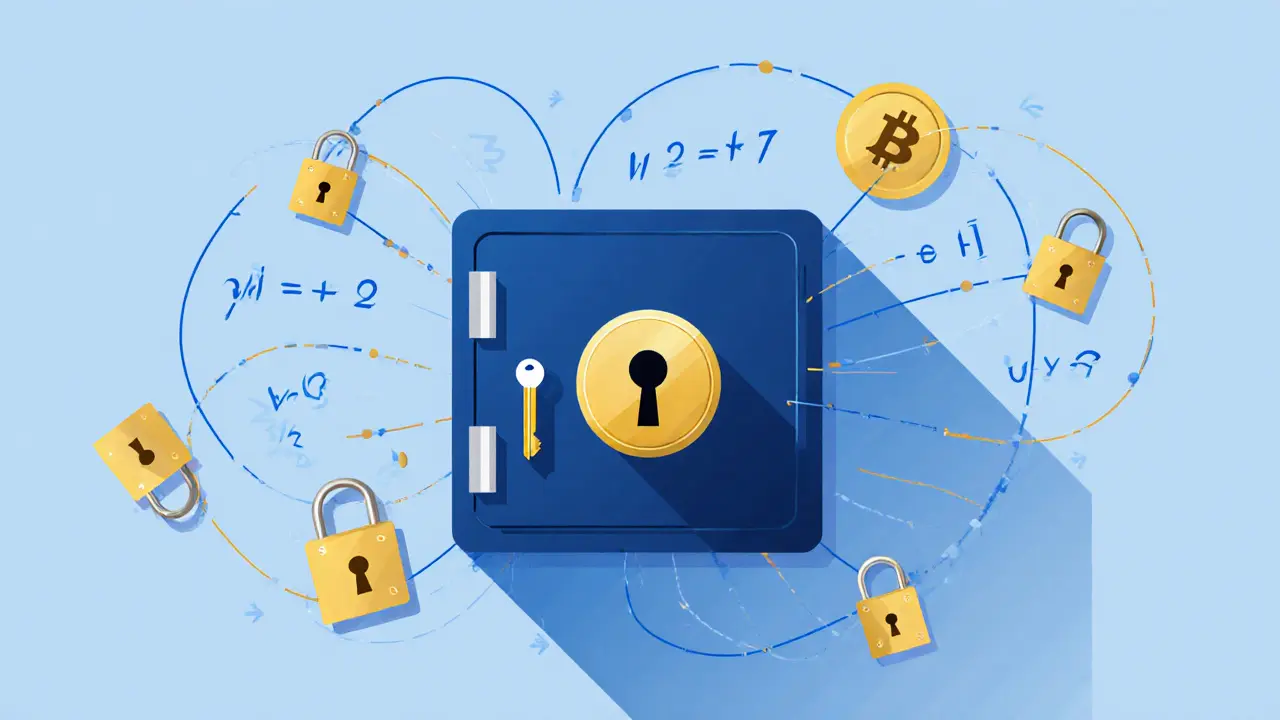
How Public Key Cryptography Powers Bitcoin Security
Public key cryptography is the foundation of Bitcoin's security, using elliptic curve math to let users prove ownership without revealing secrets. This system enables trustless transactions and has remained unbroken for over 14 years.
Details +