Blockchain Analytics: How Traceable Data Shapes Crypto Security and Compliance
When you send Bitcoin or Ethereum, every step of that transaction is permanently recorded on a public ledger. Blockchain analytics, the process of examining and interpreting public blockchain data to track movement, identify patterns, and detect suspicious activity. Also known as on-chain analysis, it turns raw transaction history into usable intelligence — whether you're a regulator, exchange, or just someone trying to avoid a scam. This isn't science fiction. It's what lets firms like Chainalysis and Elliptic trace stolen funds from hacks, helps exchanges block dirty money, and even lets tax agencies spot unreported crypto income.
Blockchain analytics doesn't just follow coins — it connects them to real people and places. For example, when Venezuela's government tried to control mining through SUNACRIP, analysts could track which wallets were receiving subsidized power and which ones were moving coins out of the country. In Russia, where crypto ownership is legal but domestic use is banned, analytics tools help spot whether someone is using crypto as a payment method locally — something the state is actively trying to prevent. And in India, banks freeze accounts when they see large crypto-to-fiat withdrawals without proper documentation, because analytics flags those flows as high-risk under FIU-IND rules.
It's not just about tracking criminals. Blockchain analytics makes DeFi safer. When a token like AVAXAI crashes 95% overnight, analysts can see if the team drained liquidity or if it was just a rug pull. When a fake airdrop like Galaxy Adventure Chest pops up, they check if the contract was ever deployed or if it's just a phishing page pretending to be real. Even in places like Argentina, where crypto helps beat inflation, analytics helps users prove they're complying with tax rules by showing clear records of buys, sells, and transfers.
At its core, blockchain analytics turns anonymity into accountability. Public keys don't hide identities forever — patterns do. A wallet that repeatedly sends to known exchange addresses, or one that receives funds from a darknet market, gets flagged. That’s why exchanges like BIT.com and UniDex use these tools to screen users before allowing deposits. It’s also why projects like Lido Finance and Venus BTC need transparent on-chain activity — their legitimacy depends on it.
What you’ll find below are real cases where blockchain analytics made the difference: how governments tried to control crypto, how scams got exposed, how taxes got enforced, and how ordinary users stayed safe. These aren’t theoretical reports. They’re the stories behind the data — and they show why understanding this tech isn’t just for experts anymore.
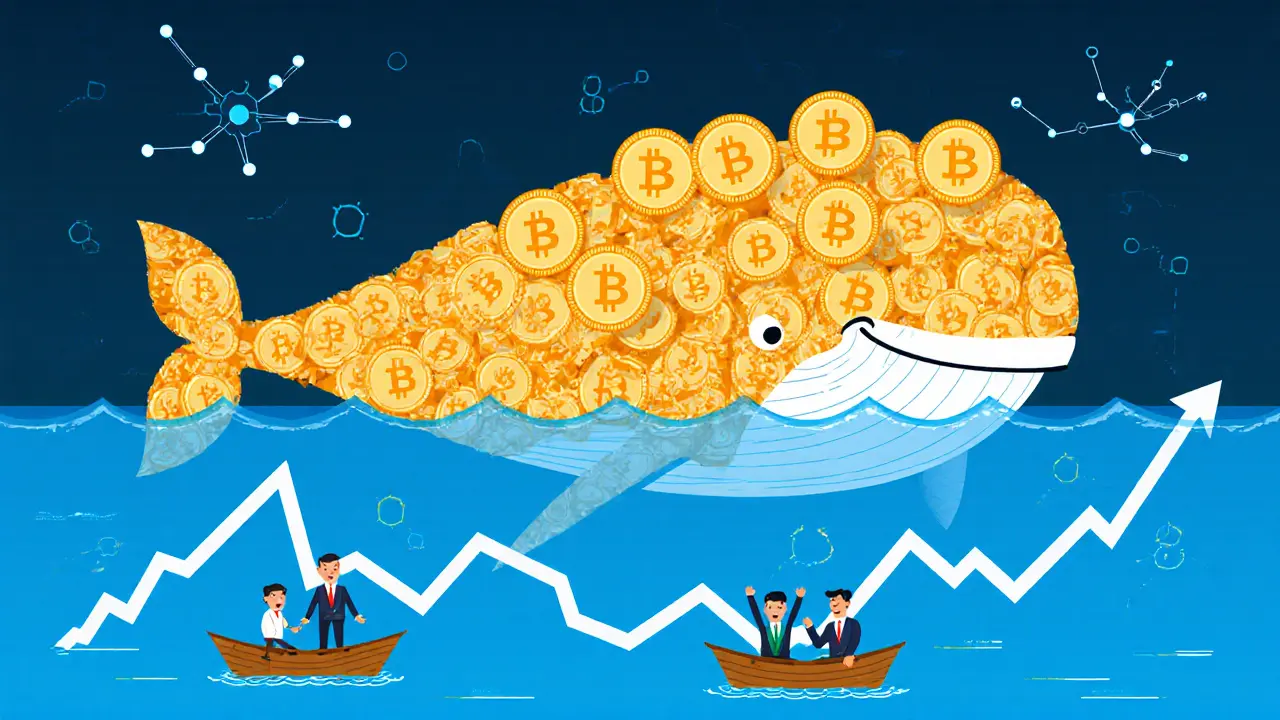
What Is Whale Watching in Cryptocurrency? A Practical Guide to Tracking Big Investors
Whale watching in cryptocurrency means tracking large holders whose transactions can move markets. Learn how to spot real signals, avoid noise, and use free and paid tools to make smarter trading decisions.
Details +