CHIHUA token scam: What it is, how it works, and how to avoid losing your crypto
When you hear about CHIHUA token scam, a deceptive crypto project pretending to be a legitimate meme coin or airdrop opportunity. Also known as fake token scam, it’s one of the most common ways new crypto users lose money without even realizing they’ve been tricked. These scams don’t need fancy tech or big teams—they just need you to click, connect your wallet, and approve a transaction. That’s it. One wrong move, and your ETH, SOL, or BNB can vanish in seconds.
Most crypto airdrop scams, like the one tied to CHIHUA, mimic real projects you’ve heard of—Dogecoin, Solana, or even CoinMarketCap campaigns. They use fake websites, fake Telegram groups, and fake influencer posts to look real. You’ll see promises of free tokens, doubling your money, or early access to a "hot new coin." But there’s no team, no whitepaper, and no real blockchain activity behind it. The moment you connect your wallet to the scam site, they drain it. This isn’t speculation—it’s theft. And it’s happening every single day. These scams rely on urgency and excitement. They tell you to act fast before the airdrop ends, or you’ll miss out on the next 100x. But real projects don’t pressure you like this. They don’t ask you to approve unlimited token spending. They don’t hide behind anonymous devs and zero social proof.
Look at the patterns in the posts below. You’ll see the same tricks repeated: fake airdrops like 1DOGE Finance, fake DEXs like Phoswap with no audits, and tokens like Omnis Genesis with no trading volume. The rug pull, when developers abandon a project after stealing all the liquidity. Also known as exit scam, it’s the endgame for most of these fake tokens. CHIHUA isn’t unique—it’s just the latest name on a long list. The tools are the same: phishing links, fake claim pages, and wallet approvals that let hackers take everything. The only difference is the label on the scam.
What you’ll find here aren’t just warnings. These are real case studies—broken down so you can spot the same red flags in the next scam before it hits your feed. You’ll see how people lost money on fake GoMining airdrops, how ZKSwap’s real airdrop was nothing like the copycats, and why a $14.73 daily volume on Zenlink should scream danger. These aren’t hypotheticals. They’re receipts.
If you’re new to crypto, this isn’t about learning how to trade. It’s about learning how to survive. The market isn’t just volatile—it’s full of predators. And if you don’t know how to recognize a fake token, you’re not a trader. You’re bait.
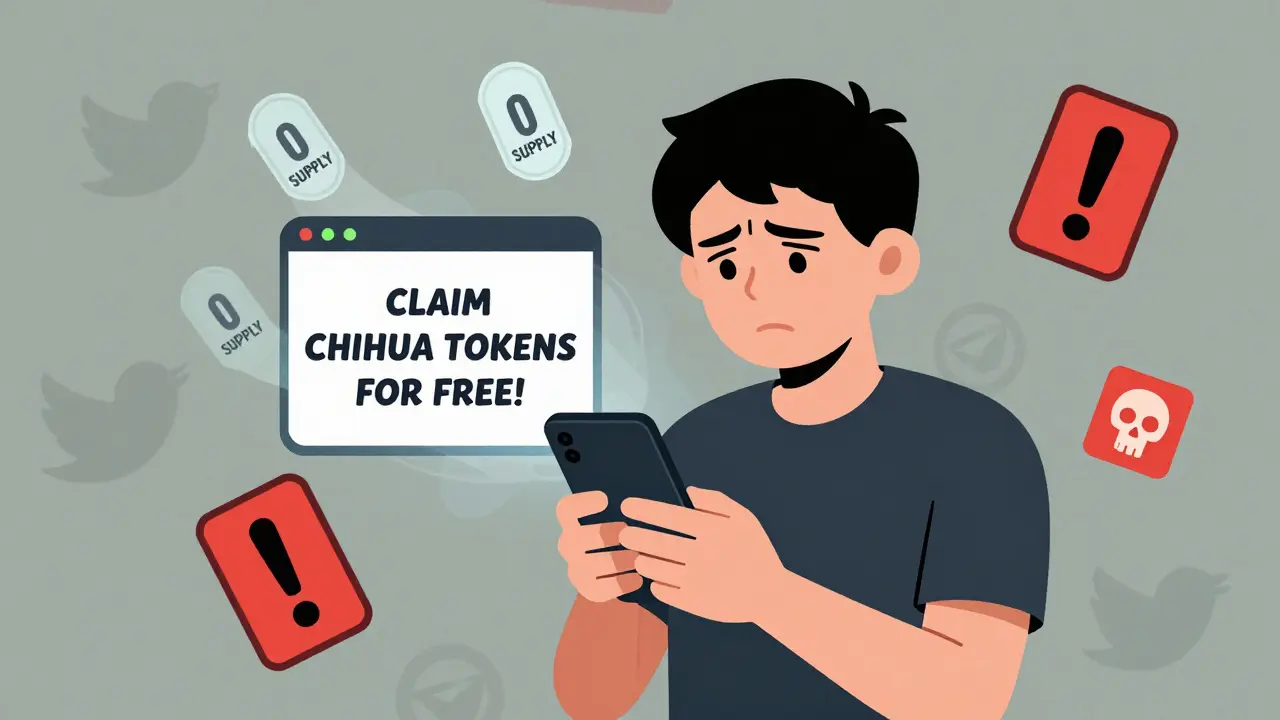
CHIHUA Airdrop: What You Need to Know About the Chihua Token Distribution
There is no legitimate CHIHUA airdrop. Despite claims online, the token shows zero supply and no trading activity. Beware of scams mimicking real projects like HUAHUA. Learn how to spot fake airdrops and protect your crypto.
Details +