Crypto Exchange Scams: How to Spot and Avoid Fake Platforms
When you hear crypto exchange scams, fraudulent platforms designed to steal your cryptocurrency by pretending to be legitimate trading sites. Also known as fake crypto exchanges, these scams trick users into depositing funds that vanish the moment they’re sent. They don’t just steal money—they steal trust. And they’re getting smarter.
These scams often copy the look of real exchanges like Binance or Coinbase, using similar logos, domain names, and even fake customer support chats. You might get a link through a DM, a YouTube ad, or a Telegram group promising "free tokens" if you connect your wallet. But once you sign in or approve a transaction, your keys are exposed. Phishing exchanges, websites built to steal login credentials or wallet access through fake login pages. Also known as crypto phishing sites, they’re the most common entry point for theft. Many users lose everything because they didn’t check the URL closely—typing "binance.com" isn’t enough if the site is "binance-security.com" or "binance[.]io".
Some scams don’t even need you to log in. They use fake airdrops like 1DOGE Finance airdrop, a non-existent token campaign that tricks users into approving malicious smart contracts. Also known as crypto airdrop scams, these lure you with promises of free tokens while silently draining your wallet. Others mimic real DeFi platforms like Phoswap or WOOFi, but without audits, real liquidity, or any team behind them. You think you’re farming PHO tokens or trading on a low-slippage DEX—but the contract is rigged to send your ETH to the scammer’s address.
It’s not just about bad websites. Some exchanges like BIT.com operate in legal gray zones, banning users from major countries and offering high leverage with no regulation. They’re not scams by definition—but they’re risky enough that many users get caught in the same traps as outright frauds. The line blurs when platforms disappear overnight, vanish with user funds, or refuse withdrawals without explanation.
And the damage doesn’t stop at your wallet. Scammers often use stolen data to launch follow-up attacks—fake support tickets, cloned social media accounts, even impersonations of real crypto influencers. Once your wallet is compromised, your entire crypto presence is at risk.
There’s no magic tool to catch every scam. But you can learn the red flags: no KYC? No audit? Zero trading volume? A token with no real use case? If it sounds too good to be true, it is. And if the site asks you to approve a transaction before you even see the token name—you’re already in danger.
Below, you’ll find real cases of crypto exchange scams, fake airdrops, and risky platforms that look real but aren’t. Each post breaks down exactly what went wrong, how to spot the same tricks, and what to do if you’ve already been targeted. No fluff. No theory. Just what you need to stay safe.
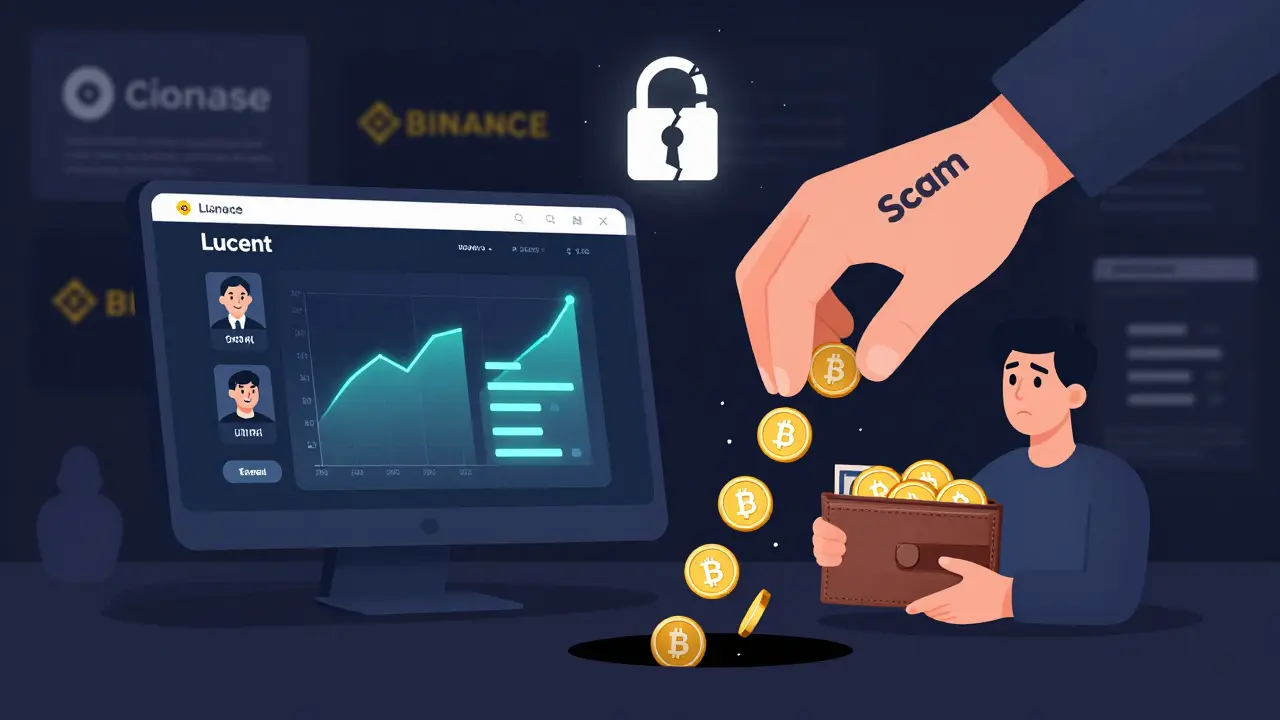
Lucent Crypto Exchange Review: Does This Exchange Even Exist?
Lucent Crypto Exchange is not real - it's a scam. Learn how fake exchanges trick users, what red flags to watch for, and which legitimate platforms to use instead.
Details +