Crypto Whales: How Big Players Move Markets and What You Need to Know
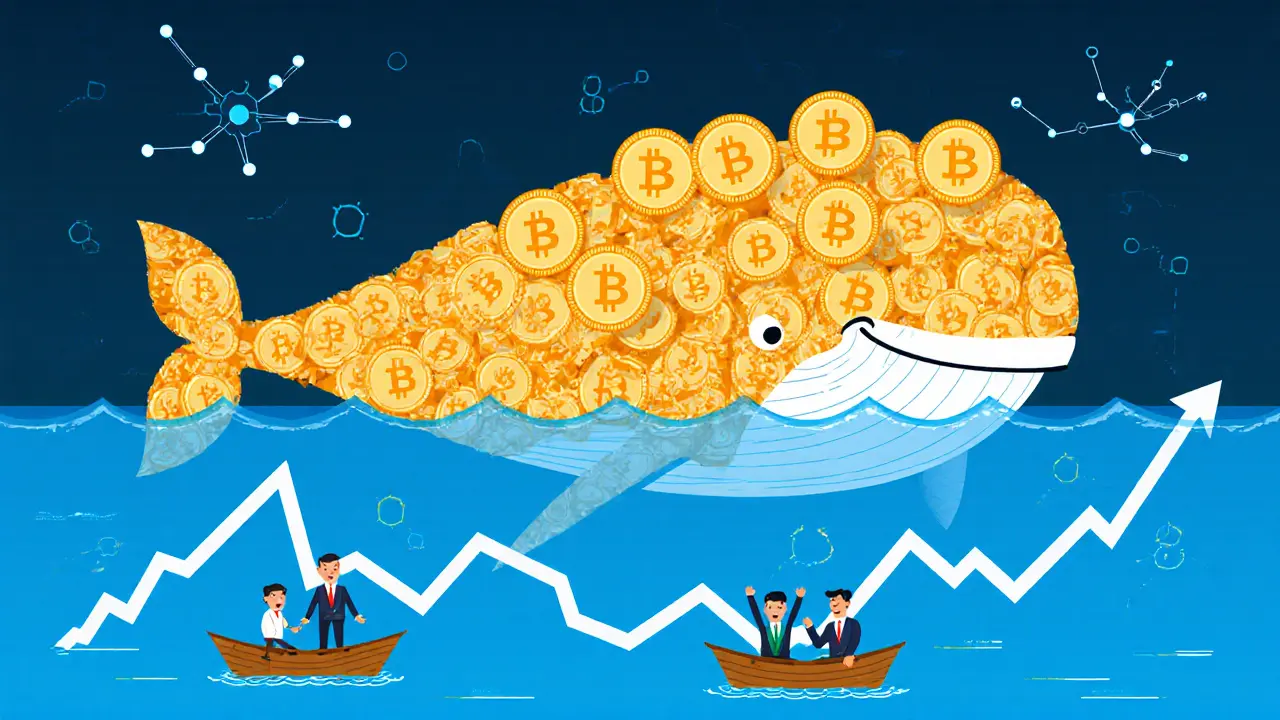
When we talk about crypto whales, large holders of cryptocurrency who control enough coins to influence market prices. Also known as big holders, these individuals or entities often own millions of dollars worth of Bitcoin, Ethereum, or other tokens—and their actions ripple through the entire market. Unlike regular traders, crypto whales don’t just buy and sell based on daily news. They move in silence, accumulate over months, and strike when liquidity is low. One large transfer can trigger panic selling or FOMO buying, turning a 2% price swing into a 20% move overnight.
These whales aren’t just random rich people. Many are early adopters, institutional funds, or even teams behind major projects. Their wallets are public on the blockchain, so anyone can track them. Tools like Whale Alert and Nansen show when a whale moves 1,000 BTC or more. But tracking isn’t enough—you need to understand why they move. Sometimes it’s profit-taking after a pump. Other times, it’s accumulation before a major upgrade. And sometimes, it’s a coordinated play to manipulate a low-cap token.
Related to this are crypto liquidity, the ease with which assets can be bought or sold without causing big price changes. Whales rely on low liquidity to make big moves. If a token has only $5 million in trading volume, a $1 million purchase can double its price. That’s why small-cap coins get crushed when whales exit—they simply can’t absorb the sell-off. On the other hand, Bitcoin and Ethereum have deep liquidity, so even a $50 million transfer barely flinches. That’s why most retail traders avoid chasing memecoins with tiny markets—whales own them, and they own the exit.
Another key player here is whale trading, strategic buying and selling by large holders using timing, volume, and market psychology. It’s not just about size—it’s about tactics. Whales often use iceberg orders, split trades across exchanges, or dump on weekends when fewer people are watching. Some even fake buy pressure to lure in retail buyers before flipping. You won’t see them in Twitter threads or Telegram groups—they don’t need to. They let the market do the work.
What you’ll find in this collection isn’t theory. It’s real examples. You’ll see how Venezuela’s state mining system was hijacked by insiders who became crypto whales overnight. You’ll learn how airdrops like 2CRZ and ElonDoge were exploited by whale groups before crashing. You’ll see how exchanges like BIT.com attract whales with high leverage, and how that creates dangerous volatility. You’ll also find how regulatory shifts in Russia and India change whale behavior—because when banks freeze accounts, whales move faster.
There’s no magic trick to outsmarting whales. But knowing how they think, where they hide, and what signals to watch for gives you a real edge. You don’t need to follow them. You just need to see them coming.
What Is Whale Watching in Cryptocurrency? A Practical Guide to Tracking Big Investors
Whale watching in cryptocurrency means tracking large holders whose transactions can move markets. Learn how to spot real signals, avoid noise, and use free and paid tools to make smarter trading decisions.
Details +