Decentralized Identity: What It Is and How It Changes Crypto Privacy
When you log into a website using your email or Google account, you’re giving away control of your identity. Decentralized identity, a system where users own and control their digital identity without relying on central authorities. Also known as self-sovereign identity, it lets you prove who you are using blockchain-based credentials—no middleman needed. This isn’t just about privacy—it’s about ownership. In crypto, where your wallet is your identity, decentralized identity makes sense. You don’t need a bank or exchange to verify you’re you. You use your private key, your public address, and cryptographically signed claims to prove your history, age, or even credentials—all without handing over your data.
Think of it like a digital passport you carry in your wallet. Instead of a government issuing it, you generate it yourself. Apps or services can ask for proof—like "Are you over 18?"—and you respond with a signed message that proves it without showing your birth certificate. This is what blockchain identity, a type of decentralized identity built on public ledgers to verify claims without central databases enables. It’s already being used in some crypto exchanges to streamline KYC without storing your ID documents. It’s also behind projects that let you prove your reputation across DeFi platforms without linking your wallet to your real name.
And it ties directly into crypto privacy, the ability to transact and interact on blockchain networks without exposing unnecessary personal information. When you use a wallet like MetaMask, you’re already using a form of decentralized identity—your address is your identifier. But decentralized identity takes it further: it lets you selectively share data. Want to prove you hold a certain NFT? Show the signature. Need to verify your identity for a loan? Send a verifiable credential. No one else sees your full history. That’s the power.
What you’ll find below are real-world examples of how this works—or fails. Some posts show how crypto projects are trying to build identity systems that actually get used. Others expose scams pretending to offer "identity verification" while stealing keys. You’ll see how regulations in Russia, India, and Canada are starting to touch this space, and how even failed tokens like PumaPay or AVAXAI hint at the bigger push toward user-controlled data. This isn’t theory. It’s happening. And if you’re using crypto, you’re already part of it.
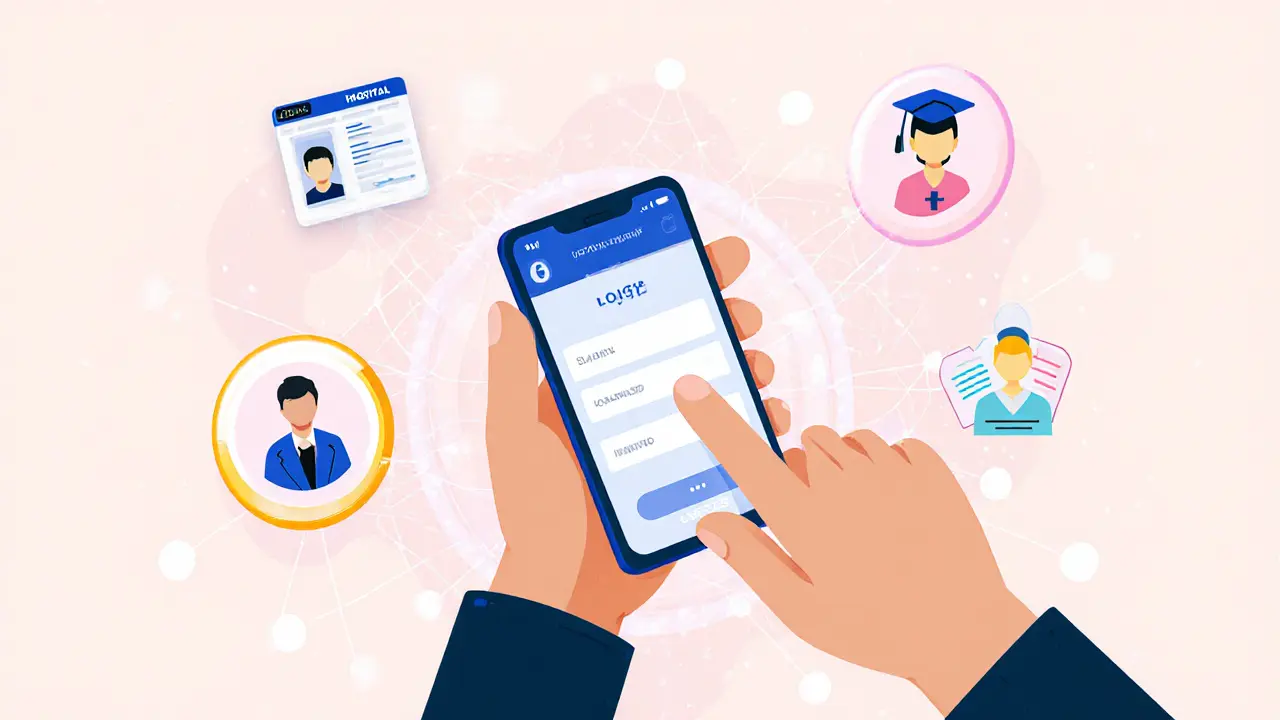
DID Use Cases and Applications: Real-World Examples of Decentralized Identity in 2025
DID (Decentralized Identifiers) let you control your digital identity without passwords or central databases. See how governments, banks, and universities are using them in 2025 to make identity safer, faster, and truly yours.
Details +