ECDSA Explained: How It Secures Bitcoin and Crypto Transactions
When you send Bitcoin or sign a transaction on any major blockchain, you’re using something called ECDSA, Elliptic Curve Digital Signature Algorithm, a cryptographic method that proves you own your coins without revealing your private key. Also known as Elliptic Curve Cryptography, it’s the invisible lock that keeps your crypto secure. Without ECDSA, anyone could fake a transaction, steal your funds, or break the whole system. It’s not just used in Bitcoin—it’s in Ethereum, Litecoin, and nearly every major blockchain you’ve heard of.
Here’s how it works in plain terms: your private key is a secret number only you know. ECDSA turns that number into a public key, which looks like a long string of random letters and numbers. When you sign a transaction, ECDSA uses your private key to create a unique digital signature. Anyone can check that signature using your public key, but no one can reverse-engineer your private key from it. That’s the magic. It’s like signing a check with a pen that only works once, and no one can copy your handwriting.
ECDSA relies on math that’s easy to do one way but nearly impossible to undo. Think of it like mixing paint—you can mix red and blue to get purple, but you can’t take purple apart to find out exactly how much of each color was used. That’s why even supercomputers can’t crack a properly generated ECDSA key. But if you reuse a key, or your device gets hacked, or someone guesses your private key (which is astronomically unlikely if you do it right), then ECDSA fails. That’s why cold wallets and hardware security matter so much.
Related to ECDSA are private keys, the secret codes that give you control over your crypto assets, and public keys, the addresses others use to send you funds. These aren’t just technical terms—they’re your digital identity on the blockchain. If you lose your private key, your crypto is gone forever. If someone steals it, they own your coins. ECDSA makes this system possible, but it doesn’t protect you from your own mistakes.
You’ll see ECDSA in action every time you sign a transaction in MetaMask, approve a trade on Uniswap, or claim an airdrop. It’s the reason you don’t need a bank to verify your identity—you’re verifying yourself with math. And while newer systems like Schnorr signatures are starting to appear, ECDSA still runs the show. It’s old, proven, and everywhere.
In the posts below, you’ll find real-world examples of what happens when ECDSA works perfectly—and when it’s bypassed through human error or bad code. You’ll see how exchanges use it, how scams trick people into signing fake transactions, and why some crypto projects fail because they misunderstood the basics. This isn’t theory. It’s the foundation of everything you do in crypto. Get it right, and your assets stay safe. Get it wrong, and you lose everything.
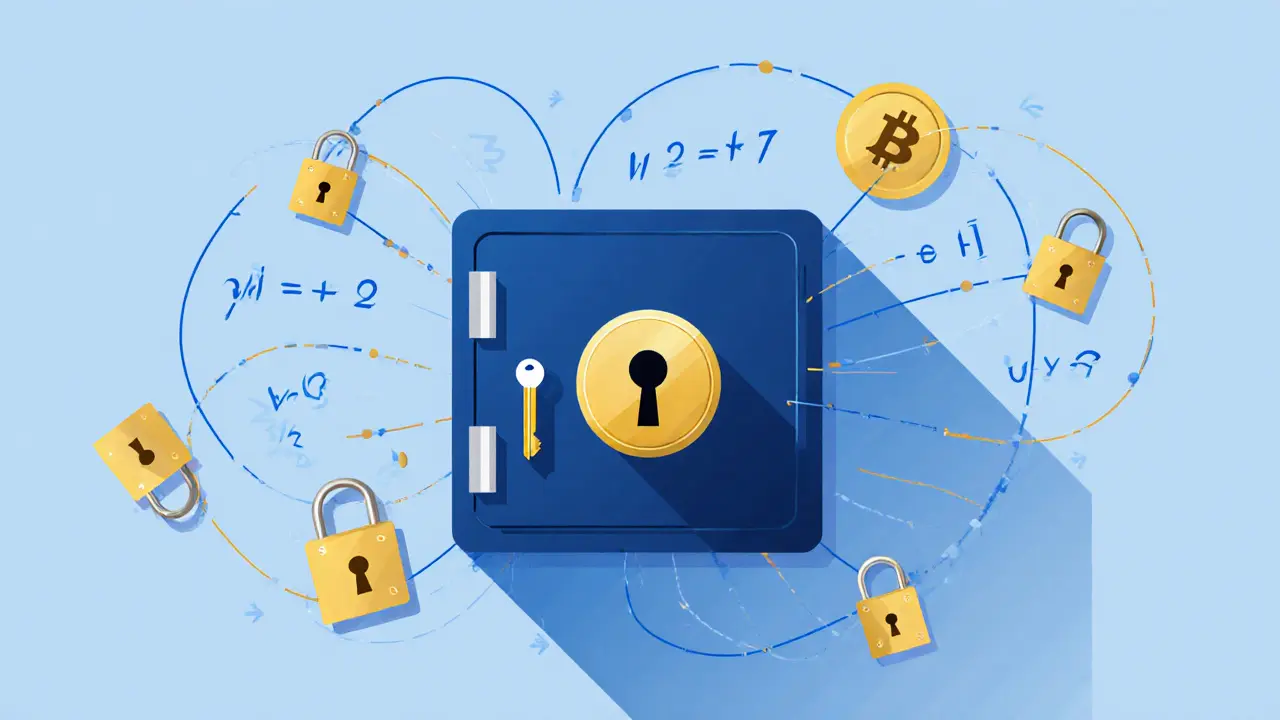
How Public Key Cryptography Powers Bitcoin Security
Public key cryptography is the foundation of Bitcoin's security, using elliptic curve math to let users prove ownership without revealing secrets. This system enables trustless transactions and has remained unbroken for over 14 years.
Details +