Private Key: What It Is, Why It Matters, and How to Keep It Safe
When you own cryptocurrency, you don’t actually hold coins in a digital wallet like you hold cash in your pocket. What you hold is a private key, a unique, secret code that proves you own your crypto and lets you spend it. Also known as a secret key, it’s the single most important thing in your entire crypto setup. If someone else gets it, they can take your money. If you lose it, your crypto is gone forever — no customer service, no reset button, no recovery option.
Think of your private key like the only key to a safe deposit box that holds your life savings. No bank has a copy. No government can restore it. No app can recover it. It’s just you and that string of letters and numbers. That’s why wallet security, the practice of protecting your private key from theft, loss, or exposure is non-negotiable. It’s not about fancy apps or complex passwords — it’s about treating your private key like a physical object you’d never leave on a train. Write it down on paper. Store it in a fireproof safe. Never type it into a website. Never screenshot it. Never share it, even with someone you trust.
Many people confuse private keys with public addresses. Your public address is like your email — you can give it to anyone to receive crypto. But your private key is like your email password — give that away, and anyone can log in and delete everything. That’s why so many crypto losses happen: people send funds to the wrong address, fall for phishing scams pretending to be exchanges, or accidentally delete their wallet file thinking it’s just another app. The truth? If you don’t control your private key, you don’t control your crypto. That’s why the posts below cover real cases — from Russian investors locked out of their wallets after exchange bans, to Indian users having bank accounts frozen because they couldn’t prove they still had access to their keys, to scams targeting people who stored keys on phones or cloud drives.
You’ll find guides here on how to back up your key correctly, how to spot fake apps that steal it, and why some exchanges are dangerous even if they seem safe. You’ll see how people lost everything because they trusted a third party — and how others stayed safe by keeping their key offline, encrypted, and isolated. This isn’t theory. These are real stories from people who learned the hard way. The next one could be yours — unless you act now.
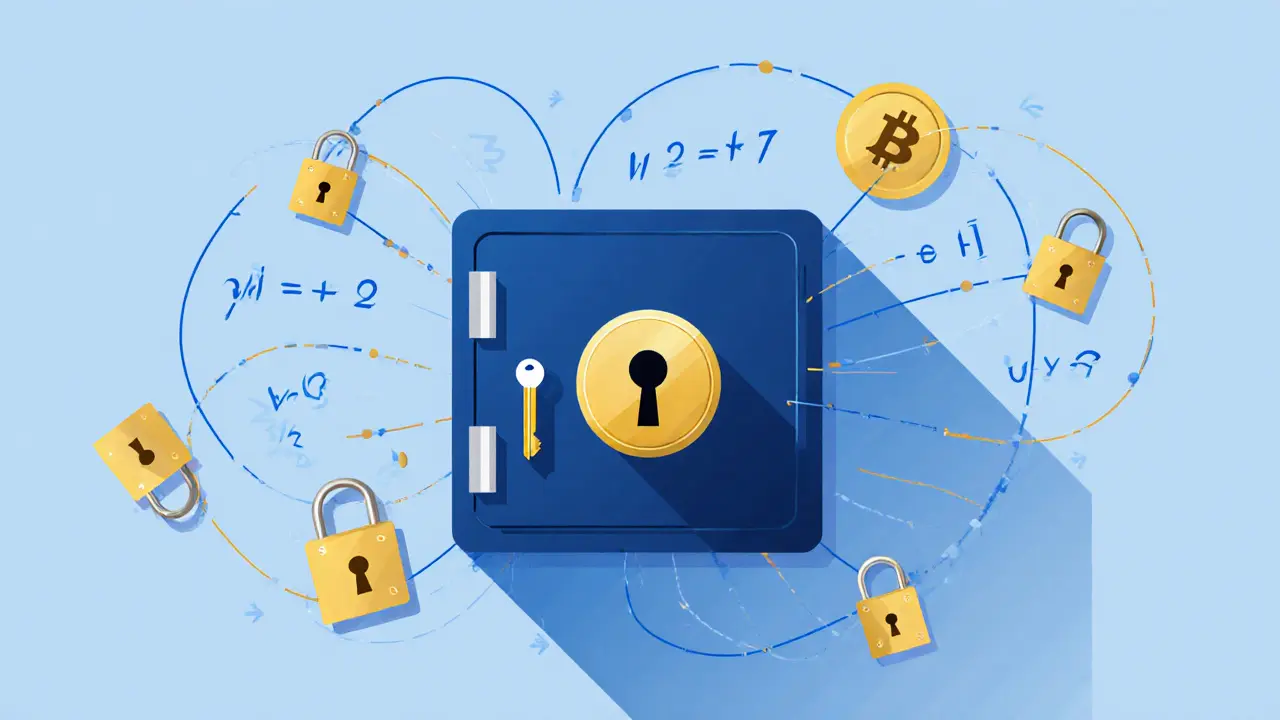
How Public Key Cryptography Powers Bitcoin Security
Public key cryptography is the foundation of Bitcoin's security, using elliptic curve math to let users prove ownership without revealing secrets. This system enables trustless transactions and has remained unbroken for over 14 years.
Details +