Public Key Cryptography: How It Secures Crypto, Wallets, and Digital Identity
When you send Bitcoin or sign into a crypto wallet, you’re not typing a password—you’re using public key cryptography, a system that uses two mathematically linked keys—one public, one private—to prove identity and secure data without sharing secrets. Also known as asymmetric encryption, it’s the invisible guardrail behind every crypto transaction, wallet, and NFT transfer you ever made. Unlike old-school passwords, where one secret unlocks everything, this system splits the job: your private key stays locked on your device, and your public key gets shared openly. Anyone can send you crypto using that public key, but only your private key can unlock it. No middleman. No reset button. Just math you control.
This isn’t just about money. digital signatures, a core use of public key cryptography, let you prove you authored a message or transaction without revealing your private key. Also known as cryptographic signing, this is how your wallet confirms you own the funds before sending them—every single time. Without it, blockchain would be open to forgery. Your wallet address? It’s just a hashed version of your public key. Your transaction history? Verified by your signature. Even decentralized identity systems like DID rely on this same foundation to prove who you are online, without handing your data to a company. And while you might hear terms like ‘hashing’ or ‘encryption’ thrown around, public key cryptography is what makes it all work securely. It’s why you don’t need to trust the exchange, the node, or the app—you only need to protect your private key.
That’s why every post in this collection ties back to this core idea. Whether it’s how Russian crypto laws treat wallet ownership, why Indian banks freeze accounts when crypto moves, or how a failed token like PumaPay collapsed because no one could verify its code, the same principles apply. Public key cryptography isn’t optional—it’s the bedrock. If your wallet doesn’t use it, it’s not crypto. If a platform claims to be ‘secure’ but hides how keys are managed, it’s not trustworthy. Below, you’ll find real-world examples of how this tech works—or fails—in practice, from regulated exchanges in the Netherlands to dead tokens with no security at all. You won’t learn how to crack a key here. You’ll learn how to protect yours.
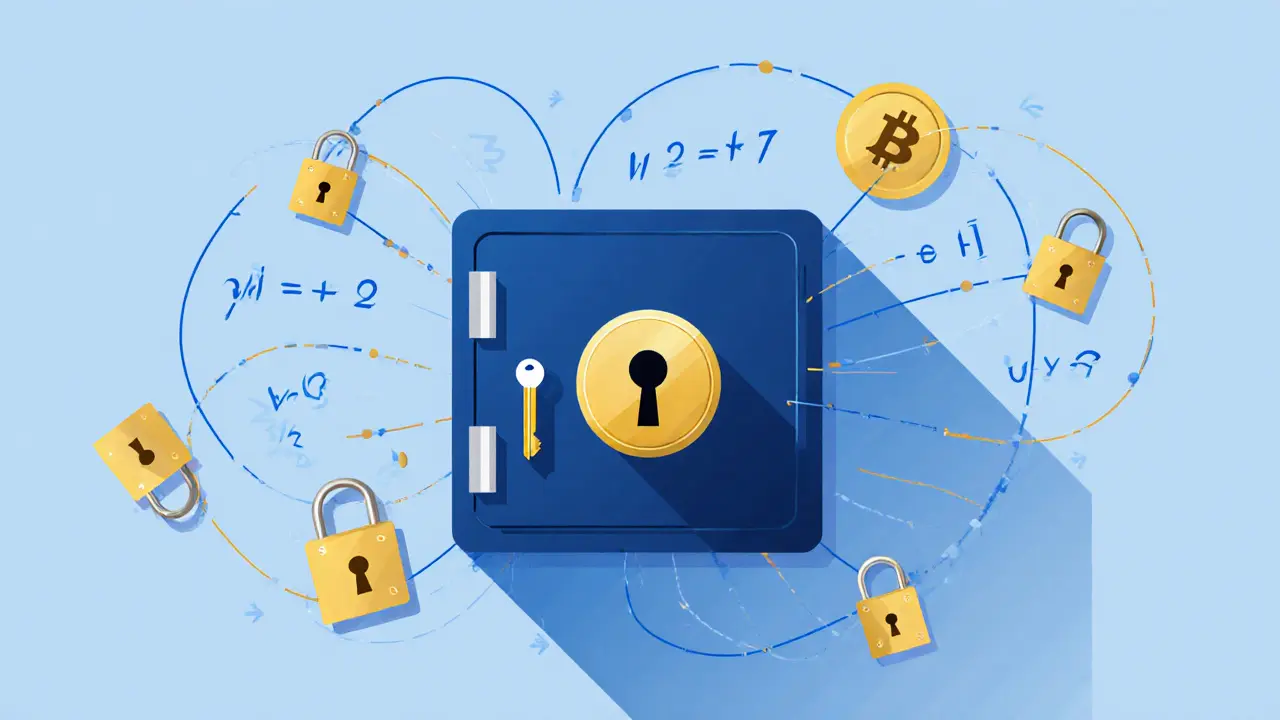
How Public Key Cryptography Powers Bitcoin Security
Public key cryptography is the foundation of Bitcoin's security, using elliptic curve math to let users prove ownership without revealing secrets. This system enables trustless transactions and has remained unbroken for over 14 years.
Details +