secp256k1: What It Is and Why It Powers Bitcoin and Ethereum
When you send Bitcoin or trade Ethereum, secp256k1, a specific elliptic curve used to generate cryptographic keys for blockchain transactions. It's the math that turns your private key into a public address you can share safely. Without secp256k1, crypto wallets wouldn't work. There's no password to reset, no customer support line to call—just this one curve doing the heavy lifting to prove you own your coins.
It's not just Bitcoin that uses secp256k1. Ethereum, Litecoin, and dozens of other blockchains rely on it too. That's because it's fast, secure, and efficient for devices with limited power, like smartphones and hardware wallets. The curve is designed so that it's easy to generate a public key from a private one, but nearly impossible to reverse the process. That’s what makes your funds safe from hackers—even if they know your public address. This is digital signatures, a cryptographic method that proves a message or transaction came from the owner without revealing the private key. Every time you sign a transaction, secp256k1 creates a unique proof that anyone can verify, but no one can fake.
Behind the scenes, secp256k1 works with public key cryptography, a system where two mathematically linked keys—one public, one private—enable secure communication and ownership verification. Your private key is a random 256-bit number. Your public key is derived from it using secp256k1’s formula. Then your wallet turns that public key into a Bitcoin address you send to others. If someone tries to spend your coins without your private key, the secp256k1 signature check fails. No exceptions. No backdoors. This isn’t theory—it’s been running since 2009 with zero known breaks.
Some people think crypto security is about complex algorithms or secret codes. It’s not. It’s about clean, well-tested math. secp256k1 was chosen over other curves because it’s simpler, faster, and less prone to side-channel attacks. That’s why Bitcoin stuck with it, even when alternatives popped up. And it’s why you can trust your wallet—even if you’ve never heard of elliptic curves before.
What you’ll find below are posts that touch on this invisible foundation. You’ll see how it connects to wallet security, why some exchanges get hacked (hint: it’s never the curve), and how new projects still depend on it—even when they claim to be "revolutionary." This isn’t about theory. It’s about what keeps your crypto safe every single day.
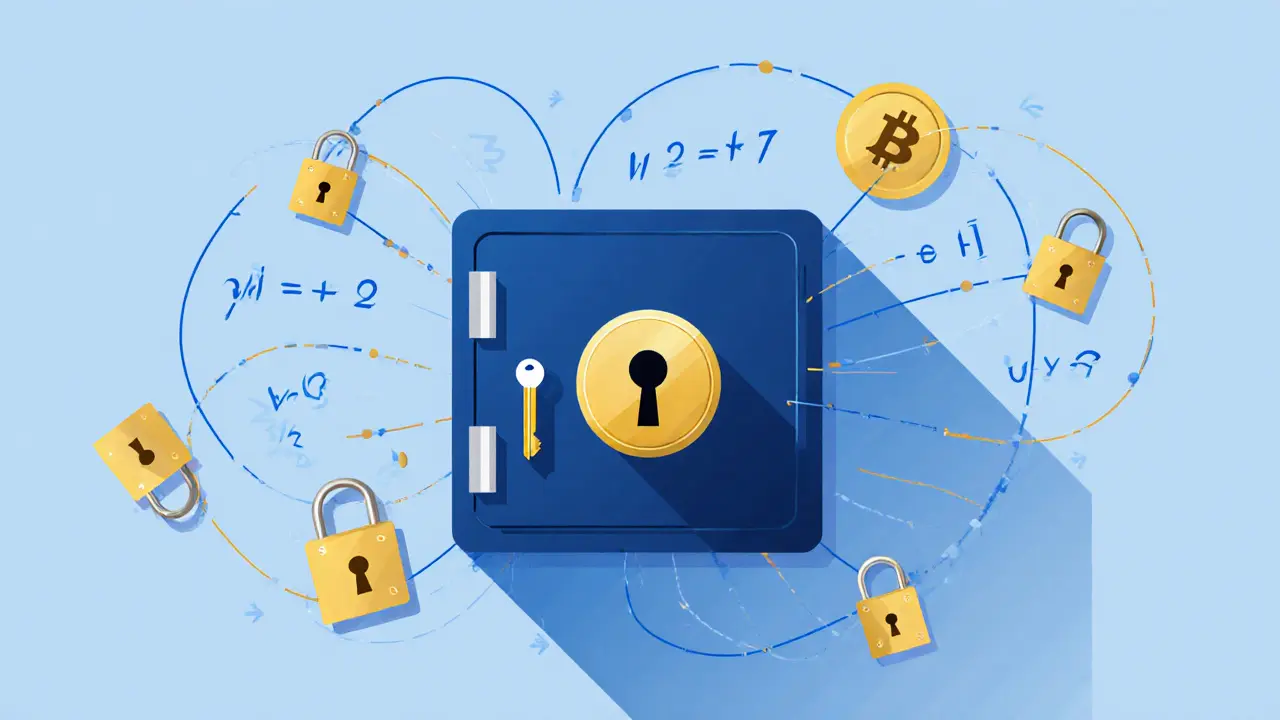
How Public Key Cryptography Powers Bitcoin Security
Public key cryptography is the foundation of Bitcoin's security, using elliptic curve math to let users prove ownership without revealing secrets. This system enables trustless transactions and has remained unbroken for over 14 years.
Details +