Web3 onboarding: How to Start Using Blockchain Without Getting Lost
When you start with Web3 onboarding, the process of helping new users enter decentralized networks like Ethereum, Solana, or Polygon using wallets, tokens, and dApps. Also known as crypto onboarding, it’s not just about downloading an app—it’s about learning how to own your data, money, and identity without a bank or big tech company in the middle. Most people get stuck here because they’re handed a wallet address and told to "just use it," but no one explains what happens when you click "connect," why gas fees appear out of nowhere, or how to tell if a dApp is safe.
Crypto wallets, software tools that store your private keys and let you sign transactions on blockchains. Also known as non-custodial wallets, they’re the first real step in Web3 onboarding—no wallet, no access. You don’t need to buy ETH right away. Start with a free wallet like MetaMask or Phantom, link it to a testnet, and play with fake tokens. That’s how real users learn—not by spending money, but by breaking things safely. Then comes decentralized apps, applications that run on blockchains instead of servers, letting you trade, lend, or play games without a company controlling your account. Also known as dApps, they’re where Web3 becomes useful. But not all dApps are equal. Some are built by teams with real code and audits. Others are just landing pages with a connect button and a promise. Web3 onboarding fails when people jump into the wrong ones.
Look at the posts below. You’ll see people trying to use Web3 onboarding in places like Costa Rica, where crypto is legal but unregulated, or Indonesia, where the government now requires licenses just to trade. Others are stuck on dead tokens like PumaPay or AVAXAI, trying to connect wallets to projects that vanished. Some are using wallets to claim NFTs from airdrops that never delivered. And others are learning how to avoid scams by watching for zero trading volume, fake teams, or platforms that ban major countries. This isn’t theory. It’s what’s happening right now.
Web3 onboarding isn’t about mastering blockchain architecture or understanding data availability layers. It’s about making one smart move after another: choosing a wallet you can recover, testing with small amounts, checking if a dApp has real users, and never trusting a link sent in a DM. The tools are simple. The risks aren’t. The posts here show you what works, what doesn’t, and why so many people give up before they even get started.
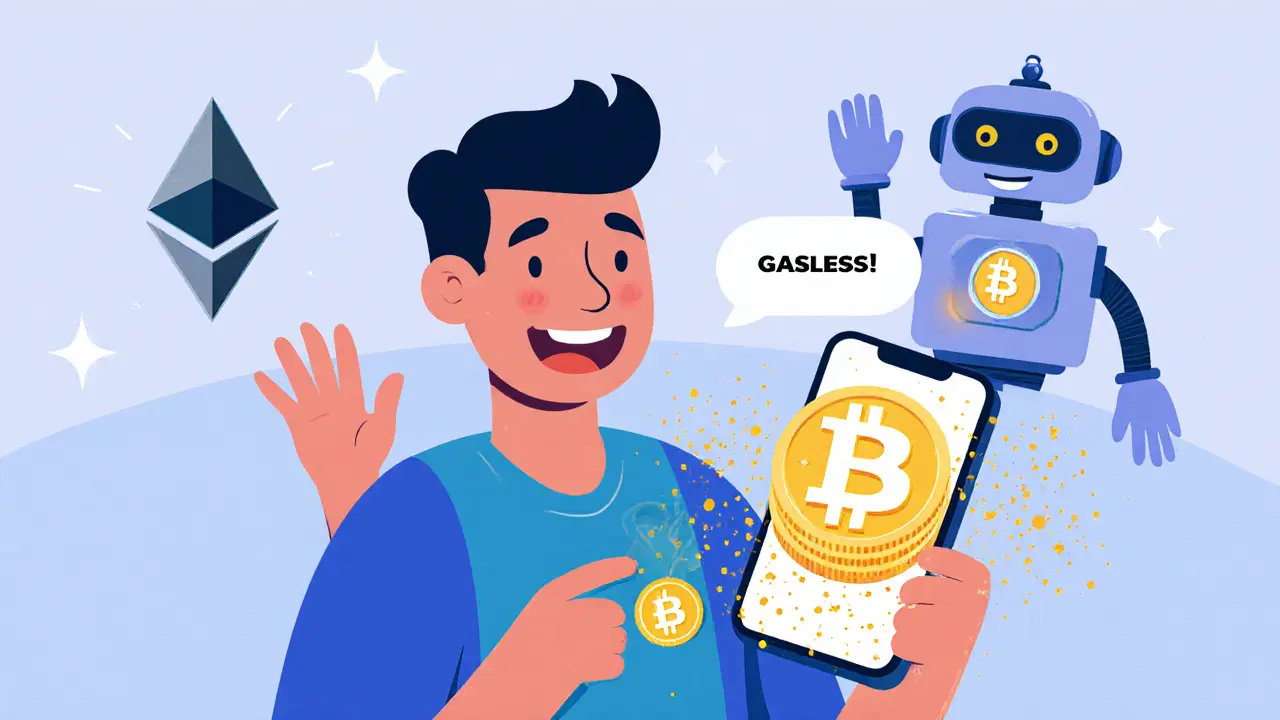
Gasless Transactions with Account Abstraction: How ERC-4337 Is Changing Web3 Onboarding
Gasless transactions via account abstraction let users send crypto without holding ETH, fixing Web3's biggest onboarding hurdle. ERC-4337 enables smart wallets with social recovery, multi-sig, and USDC gas payments - already adopted by enterprises and rising fast.
Details +