Whale Watching Cryptocurrency
When you hear whale watching cryptocurrency, the practice of tracking large cryptocurrency transactions to predict market moves. Also known as crypto whale tracking, it’s not about spotting dolphins in the ocean—it’s about watching wallets that hold millions in Bitcoin, Ethereum, or altcoins and seeing how they move. These aren’t random accounts. They’re exchanges, investment funds, early adopters, or even governments with billions in crypto holdings. When one of them shifts even 1% of their stash, prices shake. You don’t need to be a trader to notice it—you just need to know where to look.
Whales don’t operate in secret. Their moves show up on public blockchains. Every time a wallet sends 500 BTC or 100,000 ETH, it’s recorded forever. Tools like Etherscan or Bitcoin Explorer let anyone see those transfers. But seeing isn’t enough. You need to know what it means. Did a whale send coins to an exchange? That’s often a sell signal. Did they move funds to a cold wallet? Maybe they’re holding for the long run. Or worse—did they split a big transfer into 50 tiny ones to hide their intent? That’s called smurfing, a technique used to disguise large transactions as many small ones to avoid detection. It’s a red flag for market manipulation.
Some whales play nice. They buy during dips, support projects, and hold for years. Others? They pump coins with fake hype, then dump on retail buyers. The whale watching cryptocurrency trend exploded after the 2021 memecoin frenzy, when wallets like "0xAb...cD12" suddenly bought millions in Dogelon or Shiba Inu—then vanished after prices spiked. You can’t predict every move, but you can learn patterns. If a whale buys a new token and immediately lists it on a small exchange with zero liquidity, that’s a trap. If they dump 20% of their Bitcoin right after a major news headline, they’re likely cashing out.
Whales don’t care about your gains. They move markets because they can. But you can use their behavior to protect yourself. Watch the top 100 wallets on Bitcoin and Ethereum. Track sudden spikes in large transfers. Check if a coin’s top holder suddenly starts selling. That’s not luck—that’s data. And it’s free.
Below, you’ll find real cases of whale activity—from Venezuela’s state-run mining rigs that moved millions in crypto to avoid sanctions, to failed airdrops where whales grabbed 90% of the tokens before retail users even knew they existed. You’ll see how Russian investors shifted crypto to bypass banking bans, how Indian banks freeze accounts when big crypto withdrawals hit, and why a token like AVAXAI crashed 95% after whales pulled their liquidity. These aren’t theories. These are events that happened. And they all tie back to one thing: who controls the money, and what they do with it.
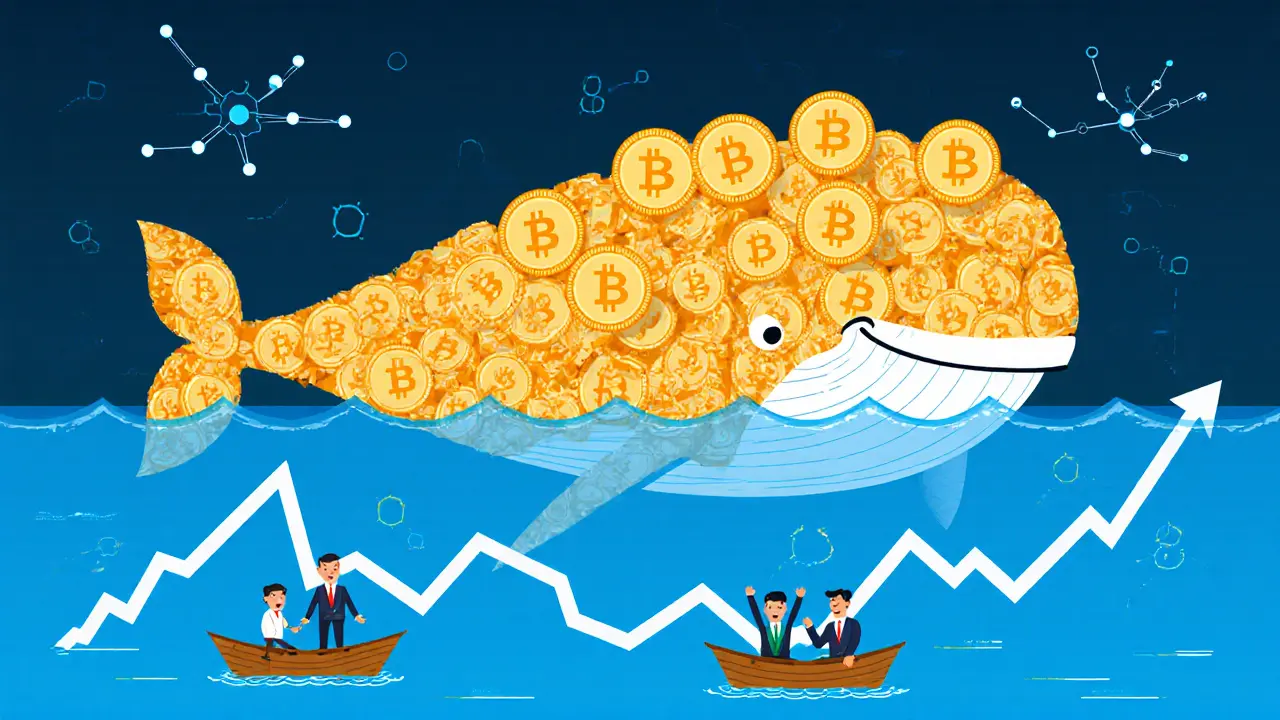
What Is Whale Watching in Cryptocurrency? A Practical Guide to Tracking Big Investors
Whale watching in cryptocurrency means tracking large holders whose transactions can move markets. Learn how to spot real signals, avoid noise, and use free and paid tools to make smarter trading decisions.
Details +